Why Mining Wastewater Breaks Conventional Activated Sludge
Quarry dewatering in the Murfreesboro/Rutherford County area routinely delivers pH swings between 2 and 11, sulfate above 800 mg/L, hardness above 1,200 mg/L as CaCO3, and residual Fe, Mn, and Al in the 5–50 mg/L range; storm-driven TSS spikes past 5,000 mg/L are not unusual after a summer cloudburst (field data from Tennessee limestone and dimension-stone operations, 2025–2026). Under these conditions, a conventional activated sludge (CAS) basin loses control quickly: filamentous organisms such as Nocardia and Microthrix parvicella bloom at low F/M and warm mixed-liquor temperatures (25–30 °C is typical in Tennessee summers), generating stable brown foam that escapes the aeration tank and rides clarifier weirs. When a 25-mm storm event pushes hydraulic loading past the clarifier's solids-flux limit, the blanket pinches and biomass washes out over the effluent launder—the classic clarifier failure mode that mining CAS systems see two or three times per year. Proceedings of the Tennessee Water Resources Symposium (S5) note that Tennessee operators consistently treat stormwater/CSO and high-solids streams as a primary design driver. The result is predictable: TSS, Fe, and Mn excursions on the daily composite that trigger TDEC NPDES exceedance letters, often within the same week as the upset.
How MBR Changes the Biological Stage
A submerged MBR puts hollow-fiber or flat-sheet PVDF cassettes directly into the aeration tank, so mixed liquor is filtered at the membrane surface rather than settled in a separate clarifier. The DF series flat-sheet PVDF MBR cassettes reject solids at a nominal 0.1 μm pore size; the integrated MBR membrane bioreactor system delivers an equivalent <1 μm barrier in a packaged frame (HydropureWater verified product catalog, S6). Because the membrane—not a clarifier—sets the solids retention time, HRT and SRT are decoupled: MLSS operates at 8,000–12,000 mg/L with SRT held at 20–60 days, versus 2,000–4,000 mg/L MLSS and 3–10 days SRT in a typical CAS basin. That longer SRT saves the process during a metals slug: slow-growing nitrifiers and metal-acclimated heterotrophs are not wasted over the effluent weir, even after 24–48 hours of inhibitory influent, because the membrane retains them regardless of clarifier performance. The same decoupling collapses the train—aeration, biological reaction, and solids separation in a single tank—which is why the integrated MBR footprint comes in around 60% smaller than an equivalent conventional activated sludge system with a separate clarifier and RAS pumping bay (S6). Each DF cassette produces 32–135 m³/day of filtrate in a compact frame, and the submerged configuration runs at 10–20× lower energy than external cross-flow designs because suction-side pressure is the only driving force.
MBR vs Conventional Activated Sludge: Mining-Effluent Comparison
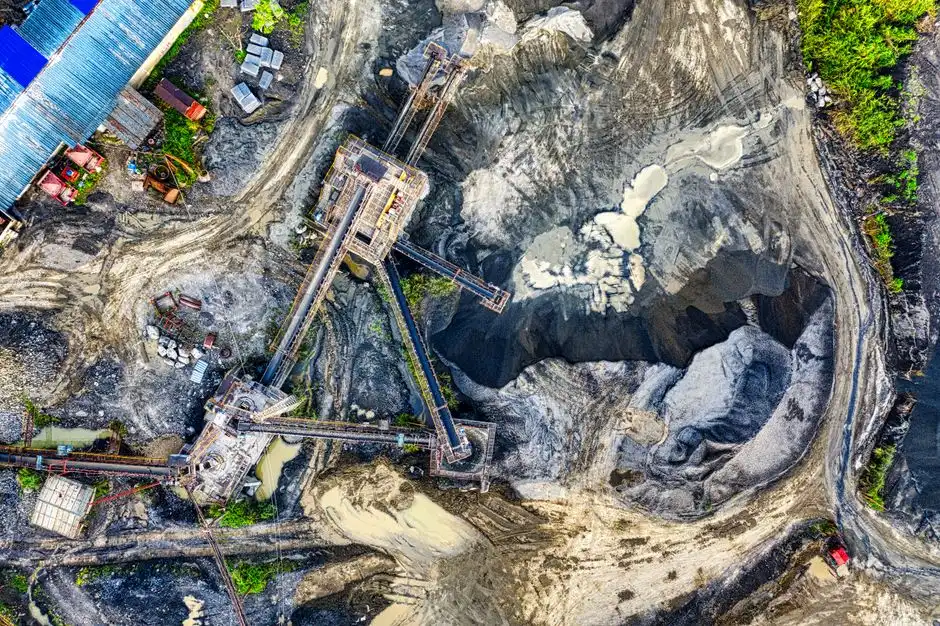
The table below provides a comparison for procurement or TDEC permit memos, listing defensible operating ranges for mining and metals influent in the 500–5,000 mg/L COD and 200–2,000 mg/L TSS range. Specific jar-test confirmation is recommended before final equipment selection, as described in the MBR fundamentals and selection guide and the hollow-fiber versus flat-sheet MBR trade-offs piece.
| Parameter | Conventional Activated Sludge (CAS) | Submerged MBR (PVDF, DF series) |
|---|---|---|
| MLSS operating range | 2,000–4,000 mg/L | 8,000–12,000 mg/L |
| SRT (solids retention time) | 3–10 days | 20–60 days |
| HRT (hydraulic retention time) | 6–12 h | 3–6 h |
| Effluent TSS | 10–30 mg/L (with good settling) | <1 mg/L (0.1 μm membrane barrier) |
| Effluent turbidity | 5–20 NTU | <0.5 NTU |
| Footprint (relative) | 1.0× (baseline) | ~0.4× (60% smaller, per S6) |
| Observed sludge yield (Yobs) | 0.3–0.5 kg TSS/kg COD | 0.15–0.30 kg TSS/kg COD |
| Tolerance to pH/metal shock | Low — clarider washout at surge | High — membrane retains biomass 24–48 h |
| Foam / bulking control | Chlorination, RAS management, selector zones | Foam trapped; bulking irrelevant to effluent |
| Recycle-water suitability | Usually requires tertiary filtration | Direct reuse for dust suppression / process |
| Operator skill required | Standard wastewater operator | Standard + membrane CIP/OEM support |
| CAPEX (relative, same flow) | 0.7–0.9× | 1.0–1.2× |
| OPEX (energy + membrane replace) | Lower energy, higher sludge hauling | Aeration + suction; lower hauling |
Peer-reviewed CAS-vs-MBR literature (Elsevier, S1 and S4) shows MBR achieving lower effluent TSS and COD than CAS, and the same solids-rejection mechanism applies to mining influent, where the <1 μm barrier physically excludes the biomass that produces turbidity. Because published CAS-vs-MBR data focus on municipal and food/beverage contexts rather than high-TDS, high-hardness mine water, run a 7-day jar test on your combined influent before signing the PO.
Murfreesboro, Tennessee Permit and Site Realities
Tennessee implements the NPDES program through the TDEC Division of Water Resources, and mining and ore processing fall under the federal effluent guidelines at 40 CFR Part 440—which Tennessee adopts and frequently tightens with site-specific permit limits on TSS, Fe, Mn, Al, pH, and sulfate. For a Rutherford County operation, siting constraints usually prioritize land, neighbors, and watershed protection. Karst terrain under much of Middle Tennessee limits infiltration and rules out large open lagoons; quarry laydown areas are narrow, so a 60% footprint reduction is a significant project metric. Proximity to the Stones River watershed and residential expansion around Murfreesboro makes aerosol drift and visual impact relevant to the public comment record. Enclosed MBR membranes address these concerns by eliminating open clarifiers and scum troughs. For prior art, the Tennessee Water Resources Symposium proceedings (S5) remain the most useful regional venue for operators presenting influent and effluent data on Tennessee-specific streams.
When CAS Still Makes Sense (and When It Doesn't)

CAS is effective for high-flow (>5,000 m³/day) applications with stable influent, where the site has surplus land and an operations team experienced in activated-sludge management. CAPEX is lower, the sludge handling train is well understood, and clarifier failure is generally recoverable. MBR is the preferred choice when footprint is constrained, influent quality fluctuates during storm events, the permit demands reuse-quality water, or TSS/metals limits are strict enough that a single clarifier failure results in a Notice of Violation. For retrofits where an existing CAS basin must be preserved, a hybrid train—CAS as a roughing stage, MBR as the polish—is a defensible path for procurement teams to justify to a CFO. The Murfreesboro peer comparison for chemicals plants evaluates this decision tree for an adjacent industry.
Frequently Asked Questions
Is MBR always better than CAS for mining wastewater?
MBR provides superior footprint efficiency, effluent quality, and tolerance to metals and pH shock, with the <1 μm membrane barrier delivering <1 mg/L TSS and <0.5 NTU turbidity. However, CAS maintains advantages in first cost and operational simplicity for high-flow, low-toxicity streams.
How much smaller is an MBR footprint than CAS for the same flow?
Verified catalog data (S6) shows the integrated MBR at roughly 60% of the conventional activated sludge footprint for an equivalent design flow, as aeration, biology, and solids separation occur in a single tank instead of a separate aeration basin, clarifier, and RAS pump bay.
What pore size do submerged MBR membranes use for mining effluent?
Submerged PVDF MBRs for mining typically use 0.1 μm flat-sheet cassettes (DF series) or <1 μm equivalent hollow-fiber systems. The 0.1 μm barrier physically rejects the biomass that drives turbidity and suspended-solids excursions, as detailed in the MBR fundamentals and selection guide.