Why Baghdad Hotels Need a Packaged MBR Instead of Conventional Sewage Treatment
A packaged membrane bioreactor (MBR) is a prefabricated, skid- or ISO-container-mounted unit that combines activated-sludge biology with submerged ultrafiltration membranes, delivered fully assembled and pre-tested so the plant can be commissioned within days of arrival on site. For a Baghdad hotel, this configuration collapses the footprint of a conventional activated-sludge (CAS) plant by roughly 60% — a critical advantage on tight urban basements, service-yard plots, and podium-level mechanical rooms where a clarifier-and-media-filter layout simply will not fit (HydropureWater MBR catalog, 2026). MBR also operates at 6,000–12,000 mg/L mixed-liquor suspended solids (MLSS), more than double the 3,000–5,000 mg/L typical of CAS, which lets the same tank volume treat a higher organic load with a smaller clarifier footprint (Sigmadaf, 2025).
Two Baghdad-specific constraints make MBR the only defensible choice for a 150+ room hotel in 2026. First, summer ambient temperatures of 45–50°C push mixed liquor in an unshaded aeration tank to 35–40°C, which derates membrane flux by 30–40% and accelerates fouling — a problem that conventional activated sludge with a final clarifier cannot solve because the clarifier simply overflows under hydraulic shock. Second, Baghdad's grid is intermittent, and most hotel sites rely on diesel rotary UPS or generator backup; a packaged MBR with PLC-controlled restart logic and anoxic-zone sequencing can ride through 2–4 hour outages without losing biomass, whereas a CAS plant loses its nitrification population after a single warm shutdown. The HydropureWater integrated MBR membrane bioreactor system is built around these two failure modes.
Baghdad Hotel Wastewater: Flows, Loads and the Iraqi Sizing Basis
The Iraqi design loading for a 3- to 5-star hotel is 1.0–1.4 m³ per guest-night, not the 150–200 L/capita figure used in Indian CPCB guides. The higher Iraqi figure accounts for laundry, kitchen, swimming-pool backwash, and air-conditioning condensate that all discharge to the hotel sewer; an Indian-style per-capita basis typically under-sizes Baghdad hotel STPs by 30–45% (HydropureWater field data, 2026). A 200-room hotel at 85% occupancy × 1.4 m³/guest-night produces an average dry-weather flow of 238 m³/day; applying a peak factor of 1.5–2.0 gives a hydraulic design flow of 360–480 m³/day for the MBR skid and equalization tank.
Typical Baghdad hotel influent characteristics sit in the following ranges, drawn from operating plants in Erbil and Baghdad (HydropureWater field data, 2026):
| Parameter | Typical range | Driver / note |
|---|---|---|
| BOD5 | 250–400 mg/L | Guest rooms + kitchen |
| COD | 500–800 mg/L | Ratio to BOD ~2:1 |
| TSS | 200–350 mg/L | Laundry lint dominant |
| Oil & grease | 50–100 mg/L | Kitchen flows; grease trap upstream |
| Total nitrogen | 40–60 mg/L | Drives anoxic-zone sizing |
| Temperature | 25–40°C | 35–40°C June–August |
For international consultants reviewing the specification, the standard conversions are 1 m³ = 264.2 US gallons and 1 MIGD = 4,546 m³/day (IDA Water Security Handbook 2020–2021), so a 400 m³/day Baghdad hotel plant sits at roughly 0.088 MIGD. The kitchen stream must pass through a dedicated grease trap before the MBR — oil and grease above 100 mg/L permanently fouls flat-sheet membranes within 30 days of operation (Sigmadaf, 2025).
Membrane Configuration: Flat-Sheet vs Hollow-Fiber for Baghdad Conditions
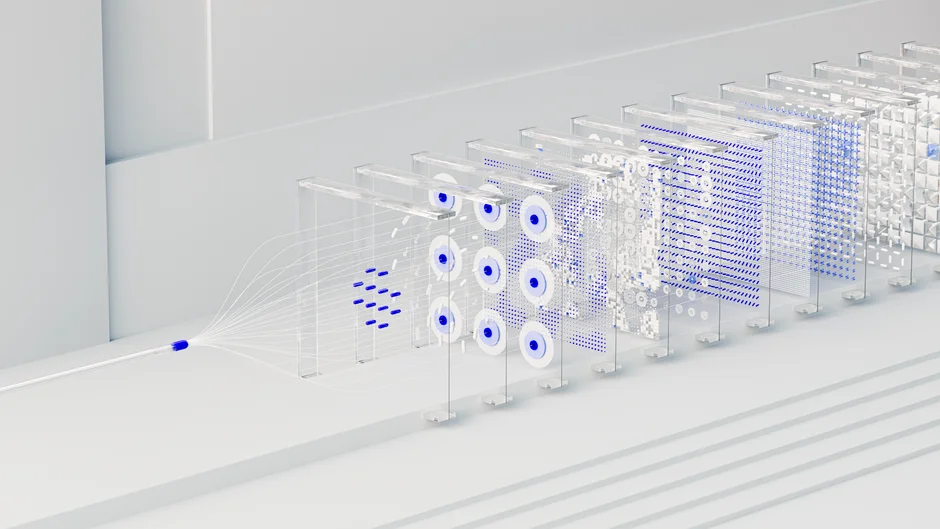
Flat-sheet PVDF membranes with a nominal pore size of 0.1–0.4 μm are the right geometry for Baghdad hotel sewage because hotel wastewater carries high TSS (200–350 mg/L) and significant hair and laundry-lint content that fouls and physically breaks hollow fibers (Sigmadaf, 2025; HydropureWater DF series catalog, 2026). The flat-plate configuration keeps the space between membranes clear of debris and is tolerant of routine in-situ chemical cleaning with citric acid and NaOCl — a procedure the MBR skid runs automatically without pulling the cassettes. Flat-sheet systems also consume 10–20× less energy than external cross-flow designs because the air-scour bubble plume below each cassette does both aeration and membrane sweeping (HydropureWater DF module catalog, 2026).
For a 400 m³/day Baghdad hotel, the cassette count works out as follows (HydropureWater DF series catalog, 2026):
| Parameter | DF-80 | DF-150 | DF-225 |
|---|---|---|---|
| Membrane area per module | 80 m² | 150 m² | 225 m² |
| Output per module (derated) | ~32 m³/day | ~80 m³/day | ~135 m³/day |
| Modules for 400 m³/day | 12–13 | 5 | 3 |
| Footprint (cassette train) | Large | Medium | Compact |
Three to five DF series flat-sheet PVDF membrane cassettes in parallel cover the 400 m³/day design at the 30–40% Baghdad summer flux derating, leaving one cassette in standby for the CIP rotation. Hollow-fiber UF gives higher packing density in a clean industrial effluent but is not recommended for hotel influent above 200 mg/L TSS with hair and lint loadings — a position reinforced by the 2026 containerized wastewater treatment engineering guide.
Climate Derating: How 45°C Baghdad Summers Reshape the Design
Mixed liquor at 35–40°C is the single largest design risk in a Baghdad MBR. Elevated mixed-liquor temperature reduces oxygen solubility by roughly 20% versus the 20°C rated condition, accelerates membrane fouling, and pushes nitrification efficiency below 40°C; net result is a 30–40% derating on the membrane flux that a foreign supplier's 20°C datasheet does not show (general MBR engineering practice, 2026; Sigmadaf, 2025). The cheapest mitigation is to bury the bioreactor or shade the skid; an above-grade containerized MBR exposed to direct June sun will routinely hit 42–44°C in the mixed liquor and lose another 10% of rated flux on top of the design derating.
For new-build hotels, the cleanest solution is the WSZ underground packaged STP with A/O process, which sits below grade in the service yard, gaining thermal mass and shade. The diffuser system must also be specified for high temperature: standard EPDM fine-bubble diffusers lose about 2 percentage points of standard oxygen transfer efficiency (SOTE) per 10°C above 20°C, so blowers should be oversized by 20–30% and diffusers specified for continuous operation above 40°C. The anoxic pre-chamber for nitrification-denitrification becomes less efficient above 40°C, so the designer should plan for partial nitrification in July–August and polish with chlorine dioxide or UV downstream rather than over-sizing the biology.
Pretreatment, Disinfection and Sludge Handling for Hotel Sites
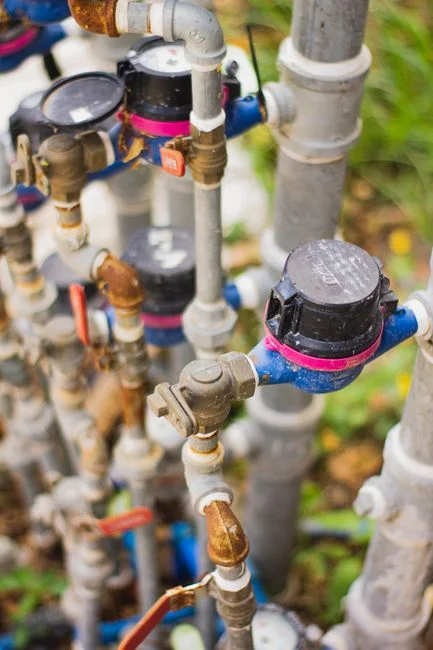
Upstream of the MBR, every Baghdad hotel STP needs a rotary mechanical bar screen with 1–3 mm aperture to remove hair, lint and plastic — the three dominant foulants in hotel sewage that the MBR manufacturer will void the membrane warranty over (Sigmadaf, 2025). The GX series rotary mechanical bar screen is sized for hotel flows of 20–80 m³/h per unit and runs on a timed cycle tied to the MBR PLC. A grit chamber follows the screen, and a kitchen-side grease trap is mandatory before the kitchen line joins the main sewer — oil and grease above 50 mg/L will blind flat-sheet membranes within weeks.
Downstream disinfection has to account for Baghdad's warm water, where free chlorine residual decays fast and breakpoint chlorination is unreliable. Two options are workable: a chlorine dioxide generator for sewer-connection discharge, or a UV-C sterilizer for tertiary disinfection when the effluent is destined for landscape irrigation. For sludge handling, MBR waste-activates sludge at roughly 30–40% of the rate of a CAS plant at the same loading, but a hotel still needs a periodic blowdown dewatering step — a small 1–5 m² plate-and-frame filter press at the end of the sludge line handles this on a weekly cycle. For hotels pursuing irrigation reuse on landscape or golf areas, an ultrafiltration polishing step before the irrigation tank protects sprinklers from the residual TSS that survives membrane bioreactors.
Iraq Discharge Compliance and Reuse Targets
For a hotel discharging to the Baghdad municipal sewer, the typical published limits from the Iraq Ministry of Environment and the Baghdad Sewerage Directorate are (verify the current 2026 gazette values with the local authority before issue):
| Parameter | Iraqi sewer-connection limit (typical) | MBR effluent (design) |
|---|---|---|
| BOD5 | ≤40 mg/L | ≤5 mg/L |
| COD | ≤150 mg/L | ≤30 mg/L |
| TSS | ≤50 mg/L | ≤1 mg/L |
| Total nitrogen | ≤45 mg/L | ≤15 mg/L (with anoxic zone) |
| Oil & grease | ≤15 mg/L | ≤5 mg/L (with grease trap) |
A properly designed MBR with the anoxic pre-chamber, fine-bubble aeration, and 0.1–0.4 μm flat-sheet membranes undercuts every one of these limits by a wide margin (Sigmadaf pollutant removal table, 2025; HydropureWater MBR catalog, 2026). The larger reuse-permit threshold in the IDA Water Security Handbook inventory sits at 5,000 m³/day, and hotel projects are far below that, so the local reuse permit path is administratively simpler. The buyer should obtain a written compliance statement from the supplier that benchmarks effluent against the Iraqi limits at the design loading — not at the 20°C rated flux — and have the consultant countersign it before contract award.
Vendor Selection and CAPEX/OPEX Benchmark for a 400 m³/day Baghdad Hotel
The vendor shortlist for a 400 m³/day Baghdad hotel should be scored against six criteria that matter specifically in the Iraqi market (HydropureWater field data, 2026):
| Criterion | Weight | What to verify |
|---|---|---|
| Iraq / Middle East reference | 20% | At least 2 operating plants in 35–45°C climate |
| Flat-sheet PVDF, 6,000–12,000 mg/L MLSS | 20% | Documented long-term operation, not just lab rating |
| Anoxic pre-chamber option | 15% | Integrated, not field-retrofitted |
| Containerized / skid format, pre-tested | 15% | Witness test at factory before shipment |
| Local service partner (Baghdad or Erbil) | 20% | Spares in-country, 48-hour response |
| 24-month membrane warranty | 10% | Pro-rata replacement, not voided by TSS events |
Planning estimates for a fully packaged 200–500 m³/day MBR skid including pretreatment, disinfection and PLC sit in the band of USD 25,000–45,000 per m³/day installed, with the exact figure driven by cassette count, container SS304 vs SS316, and whether a UV or ClO₂ polish is included (HydropureWater market data, 2026 — confirm with supplier). OPEX for the same plant runs 0.8–1.5 kWh/m³ of energy, quarterly chemical cleaning (citric acid + NaOCl), membrane replacement every 7–10 years, and 0.5 FTE operator for an automated packaged unit. Shifting operational risk to the supplier under a 2026 performance-based wastewater O&M contract guide structure is the most defensible commercial route for a Baghdad hotel developer who does not want to staff a wastewater team.
Frequently Asked Questions
What flow rate should I size a packaged MBR STP at for a Baghdad hotel?
Use the Iraqi design loading of 1.0–1.4 m³ per guest-night, not the 150–200 L/capita figure from Indian CPCB guides, because Baghdad hotels carry laundry, kitchen and AC-condensate streams. For a 200-room hotel at 85% occupancy, average flow is 238 m³/day and the hydraulic design flow after a 1.5–2.0 peak factor is 360–480 m³/day.
How do I derate MBR membrane flux for 45°C Baghdad summer conditions?
Apply a 30–40% flux derating on the 20°C rated flux to account for mixed-liquor at 35–40°C, reduced oxygen solubility, and accelerated fouling. Also oversize blowers by 20–30% to compensate for SOTE loss, and bury or shade the MBR skid to limit solar gain on the bioreactor.
What effluent limits does a Baghdad hotel STP have to meet for sewer connection?
Typical published limits from the Iraq Ministry of Environment and Baghdad Sewerage Directorate are BOD ≤40 mg/L, COD ≤150 mg/L, TSS ≤50 mg/L, total nitrogen ≤45 mg/L, and oil & grease ≤15 mg/L. Verify the current 2026 gazette values with the local authority before specification issue, and require a written compliance statement from the supplier.
Is flat-sheet or hollow-fiber MBR better for Baghdad hotel wastewater?
Flat-sheet PVDF is better for Baghdad hotel sewage because it tolerates 200–350 mg/L TSS and the hair and laundry-lint content that breaks hollow fibers. Flat-sheet systems also run an automated in-situ citric acid / NaOCl cleaning cycle and consume 10–20× less energy than external cross-flow designs, which matters at Iraqi electricity tariffs.
Does this guidance also apply to hotels in Najaf or Basra?
Yes — the sizing basis and discharge limits are the same across Iraqi governorates, but Najaf and Basra see slightly lower winter temperatures and a few additional reuse options. A parallel Iraq hotel STP guide for Najaf covers the shrine-city case in detail.