What "capacity" actually means in an activated carbon filter
Activated carbon filter capacity collapses into two independent numbers, and confusing them is the most common reason a vessel is mis-sized. Hydraulic capacity is the peak flow a vessel passes without channeling or media fluidization, governed by superficial (surface) velocity of 4–10 gpm/ft² in service, with temporary peaks tolerated to 12–15 gpm/ft² (WQA GAC Fact Sheet, 2016). Adsorptive capacity is the mass of target contaminant the bed holds before breakthrough, governed by Empty Bed Contact Time (EBCT) and the carbon's specification — iodine number, CTC, abrasion number.
EBCT is simply residence time in an empty vessel: EBCT (min) = Bed Volume ÷ Flow Rate, in consistent units. In US units, 1 ft³ of GAC equals 7.5 gal; a flow of 2.5 gpm through that 1 ft³ bed produces an EBCT of exactly 3 minutes (WQA, 2016). In metric, divide bed volume in m³ by flow in m³/h and multiply by 60 to get minutes. The two capacities are sized separately, and the larger of the two physical envelopes — usually the backwash requirement or the EBCT requirement — wins. For PFAS polishing under EPA's 4 ppt MCL for PFOA/PFOS, EBCT has to reach 10–20 minutes, which almost always produces the larger vessel (activatedcarbonfactory.com, 2026).
For a worked mental model: a 1 ft³ (7.5 gal) bed at 2.5 gpm = 3 min EBCT; at 5 gpm the same bed = 1.5 min EBCT; at 1.25 gpm = 6 min. EBCT scales inversely with flow, so halving flow doubles the contact time and roughly doubles bed life for a given breakthrough threshold. That trade-off is the engine of every cost decision downstream.
The five parameters that fix a GAC vessel
Five parameters control the design, and any one of them out of range will silently destroy the others. Consolidated for datasheet use:
| Parameter | Typical range | Design implication |
|---|---|---|
| EBCT by target contaminant | 5–10 min (Cl₂/taste-odor) · 7.5–15 min (VOCs/SOCs) · 10–20 min (PFOA/PFOS) · 15–30 min (pesticides, complex organics) | Sets bed volume = EBCT × flow |
| Hydraulic loading rate | 4–10 gpm/ft² service; 12–15 gpm/ft² peak; 1–10 gpm/ft³ volumetric | Sets minimum vessel cross-section |
| Mesh size | 8×30 (~2 mm) for deep municipal beds · 12×40 (~1 mm) for general industrial/PFAS · 20×50 for cartridges | 12×40 reaction rate is 2× faster than 8×30; 20×50 is 2× faster than 12×40 |
| Carbon specification | Iodine Number 900–1050 · CTC ≥ 50 · Abrasion Number ≥ 70 (shell carbons ~90) | Determines adsorptive capacity and backwash survivability |
| Bed depth | 6–10 ft typical; deeper beds compensate for short EBCT | Also sets vessel straight-side height plus 40–50% freeboard |
Per the WQA GAC Fact Sheet (2016), an 8×30 mesh carbon is approximately 2 mm in diameter, a 12×40 is approximately 1 mm, and a 20×50 is smaller still. The rate of reaction of a 12×40 is twice that of an 8×30 of the same product, and 20×50 is twice as fast again — so smaller mesh gives faster kinetics but at the cost of higher pressure drop and harder backwashing. The Iodine Number range of 900–1050 is the potable-water benchmark; values below 900 signal under-activated carbon with reduced micropore volume. Shell carbons hit ~90 Abrasion Number, coal bases ~70, and anything below 70 will shed fines under vigorous backwash. Deeper beds (6–10 ft) typically pair with 8×30 to keep backwash rates manageable, while shallower beds pair with 12×40 to compensate on kinetics (WQA, 2016).
Worked sizing example: 50 m³/h polishing GAC for industrial PFAS
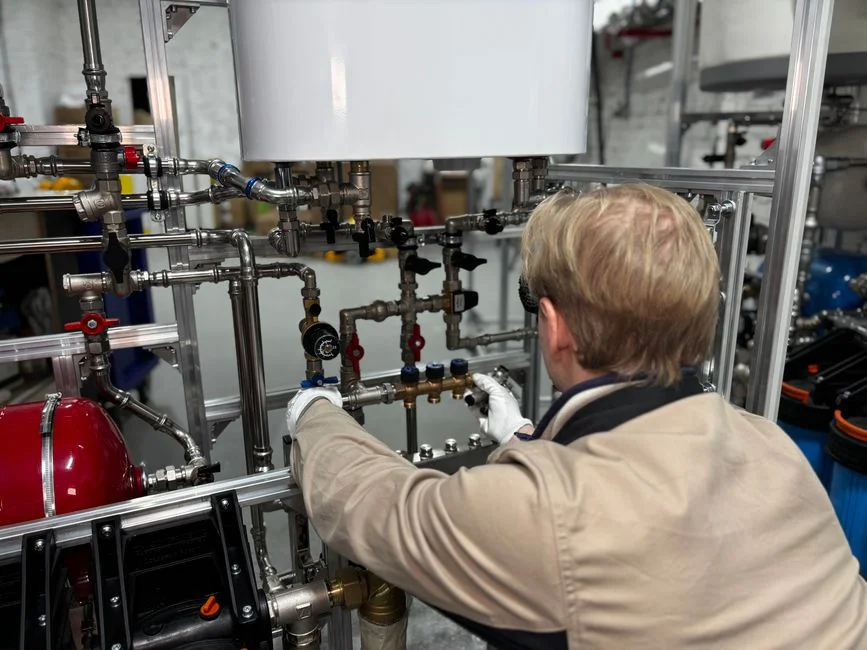
The arithmetic an engineer actually has to do, end to end, for a 50 m³/h industrial PFAS polishing duty on a wastewater side-stream — the kind of scope that lands on a desk when a discharge permit tightens or a corporate ESG target forces upstream polishing.
Step 1 — pick EBCT target. 15 minutes for PFOA/PFOS polishing, midpoint of the 10–20 min band recommended in the WQA / industry guidance (activatedcarbonfactory.com, 2026).
Step 2 — convert flow. 50 m³/h × (1 gal / 0.003785 m³) × (1 h / 60 min) ≈ 220 gpm.
Step 3 — calculate bed volume. EBCT (min) × flow (gpm) = 15 × 220 = 3,300 gal. In cubic feet: 3,300 / 7.5 = 440 ft³.
Step 4 — pick bed depth and solve for diameter. 8 ft bed depth is a defensible default for industrial 12×40 GAC. Cross-section = 440 ft³ / 8 ft = 55 ft². Solving A = π·D²/4 for D = 8.37 ft — round up to a standard 9 ft ID vessel.
Step 5 — surface-loading check. A 9 ft vessel has 63.6 ft² of cross-section. 220 gpm / 63.6 ft² = 3.5 gpm/ft², well inside the 4–10 gpm/ft² service band (WQA, 2016). The vessel is hydraulically oversized relative to EBCT, which is the right outcome for PFAS — hydraulic capacity is rarely the binding constraint.
Step 6 — GAC mass and staging. At ~30 lb/ft³ bulk density, 440 ft³ × 30 lb/ft³ = 13,200 lb (~6 t) per vessel. For PFAS duty, specify two vessels in lead-lag configuration so the lag bed signals breakthrough before the lead bed exhausts — the standard operating practice for PFOA/PFOS polishing where outlet excursions trigger non-compliance (activatedcarbonfactory.com, 2026). For the full media inventory across the duplex pair, see the bulk GAC and FRP pressure vessels line card.
Backwash hydraulics and the minimum vessel that will actually work
EBCT alone does not size a GAC vessel. Backwash hydraulics set a hard lower limit on diameter that most spreadsheet calculators ignore, and ignoring it produces a vessel that channels at startup and sheds media on the first backwash. For 12×40 coal-based GAC, a backwash rate of 8–12 gpm/ft² producing 20–30% bed expansion is the operating window (WQA, 2016). Below ~8 gpm/ft² the bed does not fluidize and accumulated fines blind the surface; above ~12 gpm/ft² the bed boils and media is lost to drain.
Freeboard above the bed must accommodate that expansion plus a safety margin — typically 40–50% of bed depth. For the 8 ft bed in the PFAS example, that is 3.2–4.0 ft of clear space between the media surface and the outlet. A vessel that meets EBCT but cannot deliver the backwash rate and freeboard cannot be regenerated in place, which short-circuits the EBCT design and forces media replacement on a much shorter cycle.
Mesh choice matters here too. An 8×30 mesh (~2 mm) backwashes more easily and survives higher backwash rates with less attrition, but its reaction rate is half that of 12×40 — so to hit the same EBCT you need roughly twice the bed volume (WQA, 2016). For PFAS polishing on a tight footprint, 12×40 coal is the engineering default; for high-flow municipal beds with deep straight-side height, 8×30 is the default. Pretreatment matters for backwash interval: a multi-media pretreatment filter ahead of the GAC cuts TSS loading and stretches the backwash cycle, which is the cheapest performance gain available on most polishing trains. For more on this trade-off in a related service, see biopharmaceutical wastewater GAC design.
Bed life, spent-carbon handling, and 2026 cost reality
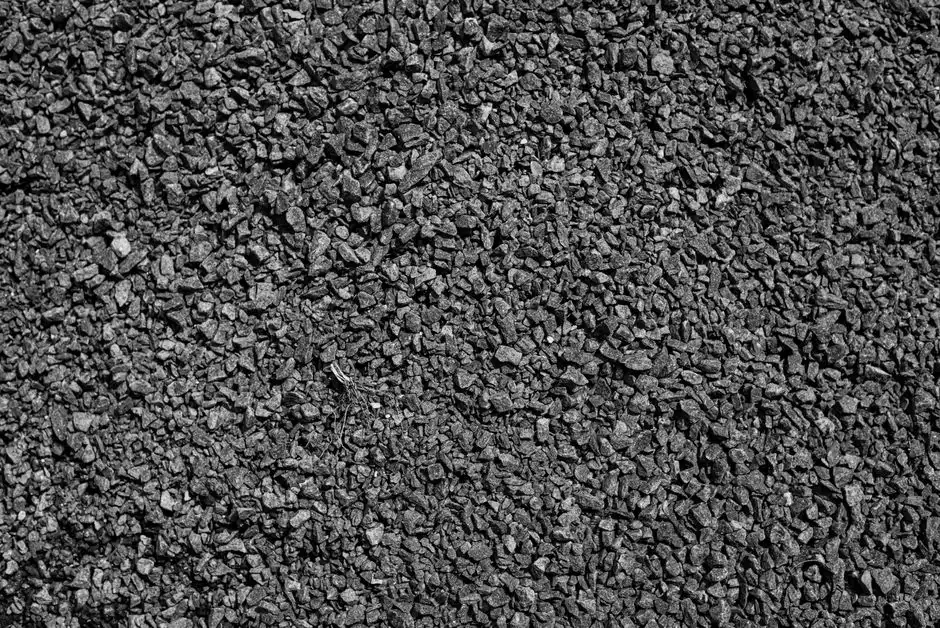
Bed life is service-driven, not calendar-driven: 1–3 years for dechlorination, 6–18 months for PFAS/VOCs/pesticides, and 2–5 years for taste-and-odor control (activatedcarbonfactory.com, 2026). The only reliable trigger for change-out is effluent monitoring for the target contaminant; calendar-based replacement either wastes media or misses breakthrough.
| Service | Typical bed life | Media price March 2026 (USD/kg) | Single-bed media cost (13,200 lb / 6 t vessel) |
|---|---|---|---|
| Dechlorination (coconut) | 1–3 yr | $4.50–6.50 | $27,000–39,000 |
| PFAS / VOC / pesticide (coal) | 6–18 mo | $3.80–5.20 | $22,800–31,200 |
| Taste & odor (wood or coal) | 2–5 yr | $4.00–5.50 | $24,000–33,000 |
For the 50 m³/h PFAS example above, coal-grade media in a single 6 t vessel runs ~$22k–$31k per change-out, and the lead-lag pair doubles the GAC on hand to roughly 12 t. Coconut prices are trending upward on Southeast Asia supply-chain pressure, so coal remains the cost-effective default for industrial polishing at this scale (activatedcarbonfactory.com, 2026).
End-of-life is a procurement and compliance gate that engineers routinely under-plan. Spent GAC from industrial service must be tested under 40 CFR 261 for toxicity, ignitability, corrosivity, and reactivity before disposal classification (WQA, 2016). Non-hazardous spent media can go to an industrial landfill; hazardous media must go to a permitted treatment, storage, and disposal facility (TSDF). Reactivation in a high-temperature furnace restores pore structure and runs at 40–60% of virgin carbon price, but is only economic above roughly 10 t/yr of spent media, and reactivated carbon is disposal-only — it cannot be reused in potable service (WQA, 2016). For a related reject-stream duty, see RO reject polishing with GAC.
Frequently asked questions
What EBCT is required for PFAS removal on GAC?
10–20 minutes of EBCT for PFOA/PFOS, with bituminous coal-based 12×40 mesh as the default media. Short-chain PFAS (PFBS, PFHxS) are harder to adsorb and may need longer contact times or a GAC + ion-exchange hybrid polishing step (activatedcarbonfactory.com, 2026).
What mesh size should I specify for an industrial GAC vessel?
12×40 (~1 mm) for general industrial and PFAS duty — it gives twice the reaction rate of 8×30. Use 8×30 (~2 mm) only on deep municipal beds where backwash efficiency and low head loss dominate the design. 20×50 is reserved for cartridges (WQA, 2016).
How do I size a GAC filter for chloramine rather than free chlorine?
Size the vessel for roughly 4× the EBCT of a free-chlorine duty, or about 5 minutes with catalytic carbon. Free chlorine dechlorination is fast (30–40 seconds EBCT), but chloramine deactivation needs the longer contact plus the catalytic carbon grade to break the N–Cl bond (WQA, 2016).
What backwash rate and bed expansion should I design for?
8–12 gpm/ft² backwash rate producing 20–30% bed expansion for 12×40 coal-based GAC, with 40–50% freeboard above the bed to accommodate the expansion plus margin (WQA, 2016). Below 8 gpm/ft² the bed will not fluidize; above 12 gpm/ft² media will be lost.
Is spent GAC from industrial service hazardous waste?
Not automatically — it must be tested under 40 CFR 261 for toxicity, ignitability, corrosivity, and reactivity. Spent media from potable service is typically non-hazardous; industrial waste streams with known hazardous contaminants frequently classify as hazardous and must go to a permitted TSDF (WQA, 2016).
Related Equipment
- bulk GAC and FRP pressure vessels — specifications, capacity range, and technical data
- multi-media pretreatment filter — specifications, capacity range, and technical data