Why a German Pharma Acquisition Is a Wastewater Event, Not Just a Real-Estate One
When AstraZeneca signs an SPA for a German manufacturing site, the deal team is usually focused on FTC review, transfer pricing, and IP — but closing also restarts a German wastewater compliance clock that cannot be paused. The Wasserhaushaltsgesetz (WHG) requires a new indirect-discharge permit under §16 within 3 months of any operator change, the Abwasserverordnung's Anhang 22 sets the binding pharmaceutical effluent limits (AOX ≤1 mg/L, mercury ≤0.05 mg/L, plus COD and antibiotic trace thresholds), and the EU Industrial Emissions Directive 2010/75/EU plus BImSchG trigger BAT-AEL review if capacity exceeds the 5 t/day API threshold defined in IED Annex I. Asset deals restart the permit clock from zero; share deals inherit the existing permit but still require a Landesbehörde notification. From FY2026, CSRD ESRS E2 reporting applies to in-scope groups, which means undisclosed wastewater liabilities move from a balance-sheet footnote into an audited sustainability disclosure. Nina Andrén, Head of AstraZeneca's Södertälje campus, has already set the internal baseline: AstraZeneca is "committed to constantly explore and improve our sustainable ways of working, including waste management of active pharmaceutical ingredients" (per Leading Cities / Pharem Biotech, 2022). A buyer that closes without a wastewater workstream in the integration plan will be reconciling that posture against an enforcement file within 12 months.
The German Wastewater Legal Stack That Triggers on Closing Day
Five overlapping instruments activate the moment a plant changes hands, and each one carries its own notification window, authority, and document set.
WHG §16 — operator-level permit. Both direct discharge into a Gewässer and indirect discharge into a public Klärwerk require a permit. An acquisition changes the Inhaber, and the new operator must file a permit transfer or fresh application — typically within 3 months of closing — through the competent Landesbehörde (usually the Untere Wasserbehörde at the Landkreis level).
Abwasserverordnung (AbwV) Anhang 22 — pharmaceutical effluent. Anhang 22 is the binding parameter set for Herstellung von Arzneimitteln und Pflanzenschutzmitteln. Heavy-metal ceilings, AOX, COD/TOC, hydrocarbon index, sulphide, and antibiotic trace loads are all set here. Where the receiving Klärwerk contract is stricter — almost always the case for indirect discharge into a biological plant — the municipal Einleitungsgrenzen govern.
AwSV — solvent and acid/alkali storage. Bulk solvent, acid, and alkali tanks on a pharma site trigger the Verordnung über Anlagen zum Umgang mit wassergefährdenden Stoffen. Each tank farm has to be reclassified into Wassergefährdungsklassen (WGK 1–3) and the secondary-containment sizing recalculated for the new operator's name on the Anlagenverzeichnis.
EU IED Chapter IV / BImSchG — capacity-based BAT-AEL review. If the plant manufactures more than 5 t/day of API, the operator must apply BAT-AELs derived from the Common Waste Water and Waste Gas Treatment/Management Systems in the Chemical Sector BREF and, for formulation, the BREF OFC (Organic Fine Chemicals). The German BImSchG translates the IED into national law; a Genehmigungsverfahren including UVP-Vorprüfung is triggered if the IED threshold is crossed for the first time under the new operator.
CSRD/ESRS E2 — disclosure. From the 2026 reporting year, discharged pollutant loads, treatment capacity, and water-stewardship KPIs move into AstraZeneca's audited ESRS E2 filing. A plant-level water/wastewater audit becomes the data source for a group-level disclosure paragraph, not an internal memo.
BBodSchG / LAGA M20 — soil and groundwater baseline. The Bundes-Bodenschutzgesetz and LAGA M20 are routinely invoked by the Landesbehörde during a permit transfer to establish a baseline soil and groundwater status, locking in the new operator's liability for any historical contamination that surfaces later.
AbwV Anhang 22 Effluent Limits: The Numbers That Drive Equipment Sizing
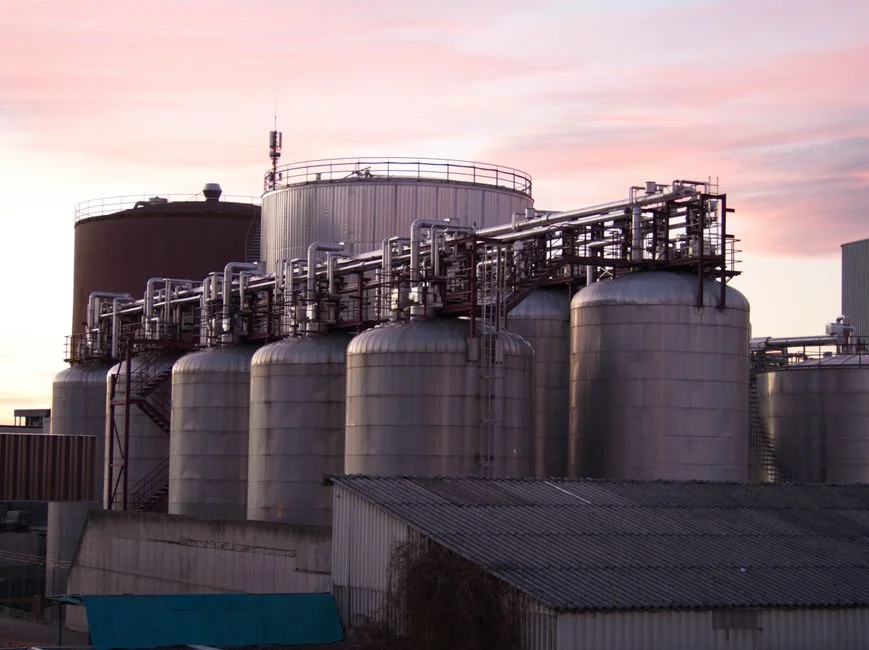
The Anhang 22 limit set is what the polishing train must hit on a 2-hour-mix sample at the discharge sampling point. The table below consolidates the binding parameters a process engineer needs to size the train; verify the current 2-hour-mix values against the official AbwV text and any stricter municipal Klärwerk contract before committing capex.
| Parameter | Daily-Mix Limit | 2-Hour-Mix Limit | Measurement Method | Source (AbwV Anhang 22) |
|---|---|---|---|---|
| AOX (adsorbable organic halides) | 1 mg/L | — | DIN EN ISO 9562 | Part 4 |
| Mercury (Hg) | 0.05 mg/L | — | DIN EN ISO 12846 | Part 4 |
| Cadmium (Cd) | 0.2 mg/L | — | DIN EN ISO 11885 / ISO 17294-2 | Part 4 |
| Chromium, total (Cr) | 0.5 mg/L | — | DIN EN ISO 11885 | Part 4 |
| Copper (Cu) | 0.5 mg/L | — | DIN EN ISO 11885 | Part 4 |
| Nickel (Ni) | 0.5 mg/L | — | DIN EN ISO 11885 | Part 4 |
| Lead (Pb) | 0.5 mg/L | — | DIN EN ISO 11885 | Part 4 |
| Zinc (Zn) | 2 mg/L | — | DIN EN ISO 11885 | Part 4 |
| COD | — | (site-specific, per permit) | DIN 38409-41 | Part 4 |
| TOC | 25 mg/L (typical indirect-discharge benchmark) | — | DIN EN 1484 | Part 4 |
| Total nitrogen (N) | 50 mg/L (typical Kläranker) | — | DIN EN 12260 | Part 4 |
| Total phosphorus (P) | 2 mg/L (typical Kläranker) | — | DIN EN ISO 6878 | Part 4 |
| Sulphide (S²⁻) | 1 mg/L | — | DIN 38405-26 | Part 4 |
| Hydrocarbon index | 5 mg/L | — | DIN EN ISO 9377-2 | Part 4 |
| Antibiotic activity (sum) | (UBA watchlist, tightening 2025–2026) | — | Whole-cell biosensor / LC-MS | UBA / EU Pharma Strategy |
For an indirect-discharge site, the municipal Klärwerk contract typically wins because the receiving plant's sludge biology is the protection target — the operator must not push AOX, heavy metals, or antibiotic activity past the level the biological stage can absorb without upset. Antibiotic trace limits are still moving: the German UBA and the EU Pharma Strategy are tightening thresholds through 2025–2026, so any design needs headroom. As a benchmark, the Pharem Zymatic polish stage paired with an existing plant train has demonstrated up to 95% pharmaceutical-compound reduction in the Södertälje pilot (per Pharem Biotech / Leading Cities 2022 disclosure) — that figure is the design point an advanced polish train should be quoted against.
Permit Transfer vs New Permit: The Decision Tree That Drives the Capex Timeline
The SPA structure dictates the regulatory path, and the path dictates when capex has to be committed.
- Asset deal (Einzelrechtsnachfolge). The seller's permits lapse on closing. AstraZeneca GmbH must file a fresh indirect-discharge application under WHG §16 and, if the plant crosses the 5 t/day IED API threshold for the first time, a BImSchG Genehmigungsverfahren. Expect a 6–12 month lead time before a final permit is issued; a bridging operation under WHG §17 is possible if the new operator can demonstrate continuity of treatment performance during the review window.
- Share deal. The permits remain valid because the legal entity holding them does not change. The Landesbehörde must be notified within the window defined by the respective Landeswassergesetz; the BImSchG/BImSchV compliance continues uninterrupted. Capex timing is driven by the asset condition, not by the regulator's clock.
- Threshold check. If the post-acquisition production plan pushes API output past 5 t/day for the first time, the new operator triggers a BImSchG Genehmigungsverfahren including UVP review, regardless of which deal type was used to acquire the entity.
CSRD ESRS E2 captures the plant's wastewater KPIs in both cases. A baseline water/wastewater audit within 90 days of close is the cheapest insurance against a disclosure gap. The same asset-vs-share-deal pattern drives a US acquisition, and the engineering logic is comparable — see the Roche Arizona acquisition compliance guide for a US-jurisdiction comparison.
Designing the Treatment Train: From Equalisation to Pharmaceutical-Compound Polish
The reference train for an indirect-discharge pharma plant in Germany runs equalisation → primary solids/FOG removal → biological → membrane or tertiary solids separation → advanced polish for residual APIs and AOX → disinfection. The numbers that justify the configuration are footprint, effluent API floor, and the receiving Klärwerk's tolerance.
- Rotary bar screen and flow-equalised buffer with pH control. Protects downstream biology from slug loads and acid/alkali peaks; a 24-hour equalisation volume is typical for batch-driven API plants.
- DAF or lamella clarifier upstream of biology. DAF for suspended solids and FOG removal upstream of the biological stage pulls out biomass debris, metal-hydroxide co-precipitates, and oils that would otherwise load the biological stage.
- Anoxic/aerobic biological stage, MBR preferred. The MBR bioreactor for the main biological step delivers <1 μm TSS, near-reuse-quality effluent, and a roughly 60% smaller footprint than conventional activated sludge (HydropureWater field data, 2026) — the deciding factor on a constrained German site. For a head-to-head view, see the MBR vs conventional activated sludge for chemicals wastewater benchmark.
- Biological polish for organic micropollutants. The Södertälje pilot paired Pharem Biotech's Zymatic enzyme stage between the MBR and the activated-carbon stage to strip residual APIs — described in the source disclosure as a polish on top of an existing plant train, not a replacement for the main biological step.
- Activated carbon or AOP. GAC alone is the baseline; for the tightest API polishing, an AOP (O₃/H₂O₂ or UV/H₂O₂) follows the carbon stage. The trade-off is CAPEX and consumables — AOP reactors and carbon contactor volume are the cost drivers.
- Disinfection. ClO₂ disinfection for indirect-discharge effluent or a UV polish before sewer discharge closes the train. UV is preferred where AOX formation has to be minimised.
Discharge to the public sewer terminates the in-plant scope. Direct discharge to a Gewässer under WHG §57 requires a substantially tighter polish and is rare for indirect pharmaceutical effluent; if a buyer's diligence turns up an existing §57 permit, that is a material capex item on its own.
90-Day Post-Close Action Plan and Indicative Capex Range
The 90-day window is where most integration plans either build the wastewater workstream or quietly let it drift into a year-two finding.
- Days 0–30. File the WHG §16 operator change notification with the Landesbehörde; if the IED threshold is crossed, kick off the BImSchG notification. Commission a baseline water and wastewater audit covering flow, load, and current effluent quality. Open the Klärwerk coordination on revised Einleitungsgrenzen.
- Days 31–60. Run a gap analysis against AbwV Anhang 22 and the municipal Klärwerk contract. Produce a conceptual treatment-train redesign with BAT-AEL benchmark for any direct-discharge stream. Lock down the CSRD ESRS E2 baseline data sources at plant level.
- Days 61–90. Issue vendor RFQs for the polishing train (DAF, MBR, AOP, GAC), assemble an engineering budget, and finalise the ESRS E2 baseline dataset. Stand up a performance-based O&M contract for the polishing train to align operating risk with the new operator's compliance exposure.
Indicative capex range for the polishing train: mid-five-figures to low-seven-figures EUR per 1,000 m³/d of polishing capacity, depending on inlet API load, target Anhang 22 margin, and whether the discharge route is sewer or surface water. That band excludes building works and is dominated by membrane area, AOP reactor sizing, and activated-carbon contactor volume — a vendor quote will move it by ±25% on either side of the midpoint.
Frequently Asked Questions
How long does a WHG §16 indirect-discharge permit take after an AstraZeneca asset deal in Germany?
Expect 6–12 months from filing to a final permit, with a bridging operation under WHG §17 typically allowed while the Landesbehörde reviews the application; the §16 filing itself is due within 3 months of closing (per WHG §16).
Does CSRD ESRS E2 capture wastewater KPIs at the plant level or only at group level?
From FY2026, ESRS E2 requires group-level disclosure of water and pollutant loads, but the underlying data must be plant-level and audit-traceable; a 90-day post-close baseline audit is the standard way to seed that dataset.
What is the IED API threshold that triggers a BImSchG Genehmigungsverfahren?
More than 5 t/day of API manufacturing capacity, per IED Annex I and the German BImSchG; crossing the threshold for the first time under a new operator restarts the BImSchG notification and UVP review, even in a share deal.
Is asset deal or share deal more common for wastewater capex exposure at AstraZeneca?
Asset deals are less common but more capex-intensive because the indirect-discharge permit resets; share deals are administratively lighter but still trigger a Landesbehörde notification and a CSRD ESRS E2 baseline. The Roche Arizona acquisition compliance guide walks through the same pattern in a US context.