The Day the Deal Closes: Why Arizona Wastewater Compliance Is Not a Back-Office Item
When Ford acquires a plant in Arizona, the deal triggers four parallel wastewater compliance tracks: re-issuance of the Aquifer Protection Permit (APP) with ADEQ, transfer or new issuance of an AZPDES industrial stormwater permit, review under any local industrial pretreatment ordinance, and a Class V underground injection well inventory. Arizona's March 2025 direct potable reuse rules, which require continuous 15-minute water quality reporting and routine ADEQ facility inspections, raise the operational bar for every industrial discharger hydraulically connected to a municipal reuse system (Cronkite News, 2025-05).
The risk is sequencing, not paperwork. A.R.S. Title 49 Chapter 2 and ADEQ's APP rules treat a new owner as a new discharger, which means the seller's permit does not transfer on the asset purchase agreement. Ford inherits the obligation, but not the legal authority to discharge under the existing permit number, until ADEQ re-issues the APP. The 30- to 90-day gap between signing and operation is the planning window where the EHS, facilities, and compliance leads at Ford, or its Tier-1 supplier or M&A advisor, have to line up four regulatory tracks at once.
Forward-looking pressure is real and rising. Scottsdale targets direct potable reuse by 2029 with roughly 85% recovery at its Water Campus Advanced Water Treatment Plant, Phoenix plans its first direct potable reuse at Cave Creek by 2030, and Tucson targets 2031 (Cronkite News, 2025-05). Those timelines mean ADEQ pretreatment and discharge scrutiny at industrial contributors is already tightening, and the deal team that treats wastewater as a back-office item will be the team that gets a Notice of Violation in the first post-close quarter.
The Four Arizona Wastewater Permits That Re-Open at Acquisition
An asset purchase in Arizona re-opens four parallel permit files. None of them transfer automatically to the buyer. Each one has its own trigger, filing deadline, and ADEQ or POTW owner, and missing any of them is a self-inflicted NOV.
- Aquifer Protection Permit (APP) — A.R.S. Title 49 Ch. 2. ADEQ re-issuance is required for any new owner. The seller cannot assign the APP under an asset purchase; Ford, or the acquiring entity, must submit a permit transfer or new application within the window ADEQ specifies in its change-of-ownership guidance, typically before the first discharge under new ownership.
- AZPDES industrial stormwater permit (multi-sector general permit for SIC 3711 automotive manufacturing). A new operator must submit a Notice of Intent (NOI) under the new operator's name within the deadline in A.A.C. R18-9-A901 et seq. Coverage under the seller's NOI does not survive the deal.
- Local industrial pretreatment / sewer use ordinance. If the plant discharges to a municipal POTW (Phoenix Water Services, Tucson Water, Scottsdale Water, Glendale, Tempe, Mesa, Chandler), Ford must notify the POTW pretreatment coordinator, re-sign the industrial user permit or control authority paperwork, and re-baseline discharge characteristics against the local limits. The local limits are stricter than, and additive to, the APP conditions.
- Underground Injection Well (UIC) Class V inventory. Legacy floor drains, wash-bay trench drains, cooling-tower blowdown, and stormwater dry wells at older Arizona auto plants often route to on-site dry wells. EPA's Class V rule and ADEQ's UIC program require inventory and, in many cases, closure-and-replacement before any new discharge authority is granted.
If Ford is adding or modifying on-site wastewater treatment, Arizona's HB 2232 framework for on-site wastewater treatment facilities (OWWTF) general permits applies to the engineering review and the discharge authorization on the project side (per anuainternational.com, 2025). Direct potable reuse facilities are also subject to ADEQ's continuous monitoring mandate under the 2025 rules, and ADEQ is the same agency that will be inspecting Ford's industrial site, which means the same data culture now reaches the industrial discharge side.
Arizona Industrial Discharge Parameters the New Owner Must Baseline
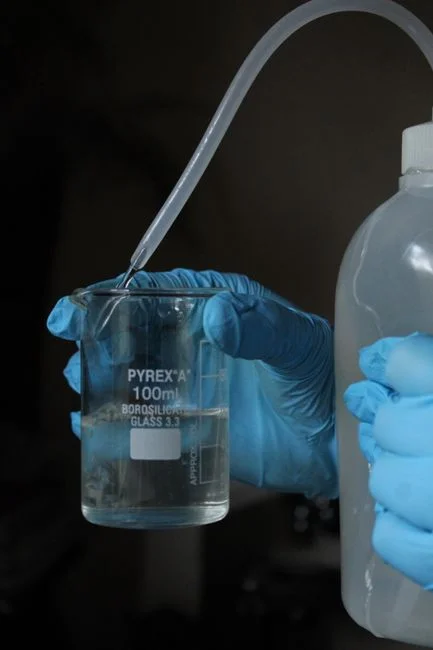
Arizona does not publish a single statewide industrial discharge limit table. Numeric criteria live in two places: the site-specific APP issued by ADEQ, and the local POTW's sewer use ordinance. A new owner has to baseline against both at the same time, because a discharge that passes APP criteria can still violate Phoenix or Tucson local limits on metals, and vice versa.
The parameter set for a stamping, paint, machining, and assembly site will typically include pH, total suspended solids (TSS), biochemical oxygen demand (BOD), chemical oxygen demand (COD), oil and grease, total petroleum hydrocarbons, total metals with a focus on zinc, nickel, lead, and copper from stamping and e-coat operations, total phosphorus from coating and pretreatment lines, hexavalent chromium where it survives legacy operations, and cyanide from some heat-treat processes. Flow, temperature, and any priority pollutants listed in 40 CFR Part 122 Appendix D are also part of the standard suite.
| Parameter | Typical source at an auto plant | Where the limit lives |
|---|---|---|
| pH | Stamping, cleaning, paint line | APP + local sewer use ordinance (typically 6.0-9.0 s.u. band) |
| Oil & grease / TPH | Machining coolants, parts washers, floor drains | POTW local limit (commonly 100-200 mg/L cap) |
| Total metals (Zn, Ni, Pb, Cu) | Stamping, e-coat, plating, paint sludge | Site-specific APP + POTW local limits (Zn and Ni are the usual pretreatment triggers) |
| TSS / BOD / COD | Paint booth water, general process | APP discharge criteria + POTW surcharge thresholds |
| Total phosphorus | Coating, pretreatment, boiler blowdown | POTW local limit, especially in Phoenix and Scottsdale service areas |
ADEQ surface-water quality standards apply if there is any direct or indirect discharge to waters of the state; POTW local limits apply to anything routed to a sanitary sewer. The two are not interchangeable. The 2025 direct potable reuse rules have set 15-minute continuous monitoring as the new operational benchmark at reuse facilities (Cronkite News, 2025-05), and industrial pretreatment coordinators are increasingly expecting the same data cadence from significant industrial users as part of routine compliance reviews.
Due-Diligence Sampling: What to Pull Before the Letter of Intent
Most acquisition-driven NOV exposure comes from sampling that the deal team did not run, not from a permit the deal team forgot to file. The M&A team should hand the sampling contractor a four-part scope before the Letter of Intent, so results land in the environmental reps and warranties schedule.
- Document pull. The most recent two years of Discharge Monitoring Reports (DMRs) for the APP and AZPDES stormwater permit, every Notice of Violation or Notice of Intent to Deny from ADEQ, all POTW discharge reports and any NOV from the local pretreatment coordinator, and the existing UIC inventory or closure documentation.
- 30-day composite sampling on every outfall. Wastewater, stormwater, and process water, run as 30-day composites against the full APP + POTW parameter suite. A single grab is not enough; metals and TPH routinely fluctuate with batch operations in paint and stamping shops.
- Physical inspection of legacy infrastructure. Floor drains, oil-water separators, paint-shop booths and their water curtains, wash-bay trench drains, and any dry wells. Dry wells in older Arizona auto plants are a common surprise, and a Class V closure obligation is a balance-sheet item the seller will want to negotiate.
- Municipal reuse service area check. Confirm whether the plant sits inside a direct potable reuse service area (Scottsdale 2029, Phoenix Cave Creek 2030, Tucson 2031). If it does, the 2025 monitoring posture and the heightened ADEQ inspection cadence will apply to the industrial pretreatment file as well (Cronkite News, 2025-05).
How Arizona's 2025 Direct Potable Reuse Rules Change the Compliance Bar
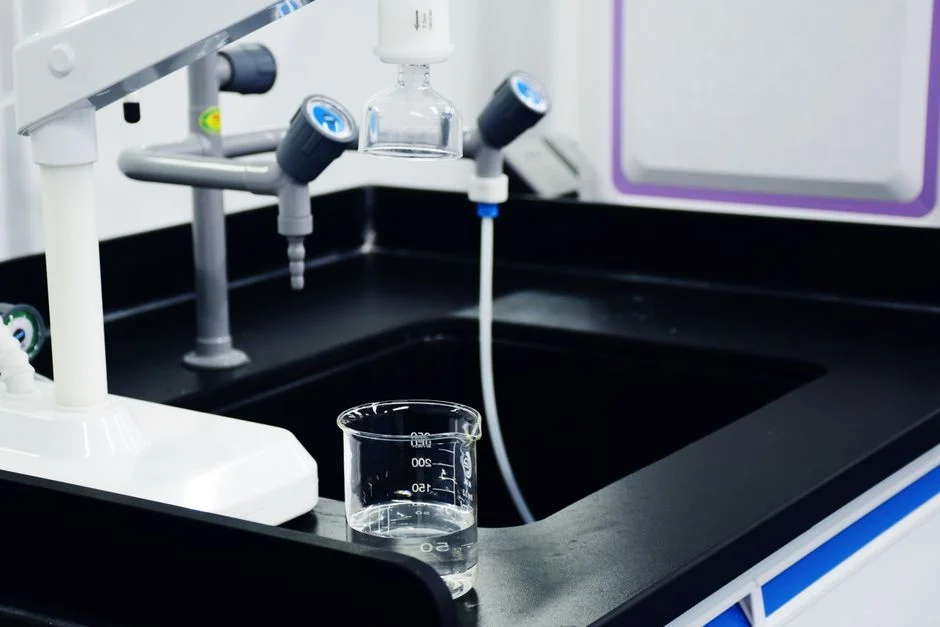
ADEQ's March 2025 direct potable reuse rules let municipalities route ultrafiltration, reverse osmosis, UV, and advanced oxidation effluent directly to customers, but only if the facility runs continuous 15-minute water quality reporting and submits the data to ADEQ (Cronkite News, 2025-05). That is a much tighter operating standard than the monthly DMR cadence most industrial sites run under today.
For Ford, the leverage point is the POTW. When ADEQ inspects a direct potable reuse plant and traces the source water back to a sewer shed, the agency will look at every significant industrial user in that shed with the same data discipline. Phoenix, Tucson, and Scottsdale pretreatment coordinators are already tightening local limits and shortening the response window on slug-control plans. The 85% recovery rate Scottsdale is targeting, plus the 2029 / 2030 / 2031 city timelines, are forward demand signals, not a separate story from industrial compliance; they are the same ADEQ water-quality file.
Advanced purified water (ADEQ 2025 definition): wastewater that has undergone ultrafiltration, reverse osmosis, ultraviolet disinfection, and advanced oxidation, and that meets ADEQ's continuous 15-minute water quality reporting and facility inspection requirements under the March 2025 direct potable reuse rules (Cronkite News, 2025-05).
Equipment Reality Check: What Treatment Train Ford's Arizona Site Will Likely Need
The treatment train for a typical Arizona auto acquisition is upstream-heavy, not reuse-heavy. Almost every site needs a DAF system for oil and grease removal on the combined stamping, machining, and wash water stream before the water sees a sewer or a biological step. FOG and emulsified oils are the most common reason legacy plants fail their first post-close POTW sampling round.
For COD and BOD reduction ahead of either a sewer discharge or a reuse polishing step, an MBR system for COD/BOD polishing is the standard answer at this flow range: it produces a low-suspended-solids effluent that downstream reuse equipment can tolerate, and it tolerates the variable loading that comes with batch paint-shop operations. If the plant is targeting internal reuse or is feeding a municipal reuse system, an industrial RO polishing train is the right next step, but only after the upstream biology is stable; otherwise the RO membranes foul fast and the lifecycle cost is brutal.
For the solids side, a plate-and-frame filter press is the default at this scale, sized to drop the sludge cake to roughly 25-35% dry solids so landfill volume and haul cost stay manageable. RO concentrate and DAF skimmings should be routed to a dedicated sludge handling area, not back into the head of the plant.
The 60-Day Countdown to Close: Compliance Action Sequence

Run this sequence as a single project plan, not four parallel to-do lists. The permits, the lab, the contractor, and ADEQ all have to converge in the same two-week window before close.
| Window | Action | Owner |
|---|---|---|
| Days -90 to -45 | Site visit, two-year DMR and NOV pull, sampling plan, identify APP and AZPDES permit numbers, confirm UIC inventory status | EHS / M&A advisor |
| Days -45 to -15 | File APP modification intent with ADEQ, contact POTW pretreatment coordinator, lock in accredited lab schedule, draft sampling and analysis plan | Compliance lead + lab |
| Days -15 to 0 | Submit AZPDES NOI under new operator name, submit pretreatment baseline report to POTW, document Class V UIC inventory, close any seller-side legacy dry wells identified in due diligence | EHS + environmental counsel |
| Days 0 to +30 | ADEQ acknowledgment letter, address any technical corrections, on-site compliance audit against 2025 monitoring posture, confirm SCADA / data logging on every continuous parameter | Plant EHS + corporate compliance |
| Days +30 to +90 | First full DMR cycle under new operator, close out all corrective actions from the on-site audit, update site-specific APP and pretreatment files with the final parameter set | Plant EHS + corporate compliance |
Frequently Asked Questions
Does an Arizona Aquifer Protection Permit transfer automatically when Ford buys a plant?
No. Under A.R.S. Title 49 Chapter 2 and ADEQ's APP rules, the buyer is a new discharger. The seller's APP does not assign through an asset purchase agreement; Ford must submit an APP transfer or new application before the first discharge under new ownership.
How do the March 2025 direct potable reuse rules affect an industrial site, not a reuse plant?
ADEQ now requires continuous 15-minute water quality reporting and routine facility inspections at advanced purified water facilities (Cronkite News, 2025-05). That same data and inspection discipline flows downhill to significant industrial users in the same sewer shed, so pretreatment baseline reporting and monitoring cadence at Ford's site will be scrutinized against the new reuse-era benchmark.
Which Arizona cities are the first movers on direct potable reuse, and when?
Scottsdale targets direct potable reuse at its Water Campus by 2029 with roughly 85% recovery, Phoenix plans its first direct potable reuse at the Cave Creek water reclamation plant by 2030, and Tucson is targeting 2031 (Cronkite News, 2025-05). Industrial sites inside those service areas should expect tighter POTW local limits in the run-up to those dates.
What due-diligence sampling should the deal team run before signing?
At minimum: two years of DMRs and any ADEQ or POTW NOV correspondence from the seller, 30-day composite sampling on every outfall against the full APP plus POTW parameter suite, a physical inspection of floor drains and any dry wells for Class V UIC exposure, and a check on whether the plant sits inside a direct potable reuse service area.