
Why a Ford Hungary Deal Runs on EU Permit Logic, Not U.S. NPDES
Under EU Industrial Emissions Directive 2010/75/EU and Hungarian Government Decree 118/2023 (XII. 12.) on integrated pollution prevention and control (IPPC), the wastewater permit is granted to the installation, not the legal entity — so on a Ford share deal, the IPPC permit passes to the buyer's Hungarian SPV without a fresh proceeding, provided the activity, throughput, and BAT-AEL compliance basis remain unchanged and the county government office (megyei kormányhivatal) is notified within 30 days. BAT-AELs (Best Available Techniques Associated Emission Levels) are the ranges published in BAT Reference Documents (BREFs) that member states transpose into individual permit conditions; for paint-shop and metal-finishing operations, the binding document is the Surface Treatment of Metals and Plastics BREF, which sets Cu, Cr, and Ni in the 0.05–0.5 mg/L band.
A U.S.-trained deal team will instinctively budget against 40 CFR 433 Metal Finishing PSNS, where Cu is 3.38 mg/L, Cr is 4.95 mg/L, and Ni is 3.98 mg/L as monthly averages (per EPA 40 CFR chapter I, subchapter N, Parts 405–471; EPA implements PSES/PSNS for 35 of 58 industrial categories as of 2025). That mental model is wrong for Hungary. The Bryan County, Georgia consent order against HMGMA, signed 2025-04-25 for a $30,000 fine on 143 days of unpermitted discharge against a $7.15M statutory maximum, is a U.S. Clean Water Act and 40 CFR 433 fact pattern (thecurrentga.org, 2025-05-12) — none of those enforcement vehicles exist in Hungarian law, where the equivalent exposures are a missed Ákr. operator-change filing, a missing IED Article 22 baseline report, or a breach of the BAT-AEL-derived water permit limits. For a parallel reference on how the same regulatory stack hits a different OEM, see the Hyundai Hungary plant acquisition compliance guide.
The Five-Document Compliance Stack Ford Inherits at Closing
The compliance lead should hand M&A counsel a single list so each document is requested in the Phase II data room and tracked against the SPA signing date. On a 2026 share deal, Ford inherits the following stack, and the critical question on each line is whether it transfers automatically or triggers a re-application:
| Hungary document | Legal basis | Transfer mechanic | U.S. analogue |
|---|---|---|---|
| IPPC permit | Government Decree 118/2023 (XII. 12.); IED 2010/75/EU | Transfers with the installation; county government office operator-change notification required | NPDES individual permit (operator-tied) |
| Water permit (vízjogi engedély) | Act LVII of 1995 on Water Management; Korm. rendelet 147/2010 | Re-application required if process water flow, pollutant mix, or discharge point changes | NPDES stormwater / POTW pretreatment |
| Hazardous-waste / shipment permits | Act CLXXXV of 2012; EU Reg. 1013/2006 | Transfer with operator-change notification to environmental authority | RCRA generator ID (re-notify) |
| IED Article 22 baseline report | Decree 118/2023 Annex 4 | Mandatory pre-closing for any IPPC-permitted installation | Phase I ESA + ASTM E1903 baseline |
| Operator-change filing | Act CL of 2016 (Ákr.) | Filed within 30 days of closing; failure suspends permit validity | NPDES transfer form (~30 days) |
The IPPC permit under Government Decree 118/2023 is the spine of the stack: it runs with the installation, so on a share deal it passes to the buyer's Hungarian SPV without a fresh proceeding — provided the county government office is notified and the activity, throughput, and BAT-AEL compliance basis remain unchanged. A new permit is triggered only if BAT conclusions update or the capacity threshold is crossed. The water permit under Act LVII of 1995 is more fragile: any change to process water flow rate, pollutant mix (for example, a new e-coat chemistry or a zinc-rich primer swap typical of Ford paint-shop standardization), or discharge point triggers a re-application. In automotive paint-shop conversions at least one of those three almost always changes, so plan for a 60–90 day water permit re-issue — and for the engineering risk that hydroxide precipitation alone will not hit the BAT-AEL band. The IED Article 22 soil and groundwater baseline report per Decree 118/2023 Annex 4 is non-negotiable: it must be on file with the authority before the operator change is registered, and it defines the contamination starting point the new operator inherits.
BAT-AEL vs 40 CFR 433: The Numbers That Will Resize the Treatment Train
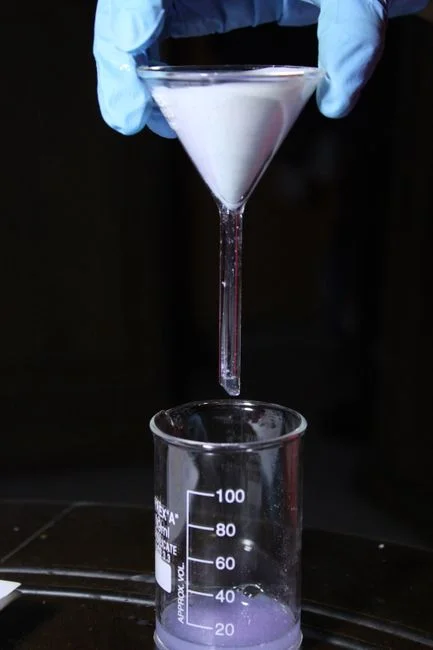
EU BAT-AELs for the Surface Treatment of Metals and Plastics BREF sit roughly 10× tighter than the U.S. categorical pretreatment standards at 40 CFR 433, and any treatment train sized for U.S. PSNS will fail Hungarian influent limits at the receiving POTW or direct discharge point. A Hungarian county authority typically writes the lower or middle of the BAT-AEL band into the discharge permit, with stricter end-of-pipe values if the receiving water body is sensitive. The standard European pretreatment train for automotive paint-shop and metal-finishing wastewater is a DAF system for paint-shop and metal-finishing wastewater for suspended-solids and emulsified oil removal, followed by PLC-controlled chemical dosing for pH adjustment and metal precipitation, then a polishing stage such as UF or RO polishing to bring Cu and Ni below 0.1 mg/L.
| Parameter | EU BAT-AEL (Surface Treatment BREF, typical range) | U.S. 40 CFR 433 PSNS Metal Finishing (monthly avg.) | Approximate EU tightening factor |
|---|---|---|---|
| Copper (Cu) | 0.05–0.5 mg/L | 3.38 mg/L | ~10× |
| Chromium (Cr, total) | 0.05–0.5 mg/L | 4.95 mg/L | ~10× |
| Nickel (Ni) | 0.05–0.5 mg/L | 3.98 mg/L | ~10× |
| Zinc (Zn) | 0.1–1.0 mg/L (sub-process dependent) | 2.61 mg/L | ~5–10× |
| pH | 6.5–9.5 | 6.0–9.0 (40 CFR 433.10) | Comparable band |
| Total suspended solids | 5–30 mg/L (sub-process dependent) | 52 mg/L (PSNS daily max) | ~2–10× |
The practical design point is this: a U.S. metal-finishing line designed around hydroxide precipitation will deliver Cu and Ni in the 1–5 mg/L range at the clarifier outlet, which is acceptable under 40 CFR 433 PSNS but will not meet a Hungarian water permit written at the lower end of the BAT-AEL band. Adding ion exchange or membrane polishing to drop Cu and Ni below 0.1 mg/L is the typical 2026 retrofit path, and the CAPEX line should be loaded before signing — not after. The U.S. 40 CFR framework is codified in 40 CFR chapter I, subchapter N, Parts 405–471 (EPA, 2025); Hungary's BAT-AEL regime is a different animal — the BREF drives the limit, not a federal effluent guideline, and the limit sits in the permit, not in a national regulation. For a cross-jurisdictional reference on a comparable U.S. deal, see the Ford Texas plant acquisition compliance guide.
Six-Document Phase II Data Room Request: What the Compliance Lead Should Ask For
The compliance lead should hand the M&A counsel and the Phase II ESA consultant the following six-document set, with a request that each item be produced in the original Hungarian plus a notarized English translation. Each row carries a red flag the deal team should watch for:
- Current IPPC permit text + all modification approvals (last 10 years). Throughput caps, BAT-AEL conditions, monitoring frequency, validity date. Flag if the permit is expiring within 12 months of closing or if conditions are stricter than current BAT conclusions.
- Self-monitoring discharge data, prior 36 months. Monthly averages vs. permit limits; exceedance history; chain-of-custody on lab data. Flag repeated Cu, Zn, or Ni exceedances, missing months, or non-accredited lab data.
- IED Article 22 / Decree 118/2023 baseline report. Soil and groundwater reference condition; sampling grid; laboratory accreditation. Flag if older than 7 years or no baseline on file.
- Hazardous-waste manifests and waste-shipment records. EWC-code classification, consignment notes, receiver permits under EU Reg. 1013/2006. Flag sludge disposed of to a non-hazardous route or missing consignment notes.
- Open enforcement actions, penalty decisions, and liability notices. Any unresolved Ákr. proceedings, environmental liability notices, or authority site-visit minutes. Flag a pending notice of violation or an overdue corrective-action plan.
- Process flow diagrams of wastewater pretreatment plus a capacity check (DAF, chemical precipitation, biological, sludge handling). Flag if no P&IDs are available, or if the DAF is undersized by more than 20% against the planned post-acquisition throughput.
The 36-month self-monitoring data set is the single most important item on this list. It tells the buyer what the site actually achieves, not what the permit allows. The baseline report is the second-most important: a missing or stale baseline will delay the operator-change notification at the county government office and, in the worst case, trigger a new Article 22 site investigation as a condition of the IPPC permit modification. For a parallel North-American frame on the same data-room logic, see the Ford Mexico plant acquisition compliance guide.
30-Day Post-Close Path: From Signing to Operator-Change Notification

Once the share purchase closes, the operator has a 30-day window to file the change-of-operator notification and lock the new compliance posture before any process change. The following sequence is the realistic 2026 path through Hungarian administrative practice:
| Day | Action | Document / authority |
|---|---|---|
| 0 (closing) | IPPC permit transfers automatically to the buyer's Hungarian SPV; water permit under Act LVII of 1995 does not. | Share purchase agreement effective date |
| 1–10 | File the operator-change notification with the county government office; attach the IED Article 22 baseline report and a current IPPC permit text. | megyei kormányhivatal; Act CL of 2016 (Ákr.) |
| 10–25 | If the paint shop is being standardized (new e-coat, zinc-rich primer, or a new discharge point), submit a water permit modification application. | Act LVII of 1995; Korm. rendelet 147/2010; expect 60–90 day review |
| 30 | Deadline under Act CL of 2016 (Ákr.); failure to file suspends IPPC permit validity and creates direct exposure to environmental liability under Hungarian law. | Act CL of 2016 (Ákr.) |
| Parallel | Re-issue hazardous-waste manifests in the new operator's name before the first post-close waste shipment leaves the site. | Act CLXXXV of 2012; EU Reg. 1013/2006 |
Hungary's environmental authority must approve the operator change before any new discharge can legally commence, and the standard administrative window is 30 days from closing under the General Administrative Procedure Act. Blow the 30-day deadline and the IPPC permit is suspended until the filing is cured, which means a stop-production risk on day 31 if the deal team is not on top of translations and notarial stamps.
Environmental Liability and the SPA: Who Eats the 0.8 mg/L Copper?
Under Hungarian environmental liability law and the IED, the operator of the installation at the time the damage is identified is typically the liable party, but contractual allocation in the SPA is decisive in practice. A pre-closing Phase II ESA and a tightly drafted environmental indemnity are the standard protections, and a current IED Article 22 baseline report is the single most useful piece of evidence in any post-close liability dispute. A site with a clean baseline limits successor liability; a site with a contaminated baseline transfers remediation duty to the buyer unless the share purchase agreement allocates it to the seller.
Worked example: if the 36-month self-monitoring average for Cu is 0.8 mg/L against a permit limit of 0.5 mg/L, the buyer is acquiring a non-compliant installation regardless of what the permit text says, and the cost of closing that gap — polishing-stage CAPEX plus a 6–12 month process upgrade — is on the buyer's side of the cap table unless the SPA carves it out. A typical protection is a specific indemnity capped at the polishing-stage CAPEX plus a Cu/Ni exceedance warranty for the trailing 36 months, with a survival period of 3 years for legacy non-compliance and 5 years for soil and groundwater matters tied to the IED Article 22 baseline. Ford's deal team should also insist on a "no new BAT-AEL tightening" representation for 24 months post-close, because a BREF revision during the integration window can move the permit limit and the CAPEX line in the same quarter.
Frequently Asked Questions
Does the IPPC permit transfer automatically on a Ford Hungary share deal, or does the buyer need a fresh proceeding?
The IPPC permit under Government Decree 118/2023 transfers with the installation on a share deal, so no fresh proceeding is required provided the activity, throughput, and BAT-AEL compliance basis remain unchanged. The buyer must file an operator-change notification with the county government office within 30 days of closing under Act CL of 2016 (Ákr.); failure to file suspends permit validity (per Decree 118/2023).
What wastewater limits will a Hungarian county authority write into a Ford paint-shop discharge permit?
Under the Surface Treatment of Metals and Plastics BREF, BAT-AELs for Cu, Cr, and Ni sit in the 0.05–0.5 mg/L band, with pH 6.5–9.5. A Hungarian county authority typically writes the lower or middle of the band into the discharge permit, and stricter end-of-pipe values apply if the receiving water body is sensitive (per IED Directive 2010/75/EU).
When does the IED Article 22 baseline report have to be on file?
Before the operator-change notification is registered, which means before the deal can close operationally. For an existing IPPC-permitted installation, the baseline report is a condition of the permit under Decree 118/2023 Annex 4; a missing or stale baseline (older than 7 years) will block the operator change and may trigger a new Article 22 site investigation.
Is the 2025 Bryan County consent order against HMGMA relevant to a Ford Hungary deal?
Only as a cautionary framing device. The 2025-04-25 Georgia EPD consent order covers U.S. Clean Water Act and 40 CFR 433 issues — missing pretreatment permit, copper and zinc exceedances at the Savannah Travis Field POTW, 143-day violation period. None of those enforcement vehicles exist in Hungarian law; the equivalent risks in Hungary are failure to file the operator-change notification, missing the IED Article 22 baseline report, or breaching the water permit's BAT-AEL-derived limits (per Act CL of 2016 and Decree 118/2023).
Which hazardous-waste documents have to be re-issued in the new operator's name post-close?
Consignment notes under EU Regulation 1013/2006 and EWC-coded manifests under Act CLXXXV of 2012 must be re-issued in the new operator's name before the first post-close waste shipment leaves the site. Sludge disposed of to a non-hazardous route or missing consignment notes is a red flag in the Phase II data room.