Industrial reverse osmosis (RO) systems achieve 99%+ TDS removal and 95% recovery rates, making them ideal for ultra-pure water applications like pharmaceuticals and semiconductors. However, alternatives like ultrafiltration (90–95% TSS removal) and dissolved air flotation (DAF, 92–97% FOG removal) often outperform RO in cost and energy efficiency for high-turbidity wastewater. This guide compares 7 industrial water purification technologies across 12 parameters, including removal efficiency, energy cost ($/m³), and compliance suitability for FDA, EPA, and EU standards.
When RO Water Purification Fails: Real-World Industrial Scenarios
Operational reliability in industrial water treatment is rarely about the technology's theoretical maximum and more about its resilience to influent fluctuations. In high-stakes environments, selecting RO as a "catch-all" solution without considering specific wastewater parameters often leads to catastrophic compliance and financial failures.
A pharmaceutical manufacturing facility in Germany recently faced a €250,000 fine for exceeding the 0.1 mg/L Total Dissolved Solids (TDS) limit specified in EU GMP Annex 1. The plant relied on a multi-stage RO system that underperformed due to high silica concentrations in the influent. Silica scaling occurs when the concentration of monomeric silica exceeds its solubility limit (typically 120–150 mg/L at 25°C), leading to irreversible polymerization on the membrane surface. This scaling reduced the permeate flux by 40% and increased salt passage, rendering the system incapable of meeting ultra-pure water standards.
In the food and beverage sector, a large-scale meat processing plant in Texas attempted to use RO for direct wastewater reuse. However, the high concentration of fats, oils, and grease (FOG) led to rapid biofouling. The facility's energy costs spiked to $0.42/m³ due to the high feed pressure required to overcome membrane resistance. By switching to a DAF system for high-FOG wastewater, the plant reduced energy costs to $0.18/m³ while achieving 95% FOG removal, proving that RO is not always the most cost-effective path for high-turbidity streams.
Similarly, a semiconductor fab in Taiwan experienced particle count spikes (>0.1 μm) in their rinse water. While RO has a theoretical pore size of 0.0001 μm, the mechanical stress of frequent Clean-In-Place (CIP) cycles caused micro-tears in the polyamide layers. They integrated ultrafiltration (UF) as a dedicated barrier, leveraging the 0.01–0.1 μm pore size of UF to stabilize particle removal. For critical health applications, such as a hospital in Dubai, RO alone was deemed insufficient for Cryptosporidium control. Following WHO Guidelines for Drinking-water Quality, they implemented a hybrid RO and ozone system to ensure a 99.999% pathogen kill rate, providing the necessary redundancy for patient safety.
How RO Water Purification Works: Mechanism, Limitations, and Industrial Parameters
Reverse osmosis is a pressure-driven separation process where water is forced through a semi-permeable membrane, leaving behind dissolved ions, organics, and bacteria. The standard industrial RO membrane features a thin-film composite structure with a 0.0001 μm pore size, designed to reject particles based on both size and ionic charge.
The process flow typically involves influent entering a pre-treatment stage to lower the Silt Density Index (SDI), followed by a high-pressure pump that overcomes the osmotic pressure of the feed water. This pressure (ranging from 10 to 80 bar) pushes pure water through the membrane as permeate, while the rejected contaminants exit as a concentrated brine stream. HydropureWater’s industrial RO systems with 95% recovery rates utilize advanced membrane configurations to minimize waste and maximize throughput.
Key industrial parameters for RO performance include:
- Recovery Rate: The percentage of feed water that becomes permeate (typically 50–95% in industrial settings).
- Salt Rejection: The efficiency of the membrane in removing dissolved ions (standard industrial rates are 95–99.5%).
- Energy Consumption: Highly dependent on TDS; typically 3–10 kWh/m³ for high-salinity industrial wastewater.
Despite its precision, RO faces significant limitations. RO membrane fouling remains the primary cause of downtime, driven by silica, calcium sulfate, and organic matter. brine disposal challenges are increasing as environmental regulations tighten; 15–50% of the influent volume often becomes a waste stream that requires specialized handling. To prevent premature membrane degradation, industrial RO requires rigorous pre-treatment, including JY series multi-stage purification for surface water, antiscalant dosing, and pH adjustment (6.5–7.5) to protect the polyamide layers from chlorine and scale.
| Parameter | Industrial Standard Range | HydropureWater System Capabilities |
|---|---|---|
| Feed Water TDS Limit | < 40,000 mg/L | Up to 45,000 mg/L (Seawater Grade) |
| Operating Pressure | 150 – 1,000 psi | Variable Frequency Drive (VFD) Optimized |
| Membrane Material | Polyamide Thin-Film | High-Rejection Low-Fouling Composite |
| SDI Tolerance | < 5.0 | Integrated Pre-filtration included |
Industrial Alternatives to RO: Technologies, Mechanisms, and Use Cases
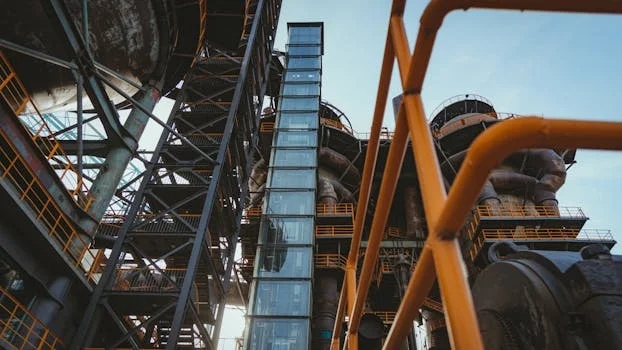
While RO is the benchmark for dissolved solids, several alternatives offer superior efficiency for specific industrial wastewater profiles. Understanding the ultrafiltration pore size and the mechanics of bubble-attachment in DAF is critical for selecting the right technology.
Ultrafiltration (UF): With a pore size of 0.01–0.1 μm, UF is the preferred technology for removing bacteria, viruses, and colloids without the high energy penalty of RO. In dairy processing, UF is used to concentrate proteins while allowing salts to pass. It operates at much lower pressures, resulting in an energy cost of 0.1–0.5 kWh/m³. For more details, see this in-depth comparison of RO and UF for industrial applications.
Dissolved Air Flotation (DAF): This technology uses DAF micro-bubble technology to lift suspended solids and FOG to the surface. According to EPA 2024 benchmarks, DAF achieves 92–97% TSS removal efficiency in meat processing and petrochemical applications. It is often a more viable alternative to RO when the goal is COD reduction in wastewater rather than TDS removal. Energy costs remain low, typically between $0.15 and $0.30/m³.
Multi-Media Filtration: Utilizing layers of anthracite, sand, and garnet, these filters remove turbidity and suspended solids down to 10 μm. They are essential for achieving an SDI < 5 for RO pre-treatment. The multi-media filter backwash cycle, occurring every 8–24 hours, ensures consistent flow but requires careful waste management. JY series multi-stage purification for surface water often incorporates these filters for robust primary treatment.
Activated Carbon: Focusing on adsorption rather than physical straining, activated carbon removes chlorine, VOCs, and organic compounds that would otherwise cause RO membrane fouling. It is a critical sacrificial layer in industrial systems, though it does not remove dissolved minerals or bacteria.
Lamella Clarifiers: These systems use inclined plates to increase the effective settling area, reducing the footprint by up to 80% compared to conventional tanks. They are ideal for TSS removal efficiency in space-constrained sites like urban hospitals or manufacturing plants. For a comparison of these settling technologies, refer to the comprehensive guide to DAF vs lamella clarifiers and sedimentation tanks.
Electrodeionization (EDI): Used as a post-RO polishing step, EDI removes remaining ions to produce ultra-pure water with resistivity exceeding 18 MΩ·cm. While it uses electricity instead of chemicals for regeneration, it requires high-quality RO permeate as feed water.
RO vs Alternatives: Side-by-Side Industrial Comparison Table
The following table provides a data-driven comparison of water purification technologies based on HydropureWater internal testing and EPA 2024 industrial benchmarks. Energy costs assume a standard rate of $0.10/kWh.
| Technology | Pore Size (μm) | TSS Removal | TDS Removal | COD Removal | Energy Cost ($/m³) | Brine Waste | Compliance |
|---|---|---|---|---|---|---|---|
| Reverse Osmosis | 0.0001 | >99% | 95–99.9% | >95% | $0.30 – $0.60 | 15–50% | FDA/EU GMP |
| Ultrafiltration | 0.01 – 0.1 | 95–99% | <5% | 30–60% | $0.05 – $0.15 | 5–10% | EPA NPDES |
| DAF | N/A (Flotation) | 92–97% | <2% | 50–85% | $0.15 – $0.30 | 3–5% (Sludge) | EPA / Local |
| Multi-Media | 10 – 20 | 85–90% | 0% | <10% | $0.02 – $0.05 | 2–5% | Pre-treatment |
| Activated Carbon | N/A (Adsorp) | <10% | 0% | 70–90% (VOC) | $0.03 – $0.08 | 0% | VOC/Chlorine |
| EDI | N/A (Ionic) | 0% | >99.9% | <5% | $0.10 – $0.25 | 5–10% | Ultra-Pure |
*Footnote: Footprint estimates assume a 100 m³/day capacity. Compliance suitability is subject to specific influent chemistry and local discharge permits.
Cost Analysis: ROI, CAPEX, and OPEX for Industrial Water Purification
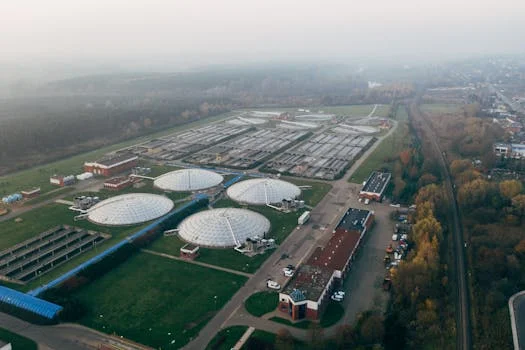
Selecting a water treatment system requires a Total Cost of Ownership (TCO) analysis. CAPEX is often higher for RO due to the high-pressure pumps and sophisticated membrane housings, but the high OPEX associated with energy cost of reverse osmosis and membrane replacement is what typically impacts the long-term ROI.
CAPEX Breakdown: Industrial RO systems typically range from $500 to $2,000 per m³/day of capacity. In contrast, DAF systems cost between $200 and $800 per m³/day. Installation generally adds another 20–30% to the equipment cost, covering piping, electrical integration, and control systems.
OPEX Breakdown:
- Energy: RO consumes 3–10 kWh/m³ ($0.30–$1.00/m³), while UF requires only 0.2–0.5 kWh/m³.
- Maintenance: RO membrane replacement costs average $0.05–$0.20/m³, whereas DAF maintenance focuses on chemical coagulants ($0.05–$0.15/m³).
- Brine Disposal: Often a hidden cost, disposing of RO concentrate can cost $0.10–$0.50/m³ depending on local environmental levies.
ROI Calculation Example: A pharmaceutical plant produces 500 m³/day of Water for Injection (WFI). By replacing outdated sand filters with a high-efficiency RO + EDI system, they achieved a CAPEX of $1.2M. However, the system eliminated €300,000/year in non-compliance fines and reduced chemical cleaning costs. The resulting payback period was 4.2 years, after which the system generated net savings through operational stability.
Selecting the Right Technology: Decision Framework for Industrial Applications
To determine the most effective technology, industrial engineers should follow a structured decision framework:
Step 1: Define Influent Parameters. Conduct a comprehensive water analysis focusing on TDS, TSS, COD, FOG, and silica. If TDS is >1,000 mg/L and high purity is required, RO is mandatory. If FOG is >500 mg/L, DAF must be the primary treatment stage to prevent downstream fouling.
Step 2: Define Effluent and Compliance Requirements. Match the technology to the required industrial water compliance standards. FDA WFI standards require <0.1 mg/L TDS, necessitating RO + EDI. For simple EPA NPDES discharge compliance (TSS <30 mg/L), UF or DAF is usually sufficient and more energy-efficient.
Step 3: Evaluate Site Constraints. Consider the available footprint and brine disposal options. An urban hospital with limited space might opt for a lamella clarifier or UF due to their compact design, whereas a remote mine site might prioritize the durability of a mobile RO trailer despite the higher energy cost.
Step 4: Calculate TCO. Use the OPEX and CAPEX data provided above to compare the 5-year cost of RO versus a DAF + UF hybrid system. In many food processing cases, the hybrid system offers a 30% lower TCO.
Step 5: Pilot Testing. Before full-scale implementation, conduct a 3–6 month pilot test at 10% of the design flow. Track removal rates, membrane flux decline, and chemical consumption to validate the ROI assumptions.
Maintenance and Failure Modes: Industrial Protocols for RO and Alternatives
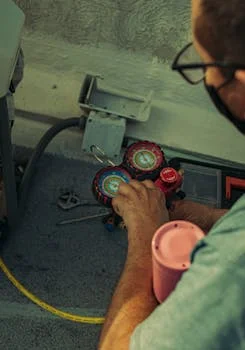
Preventative maintenance is the only way to avoid the high costs of unplanned downtime. For RO systems, operators should follow a step-by-step RO maintenance protocol for industrial operators. Daily tasks must include monitoring permeate flow, pressure drop (ΔP), and conductivity. A 15% increase in ΔP or a 10% drop in permeate flow indicates the need for an immediate CIP cycle using citric acid for inorganic scales or NaOH for organic fouling.
DAF systems require different daily protocols, specifically checking skimmer alignment and air saturation pressure. A common failure mode in DAF is air compressor failure or nozzle clogging, which reduces bubble size and leads to poor flotation. Weekly cleaning of the scum pit and monthly pump calibration are essential to maintain TSS removal efficiency.
Ultrafiltration maintenance focuses on Transmembrane Pressure (TMP). Systems should be backwashed with permeate every 30–60 minutes, with a chemically enhanced backwash (CEB) using NaOCl performed monthly. Integrity testing, such as an air pressure hold test, should be conducted quarterly to ensure no fibers have ruptured, which would compromise the microbial barrier.
Common pre-treatment failures include multi-media filter channeling, where water bypasses the media through gaps. This is fixed by ensuring backwash rates of 10–15 gpm/ft². In activated carbon systems, breakthrough occurs when the adsorption sites are saturated, requiring media replacement or steam regeneration to prevent chlorine from reaching and destroying polyamide RO membranes.
Frequently Asked Questions
Q: Is there a downside to reverse osmosis water?A: In an industrial context, the downsides include high energy consumption (3–10 kWh/m³), the requirement for intensive pre-treatment (SDI <5), and the generation of a large brine waste stream (15–50% of influent). If TDS removal is not the primary goal, technologies like UF or DAF are more cost-effective.
Q: What is the best water filter for Giardia?A: Ultrafiltration (0.01–0.1 μm) and RO (0.0001 μm) are both highly effective. UF removes 99.99% of Giardia cysts, meeting EPA LT2ESWTR requirements, while RO can achieve >99.9999% removal. Activated carbon alone is insufficient as it only achieves 30–50% removal.
Q: Does reverse osmosis remove Cryptosporidium?A: Yes. RO membranes effectively reject Cryptosporidium oocysts (which are 4–6 μm in size) due to their much smaller 0.0001 μm pore size. For high-risk industrial or medical applications, pairing RO with UV or ozone disinfection is recommended to ensure a 99.999% kill rate per WHO guidelines.
Q: RO vs 3-stage filter: Which is better for industrial wastewater?A: It depends on the target contaminants. A 3-stage filter (sediment/bacteria/GAC) is cheaper ($0.05–$0.15/m³) and removes particles down to 1 μm and chlorine. However, it cannot remove dissolved solids (TDS). For pharmaceutical or semiconductor grade water, RO is necessary; for basic wash-water reuse in food processing, a 3-stage filter may suffice.
Q: Can DAF replace RO for industrial wastewater?A: DAF can replace RO only if the goal is removing suspended solids, fats, oils, and grease. DAF cannot remove dissolved salts or minerals. In many meat processing plants, a DAF system followed by UF is used as a more efficient alternative to RO for non-potable reuse applications.