Why a 2026 Notice of Violation Is Landing at More Arkadelphia-Area Terminals
A Notice of Violation arrives citing a single hexane-extractable material (HEM) composite at 187 mg/L against a 100 mg/L daily maximum, a 30-day cure window, and a footnote that any further exceedance in the next two reporting months will escalate the event to Significant Noncompliance (SNC) under the EPA's National Pretreatment Program. That letter is arriving at more petroleum bulk plants in 2026 than at any point in the last decade, driven by three converging pressures: aging POTW infrastructure struggling with hydraulic and biosolids capacity, more aggressive EPA pretreatment audits under the 2024–2026 National Pretreatment Program review cycle, and intensifying water-reuse demand in water-stressed regions of the U.S. (HydropureWater field data, 2026).
For an Arkadelphia-area bulk plant, the receiving POTW (e.g., the Arkadelphia Wastewater Treatment Plant on the Ouachita River watershed) and ADEQ are the actual control authorities, not EPA Region 6 directly. The federal floor is the Clean Water Act §301(b)(1)(A) and EPA's General Pretreatment Regulations at 40 CFR Part 403, which delegate enforcement authority to the POTW and, by extension, the state. The community's petroleum terminals, bulk plants, and small fuel-blending operations discharge to a small municipal or county POTW whose own NPDES permit, biosolids program, and receiving-stream water-quality standards drive the local limits printed on the industrial user's discharge permit. The controlling document on an engineer's desk is therefore the receiving POTW's current Technically Based Local Limits (TBLL) study, not a generic 40 CFR excerpt.
What 'Pretreatment' Actually Means Under 40 CFR Part 403
For a US petroleum plant, "pretreatment" is a regulatory contract with the receiving POTW, not a self-imposed list of internal targets. Under 40 CFR Part 403.5(a), pretreatment standards are pollutant discharge limits applied to any industrial user (IU) that discharges to a publicly owned treatment works, and the general prohibition forbids any discharge that causes "pass-through" or "interference" at the POTW. EPA states these standards apply whether or not the POTW has an approved pretreatment program and whether or not the IU has been issued a control mechanism — there is no "silent" exemption just because the local control authority has not yet issued a permit.
Industrial User (IU) status is triggered by discharge of process wastewater to a POTW, or contribution of ≥25,000 gpd of non-domestic waste (40 CFR Part 403.3). Two definitions an engineer should be able to quote cold: pass-through (40 CFR 403.3(p)) is a discharge that exits the POTW into waters of the U.S. and causes, alone or with other sources, a violation of the POTW's NPDES permit; interference (40 CFR 403.3(k)) is a discharge that, alone or with other sources, both (1) inhibits or disrupts the POTW, its treatment processes, or its sludge use or disposal and (2) therefore is a cause of a POTW NPDES violation or a violation of the sewage-sludge use or disposal requirements under CWA §405 or RCRA.
The eight 40 CFR 403.5(b) specific prohibitions also forbid: flashpoint below 140 °F (60 °C); solid or viscous pollutants that obstruct the collection system; oxygen-demanding pollutants at slug concentrations; heat that pushes the POTW above 40 °C (104 °F); petroleum or non-biodegradable oils in amounts that cause pass-through or interference; toxic gases or vapors that threaten worker safety; and any trucked or hauled pollutant discharged at a point not designated by the POTW. Local limits are routinely more stringent than the federal categorical numbers in 40 CFR Part 419 (petroleum refining) because the POTW is protecting its own NPDES permit and its biosolids program, and a small ADEQ-delegated POTW will skew conservative.
How the POTW Turns the Federal Floor Into the Number on Your Permit

The arithmetic is the EPA's Maximum Allowable Headworks Loading (MAHL) method, executed by the POTW with ADEQ oversight. Four MAHL inputs drive every local limit a terminal sees: the POTW's own NPDES permit limits, state water-quality standards for the receiving stream, 40 CFR Part 503 numerical limits on metals and organics in biosolids, and local worker/ecosystem protection factors such as NIOSH thresholds and toxicity data. The POTW converts the MAHL into a Maximum Allowable Industrial Loading (MAIL) for each industrial user, then allocates mass against flow, and the result is the daily maximum and monthly average numbers printed on the discharge permit.
For a hypothetical Arkadelphia-area terminal — small receiving POTW, conservative MAHL, ADEQ-delegated NPDES, biosolids land-applied under Part 503 — the resulting local limits will track the conservative end of the standard 2026 bands shown below. The instruction to the reader is to obtain the TBLL document from the POTW pretreatment coordinator and reverse-check the printed permit number against it, because the document, not the salesperson's slide deck, is what an ADEQ inspector will ask for.
| Parameter | Method | Typical 2026 POTW daily maximum (bulk plant) | Refinery local-limit range (40 CFR Part 419 overlay) |
|---|---|---|---|
| HEM (Oil & Grease) | EPA Method 1664A (n-hexane, SGT-HEM) | 100–200 mg/L | 50–100 mg/L |
| Total Suspended Solids | SM 2540D | ~250 mg/L | 30–100 mg/L |
| Sulfides (total) | SM 4500-S²⁻ | 1–10 mg/L (often non-zero at refineries) | 1–10 mg/L |
| Phenols | EPA 420.1 | 0.5–5 mg/L (POTW-specific) | 0.5–5 mg/L |
| BTEX (benzene, toluene, ethylbenzene, xylene) | EPA 624 / 8260 | Often quarterly monitoring parameter | 0.1–1 mg/L (often GC/MS quarterly) |
| pH | SM 4500-H⁺ | 6.0–9.0 standard units | 6.0–9.0 |
The Four-Stage Train an Arkadelphia Bulk Plant Runs in 2026
A bulk plant pretreatment train has four stages, and the order is non-negotiable. The first stage is gravity oil removal in an API separator or corrugated-plate interceptor (CPI), which removes free oil and typically leaves 100–200 mg/L oil & grease in the water phase — this sets the floor for the emulsified load hitting Stage 2. The second stage is a dissolved air flotation (DAF) unit, which strips the emulsified oil, FOG, and colloidal TSS that the API unit cannot catch and brings oil & grease down to roughly 15–30 mg/L; a properly sized DAF system (4–300 m³/h) with 0.02–0.06 air-to-solids ratio, 15–30 min HRT, and 20–50% saturator recycle is the single stage that has to clear the 50–100 mg/L POTW oil & grease ceiling with margin, before any biological polishing is asked to clean up oil. Operating outside that band is the most common root cause of a 1.87× HEM spike ending up in a NOV.
Stage 3 is equalization and neutralization — an EQ basin sized for 8–24 hours of hydraulic retention, with pH trimmed to 6–9 before the biological stage. For a pure bulk plant, the pH swings are smaller than at a refinery, but a spent-caustic slug from a tank transition or a batch discharge can still cause an interference event; this stage is the single most important control point for preventing that. Stage 4 is biological polishing, either an MBBR (robust, tolerates 200–800 mg/L COD) or an MBR. MBR is the default for space-constrained 2026 retrofits because the MBR flat-sheet membrane module (DF series, 0.1 μm PVDF) holds biomass at 8,000–12,000 mg/L MLSS and produces a polished effluent with <5 mg/L TSS and <1 NTU turbidity, in roughly 60% of the footprint an equivalent CAS basin would need (HydropureWater product catalog, 2026).
| Stage | Unit operation | Typical inlet to stage | Typical outlet from stage | 2026 design band |
|---|---|---|---|---|
| 1 | API separator / CPI | 500–2,000 mg/L O&G (raw wastewater) | 100–200 mg/L O&G | Gravity, 30–60 min HRT |
| 2 | DAF (or IGF) | 100–200 mg/L O&G | 15–30 mg/L O&G | 0.02–0.06 A/S, 15–30 min HRT, 20–50% recycle |
| 3 | Equalization + neutralization | Variable pH, slug flows | pH 6–9, dampened flow | 8–24 hr HRT |
| 4 | MBBR or MBR polishing | 200–800 mg/L COD | <5 mg/L TSS, <1 NTU (MBR) | MBR: 0.1 μm PVDF, 8,000–12,000 mg/L MLSS |
For a deeper look at the DAF sizing decision, the DAF vs clarifier decision guide for petroleum wastewater walks through the hydraulic-loading and air-to-solids basis-of-design. For a parallel basin-specific case, see the Demopolis petroleum pretreatment 2026 guide — same regulatory stack, different receiving POTW.
Arkadelphia-Flavored Self-Monitoring and Slug Control in 2026
The minimum self-monitoring cadence most POTWs expect from a petroleum bulk plant in 2026: daily visual free-oil inspection at the outlet weir, dated and initialed; weekly TSS grab; monthly HEM composite (EPA Method 1664A, 24-hour flow-proportional where the permit specifies); and a 24-hour flow-proportional composite for BTEX/TPH where the local limit is non-zero. For a broader US context outside the Ouachita basin, the broader US petroleum pretreatment walkthrough covers the same cadence applied at refinery scale.
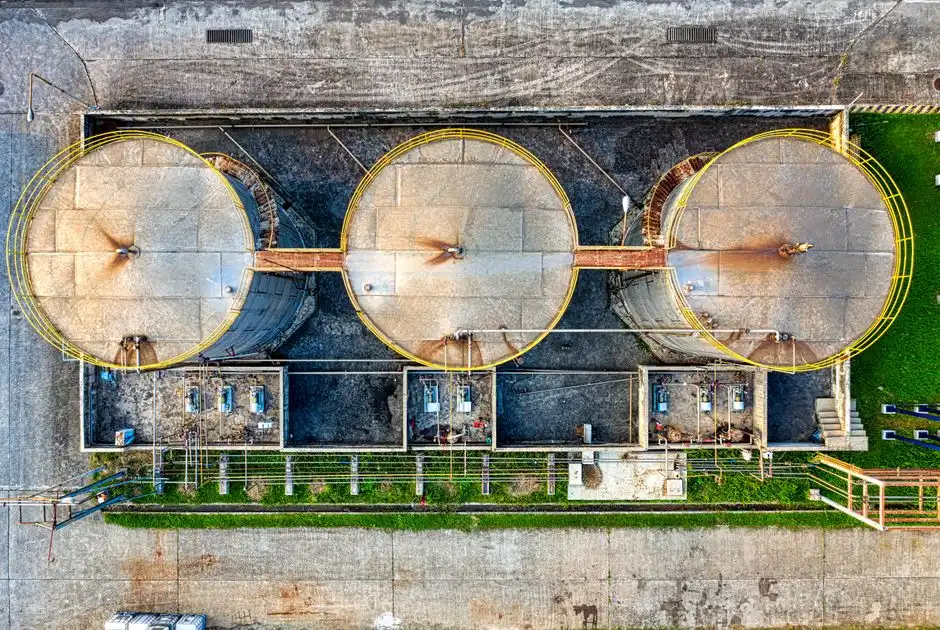
Slug control is not optional — it is the engineering defense that turns "the train was undersized" into "the train was sized correctly and the slug was contained." A slug-control plan under 40 CFR 403.8(f)(2)(v) must be written, current, and trained out, covering loading racks, tank transitions, and batch discharges; it must define what counts as a slug, what the terminal will do to contain it, and how it will notify the POTW. Any discharge that could cause interference must be reported within 24 hours. POTW pretreatment coordinators look for spill containment around all aboveground storage tanks, drip pans under truck loading arms, covered and locked dump valves on coalescers, segregated sewer laterals that keep product-handling pads out of the clean stormwater system, and visible tagging of all sample points. A written Spill Prevention and Countermeasure Plan (SPCC, 40 CFR Part 112) tied to the sewer map eliminates roughly half of common audit findings (HydropureWater field data, 2025) — treat the SPCC and the slug plan as one document in the audit file.
How SNC Actually Triggers — and the Consequence Chain to Avoid
Under EPA's National Pretreatment Program, an SNC is triggered by any of the following: violation of a numerical limit by ≥1.5× for any single day; violation of a numerical limit on more than 5% of measurement days in a six-month period; or failure to provide a required report within 30 days of the due date. A single HEM composite of 187 mg/L against a 100 mg/L ceiling is a 1.87× exceedance — already past the 1.5× single-day trigger on its own, before the second month of the cure window even closes.
The consequence chain is linear and avoidable: one late monthly report triggers a Notice of Violation; two in twelve months escalate to SNC; SNC triggers a Show Cause hearing and potential permit action, including administrative orders, surcharges, mandated zero-discharge status, or permit termination. Defensive practice: file on the 15th of every month without exception, even if the result is "estimated pending lab"; keep a pre-audit file using the EPA National Pretreatment Program audit checklist categories; and treat the reporting calendar as a permit condition. SNC is the metric ADEQ and the receiving POTW will use to grade the rest of the year — calculate it against your own data before they do.
Frequently Asked Questions
What is HEM and how is it different from TPH?
HEM (hexane-extractable material) is measured by EPA Method 1664A using n-hexane extraction with silica-gel cleanup (SGT-HEM), and is the parameter most POTW permits cite as "oil & grease." TPH (total petroleum hydrocarbons) is a broader carbon-range measurement, typically by GC/FID, and is reported separately where the local limit is non-zero (per EPA Method 1664A and EPA 8015).
Can a small bulk plant under 25,000 gpd be exempt from IU status?
No. Industrial User status is triggered either by discharge of process wastewater to a POTW or by contribution of ≥25,000 gpd of non-domestic waste, but the 40 CFR 403.5(a) general pass-through and interference prohibition applies whether or not a control mechanism has been issued (per 40 CFR 403.3 and 40 CFR 403.5(a)).
What does "pass-through" look like in practice at a small POTW?
Pass-through is when the discharge exits the POTW into waters of the U.S. and causes, alone or with other sources, a violation of the POTW's NPDES permit — for a small ADEQ-delegated POTW, that is typically a TSS or HEM excursion in the receiving stream's quarterly monitoring, or a biosolids-quality failure under 40 CFR Part 503 (per 40 CFR 403.3(p)).
How often must BTEX be sampled at a petroleum bulk plant?
Where the local limit is non-zero, BTEX is typically sampled on a 24-hour flow-proportional composite at a quarterly cadence under the SIU permit; some ADEQ-delegated POTWs require monthly monitoring if the upstream waste stream is segregated (per EPA Method 624 / 8260 and the local control mechanism).
What should I do in the first 30 days after a NOV?
Confirm the 30-day cure window in the NOV letter, pull the corresponding EPA Method 1664A chain-of-custody for review, run a slug-control plan refresher with operations, file the next monthly DMR on the 15th without exception, and request the TBLL document from the POTW pretreatment coordinator to verify the printed permit numbers (per 40 CFR Part 403 and the ADEQ-delegated local limits).