
How France Regulates Residential Wastewater in 2026
Residential wastewater treatment in France is governed by the SPANC-controlled non-collective (ANC) framework under national standard DTU 64.1, which since 2021 also references the NF EN 12566-3 product certification. A single home typically chooses between a traditional fosse septique with sand épandage, an aerobic micro-station under Ministerial Agrément, a compact coco or zeolite filter, or a packaged biological plant for clusters — with CAPEX from roughly €6,000 to €15,000+ depending on soil, capacity, and agrément status.
Two parallel tracks exist. Properties inside a zone d'assainissement collectif are connected to the municipal sewer operated by the commune, an intercommunalité, or delegated operators — SUEZ and Veolia hold the majority of these délégations de service public in 2026. Properties outside that zone fall under ANC and rely on the local SPANC (Service Public d'Assainissement Non Collectif) for both design approval and periodic compliance audits. The cutoff is set by the communal schéma d'assainissement, so a buyer must verify the zone before signing a compromis de vente. Approximately 5.3 million French dwellings sit in the ANC segment (Ministère de la Transition écologique estimate, 2024 baseline).
Two technical documents govern the equipment. DTU 64.1 is the NF-standard rules of practice for non-collective installations and dictates setbacks, ventilation, hydraulic loads, and filter-bed geometry. Since the 2021 revision, factory-built packaged plants and micro-stations must also hold NF EN 12566-3 certification — the European test protocol for treatment efficiency at 25 °C and a defined organic load. Any imported unit needs that CE-marked test report to clear SPANC review. Upstream, the EU Urban Waste Water Treatment Directive 91/271/EEC sets the discharge envelope (BOD5 ≤25 mg/L, COD ≤125 mg/L for sensitive areas) that any cluster plant must respect.
Two SPANC visits are mandatory. The contrôle de conception reviews the fil d'étude and dossier de conception before any trench is dug; the contrôle de réalisation happens on site before backfill, typically within 72 hours of SPANC being notified. After commissioning, a contrôle de bon fonctionnement is scheduled every 4 to 8 years, with a 2024 amendment tightening the cadence to a maximum of 6 years in most départements (per the Arrêté du 7 mars 2012 modifié, 2024).
The Four System Options for a French Home
French homeowners choose between four primary systems, each balancing CAPEX against footprint, electrical dependency, and SPANC predictability. In good, permeable soils with a generous plot, the traditional fosse septique + épandage is the lowest-cost legal route.
The traditional fosse septique + épandage is an anaerobic tank followed by a network of perforated pipes laid in a sand filtration bed of typically 20–30 m² for a 5-Person Equivalent (PE) home. All-electric loading is zero, but excavation spoil is the highest of the four options, often 60–100 m³, and the bed is sensitive to vehicle traffic or tree roots. CAPEX in 2026 sits in the €6,000–€9,000 band for a 5–10 EH dwelling on workable soil, per the Marseille 2026 cost guide. SPANC acceptance is high because the design follows DTU 64.1 geometry exactly.
The micro-station agréée (e.g., WPL Diamond, Clearfox, Ecoflo, Neve Topaze, Compact'O ST) is an aerobic packaged unit that combines a pretreatment stage, an aeration chamber, and a clarifier. The footprint collapses to 5–10 m² for a 5 PE unit, and most designs are installed in one day. The catch: a permanent 230 V supply is required to drive the blower, which disqualifies the technology for many second/holiday homes (per the S4 forum thread, where the rule was reported as consistently applied across SPANC offices). CAPEX for a 5–10 EH unit runs €8,000–€12,000 in 2026.
The filtre compact uses coco fibre, zeolite, or a Biorock-style fixed media as the biological substrate. Power is needed only for a small recirculation pump, and some Biorock variants operate fully passively, which broadens acceptance in intermittent-occupancy settings. Microbial recovery after long idle periods is slower than in an aerated unit, so a 4–6 week reactivation window is normal. CAPEX falls in the €7,000–€11,000 band for 5–10 EH (Marseille 2026 anchor).
The phytobac / reed bed (e.g., Aquatiris) is a plant-rooted horizontal-flow filter that performs primary treatment upstream and polishing downstream. It tolerates intermittent loading better than a coco filter and needs no permanent power, but it occupies 15–25 m², requires a helophyte species plan, and SPANC reception varies sharply between départements.
| System | Typical 5–10 EH CAPEX (€) | Footprint (m²) | Permanent power | Agrément / DTU 64.1 status | Best-fit plot |
|---|---|---|---|---|---|
| Fosse septique + épandage | 6,000 – 9,000 | 40 – 80 | No | DTU 64.1 only | Large plot, permeable soil, primary residence |
| Micro-station agréée | 8,000 – 12,000 | 5 – 10 | Yes (230 V) | Ministerial Agrément (e.g., 2015-011 ext 1–3) | Compact urban plot, primary residence, good soil OR forced discharge |
| Filtre compact (coco/zeolite/Biorock) | 7,000 – 11,000 | 8 – 15 | Sometimes (pump only) | NF EN 12566-3 + DTU 64.1 geometry | Small plot, intermittent occupancy, sensitive soil |
| Phytobac / reed bed (Aquatiris) | 9,000 – 15,000 | 15 – 25 | No | DTU 64.1; SPANC-by-SPANC | Rural, large plot, intermittent occupancy, finishing stage |
CAPEX, Footprint and Power: A Side-by-Side Comparison
Cost data fluctuates based on regional market conditions and site-specific requirements. The table below anchors each price band to the Marseille 2026 cost guide, serving as a baseline for cross-département planning.
| System | 5–10 EH CAPEX (€) | Footprint (m²) | Permanent power | Agrément | Soil / plot fit |
|---|---|---|---|---|---|
| Fosse septique + épandage | 6,000 – 9,000 | 40 – 80 | No | DTU 64.1 (no agrément) | Permeable, deep, roomy |
| Micro-station (SBR / culture fixée) | 8,000 – 12,000 | 5 – 10 | Yes (blower) | Ministerial Agrément mandatory | Any soil, any plot size, primary residence |
| Filtre compact (coco / zeolite) | 7,000 – 11,000 | 8 – 15 | Often (recirc. pump) | NF EN 12566-3 certificate | Poor soil, small plot, holiday home possible |
| Phytobac / reed bed | 9,000 – 15,000 | 15 – 25 | No | DTU 64.1 + local SPANC | Rural, large plot, polishing stage |
| Packaged A/O or MBR plant (5–20 dwellings) | 45,000 – 180,000 | 20 – 60 | Yes (blowers + pumps) | NF EN 12566-3 + CE | Cluster, gîte, small development — no municipal sewer |
The Marseille 2026 guide covers CAPEX, OPEX, and the electricity line item that determines the micro-station's 10-year total cost of ownership. Historical data from 2015 indicates that the cost relationship between compact aerobic systems and traditional sand-bed options has remained consistent through 2026.
SPANC and the Departmental Reality
Regulatory application varies by region despite a uniform national framework. A SPANC in Finistère may refuse direct discharge to any watercourse, whereas a SPANC in Ille-et-Vilaine routinely accepts it for micro-stations; inspectors in Côtes-d'Armor may apply different standards (S4 field reports). The 2024 amendment to the Arrêté du 7 mars 2012 set a 6-year maximum cadence for the contrôle de bon fonctionnement, with visit fees ranging from €80 to €250 as of 2025-08. Before any ANC purchase, the buyer should request the SPANC's règlement de service in writing and confirm: (1) which technology list they accept, (2) the maximum hydraulic load accepted per m² of filter bed, (3) the required discharge mode (infiltration, ditch, or holding), and (4) the timeline for the contrôle de conception dossier. Engaging a bureau d'études for soils testing costs €300–€600 in 2026 and is the most reliable way to avoid a refused dossier and subsequent rework. The procurement checklist is: (i) request local SPANC rules, (ii) commission a soil permeability test, (iii) shortlist two systems, (iv) submit the étude de filière before signing any installer contract.
Choosing a Packaged Plant for a Small Residential Cluster
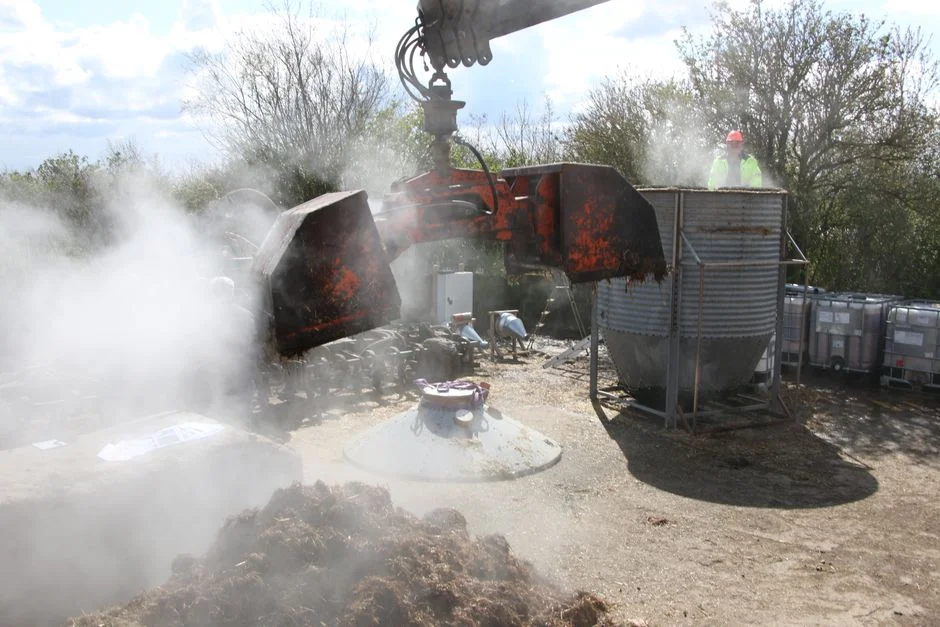
Packaged A/O or MBR units provide a solution for hamlets, gîte complexes, or rural estates where municipal connection is uneconomic. The design envelope is well defined: residential influent typically runs BOD5 200–400 mg/L, TSS 200–350 mg/L, and ammonia 20–40 mg/L; the effluent target is BOD5 ≤25 mg/L, COD ≤125 mg/L, and TSS ≤35 mg/L to align with EU Urban Waste Water Directive 91/271/EEC. Containerised or underground packaged plants can be factory-tested to NF EN 12566-3 protocols and shipped with the full CE technical file, which shortens the SPANC review timeline. For CAPEX and OPEX planning in the south of France, the 2026 wastewater treatment plant cost guide for Marseille is the regional anchor, with installed prices for a 50–100 PE A/O unit in the €45,000–€90,000 band and 10-year OPEX dominated by electricity (0.8–1.4 kWh per m³ treated) and sludge evacuation every 12–24 months. Where the receiving water is a bathing or shellfish area, a downstream disinfection stage — UV or on-site chlorine dioxide — is sometimes required to bring E. coli below 100 CFU/100 mL. The same underground packaged sewage treatment plant (A/O process) architecture that serves a single hamlet is what most importers now offer as a CE-marked skid, which is why SPANC offices increasingly accept them as a cluster alternative to a communal fosse.
Frequently Asked Questions
What is the legal split between ANC and collectif in France?
Assainissement collectif applies to properties inside a communal sewer zone, typically run by SUEZ or Veolia. Assainissement non collectif (ANC) covers every dwelling outside that zone and is controlled by the local SPANC, which enforces DTU 64.1 and, since 2021, NF EN 12566-3 for packaged equipment. The split is set by the communal schéma d'assainissement.
What does a residential wastewater system cost in France in 2026?
For a single home the typical CAPEX band
Frequently Asked Questions
Is a micro-station legal for a holiday home in France?
Yes, micro-stations are legal for holiday homes, provided they are certified under the NF EN 12566-3 standard. However, because these systems rely on aerobic biological processes that require a consistent organic load to maintain bacterial health, they are often less suitable for intermittent use than traditional sand filters or compact filters.
If a property is unoccupied for extended periods, the biological flora may die off, leading to suboptimal treatment upon your return. In such cases, SPANC (Service Public d'Assainissement Non Collectif) may recommend a system with higher resilience, such as a compact filter using coconut husk or zeolite, which handles irregular loading more effectively.
How much does residential wastewater treatment cost in France in 2026?
For 2026, the installation cost of a complete residential wastewater treatment system typically ranges between 6,000 EUR and 15,000 EUR, depending on the technology chosen and site-specific soil conditions. Compact filters generally sit at the higher end of this range, while traditional sand filters are often more affordable but require significantly larger surface areas.
In addition to installation, homeowners must budget for mandatory SPANC inspection fees, which vary by municipality, and ongoing maintenance costs. For micro-stations, annual maintenance contracts typically range from 150 EUR to 300 EUR to ensure the blower and mechanical components remain compliant with technical regulations.
What is the difference between ANC and assainissement collectif?
Assainissement collectif refers to a centralized public sewer system where wastewater is transported via a network of pipes to a municipal treatment plant. In this scenario, the homeowner is only responsible for the connection from the house to the public main, and the municipality manages the treatment process.
ANC (Assainissement Non Collectif) applies to properties that cannot be connected to the public network. In this case, the homeowner is legally responsible for the installation, operation, and maintenance of an autonomous treatment system located entirely on their private property, which must strictly comply with national health and environmental standards.
Can a non-French packaged sewage plant be approved by SPANC?
A non-French packaged sewage plant can be approved by SPANC if it holds a valid CE marking and has been tested according to the European standard NF EN 12566-3 by a notified laboratory. The manufacturer must provide a certificate of compliance that is recognized within the French regulatory framework.
Before purchasing an imported unit, you must ensure the system is included on the official list of authorized equipment published by the Ministry of Ecology. SPANC will verify this documentation during the pre-installation review; if the unit lacks the specific French technical approvals or the required CE documentation, the installation permit will be denied.
What is DTU 64.1 and does my installer need to follow it?
DTU 64.1 (Document Technique Unifié) is the official French standard that defines the technical requirements for the design, implementation, and maintenance of non-collective sanitation systems. It serves as the primary technical reference for the installation of septic tanks and associated treatment zones, such as soil infiltration or sand filters.
Yes, your installer is strictly required to follow DTU 64.1. Adherence to this standard is the baseline for SPANC approval; failing to comply with these installation norms can result in a negative inspection report, forcing the homeowner to undertake costly remedial work to bring the system up to code.