Why pharmaceutical wastewater in Singapore is a 2026 design problem
Singapore hosts more than 50 commercial-scale pharmaceutical and biologics manufacturers licensed by the Health Sciences Authority (HSA), producing mixed active pharmaceutical ingredient (API) streams that combine residual solvents, fermentation residues, and clean-in-place (CIP) chemicals. Review-level evidence published in 2024 (Jani, 2024, PEXACY Int. J. Pharm. Sci.) confirms that APIs persist through conventional biological treatment and that manufacturing effluents carry 100–1,000× the API load of municipal sewage (Birniwa et al., 2023, cited in Jani, 2024) — directly relevant because most Singapore industrial estates discharge into the public sewer that PUB operates. Conventional municipal plants do not sufficiently remove these residues (Bankole et al., 2023, cited in Jani, 2024), so the burden falls on the industrial discharger. CRC Press's 2026 review of carbon-electrode and AOP-class technologies (Taylor & Francis, 2026) confirms these tools are moving from lab to plant in 2026. Singapore's specific design driver is therefore not a generic "treat the water" problem; it is a dual compliance-and-reuse problem governed by the PUB Trade Effluent Regulation, the Sewerage and Drainage Act, and a potable water tariff of roughly SGD 2.74/m³ that makes NEWater-grade reuse financially rational rather than aspirational.
PUB trade effluent requirements pharma plants must meet in 2026
PUB frames every industrial discharger as either a controlled discharge to sewer (the more common path for plants in Tuas, Jurong, and the Jurong Innovation District) or a controlled discharge to watercourse, with the latter carrying the tighter envelope. Pharma plants typically discharge to sewer under a Trade Effluent Licence that cites the Sewerage and Drainage Act and a site-specific schedule. The headline 2026 parameters a pharma effluent must respect on a daily-proportional basis are pH 6–9, temperature ≤40 °C, total suspended solids (TSS) ≤400 mg/L for sewer discharge and ≤50 mg/L for watercourse, chemical oxygen demand (COD) ≤600 mg/L, biochemical oxygen demand (BOD) ≤400 mg/L, oil and grease ≤60 mg/L, sulfate ≤1,000 mg/L, total nitrogen ≤60 mg/L, and heavy-metal caps on mercury, cadmium, lead, copper, zinc, nickel, and chromium (per PUB Trade Effluent Regulation schedule; see also PUB used-water tariff guidance). APIs and antibiotics are not yet individual numeric limits, but they fall under toxicity-based and "no visible interference" clauses that are tightening under joint HSA/PUB guidance. For 2026 new builds, PUB has signalled that API class-level monitoring — at minimum β-lactams, tetracyclines, sulfonamides, and macrolides — is becoming a permit condition rather than a voluntary practice, especially for antibiotic-formulating lines.
| Parameter | 2026 PUB sewer limit (typical) | 2026 PUB watercourse limit (where applicable) | Engineering implication |
|---|---|---|---|
| pH | 6–9 | 6–9 | Equalization with pH trim essential |
| Temperature | ≤40 °C | ≤38 °C | Cooling or HRT sizing in tropical ambient |
| TSS | ≤400 mg/L | ≤50 mg/L | MBR or sand filtration required for watercourse path |
| COD | ≤600 mg/L | ≤100 mg/L | AOP polish typically required |
| BOD | ≤400 mg/L | ≤50 mg/L | MBR biological stage sufficient for sewer; polishing for watercourse |
| Oil & grease | ≤60 mg/L | ≤10 mg/L | DAF or lamella pre-treatment |
| Total nitrogen | ≤60 mg/L | ≤30 mg/L | Nitrification/denitrification in MBR |
| Sulfate | ≤1,000 mg/L | ≤500 mg/L | CIP control and biological reduction |
Characterising a Singapore pharmaceutical effluent stream
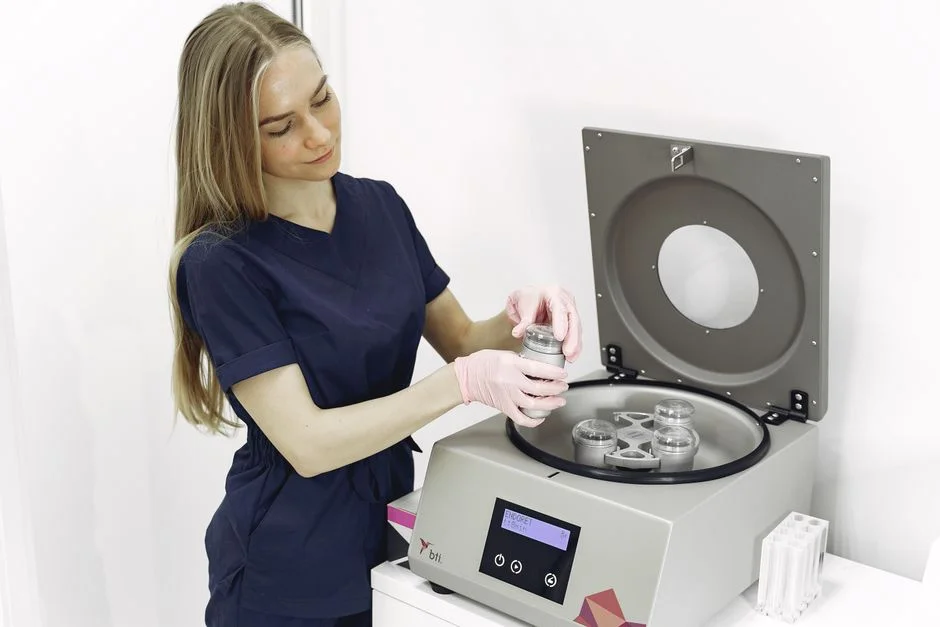
Before any equipment list, a Singapore plant engineer should anchor the design to a defensible influent envelope rather than a textbook number. A 2026 API or finished-dose facility typically presents COD in the 1,500–6,000 mg/L band, BOD at 800–2,500 mg/L, TSS at 300–1,200 mg/L, total nitrogen at 60–250 mg/L, sulfate at 200–1,500 mg/L, and conductivity of 2–8 mS/cm. Trace organics are the harder problem: residual solvents (methanol, acetone, dichloromethane), antibiotics from the β-lactam, tetracycline, sulfonamide, and macrolide families, and hormone-active compounds that survive secondary treatment, with manufacturing-side API loads documented at 100–1,000× municipal background (Birniwa et al., 2023, cited in Jani, 2024). Temperature runs 28–38 °C from CIP and fermentation clean-out, and pH swings from 2 to 12 across batch cycles, which is why the first engineered unit on every train is a buffer tank rather than a membrane. Flow variability is the third design driver: a typical Singapore API plant runs 2–4× peak-to-trough on a normal day and can spike further during monsoon stormwater ingress in uncovered process areas, so hydraulic design must be sized on peak wet-weather flow, not average daily flow.
The 2026 process train Singapore pharma plants actually use
Compliance and reuse in 2026 are not a single technology decision; they are a five-stage train. Stage 1 — Equalization and pH correction: an 8–24 h HRT buffer tank stabilizes flow and brings pH into the 6.5–8.0 band. The downstream biological and AOP stages are both shock-sensitive, and this unit pays for itself the first time a batch dump arrives. Stage 2 — Dissolved air flotation (DAF) and/or lamella clarification: typically 70–90% TSS and 60–80% free-oil removal, and a non-negotiable membrane and catalyst protectant (Jani, 2024). A packaged DAF pre-treatment unit sized at 3–5 m³/m²·h hydraulic loading is the standard configuration. Stage 3 — Biological treatment, normally an MBR with submerged PVDF flat-sheet membranes at HRT 12–36 h and mixed-liquor suspended solids (MLSS) of 8,000–12,000 mg/L. COD removal sits at 90–97%, BOD at >98%, and effluent TSS drops below 5 mg/L at the permeate, supported by a PVDF flat-sheet MBR module with a 0.1 μm nominal cut-off. A turnkey submerged MBR membrane bioreactor system at this scale is rated for an instantaneous flux of 15–25 L/m²·h at 28–32 °C. Stage 4 — AOP polish for recalcitrant APIs: target 50–80% reduction in residual COD and measurable mass removal on the dominant API class, and it also conditions the water for RO by oxidizing the slowly-biodegradable fraction that would otherwise foul the membrane. Stage 5 — RO polish (and optional UV) for NEWater-grade reuse, with RO recovery 65–75% in pharma service because of high feed TDS, backed by an industrial RO polish train; permeate meets NEWater industrial-grade targets on turbidity, conductivity, and total organic carbon. A side-stream anaerobic digester on MBR waste-activated sludge plus DAF float recovers biogas that typically offsets 20–40% of plant electricity (Abubakar et al., 2024, cited in Jani, 2024). For a comparable regional design pattern, see our pharma process guide for Thailand; for MBR-specific commissioning detail, the MBR installation and commissioning guide covers the 2026 practice; for RO economics, the 2026 RO cost breakdown lays out system-by-system pricing.
| Stage | Unit operation | Typical design parameter | Removal or performance |
|---|---|---|---|
| 1 | Equalization + pH correction | HRT 8–24 h | Flow and pH smoothing; pH 6.5–8.0 trim |
| 2 | DAF / lamella | 3–5 m³/m²·h | TSS −70–90%, FOG −60–80% |
| 3 | MBR (PVDF flat-sheet) | HRT 12–36 h, MLSS 8,000–12,000 mg/L | COD −90–97%, BOD >98%, TSS <5 mg/L |
| 4 | AOP (O₃ or UV/H₂O₂) | 10–50 mg/L H₂O₂ or 2–8 g O₃/m³ | COD −50–80%, dominant API −60–95% |
| 5 | RO (+ optional UV) | Recovery 65–75% | TDS >95% rejection, meets NEWater industrial specs |
| Side | Anaerobic digester on WAS + DAF float | HRT 20–30 d, mesophilic | 20–40% electricity offset via biogas |
Choosing the right AOP for your API mix
"Add an AOP" is not a design decision — picking the right oxidant against the right API family is. The two questions to answer in the design review are: which API class dominates the stream, and what is the background chloride and carbonate scavenging load? Ozonation (O₃, 2–8 g/m³ dose) is strong for sulfonamides, macrolides, and many non-antibiotic APIs because of selective attack on activated aromatic rings, but in a coastal plant with measurable bromide, ozone forms bromate — a regulated disinfection by-product — so bromide must be monitored and controlled upstream. UV/H₂O₂ at 10–50 mg/L H₂O₂ with a low-pressure-high-output lamp is the better match for tetracyclines, β-lactams, and many photolabile APIs, requires UV transmittance >70% and avoids the bromate risk entirely. Fenton or electro-Fenton (Fe²⁺/H₂O₂, pH 3–4, with a downstream neutralization step) is the right answer for high-COD concentrates and antibiotic residuals, at the cost of an iron sludge that must be dewatered and sent to a licensed waste handler. Carbon-electrode and boron-doped-diamond (BDD) cells (Taylor & Francis, 2026) are emerging for hard-to-treat streams and trace organic removal, but remain pilot-scale in 2026 Singapore service.
| AOP option | Best-fit API family | Typical dose | Key risk / side product |
|---|---|---|---|
| Ozonation (O₃) | Sulfonamides, macrolides, non-antibiotic aromatics | 2–8 g O₃/m³ | Bromate formation if Br⁻ present |
| UV / H₂O₂ | Tetracyclines, β-lactams, photolabile APIs | 10–50 mg/L H₂O₂, UVT >70% | Residual H₂O₂ quenching required |
| Fenton / electro-Fenton | High-COD concentrates, antibiotic residuals | Fe²⁺:H₂O₂ 1:5–1:10 w/w, pH 3–4 | Iron sludge handling, low-pH corrosion |
| Carbon-electrode / BDD | Refractory / trace organics, polishing | 10–40 mA/cm², 3–6 V | Capital cost, pilot-scale in 2026 |
2026 economics: what a Singapore pharma effluent plant actually costs
A 200–500 m³/day pharmaceutical effluent train in Singapore — equalization, DAF, MBR, AOP, and RO — lands in the region of SGD 1.5–4.0 million installed, with the wide range driven by AOP choice, building works, and whether the design is sized for watercourse discharge (lower-cost envelope) or NEWater reuse (higher-cost envelope with full RO polish). Operating cost in 2026 is in the SGD 1.8–3.5 per m³ treated band, dominated by electricity, chemical dosing, and membrane replacement; the combined MBR+AOP+RO train typically runs at 0.8–1.5 kWh/m³. The economic pivot is the PUB potable water tariff of roughly SGD 2.74/m³ (2026) plus the used-water fee: reusing 50–70% of the effluent as NEWater-quality process water converts the effluent plant from a pure cost centre into a partial credit on the water line, typically netting out at SGD 0.5–1.2/m³ of avoided purchase after accounting for RO operating cost. Anaerobic digestion of MBR waste-activated sludge and DAF float recovers biogas that typically offsets 20–40% of plant electricity (Abubakar et al., 2024, cited in Jani, 2024), which under Singapore's grid carbon intensity also de-risks the ESG disclosure that procurement increasingly asks for. The defensible 2026 figure to put in front of a board is therefore: SGD 1.5–4.0M CAPEX, SGD 1.8–3.5/m³ OPEX, and a 2–4 year simple payback on the reuse loop at current PUB tariffs.
Frequently Asked Questions
What PUB Trade Effluent limits apply to a Singapore pharmaceutical plant in 2026?
For sewer discharge, a Singapore pharma plant must hold a Trade Effluent Licence under the Sewerage and Drainage Act and meet the PUB Trade Effluent schedule: pH 6–9, temperature ≤40 °C, TSS ≤400 mg/L, COD ≤600 mg/L, BOD ≤400 mg/L, oil and grease ≤60 mg/L, sulfate ≤1,000 mg/L, and total nitrogen ≤60 mg/L, with metals capped individually (per PUB guidance).
Which AOP removes sulfonamides and tetracyclines most effectively?
UV/H₂O₂ at 10–50 mg/L H₂O₂ with UV transmittance above 70% is the most consistent 2026 option for tetracyclines and β-lactams; ozonation at 2–8 g O₃/m³ outperforms UV/H₂O₂ on sulfonamides and macrolides, but only when bromide is controlled below 50 µg/L to keep bromate below the 10 µg/L drinking-water target.
What does a 200–500 m³/day pharma effluent plant cost in Singapore in 2026?
Installed CAPEX for an EQ + DAF + MBR + AOP + RO train at 200–500 m³/day sits at roughly SGD 1.5–4.0 million, with OPEX of SGD 1.8–3.5 per m³ treated at 0.8–1.5 kWh/m³; reusing 50–70% of effluent against the SGD 2.74/m³ PUB potable tariff typically delivers a 2–4 year simple payback on the reuse loop.
Can pharmaceutical effluent in Singapore realistically be reused as NEWater?
Yes — a five-stage train (equalization, DAF, MBR, AOP, RO) routinely produces permeate that meets PUB NEWater industrial-grade targets for turbidity, conductivity, and TOC, and a 65–75% RO recovery rate is achievable on pharma feed; the remaining 25–35% concentrate is sent to sea or to a licensed waste handler.
Related Equipment
- industrial RO polish — specifications, capacity range, and technical data