
Why Kigali Housing Needs a Packaged Sewage Treatment Plant
Kigali has no central sewer network and no centralized sewage treatment plant, so every new housing estate of 200–2,000 dwellings must treat its own wastewater on-site or semi-centrally (per the 2024 PMC review of African wastewater management). The constraint is structural, not transitional: only 19 collective sewage treatment plants currently operate across Kacyiru, Gacuriro, Kabuga, and Gikondo, and they serve as the only proof points that semi-centralized package plants work in Kigali's housing market (MDPI 2018). The scale of the gap is quantified by EICV4 (Rwanda's 2016 Integrated Household Living Conditions Survey), which recorded that 81.6% of "improved sanitation" in the country still relies on pit latrines with solid slabs because no sewage network exists (MDPI 2018, citing EICV4 2016). For a developer breaking ground on a 500-unit estate in 2026, that statistic is not academic — it means the municipal trunk sewer will not arrive in the project's lifetime, and the only compliant path is a buried or containerized package plant sized to Rwanda's draft national effluent standards and REMA discharge limits. The same MDPI study confirms the four pilot sites above have demonstrated that semi-centralized systems (SCSSs) can meet effluent targets when properly designed, which is why packaged plants are now the default specification for residential masterplans in the City of Kigali's eastern and southern expansion zones.
Sizing a Package Plant for a Kigali Housing Estate
Engineers sizing a package plant for a Kigali estate should use 150–200 L per person per day as the design basis for middle-income African residential developments, then multiply by 5 persons per household and apply a peak factor of 2.0–2.5 on the daily average to derive peak hourly hydraulic load. The package plant must be sized to peak flow, not average — the equalization tank absorbs the rest. Add 10–15% to the average daily flow for ground-floor commercial or mixed-use space (shops, schools, clinics) that almost every Kigali master plan includes. The table below maps household counts to design flow and to a candidate HydropureWater configuration, drawing on typical 150 L/cap/day design and 5 persons/HH.
| Housing Estate Size | Population (5 p/HH) | Avg Daily Flow | Peak Hourly Flow (×2.0–2.5) | Recommended Plant |
|---|---|---|---|---|
| 100 households | 500 | 75–100 m³/day | 6–10 m³/h | WSZ underground A/O unit, 1 module |
| 300 households | 1,500 | 225–300 m³/day | 19–31 m³/h | WSZ underground A/O unit, 2–3 modules in parallel |
| 500 households | 2,500 | 375–500 m³/day | 31–52 m³/h | WSZ underground A/O unit, 3–4 modules; or single MBR skid |
| 1,000 households | 5,000 | 750–1,000 m³/day | 63–104 m³/h | Integrated MBR system with equalization, 2–3 trains |
| 2,000 households | 10,000 | 1,500–2,000 m³/day | 125–208 m³/h | Integrated MBR system, 4–6 trains, with sludge handling |
For an 800-household estate (a common Kigali phase-1 deliverable), the calculation is 800 × 5 × 175 L = 700 m³/day average, with a peak of 1,400–1,750 m³/day — comfortably handled by a 2-train integrated MBR system or 4 parallel WSZ underground A/O package plant modules. The sizing math above is conservative; engineers should also verify the local water utility's per-connection consumption data because Kigali's domestic use has been climbing roughly 3–5% year-on-year as middle-income households add washing machines and second bathrooms.
Comparing Package Plant Technologies: A/O, MBR, SBR, and Septic+Filter
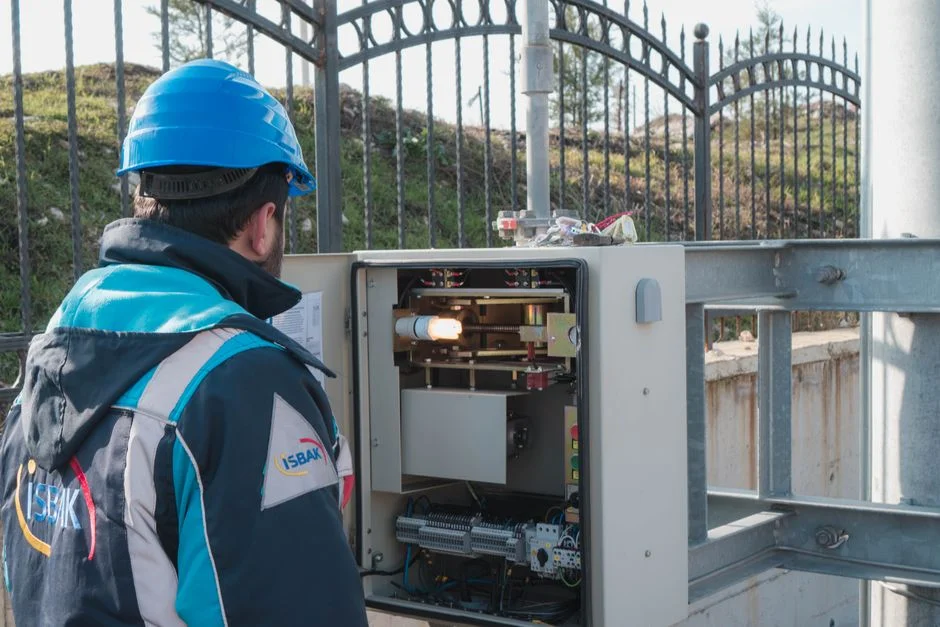
Four process trains dominate the East African packaged-plant market, and the right pick depends on effluent target, available land, and operator skill. The table below compares them on the parameters a developer actually cares about; the numbers reflect typical performance for properly designed units in tropical conditions.
| Technology | Effluent BOD / COD | Effluent TSS | Footprint vs. Conventional | Typical CAPEX Band (2026, East Africa) | Operator Skill | Best Fit in Kigali |
|---|---|---|---|---|---|---|
| A/O contact oxidation (WSZ series) | BOD 20–30 mg/L; COD 60–100 mg/L | ~20 mg/L | Baseline (buried, very compact) | USD 8,000–15,000 per 10 m³/day module | Low — no dedicated operator | Estates discharging to soak-away or subsurface irrigation; dense sites where burial is required |
| Submerged MBR (PVDF, DF series) | BOD <5 mg/L; COD <50 mg/L | <1 μm filtered, TSS near zero | ~40% of conventional activated sludge (60% reduction) | USD 25,000–45,000 per 100 m³/day containerized | Moderate — membrane cleaning every 6–12 months | Reuse for landscape irrigation; sites with area ≤ 0.3× water demand in m²/day; compliance-sensitive sites |
| SBR (sequencing batch reactor) | BOD 15–25 mg/L; COD 50–80 mg/L | ~15–20 mg/L | ~70% of conventional | USD 12,000–22,000 per 100 m³/day | Moderate–high — cycle tuning required | Estates with highly intermittent flow (holiday/Christmas occupancy peaks) |
| Septic tank + anaerobic filter + polishing pond | BOD 30–60 mg/L; COD 80–150 mg/L | ~30–50 mg/L | Requires pond area (large) | USD 4,000–8,000 per 100 m³/day | Low | Low-density peri-urban estates where land is cheap and effluent targets are lenient |
The decision rule is straightforward: choose an WSZ underground A/O package plant when land is available for subsurface irrigation dispersal and the estate is willing to accept effluent at REMA's general discharge limit; choose an integrated MBR system when the estate footprint is tight, neighbours are close, or on-site reuse for landscape irrigation is part of the developer's water strategy; choose SBR only when inflow is genuinely intermittent because Kigali's residential occupancy is actually quite stable year-round, so SBR's flexibility rarely justifies its higher operator burden. For a 2026 Kigali housing estate targeting REMA compliance and irrigation reuse, the WSZ-plus-MBR pairing is the dominant configuration in the regional market.
Engineering for Kigali's Climate: Altitude, Temperature, and Power
Kigali sits at roughly 1,500 m elevation, where standard air density drops to approximately 1.0 kg/m³ (versus 1.225 kg/m³ at sea level) — that alone forces an 8–12% derate on blower and membrane aeration sizing, or the specification of a high-altitude blower curve. Year-round temperatures of 18–27 °C keep biological activity in the mesophilic optimum, so no enclosure heating is required; however, tropical pathogen loads (E. coli, helminths, rotavirus) demand a disinfection stage that handles variable turbidity, and UV alone underperforms in effluent above 30 NTU. Power reliability is the single largest O&M risk: spec duty/standby blowers, allow a 24-hour equalization tank to ride through grid outages, and consider a solar PV + battery buffer sized to the control panel and disinfection dose pump (typically 1.5–3 kW peak load). Buried installation of the WSZ biological reactor does three things at once — it eliminates odour complaints from neighbouring plots, protects the mixed liquor from UV degradation of nitrifying bacteria, and removes the visual footprint that often triggers planning objections in Kigali's master-plan reviews. For MBR skids installed above ground, specify a shaded, ventilated container with cross-flow capability because membrane performance is sensitive to feed temperature above 30 °C, which Kigali's sun can drive in unbuffered tanks.
Effluent Quality Targets and Rwanda Compliance
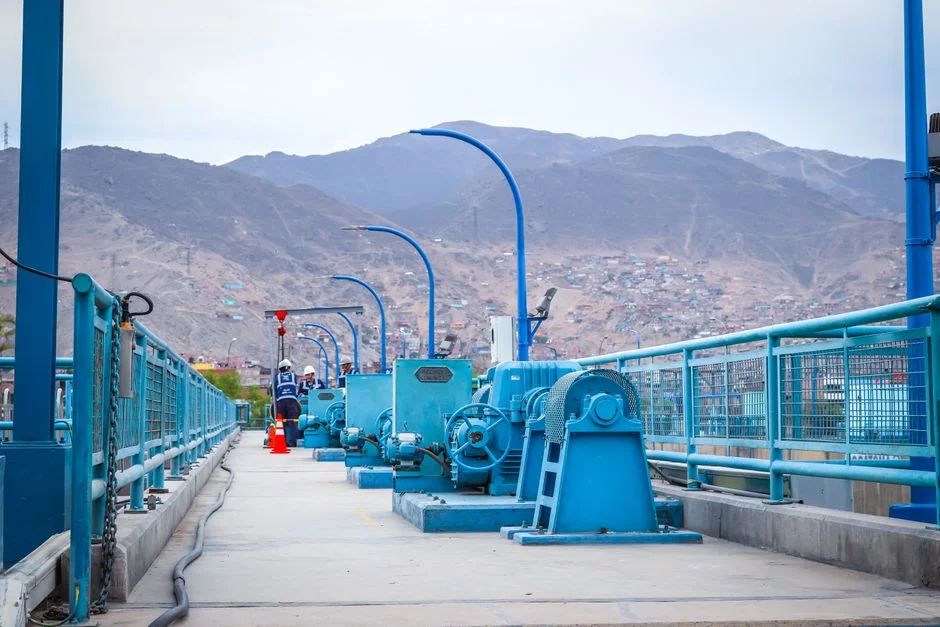
Rwanda's national effluent guidelines, currently enforced by REMA, set the following general discharge limits for residential wastewater: BOD ≤ 50 mg/L, COD ≤ 100 mg/L, TSS ≤ 50 mg/L, and fecal coliform ≤ 400 CFU/100 mL (confirm current values with REMA's 2026 regulation before tender). For estates discharging to a Kigali marshland or river buffer — and most eastern Kigali sites eventually drain toward the Nyabarongo watershed — designers should target the stricter EU Urban Waste Water Directive (91/271/EEC) thresholds of BOD ≤ 25 mg/L and COD ≤ 125 mg/L as a defensible international benchmark, because REMA is tightening alignment with EU practice through 2026. A properly designed WSZ A/O plant meets the general REMA limit with margin; an MBR system beats it entirely and produces water clean enough for landscape irrigation, cutting estate freshwater demand by 20–40%. For disinfection, a chlorine dioxide disinfection generator handles variable hydraulic and microbial load better than UV in turbid tropical effluent and leaves a residual that protects the irrigation distribution laterals from biofouling — a practical advantage UV cannot match.
Cost Bands and Procurement Roadmap
Defensible 2026 CAPEX bands for packaged sewage treatment in East Africa run as follows: WSZ-style A/O unit at USD 8,000–15,000 per 10 m³/day module; MBR containerized plant at USD 25,000–45,000 per 100 m³/day; full turnkey housing estate plant including civils, MCC panel, and commissioning at USD 150,000–600,000 for 200–800 households. OPEX is dominated by blower power and periodic desludging: 0.04–0.08 USD per m³ treated for A/O, and 0.08–0.12 USD per m³ for MBR (HydropureWater field data, 2026). The procurement sequence that actually works for a Kigali project is: (1) site survey plus soil percolation test, (2) flow calculation using the sizing table in Section 2, (3) vendor-supplied performance test or pilot, (4) Rwanda Development Board (RDB) single-window investment registration, (5) REMA environmental compliance certificate, (6) factory acceptance test in China, (7) containerized shipment via Dar es Salaam or Mombasa port to Kigali by road. Total lead time runs 16–24 weeks ex-works; budget 12% contingency for customs duties, Kigali city inspection fees, and on-site commissioning.
| Procurement Step | Typical Duration | Key Output | Cost Implication |
|---|---|---|---|
| Site survey + soil percolation | 1–2 weeks | Geotechnical report, percolation rate | USD 2,000–5,000 |
| Flow calculation + plant selection | 1 week | Process design memo, equipment list | Internal engineering cost |
| Vendor pilot / performance test | 2–4 weeks | Verified effluent quality data | USD 3,000–8,000 |
| RDB + REMA permits | 4–8 weeks | Investment certificate, ECC | USD 1,500–4,000 in fees |
| Factory acceptance test (China) | 1 week (engineer on-site) | Signed FAT report | Travel + 3–5 days accommodation |
| Shipment Dar es Salaam → Kigali | 3–5 weeks | Delivered equipment | USD 4,000–12,000 for 1–3 containers |
| Installation + commissioning | 3–6 weeks | Operating plant, performance certificate | 10–15% of equipment CAPEX |
For broader context on regional cost benchmarks and CAPEX drivers, the 2026 integrated plant CAPEX guide provides comparative numbers, while the 2026 water reuse technology outlook covers the reuse side of the value equation. For a parallel tropical-Asian case study on decentralized systems, the Bangladesh decentralized wastewater case is a useful reference because Khulna and Kigali share similar density, climate, and grid-reliability constraints.
Frequently Asked Questions
How much does a package sewage treatment plant cost in Rwanda?
A packaged A/O unit costs USD 8,000–15,000 per 10 m³/day module, while a containerized MBR system runs USD 25,000–45,000 per 100 m³/day in 2026 (HydropureWater field data, 2026). A full turnkey housing estate plant including civils and commissioning for 200–800 households lands between USD 150,000 and USD 600,000, depending on effluent targets and reuse requirements. Budget an additional 12% contingency for customs, Kigali inspection, and commissioning.
What flow rate should I size for per household in Kigali?
Use 150–200 L per person per day × 5 persons per household, which gives 750–1,000 L per household per day average, then apply a peak factor of 2.0–2.5 for hourly design flow. Add 10–15% for ground-floor commercial or mixed-use space typical in Kigali master plans. A 500-household estate therefore needs 375–500 m³/day average and roughly 800–1,250 m³/day peak, comfortably handled by 3–4 WSZ modules or one MBR skid.
Does the 1,500 m altitude of Kigali affect aeration equipment sizing?
Yes — air density at 1,500 m drops to approximately 1.0 kg/m³, forcing an 8–12% derate on standard blower and membrane aeration curves. Specify a high-altitude blower curve or oversize the blower by 10% at quotation stage. Failure to derate results in oxygen-transfer shortfalls of 8–12% and visible effluent quality decline within the first month of operation.
Can a package plant in Kigali produce water for landscape irrigation?
Yes — an MBR system with submerged PVDF membranes (DF series) produces effluent with COD below 50 mg/L, TSS near zero, and turbidity under 1 NTU, which meets the quality needed for landscape irrigation after chlorine dioxide disinfection. This typically cuts estate freshwater demand for irrigation by 20–40%, which over a 10-year operating horizon often offsets the MBR CAPEX premium versus a basic A/O unit.