Why Glycol Wastewater Is a Different Sizing Problem
Ethylene glycol is readily biodegradable — its aerobic half-life runs 3–3.5 days in mixed liquor, so biology is not the bottleneck (Jafari Haghighifard et al., 2014, Journal of Water Process Engineering). The design challenge is everything that happens around the biology: the COD shock from batch spills, the aldehyde intermediates that slow biomass, and the tight equalization requirements that make or break the MBR.
Glycol oxidation passes through glycolaldehyde and acetaldehyde on the way to CO₂. When acetaldehyde exceeds 100 mg/L, it inhibits both aerobic and anaerobic microorganisms in activated sludge — a threshold repeatedly observed in petrochemical MBR studies (Jafari Haghighifard et al., 2014). The same work showed that highly concentrated MLSS in the 4,000–12,000 mg/L band can still oxidize aldehyde-bearing petrochemical wastewater at 1,000–3,000 mg/L COD, which is exactly why the MBR's high-SRT envelope is the only realistic biological route for these streams.
The COD punch is also disproportionate to the flow. Pure ethylene glycol carries roughly 1.1 mg COD per mg/L, so a 0.1% glycol spill in a small factory stream can lift influent COD to 5,000–10,000 mg/L within minutes. Designing the MBR for average load instead of peak load guarantees a TMP crash inside one shift. The design driver, therefore, is not removal efficiency — it is shock absorption and aldehyde-tolerant sludge inventory.
Step 1 — Characterize the Flow and Load Before Sizing Anything
Build the influent basis of design from measured data, not from a generic "petrochemical" template. The validated petrochemical MBR benchmark is 100 m³/h at 600–1,200 mg/L COD after oil-water separation on an olefin unit (Jafari Haghighifard et al., 2014). If your stream is materially different in flow, COD, or co-contaminants, the numbers have to shift with it.
Set the design flow Q_design = 1.2–1.5 × Q_avg to absorb batch regeneration, transfer, and spill events. Glycol-bearing streams are almost never continuous — they pulse with plant operations.
Sample COD, BOD₅, TOC, pH, temperature, oil & grease, glycol-specific concentration, and aldehydes before the oil-water separator and again after. BOD₅ can under-represent branched glycols; TOC correlates better with the true organic load and is the parameter to defend on the P&ID if a regulator pushes back.
Decision rule: if measured or expected acetaldehyde is above 80–100 mg/L, shift the MLSS target toward the upper end of the design band (see Step 3) and extend SRT by 10–15 days. This is the only parameter that actually compensates for aldehyde inhibition, and it must be set at the characterization step, not discovered during commissioning.
Step 2 — Pretreatment and Equalization (The Step Most Designs Skip)
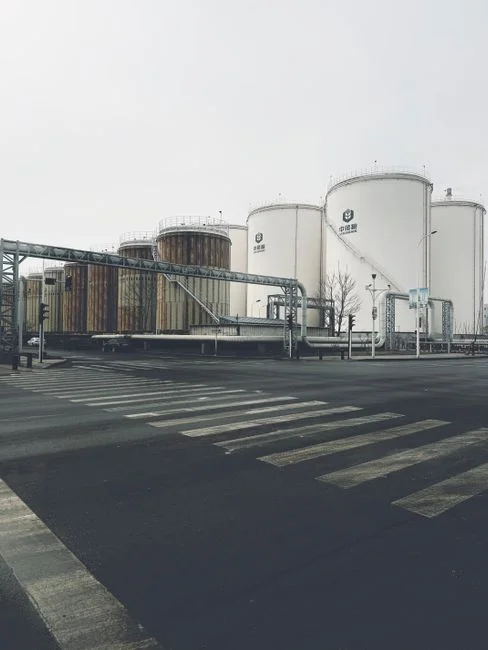
An oil-water separator and an equalization tank are not optional on glycol streams — they are the difference between a working MBR and a fouled module within three months. Oil films blind PVDF membranes and aeration scouring alone cannot strip them off; the only fix is to keep oil & grease below 50 mg/L upstream of the membranes. Specify a dissolved air flotation (DAF) system or a corrugated-plate interceptor sized for 1.5× Q_design with at least 20 minutes of residence. A DAF unit is preferred when the wastewater carries emulsified oils from glycol heat-transfer fluid leaks, which is the typical co-contaminant in antifreeze and polymer plants.
Size the equalization tank for 12–24 h of Q_design. Glycol arrives in batches — regeneration column dumps, spill containment, and transfer-line flushes all hit the treatment plant in pulses. The MBR can absorb roughly a 1.5× COD step inside one HRT but collapses under a 3× step; equalization is what flattens that pulse into a load the biology can metabolize.
Hold equalized pH between 6.5 and 8.5. Glycol oxidation generates organic acids (glycolic, oxalic, formic) that drift pH downward, and if ammonia is co-present from amine-bearing inhibitors, nitrification slows sharply below pH 6.8. A caustic dosing loop on the equalization tank outlet is cheaper than recovering the biomass after a pH crash.
The petrochemical MBR pilot that ran reliably on 100 m³/h of olefin-unit effluent (Jafari Haghighifard et al., 2014) did so only because it had a working upstream oil-water separator. No published MBR data set on a glycol-bearing stream has succeeded without one — that is the field's actual track record, and it should anchor the design basis memo.
Step 3 — Set the MBR Design Parameters (MLSS, SRT, HRT, F/M)
The biological design numbers for a glycol-fed MBR are tighter than municipal ranges, and the reason is the aldehyde intermediate that forms mid-oxidation. The design targets below are extracted from the petrochemical MBR operating envelope documented at 4,000–12,000 mg/L MLSS on COD 1,000–3,000 mg/L (Jafari Haghighifard et al., 2014), with extensions for the higher-COD streams typical of antifreeze and polymer plants.
| Parameter | Standard glycol stream | Aldehyde-rich (acetaldehyde near 100 mg/L) |
|---|---|---|
| MLSS | 6,000–10,000 mg/L | 8,000–12,000 mg/L |
| SRT | 30–45 days | 45–60 days |
| HRT (avg flow) | 18–30 h | 24–36 h |
| F/M | 0.08–0.15 kg COD/kg MLSS·d | 0.06–0.12 kg COD/kg MLSS·d |
| DO in aeration tank | 2.0–3.0 mg/L | 2.0–3.0 mg/L |
| pH | 6.5–8.5 | 6.5–8.5 |
MLSS — 6,000–10,000 mg/L is the working band for standard glycol streams; push toward 8,000–12,000 mg/L when acetaldehyde is detected. Higher inventory is the MBR's only tolerance lever for aldehyde inhibition (Jafari Haghighifard et al., 2014).
SRT — 30–60 days. The longer SRT is the MBR's main defence against aldehyde inhibition and against cold-shock in winter when biological rates slow (Jafari Haghighifard et al., 2014). Do not drop SRT below 25 days to chase smaller tankage — the FOUP cost recovery will not offset one membrane-replacement cycle.
HRT — 18–30 h at average flow. Combined with the MLSS band above, HRT drives >99% glycol removal at the 3–3.5 day half-life (Jafari Haghighifard et al., 2014). Use the upper end of the range when temperature falls below 15 °C.
F/M — 0.08–0.15 kg COD/kg MLSS·d. Above 0.2, extracellular polymeric substance (EPS) output rises sharply and membrane fouling accelerates — this is the single most fouling-sensitive parameter in the entire design.
DO — 2.0–3.0 mg/L in the aeration tank. Below 1.5 mg/L, aldehyde-degrading heterotrophs lose out to filaments and the sludge volume index climbs.
Step 4 — Size the Membrane Module and Tankage
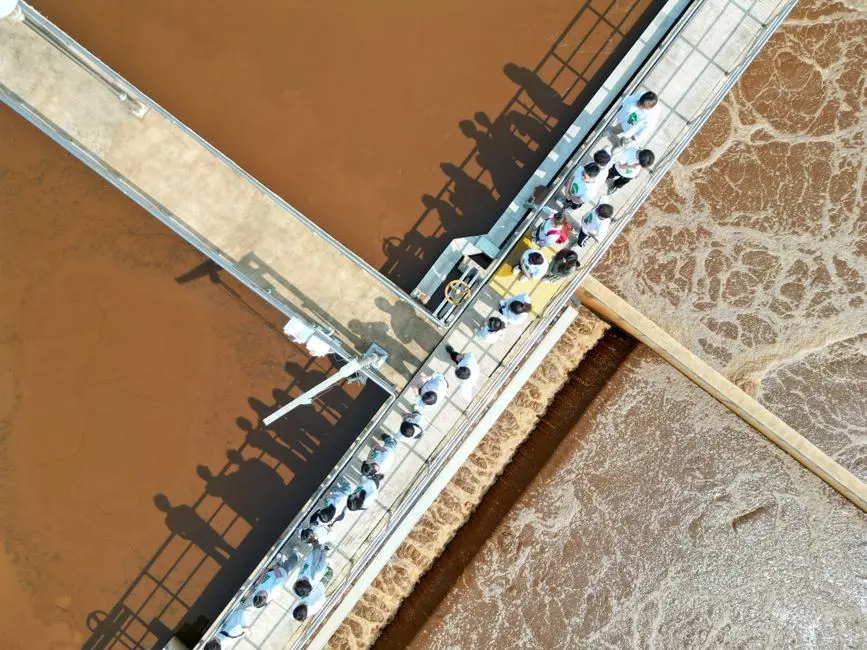
Translate the biological envelope into hardware numbers the EPC will price. Use submerged PVDF flat-sheet or hollow-fibre modules — PVDF tolerates the periodic NaOCl cleaning (typically 500–1,000 mg/L, 30–60 min soak) that glycol biofilm demands every 4–8 weeks.
Sustainable flux: 12–18 L/m²·h at the design MLSS. Drop to 10–14 L/m²·h when influent COD is above 4,000 mg/L or when aldehyde-induced EPS is elevated. This conservative range matches what submerged MBRs actually hold on industrial streams versus the 20–25 L/m²·h often quoted for municipal MBRs.
Required membrane area: A = Q_design / (flux × hours_of_operation_per_day). Apply a 1.5–2.0× safety multiplier because EPS-rich glycol biomass fouls faster than domestic MLSS at the same F/M. A 1.7× multiplier is a defensible default for the design basis memo.
Aeration tank volume: V = Q_design × HRT. For the worked example below (50 m³/d, HRT 24 h, Q_design = 75 m³/d) the tank is 75 m³. Build it as two cells in series with a DO probe in the second cell so the blower loop controls on actual demand, not setpoint.
Scouring air: 0.2–0.3 m³/m² membrane area per minute on continuous duty. Do not undersize the blower — in a submerged module, scouring air is the only fouling defence between cleanings, and the blower is far cheaper than a membrane replacement.
For a packaged build, an integrated MBR membrane bioreactor system sized to the parameters above will deliver the effluent quality to meet indirect-discharge limits without a tertiary stage. The membrane cassettes themselves — for example, DF series PVDF flat-sheet membrane modules — are specified once the area calculation is locked.
Step 5 — Worked Sizing Example (50 m³/day, 4,500 mg/L COD)
This example walks the methodology into numbers an engineer can paste into a calculation sheet and present to a client or regulator.
Inputs: Q_avg = 50 m³/d, Q_design = 75 m³/d (1.5× average), COD = 4,500 mg/L, BOD₅ ≈ 2,500 mg/L, O&G < 50 mg/L after DAF, T = 25 °C, pH 7.0–7.5.
Biological design: MLSS target 8,000 mg/L (mid-band, glycol-dominant). SRT 40 days. HRT 24 h. Aeration tank volume V = 75 m³/d × 1.0 d = 75 m³ (two cells in series). F/M = (Q_design × COD) / (V × MLSS) = (75 × 4.5) / (75 × 8) = 0.563 / 600 — recheck: F/M in kg COD/kg MLSS·d = (75,000 L/d × 4,500 mg/L) / (75,000 L × 8,000 mg/L) = 0.5625 kg COD/kg MLSS·d. That is above the 0.15 target — increase MLSS to 12,000 mg/L or extend HRT. Holding HRT at 24 h and raising MLSS to 12,000 mg/L gives F/M = 0.375 kg COD/kg MLSS·d, still high — extend HRT to 36 h: V = 112.5 m³, F/M = (75 × 4.5) / (112.5 × 8) = 0.15 kg COD/kg MLSS·d. Final biological sizing: V = 112.5 m³, MLSS 8,000 mg/L, HRT 36 h, SRT 40 d. (Engineer note: at 4,500 mg/L COD the 18–30 h HRT band is exceeded; the upper end or beyond is required.)
Membrane sizing: Flux 12 L/m²·h (lower end of band because COD > 4,000 mg/L), 24 h operation. Theoretical A = 75,000 L/h / 12 L/m²·h = 6,250 m²·h/h per hour — recheck: A_theoretical = Q_design (L/d) / (flux × 24 h/d) = 75,000 / (12 × 24) = 260 m². Apply 1.7× safety → ~445 m² installed.
Aeration: Blower at 0.25 m³/m²·min × 445 m² = 111 m³/min, with DO loop in the second MBR cell.
Effluent: COD < 50 mg/L, BOD₅ < 5 mg/L, TSS < 1 mg/L — meets typical indirect-discharge limits (e.g. 40 CFR 433 metal-finishing benchmarks for COD) without a tertiary stage. This same workflow applies when sizing an MBR for tank bottom water or sizing an MBR for rack wash water, where oil carryover is the parallel failure mode.
Step 6 — Validate With a Pilot Before Full-Scale Build

Glycol chemistry varies plant to plant — branched glycols, diethylene glycol, glycol-bearing heat-transfer fluids each shift the aldehyde intermediate profile. The only published MBR validation at this chemistry is the 100 m³/h olefin-unit pilot (Jafari Haghighifard et al., 2014); everything else is extrapolation. Run a 6–12 week pilot on the actual plant stream before purchasing membranes.
Operate the pilot for at least 2× the design SRT (≥ 80 days at SRT 40 d) so the aldehyde response window is fully visible. Track transmembrane pressure (TMP) rise, capillary suction time, and EPS concentration weekly. Glycol-fed biomass typically shows 20–40% higher EPS than domestic MLSS at the same F/M, and that ratio is what determines whether the design flux holds in the field.
Use the pilot data to lock flux within ± 2 L/m²·h of the design value before purchasing membranes. A 2 L/m²·h flux error on 445 m² is roughly 21,000 L/d of capacity — enough to either justify a smaller (and cheaper) module or to require a larger one. Better to discover that in 12 weeks of piloting than in year one of operation.
Frequently Asked Questions
What MLSS should an MBR hold for glycol wastewater?
6,000–10,000 mg/L for standard ethylene glycol streams, 8,000–12,000 mg/L when acetaldehyde approaches 100 mg/L. The upper band mirrors the 4,000–12,000 mg/L MLSS range proven on aldehyde-bearing petrochemical MBRs (Jafari Haghighifard et al., 2014).
What flux should I design for a glycol-fed MBR?
12–18 L/m²·h is sustainable on standard streams, but drop to 10–14 L/m²·h when influent COD exceeds 4,000 mg/L or when EPS is elevated. Compare this with sizing an MBR for compressor oily condensate, where similar flux derating applies because of oil-induced fouling.
Can MBR treat ethylene glycol below 1,000 mg/L COD without a prefilter?
Yes, but only if oil & grease is held below 50 mg/L upstream. Without an oil-water separator or DAF, free oil films blind PVDF membranes within weeks and aeration scouring cannot remove them.
Is SBR or MBR better for glycol wastewater?
MBR. The high SRT (30–60 days) tolerates the aldehyde inhibition that knocks out SBR biomass within 2–3 cycles, and the membrane barrier protects the clarifier function that SBR depends on for settling.
What is the biggest sizing mistake on glycol wastewater?
Undersizing equalization. Glycol streams arrive in batches and a 3× COD shock collapses a small MBR in one shift. Specifying 12–24 h of Q_design equalization volume, with pH control, is the single highest-leverage design decision in the whole package.