Why Dublin Hyperscale Campuses Are Reusing Cooling Blowdown in 2026
Dublin's hyperscale buildout is colliding with a hard water-allocation ceiling. Microsoft, AWS, and Google have collectively commissioned more than 1.2 GW of new IT load across the Greater Dublin region since 2023, and Uisce Éireann (Irish Water) has signalled that fresh abstraction licenses in the Liffey–Vartry catchment will not keep pace with cooling demand after 2026. Reuse of cooling tower blowdown has therefore moved from a sustainability talking point to a baseline design assumption on every new campus. The driver is operational, not aspirational: at a PUE of ~1.3, each 1 MWh of IT load consumes roughly 1.5–2.0 m³ of cooling water, and 60–80% of that exits as blowdown that can be softened, RO-treated, and returned to the makeup line. The risk that pushes monitoring from "nice to have" to "single point of failure" is simple: a single missed conductivity or silica excursion in a closed loop serving 30–80 kW per rack will deposit silica or calcium carbonate irreversibly on cold plates and CDUs, and a 50 MW campus cannot tolerate that loss path. That is why a procurement-grade monitoring architecture — the layer covered in the 2026 data center ZLD engineering blueprint — is now specified at FEED stage, not retrofitted after commissioning.
The Parameter Matrix: What to Measure on a Cooling-Blowdown Reuse Loop
Two anchor setpoints drive every other monitoring decision on a Dublin reuse loop: the 300 ppm CaCO₃ calcium cap carried forward from the OSTI softening study (S1) and the silica ceiling of <150 mg/L SiO₂ at the RO feed documented in the 2025 ScienceDirect industrial CTBW review (S4). Both numbers are non-negotiable because they set the cycles-of-concentration limit at which the cooling tower can safely operate without scale formation, and they trigger the conductivity dump valve and the RO interlock respectively. Online instrumentation on the tower basin and side-stream must cover conductivity/TDS, pH, ORP, free and total chlorine, silica, turbidity, temperature, and flow — with typical 2026 hyperscale control bands of pH 6.5–8.5, ORP 650–750 mV for ORP-biocide control, free Cl₂ 0.1–0.5 mg/L, turbidity <1 NTU at the side-stream, and conductivity tied directly to the 300 ppm CaCO₃ baseline. Offline and laboratory parameters layer on top: weekly ICP-MS for Fe, Cu, Al, and Zn (target <0.1 mg/L each at the reuse return), quarterly Legionella via ISO 11731, heterotrophic plate count at <10⁴ CFU/mL, gravimetric TDS, plus total hardness, alkalinity, sulfate, and phosphate for the lime-softener mass balance. A single sampling point is never sufficient because the blowdown stream, the softened clarifier overflow, the RO feed, and the reuse return each carry a different failure mode — conductivity drifts on the tower, silica breaks through post-RO, metals leach in the equalization tank — and the matrix below is what closes that loop. Further detail on the RO-side setpoints sits in this RO-based cooling blowdown reuse design reference.
| Parameter | Measurement Point | Online/Offline | 2026 Control Band | Alarm Trigger |
|---|---|---|---|---|
| Conductivity / TDS | Tower basin, side-stream | Online (toroidal) | Cycles mapped to 300 ppm CaCO₃ | Dump valve open at +10% over setpoint |
| Silica (SiO₂) | RO feed (post-softener) | Online (heteropolyblue) | <150 mg/L | RO interlock, isolate membrane |
| pH | Tower basin, side-stream, RO permeate | Online (differential) | 6.5–8.5 (tower), 6.0–7.0 (RO feed) | Auto-dosing call to acid skid |
| ORP | Side-stream | Online | 650–750 mV | Biocide pump on/off |
| Free Cl₂ | Tower basin, discharge | Online (amperometric) | 0.1–0.5 mg/L basin; <0.05 mg/L discharge | Irish EPA consent breach notification |
| Turbidity | Side-stream, post-filter | Online (self-cleaning) | <1 NTU side-stream; <0.2 NTU post-cartridge | Backwash initiation |
| Temperature | Tower basin, discharge | Online RTD | <35 °C basin; <25 °C discharge | Uisce Éireann trade-effluent cap |
| Flow | Makeup, blowdown, reuse return | Online magmeter | Per mass balance | Low-flow pump trip |
| Fe, Cu, Al, Zn | Reuse return | Lab ICP-MS (weekly) | <0.1 mg/L each | Quarterly review |
| Legionella | Tower basin, drift eliminator | Lab ISO 11731 (quarterly) | <1,000 CFU/L (per HSG274) | Biocide shock dose |
| HPC | Tower basin | Lab pour-plate (weekly) | <10⁴ CFU/mL | Biocide review |
Sampling Topology: Where Sensors Go on a Hyperscale Reuse Train
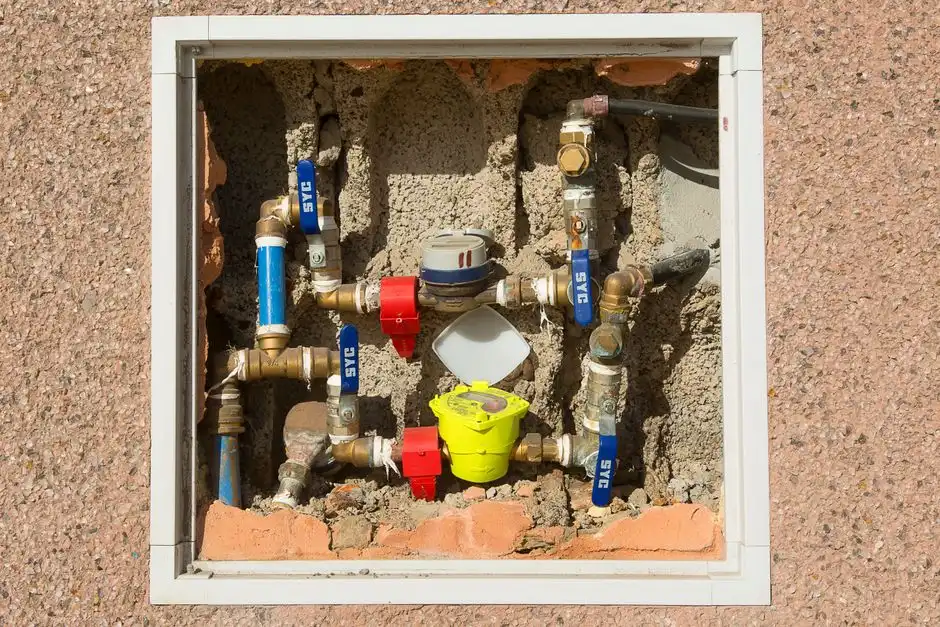
The blowdown path is sequential and each node has a distinct failure mode: cooling tower basin → blowdown sump → equalization tank → lime-softener or DAF clarifier → multimedia filter → cartridge filter → RO → permeate buffer → reuse return. The single highest-value measurement point in the entire train is a side-stream sample cooler feeding a multi-parameter analyzer upstream of the RO high-pressure pump, because it is the last point at which you can auto-dump or auto-isolate before silica or hardness hits the membrane. Conductivity-triggered blowdown dump logic is correlated to the 300 ppm CaCO₃ baseline from OSTI S1: a toroidal conductivity sensor on the side-stream opens the dump valve when the reading exceeds the cycles-of-concentration setpoint, typically 5–6 cycles for Dublin's moderately soft Liffey-derived makeup, and the same signal is mirrored into the SCADA tag database. Silica-triggered RO interlocks are independent of the conductivity loop — a heteropolyblue online silica analyzer holds the RO in standby if SiO₂ exceeds 150 mg/L, with a manual grab-sample confirmation required before restart, and a similar pattern is shown in the RO pretreatment train for hyperscale cooling blowdown. The OSTI S1 corrosion-coupon practice is now obsolete for 2026 hyperscale builds: modern designs replace rack-mounted coupons with online linear polarization resistance (LPR) probes plus electrical resistance (ER) probes at three heat-flux surfaces (cold plate return, CDU shell, and tower fill), which give real-time corrosion rate in mpy rather than a 90-day averaged coupon mass loss.
Sensor Selection by Parameter: 2026 Buyer's Matrix
Selection starts with measurement principle, not brand. For conductivity, toroidal (electrodeless) sensors win on fouling-prone blowdown streams because contacting four-electrode cells foul within days when TDS drifts past 2,000 µS/cm; toroidal cells tolerate coating, need no flow cell cleaning, and read correctly to ±1% of range. For silica, colorimetric heteropolyblue analyzers outperform older molybdate-blue methods on selectivity over phosphate, and the reagentless LED-photometric variants now dominate 2026 procurement lists. For free chlorine, amperometric membrane sensors give a true residual rather than the ORP proxy that drifts with pH — but on the discharge line to sewer, ORP-as-proxy is acceptable because the regulatory cap is conservative. Housings should be IP66/NEMA 4X minimum, with self-cleaning ultrasonic transducer heads on turbidity and colorimetric analyzers, and 4–20 mA plus Modbus TCP or MQTT outputs for direct ingestion into the hyperscale DCIM. The redundancy rule is non-negotiable: any single online analyzer whose failure would cause a 10-minute loss of monitoring on a reuse loop must have a hot-standby unit or a manual grab-sample SOP with a defined response time. The CAPEX-versus-OPEX math is straightforward — per the OSTI S1 economics, recycling blowdown saves $4.31 per 10³ gal/day of evaporation in operating cost and $10.89 per 10³ gal/day in capital cost, so a monitoring package that prevents even a single scale event per year pays back its sensor CAPEX in weeks, especially when the sensor signals feed a PLC-controlled chemical dosing skid that trims acid and biocide in real time.
| Parameter | Recommended Principle | Why It Wins on Blowdown | Output / Integration | Hot-Standby Required? |
|---|---|---|---|---|
| Conductivity / TDS | Toroidal (electrodeless) | Tolerates fouling, no flow cell | 4–20 mA + Modbus TCP | Yes, on side-stream |
| pH | Differential (double-junction reference) | Resists reference poisoning | 4–20 mA + MQTT | Yes, on RO permeate |
| Silica (SiO₂) | Heteropolyblue colorimetric, LED photometric | Selective over phosphate | Modbus TCP | Yes, on RO feed |
| Free Cl₂ | Amperometric membrane | True residual, not ORP proxy | 4–20 mA | No, ORP-as-proxy on discharge |
| ORP | Platinum-band, double-junction | Biocide control feedback | 4–20 mA | No |
| Turbidity | Self-cleaning ultrasonic, 90° scatter | No wipers to fail | Modbus TCP | No, redundant with SDI |
| Corrosion rate | LPR + ER probes | Real-time, replaces coupons | Modbus TCP / 4–20 mA | Yes, on CDU shell |
| Flow | Electromagnetic magmeter | No moving parts | 4–20 mA + Modbus | Yes, on reuse return |
Control Logic and Alarm Architecture for Dublin's Compliance Envelope
Alarm architecture is structured in three tiers so the SCADA logic mirrors directly to the Irish EPA wastewater discharge licence and to the Uisce Éireann trade-acceptance limits on temperature, pH, total chlorine, and metals. Advisory alarms are early-warning (e.g., conductivity drifting to 95% of the 300 ppm CaCO₃ setpoint) and trigger no blowdown action — they page the water-treatment operator and write to the trend log only. Critical alarms are process-level: at >110% of the conductivity setpoint the blowdown dump valve auto-opens and the RO high-pressure pump is held in standby, awaiting operator acknowledgement. Regulatory alarms are immediate: any discharge parameter breaching the EPA consent condition (free Cl₂ >0.05 mg/L at the trade-effluent meter, temperature >25 °C, pH outside 6.0–9.0) triggers a notification to the consent holder and a timestamped entry in the EPA's annual environmental return. Telemetry is logged at one-minute resolution into the campus DCIM, and the same tag stream is mirrored to a corporate water-PUE API for CSRD/ESRS E2 water reporting in 2026, which closes the audit trail between a sensor reading and a published PUE figure. The OSTI ozone survey (S2) is the rationale for ORP-based biocide control replacing residual-free-Cl₂ setpoints on the cooling loop itself, reducing chlorinated discharge load to the Greater Dublin sewer network — and on the discharge line, an on-site chlorine dioxide generator is now the preferred residual strategy for sites where free-Cl₂ is constrained by the consent.
Dublin-Specific Case Frame: A Monitoring Design for a 50 MW Liquid-Cooled Campus
A representative 50 MW IT-load liquid-cooled campus in Dublin draws ~3,500–4,500 m³/day of cooling water and discharges ~25–35% as blowdown, leaving ~900–1,500 m³/day of side-stream available for softening, RO, and reuse — the design target is 60–70% reuse recovery before any brine or ZLD step. The monitor list for that footprint is 18 online analyzers (6 conductivity, 3 pH, 2 ORP, 2 silica, 2 free-Cl₂, 2 turbidity, 1 temperature multipoint), 4 automatic side-stream sample coolers feeding a shared multi-parameter analyzer panel, 12 LPR/ER corrosion probes (4 on cold-plate return, 4 on CDU shell, 4 on tower fill), and one SCADA node pushing MQTT tags to the campus water-PUE API and to the EPA consent return. The monitoring CAPEX envelope for a 2026 Dublin buildout sits in the €350–650k band, against avoided municipal-water OPEX of €0.8–1.4/m³ once Uisce Éireann trade-effluent charges are included — payback on the sensor package is well under 18 months on that math. The residual risk that no top-3 source has addressed is silica breakthrough above 150 mg/L at the RO feed: a single missed calibration cycle on a colorimetric silica analyzer can let monomeric silica pass into the membrane and scale it irreversibly, which is why this design mandates monthly heteropolyblue verification against a lab ICP-MS silica on the same grab sample. A practical buyer-side checklist is given in the 2026 buyer-side guide for server liquid-cooling wastewater treatment.
Frequently Asked Questions
What sensors are used to monitor data center cooling tower blowdown reuse in Dublin?
Toroidal conductivity, differential pH, heteropolyblue online silica, amperometric free-Cl₂, ORP, self-cleaning turbidity, LPR/ER corrosion probes, and magmeter flow — all on 4–20 mA plus Modbus TCP/MQTT, with side-stream sample coolers feeding a multi-parameter analyzer upstream of the RO on a 2026 hyperscale campus.
What is the silica limit for RO feed on a Dublin cooling blowdown reuse loop?
150 mg/L SiO₂ at the RO feed, per the 2025 ScienceDirect industrial CTBW review (S4). The online heteropolyblue analyzer holds the RO in standby above this setpoint and requires a manual grab-sample confirmation before restart.
How is the 300 ppm CaCO₃ calcium cap enforced on a hyperscale cooling loop?
By a toroidal conductivity sensor on the tower side-stream correlated to the 300 ppm CaCO₃ baseline (OSTI S1). At +10% above the cycles-of-concentration setpoint the dump valve auto-opens and a critical alarm is raised in the SCADA.
What is the role of LPR probes in a 2026 data center cooling reuse design?
LPR (linear polarization resistance) and ER (electrical resistance) probes replace the legacy corrosion-coupon rack from OSTI S1, giving real-time corrosion rate in mpy at the cold-plate return, CDU shell, and tower fill, with hot-standby required on the CDU shell probe.
How does monitoring data flow into CSRD/ESRS E2 water-PUE reporting in 2026?
SCADA tags are logged at one-minute resolution and mirrored via MQTT to a corporate water-PUE API, which feeds the CSRD/ESRS E2 disclosure and the Irish EPA wastewater discharge licence return from the same telemetry stream.
Related Equipment
- industrial RO permeate system — specifications, capacity range, and technical data