What Actually Drives MBR Spare-Parts OPEX in 2026
MBR spare parts and consumables cost in 2026 runs $0.04–$0.11 per m³ treated for routine O&M, with membrane module replacement alone at $1,500–$7,000 per piece every 5–8 years. A typical 1,000 m³/day MBR spends $45,000–$60,000 per year on membranes, diffusers, sodium hypochlorite, and citric acid combined — driven mainly by cleaning-chemical dosing and membrane lifespan, not by the modules' sticker price. Operators who only budget the module line item routinely run 30–40% over plan by year three.
The Colorado 30-year cost framework (2022 dollars) anchored MBR membrane replacement at $40,000–$55,000/yr and the MBR system power bill at $150,000/yr, with sodium hypochlorite at $5,000, citric acid at $2,000, and diffuser replacement at $3,000 (Colorado Division of Water Resources, 2022-08). Escalating that baseline to 2026 with a 15% polymer-cost inflation since 2022 lifts the realistic membrane reserve to $46,000–$63,000/yr and pushes combined consumables to $11,500–$14,500/yr at a 1,000 m³/day site. Power is the single largest line item but is rarely a "spare parts" question; the four line items that actually belong on a procurement engineer's bench are:
- Membrane modules — 2026 Alibaba-sourced UF/MBR listings cluster at $1,500–$7,000/piece (source: Alibaba 2025-2026 listings); the more defensible comparison metric is $/m² of filtration area, which collapses the hollow-fiber vs flat-sheet debate into a single number.
- Aeration diffusers — typically 5–10 year life, sized at one diffuser per 3–5 m² of tank floor for fine-bubble grids.
- CIP chemicals — sodium hypochlorite 12.5% and citric acid 50%, dosed 1–4 times per year on most municipal sites.
- Instrument service parts — DO probes, MLSS sensors, level and pressure transmitters, plus permeate-pump seals and backflush valves.
Across a 30-year MBR life cycle, the Colorado framework puts membranes + chemicals + diffusers at 35–45% of total OPEX, power at 50–55%, and labor at 10–15%. That ratio is the single most useful sanity check for any 2026 budget you build — if your consumables share is below 30%, the membrane replacement reserve is almost certainly understated.
MBR Membrane Module Replacement: Price, Life, and the Flat-Sheet vs Hollow-Fiber Cost Gap
Standard PVDF hollow-fiber modules in the 10–25 m² class list at $1,500–$2,500/piece in 2026, reinforced flat-sheet elements (0.8–1.5 m² each) at $3,000–$5,000, and high-flux or chemically-resistant PVDF variants at $5,000–$7,000 (source: Alibaba 2025-2026 listings, 1-piece MOQ). The unit price spread is wide because $/m² of membrane area is not constant across geometries — hollow-fiber runs $80–$200/m² installed, while flat-sheet runs $200–$500/m² installed. The replacement-frequency delta reverses that capital penalty over a 10-year horizon on fouling-prone feeds.
Membrane lifespan is feed-driven, not calendar-driven. A defensible 2026 reserve sets replacement cycles as follows:
| Feed type | Typical MBR membrane life | Cost escalation vs baseline |
|---|---|---|
| Domestic sewage (municipal) | 6–8 years | Baseline |
| Food & beverage / dairy | 4–6 years | 1.3–1.5× module cost due to CIP frequency |
| Pharmaceutical wastewater | 3–5 years | 1.4–1.7× module cost (chemical-resistant PVDF) |
| Landfill leachate (raw) | 2–3 years | 2.0–2.5× module cost (high-flux variant) |
| Landfill leachate with pre-UF | 3–4 years | 1.6–2.0× module cost |
Flat-sheet's geometric advantage shows up in feeds with high suspended solids or oil & grease — expect 20–30% longer service life on those streams, but budget 25–40% higher module cost. A 10-year cost example on a 1,000 m³/day plant with mixed industrial sewage: hollow-fiber at $145,000 (two replacement cycles at $1,800/m² × ~40 m² replaced/cycle), flat-sheet at $180,000 (one-and-a-half cycles at $320/m² × ~38 m² replaced/cycle). The flat-sheet premium is real but recoverable in lower labor and shorter downtime windows. For sites standardizing on individually replaceable elements, the DF-series PVDF flat-sheet membrane module ships in 80–225 m² configurations that slot into existing cassettes without rack rework.
CIP Chemicals: Sodium Hypochlorite, Citric Acid, and What Dosing Actually Costs
The standard 2026 MBR clean-in-place protocol is a 500–2,000 mg/L NaClO soak for 30–120 minutes followed by a 1,000–2,000 mg/L citric acid soak for 30–60 minutes, with frequency set by transmembrane pressure (TMP) trend rather than the calendar (HydropureWater field data, 2026). On municipal sites, 1–2 cycles per year is typical; on industrial sites with high-fouling feeds, 3–4 cycles per year is the upper bound before operators start losing membrane life faster than they save on chemicals.
Bulk US/EU 2026 pricing has drifted above the 2022 Colorado reference: sodium hypochlorite 12.5% solution runs $1.20–$1.80/gal (up from $1.00/gal in 2022-08), and citric acid 50% runs $7.50–$10.00/gal (up from $7.00/gal in 2022-08). On a per-m²-of-membrane basis, each cleaning cycle consumes 2.0–4.5 L of NaClO and 0.2–0.5 L of citric acid, scaling linearly with installed area. A worked example for a 1,000 m³/day MBR with 1,200 m² of flat-sheet membrane and 3 CIP cycles per year:
| Parameter | NaClO 12.5% | Citric acid 50% |
|---|---|---|
| Volume per cycle (1,200 m²) | ~3,150 L | ~360 L |
| Annual volume (3 cycles/yr) | ~9,500 L (~2,500 gal) | ~1,100 L (~290 gal) |
| 2026 unit cost (mid-range) | $1.50/gal | $8.75/gal |
| Annual chemical spend | ~$3,750 | ~$2,540 |
| Combined CIP chemical OPEX | ~$6,300/yr (~$0.017/m³) | |
The lower-bound figure ($0.005/m³) applies to clean industrial sewage at 1 CIP/yr; the upper bound ($0.012/m³) reflects landfill leachate or pharmaceutical sites at 4 CIP/yr with higher chemical dose. Plan around the mid-range unless the feed is documented otherwise.
Aeration Diffusers, Pumps, and the Quiet Service-Parts Line Items
Diffuser replacement is the line item most often left out of vendor quotes. EPDM tube/bubble diffusers list at $10–$25 each in 2026, and fine-bubble disc diffusers at $15–$40, with a 5–10 year service life depending on fouling air and continuous-on duty cycle. A 300-diffuser aeration grid — typical for a 1,000 m³/day MBR — carries a $3,000–$12,000 replacement exposure every 5–8 years (HydropureWater field data, 2026). Membrane-scour diffusers on the dedicated MBR air grid run 10–20% higher than process-aeration diffusers because they stay on during the permeation phase.
Permeate pumps and backflush valves are the second quiet exposure. Progressive-cavity or centrifugal permeate pumps list at $800–$3,500 with a 5–7 year service life; pneumatic backflush valves at $200–$600 each last 3–5 years at high-cycle sites running 9–12 backflush cycles per day. Instrumentation rounds out the bench:
- DO probes: $400–$900, replace every 2–3 years (membrane fouling is the failure mode, not electronics).
- MLSS sensors: $1,500–$3,500, 3–5 year life — optical sensors last longer than ultrasonic in high-TSS MBR tanks.
- Level and pressure transmitters: $200–$600, 5–8 year life; keep two spares per transmitter type for critical-spares inventory.
For comparison, an MBBR plant spends much less on instrumentation per m³ because there are no membrane-specific sensors — the MBBR maintenance cost benchmark in 2026 runs instrumentation at roughly 40% of an equivalent MBR's annual spend.
Consolidated 2026 OPEX-per-m³ Benchmark for a 1,000 m³/day MBR
The four-line-item OPEX model below is the single table to screenshot for a budget meeting. Numbers are 2026 dollars and include a 12–18% markup over the 2022 Colorado baseline to reflect polymer and energy cost escalation since publication (HydropureWater field data, 2026).
| Cost line item | Low ($/m³) | Mid ($/m³) | High ($/m³) |
|---|---|---|---|
| Membrane module replacement reserve | 0.015 | 0.028 | 0.045 |
| CIP chemicals (NaClO + citric acid) | 0.005 | 0.009 | 0.012 |
| Aeration diffuser replacement | 0.002 | 0.004 | 0.006 |
| Instrument service parts | 0.003 | 0.005 | 0.008 |
| Service-contract / labor reserve | 0.015 | 0.024 | 0.035 |
| Total spare-parts + consumables OPEX | 0.040 | 0.070 | 0.110 |
| Annual total at 1,000 m³/day | $14,600 | $25,550 | $40,150 |
| Power (MBR aeration + permeate pumps), separate | 0.080 | 0.120 | 0.180 |
| Total OPEX including power, 1,000 m³/day | $43,800 | $69,400 | $106,000 |
The mid-range annual figure of ~$25,550 in consumables plus ~$43,800 in power lands a 1,000 m³/day MBR at roughly $69,400/yr total OPEX — a defensible planning number for clean industrial or municipal sewage. Landfill leachate and pharmaceutical sites run at the high scenario (~$73,000/yr consumables alone before power) and should not be benchmarked against municipal data. For an integrated packaged skid with these consumables pre-engineered, see the integrated MBR membrane bioreactor system reference design.
Three Operator-Tested Levers to Cut 2026 MBR Consumables Cost
Budget planning gets you to a defensible number; the three levers below get you under it without touching membrane life.
| Lever | Action | 2026 saving on 1,000 m³/day plant | Risk |
|---|---|---|---|
| 1. TMP-based CIP triggers | Replace quarterly calendar CIP with TMP-rise-based cleaning (clean when ΔP rises 20–30% above clean-water baseline) | ~$2,000–$2,500/yr in chemical spend (30–45% chemical reduction) | Low — requires reliable dP transmitters and a written SOP |
| 2. Intermittent scour aeration | Shift membrane-scour air from continuous to 10s-on / 10s-off or 10s-on / 30s-off cycles; use DO and MLSS as control variables | 20–30% longer diffuser life (~$1,500–$3,000 over 5 years) + 8–15% permeate-pump-linked energy reduction | Medium — verify with jar tests on feeds with high viscosity |
| 3. OEM service contract vs in-house stocking | At <2,000 m³/day, compare 2026 OEM service contract ($8,000–$15,000/yr) against 18-month-shelf-life spare modules held in-house | ~$3,000–$6,000/yr avoided carrying cost and obsolete-module write-off | Low — contract locks in lead time but reduces working capital |
Combined, all three levers routinely take 15–25% off the mid-range consumables line for a 1,000 m³/day plant, with no documented membrane-life penalty on municipal feeds. On landfill leachate, expect half that — the feed is the dominant cost driver, not the cleaning protocol.
2026 Vendor and Spare-Parts Sourcing Checklist
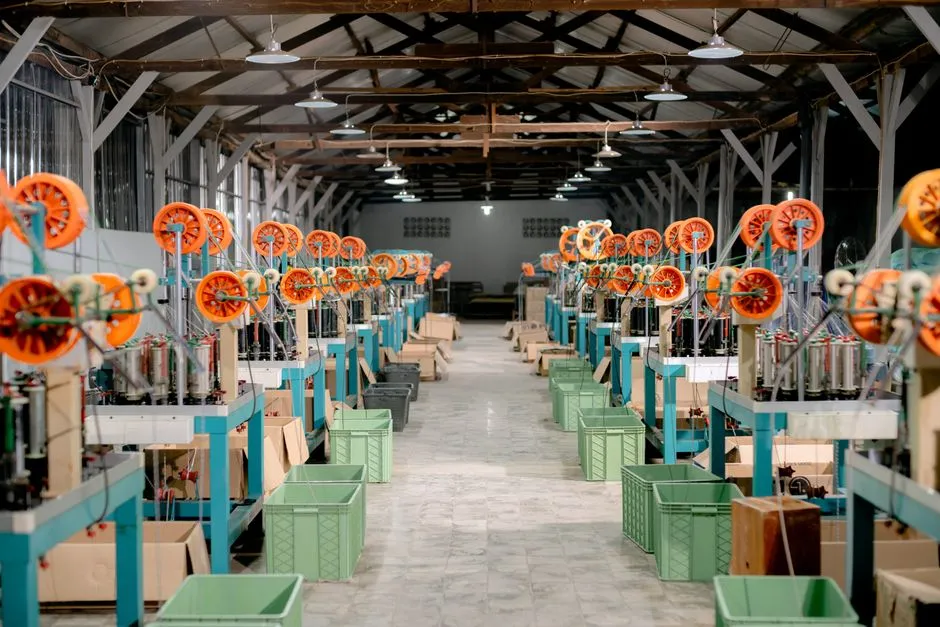
Apply this filter to every vendor quote before signing a 2026 supply or service contract. Each line maps to a specific budget risk covered earlier in this article.
- Demand membrane-geometry interchangeability data in writing. Confirm replacement modules fit existing cassettes without rack modification — the $5,000–$15,000 rack-rework line item is the single most common hidden cost in 2026 retrofit quotes.
- Require a written CIP-chemical compatibility statement for the membrane polymer (PVDF, PES, PP). Vendors that will not sign this are signaling future membrane-life risk that will show up as a 2027 or 2028 budget overrun.
- Confirm 2026 spare-parts lead times and build them into the critical-spares inventory: 6–14 weeks for OEM membrane modules, 2–4 weeks for diffusers and instruments, 1–2 weeks for bulk chemicals. Sites running single-train MBRs should hold a minimum 3-month critical-spares buffer.
- Prefer vendors with regional warehouse stock (US, EU, SEA) for diffusers and instruments, OEM-direct for membrane modules. Distributor-stocked membrane modules often carry 8–15% markup with no factory warranty backing in 2026. The DF-series PVDF flat-sheet membrane module ships factory-direct with regional warehouse support for diffusers and instruments. For adjacent budgeting context, the sludge dryer spare parts and consumables cost in 2026 reference covers the downstream dewatering step, and the mineral processing MBR case study shows how these numbers shift on a high-TSS industrial feed.
Frequently Asked Questions
How much does MBR membrane replacement cost per m³ treated in 2026? Budget $0.015–$0.045/m³ as a replacement reserve, which translates to $5,500–$16,400/yr at a 1,000 m³/day site for the membrane line item alone (HydropureWater field data, 2026).
How often should MBR membranes be cleaned with NaClO and citric acid in 2026? Run 1–4 CIP cycles per year on municipal feeds, triggered by a 20–30% TMP rise above clean-water baseline rather than the calendar. Each cycle uses 2.0–4.5 L of NaClO and 0.2–0.5 L of citric acid per m² of installed membrane area.
What is the typical lifespan of PVDF hollow-fiber vs flat-sheet MBR membranes? Hollow-fiber runs 6–8 years on domestic sewage and 2–3 years on raw landfill leachate; flat-sheet delivers 20–30% longer life on fouling-prone feeds at 25–40% higher module cost (per the 10-year cost example in this article).
Is an OEM MBR service contract cheaper than stocking spares in-house for a small plant? At <2,000 m³/day, a 2026 OEM service contract at $8,000–$15,000/yr usually beats in-house stocking once the 18-month shelf life of spare membrane modules and the carrying cost of diffuser inventory are factored in.
How much do MBR aeration diffusers cost to replace in 2026? $10–$40 per diffuser for EPDM tube or fine-bubble disc types, with a 5–10 year life; a 300-diffuser grid at a 1,000 m³/day MBR carries a $3,000–$12,000 replacement exposure per cycle.