Thailand's PCD Framework: Where the Ammonia Nitrogen Limit Actually Comes From
Thailand's ammonia nitrogen discharge limit for industrial wastewater is set by the Pollution Control Department (PCD) under the Ministry of Natural Resources and Environment, not the older 1992 Building Control Act. The governing instrument is the Industrial Effluent Standards issued under the Factory Act B.E. 2535 (1992) and its subsequent amendments, which give PCD inspectors authority to issue daily administrative fines and order partial or total plant shutdown for repeated violations. The standard a plant must hit is determined by two factors: the receiving-water classification (river vs. coastal vs. industrial estate) and the industry sector, with the tighter Standard A historically applying to <5 mg/L NH3-N and Standard B covering general industrial zones at <10 mg/L.
Receiving water matters more than most engineers assume. Class 1–2 receiving waters (used for drinking-water abstraction or aquaculture) drive a 5 mg/L NH3-N ceiling, while discharges to industrial estate common headers or coastal outfalls typically accept 10 mg/L but require flow-proportional monitoring. The PCD has signaled a 2024–2026 tightening trend, moving more sectors toward <5 mg/L, particularly for plants whose effluent enters Class 1–2 waters or municipal sewers feeding such waters. The PCD's published enforcement notices in 2025-08 also flagged that plants failing SMR (self-monitoring report) verification will be moved to the higher-risk inspection tier regardless of sector.
| Standard / Pathway | Typical NH3-N Ceiling | Receiving Environment | Typical PCD Enforcement Vehicle |
|---|---|---|---|
| Standard A (older nomenclature) | < 5 mg/L | Sensitive river, Class 1–2 water, drinking-water catchment | Factory Act B.E. 2535, Article 44–46 |
| Standard B (general industrial) | < 10 mg/L | Industrial estate common header, coastal outfall, Class 3–4 river | Factory Act B.E. 2535, Article 44 |
| Sector-specific (food, textile, electroplating) | 5–10 mg/L | Per PCD sector notice | Sub-sector ministerial notifications |
| Industrial estate ZLD (Eastern Seaboard, post-2024) | < 1–2 mg/L (polish target) | Recirculated cooling / process reuse | Estate operator MOUs with PCD |
Sector-Specific NH3-N Limits: Food, Textile, Electroplating, Pulp & Paper
Sector-specific ceilings are where most plant engineers get caught flat-footed, because the sector notice can override the generic 5 or 10 mg/L value. Food processing — starch, dairy, MSG, seafood — typically sits at 5–10 mg/L NH3-N on effluent, but raw influent often runs 200–800 mg/L NH3-N, so an A/O or MBR front-end is non-negotiable. Textile finishing commonly sees a 5 mg/L NH3-N limit, paired with chemical pretreatment for color and a biological nitrification stage for the nitrogen load. Electroplating facilities often face <5 mg/L NH3-N because ammonia complexes with nickel and copper, defeating downstream metal precipitation; chemical precipitation for metals must precede the biological stage. Pulp & paper and landfill leachate hit the most stringent band, frequently <5 mg/L, requiring an MBR or SBR with extended SRT beyond 20 days. Research on landfill leachate treatment using a bentonite-augmented SBR reported 76.33% NH3-N removal in 3 hours at optimum aeration (0.5–7.5 L/min) (Scientific.Net, 2025), a useful benchmark for high-strength batch streams. For context on regional pressure, MDPI's January 2026 national inventory placed Northern Thailand's atmospheric NH3 burden at 85.45 kt, the highest sub-region in the country, which means agro-processing plants in that corridor should expect both air and water NH3 enforcement to tighten in parallel. For an applied sector walkthrough, the Slaughterhouse Wastewater Nitrogen Removal Process: 2026 Engineering Guide covers high-strength protein waste streams in detail.
| Sector | Typical Influent NH3-N | PCD Effluent Ceiling | Mandatory Treatment Step |
|---|---|---|---|
| Food processing (starch, dairy, MSG, seafood) | 200–800 mg/L | 5–10 mg/L | A/O or MBR nitrification/denitrification |
| Textile finishing | 20–80 mg/L | 5 mg/L | Chemical color removal + biological nitrification |
| Electroplating | 10–60 mg/L (with complexing agents) | < 5 mg/L | Metal precipitation first, then biological |
| Pulp & paper / landfill leachate | 500–2,000 mg/L | < 5 mg/L | MBR or SBR with SRT > 20 days; bentonite augmentation in SBR gave 76.33% removal in 3 h (Scientific.Net, 2025) |
| Agro-processing (Northern Thailand) | 100–400 mg/L | 5–10 mg/L (tightening) | A/O or SBR; expect air-NH3 co-enforcement per MDPI 2026 inventory |
Why Ammonia Nitrogen Is Hard to Remove: The Chemistry That Drives Process Choice
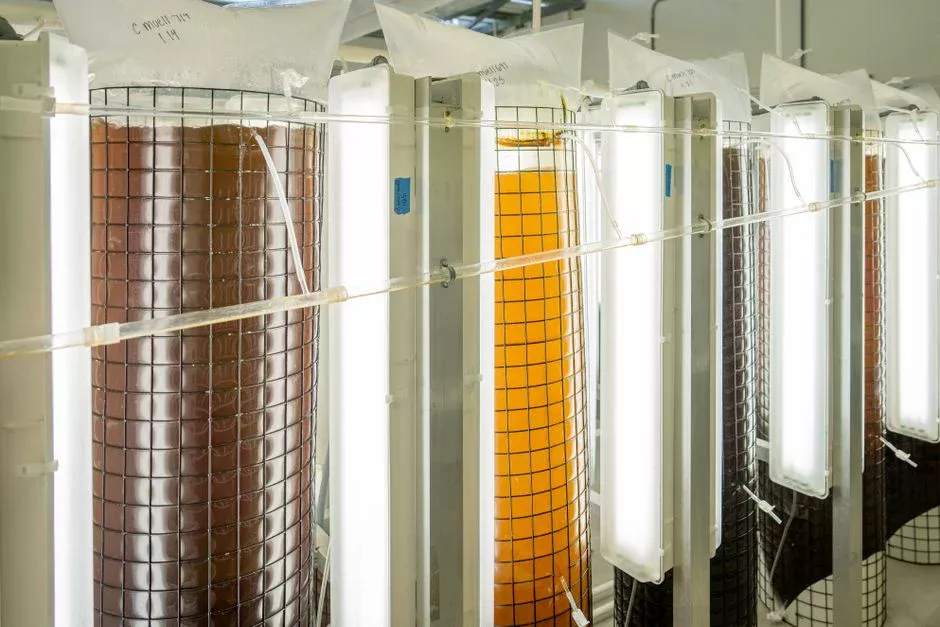
The conceptual model that ties influent load to process choice rests on four stoichiometric facts every compliance engineer should be able to recite. First, PCD measures NH3-N, but plant operators typically report influent load as TKN, which includes organic nitrogen that mineralizes to NH3-N inside the biological reactor — so a TKN of 60 mg/L often translates to a 40–50 mg/L NH3-N oxygen demand on the aeration tank. Second, nitrification stoichiometry: oxidizing 1 g of NH3-N to nitrate consumes roughly 4.57 g of O₂ and 7.14 g of alkalinity as CaCO₃, which is why alkalinity dosing (NaHCO₃ or lime) is mandatory in Thailand's soft tropical waters. Third, nitrifiers (Nitrosomonas and Nitrobacter) are slow-growing; solids retention time must exceed 10 days at 25–30°C, and over 20 days below 15°C, explaining why cold-season compliance failures are so common in Northern and Northeastern provinces. Fourth, denitrification consumes 2.86 g of COD per gram of NO3-N removed, so when the influent C/N ratio falls below 6:1, external carbon (methanol, glycerol, or acetate) becomes a hard operating cost rather than an option. Field data from MABR retrofits (Fluence Aspiral™) showed ammonia dropping below 10 mg/L within weeks of installation on a US Midwestern lagoon (Fluence, 2024–2025), demonstrating that the <10 mg/L vs <5 mg/L line is the most defensible benchmark separation when scoping capital upgrades.
Process Selection: A/O, SBR, MBR, MBBR, and Breakpoint Chlorination
The decision tree below assumes the influent has already been screened, equalized, and (where required) stripped of inhibitory metals. Conventional A/O delivers 60–85% NH3-N removal with effluent typically 5–15 mg/L, the lowest CapEx option, and fits steady flows of 50–2,000 m³/day from food and beverage plants. SBR (sequencing batch reactor) hits 80–95% removal with effluent <10 mg/L typical, tolerates shock loads from batch industries such as dye houses and slaughterhouses, and has a smaller footprint than continuous-flow A/O. MBR (membrane bioreactor) reaches 90–99% removal with effluent commonly <2–5 mg/L NH3-N, occupies roughly 60% of the footprint of an equivalent CAS (per MBR membrane bioreactor system design data, 2026), and is the only mainstream option that simultaneously supports water reuse, which is why it dominates new builds in Eastern Seaboard industrial estates. MBBR delivers 70–90% removal at lower CapEx than MBR and is the right call when retrofitting an existing activated-sludge basin. Breakpoint chlorination is a tertiary polish, not a primary process, that pushes effluent below 1 mg/L NH3-N at a dose of 7–10 mg Cl₂ per mg NH3-N removed, but it raises chloride and can form disinfection byproducts, so it is reserved for sensitive discharge or reuse, not routine polishing. Niche options such as ion exchange and struvite precipitation apply to high-strength, low-flow streams where recovery of nitrogen as fertilizer has a positive business case.
Flow rate is the strongest single tie-breaker: under 50 m³/day points to a package WSZ underground package plant; 50–500 m³/day favors SBR or compact A/O; above 500 m³/day, MBR with optional ZLD polishing becomes the default. For plants already running CAS that need to drop from 15 mg/L to <5 mg/L, retrofitting DF-series PVDF flat sheet membrane modules into the existing aeration tank is often the fastest path to compliance.
| Process | NH3-N Removal | Typical Effluent NH3-N | Footprint vs CAS | CapEx Band | Best Fit |
|---|---|---|---|---|---|
| Conventional A/O | 60–85% | 5–15 mg/L | 1.0× (baseline) | Low | Steady 50–2,000 m³/day, food & beverage |
| SBR | 80–95% | < 10 mg/L | 0.7× | Low–Medium | Batch/shock load, dye houses, slaughterhouses |
| MBR | 90–99% | < 2–5 mg/L | 0.4× (60% smaller than CAS) | Medium–High | Tight limits, water reuse, >500 m³/day, ZLD polish |
| MBBR | 70–90% | 5–10 mg/L | 0.8× | Low–Medium | Retrofit of existing activated sludge |
| Breakpoint chlorination (polish) | To < 1 mg/L | < 1 mg/L | Add-on | Low (chemical OPEX high) | Reuse or sensitive discharge, downstream of biological |
Operating Cost Reality: What It Costs to Hit <5 mg/L in 2026
Electricity is the dominant OPEX line, typically 60–70% of the total. Aeration for nitrification consumes 1.5–2.5 kWh/m³ on an MBR and 1.0–1.8 kWh/m³ on a conventional A/O at Thai industrial tariffs of roughly THB 4–5/kWh, which alone puts the energy bill at THB 6–12 per m³ treated. Chemical cost comes second: methanol for denitrification when influent C/N is below 6:1 runs THB 8,000–12,000 per cubic meter dosed (typical dose 3–5 L/m³), and alkalinity supplement with NaHCO₃ runs THB 3,000–5,000 per ton for soft-water plants in the South and East. MBR membrane replacement is a capex-deferred-as-OPEX line: every 5–8 years, expect THB 1,200–1,800 per m² of membrane area, and a 500 m³/day MBR with 2,000 m² of membrane area is a six-figure THB replacement event. Sludge disposal is the sleeper cost: nitrification generates roughly 0.15 kg of MLSS per kg of NH3-N removed, and dewatering that sludge on a belt press or screw press is the next downstream OPEX line item; the MBBR Operating Cost in 2026: Real OPEX Breakdown & Savings reference shows MBBR total OPEX at USD 0.06–0.18/m³ in 2026 benchmarks, a useful comparator when scoping an MBR upgrade at the same site.
Monitoring, Enforcement, and 2026 PCD Direction
The compliance failure mode in 2026 is no longer "did the lab sample fail" but "did the online analyzer fail to upload." Plants above 500 m³/day are increasingly required to install online NH3-N analyzers with daily data upload to the PCD's central monitoring platform, and the analyzer specification is converging on ISE or UV-vis with auto-cleaning, a 0.5 mg/L detection limit, and a daily calibration check (per general online sensor guidance for NH3-N, 2025-11). Self-monitoring reports are now filed quarterly rather than semi-annually for high-risk sectors, and a third-party lab cross-check is required at least once per year. Non-compliance penalties under the Factory Act B.E. 2535 include administrative fines up to THB 200,000 per incident, plus suspension orders and listing on the PCD's public violator register, which has become a procurement disqualifier for export-oriented supply chains. The 2026 trend to watch is PCD's push toward industrial estate zero-liquid-discharge (ZLD) for water-stressed zones along the Eastern Seaboard, where Class 1–2 receiving waters are already fully allocated, and a parallel tightening of atmospheric NH3 controls in the North, where the MDPI 2026 inventory recorded 85.45 kt of NH3 emissions, the highest sub-regional burden in Thailand. Plants installing analyzer infrastructure today should future-proof the enclosure for a second sensor channel; the reference design pattern is well established in the nickel online monitoring system 2026 engineering buyer's guide, which walks through the same enclosure, data-logger, and PCD upload stack used for NH3-N.
Frequently Asked Questions

What is the current PCD ammonia nitrogen discharge limit for industrial wastewater in Thailand?
Industrial effluent in Thailand must typically meet <5 mg/L NH3-N for Standard A (sensitive receiving waters) or <10 mg/L for Standard B (general industrial zones), with sector-specific values often tighter (Factory Act B.E. 2535, PCD Industrial Effluent Standards).
Which treatment process reliably hits <5 mg/L NH3-N from a 200–800 mg/L food-processing influent?
A membrane bioreactor sized for SRT >20 days, such as the MBR membrane bioreactor system, will hold <2–5 mg/L NH3-N on food and beverage waste; an SBR with extended aeration is the next-best option for batch operations.
How much methanol do I need to dose for denitrification when influent C/N is below 6:1?
Plan on 3–5 L of methanol per m³ treated at THB 8,000–12,000 per m³ dosed in 2026, sized against the stoichiometric 2.86 g COD per g NO3-N removed plus a 10–20% safety margin.
Do I need an online NH3-N analyzer for my plant in 2026?
Plants above 500 m³/day are increasingly required to install online NH3-N analyzers with daily PCD upload; an ISE or UV-vis sensor with a 0.5 mg/L detection limit and auto-clean is the current de facto specification.
Is breakpoint chlorination an option for routine compliance to <1 mg/L NH3-N?
It is a viable tertiary polish, dosing 7–10 mg Cl₂ per mg NH3-N removed, but it raises chloride and can form DBPs, so reserve it for reuse or sensitive-discharge polishing downstream of an MBR or SBR.