What the QCVN Standards Actually Say About Nickel in 2026
Under QCVN 40:2011/BTNMT, the nickel discharge limit in Vietnam is 0.5 mg/L for industrial wastewater (Column A) and 1.0 mg/L (Column B), while QCVN 14:2008 sets 0.2 mg/L for domestic wastewater from plants ≥1,000 m³/day. Compliance is typically achieved with hydroxide precipitation at pH 9.5–10.5 followed by ion exchange or sand filtration polishing to reach 0.1–0.3 mg/L. Column A applies to discharges into water bodies used for domestic water supply or aquaculture; Column B applies to discharges into non-source receiving waters such as industrial canals or non-drinking rivers.
The 2022 amendment under MONRE Circular 02/2022/TT-BTNMT reaffirmed the 0.5 mg/L Column A ceiling but added a hard administrative layer: any facility discharging more than 500 m³/day must now file quarterly self-monitoring reports through the MONRE environmental data portal, and DONRE provincial offices may escalate non-compliant sites to monthly external sampling at the operator's cost. QCVN 28:2010/BTNMT — the sector-specific benchmark for electroplating and metal finishing — sets a tighter 0.3 mg/L Ni that DONRE officers frequently reference when writing permit annexes. For context, the WHO drinking water guideline sits at 0.07 mg/L Ni, which is why Vietnam's 0.5 mg/L industrial ceiling still leaves a meaningful compliance margin that inspectors actively check.
| Standard | Nickel Limit (mg/L) | Applies To |
|---|---|---|
| QCVN 40:2011/BTNMT, Column A | 0.5 | Industrial wastewater discharged to water bodies used for water supply |
| QCVN 40:2011/BTNMT, Column B | 1.0 | Industrial wastewater discharged to non-source water bodies |
| QCVN 14:2008/BTNMT (≥1,000 m³/day) | 0.2 | Domestic wastewater from large plants |
| QCVN 14:2008/BTNMT (<1,000 m³/day) | 0.5 | Domestic wastewater from smaller plants |
| QCVN 28:2010/BTNMT | 0.3 | Metal-finishing sector benchmark cited in DONRE permits |
Where the Nickel Comes From: 2026 Influent Profiles in Vietnamese Facilities
Nickel influent concentration is the single most important design variable — a cathode precursor plant in Hai Phong and a small electroplating shop in Bac Ninh cannot share a process flow. The 2026 industry envelope runs from 1 mg/L to 500 mg/L, with pH consistently in the 2–6 acidic band and wastewater flow from a single mid-sized plating line typically at 5–30 m³/h.
- Electroplating rinse water: 5–200 mg/L Ni, driven by bright nickel bath drag-out on racks and barrels; sulfate or sulfamate chemistries.
- PCB and electronics manufacturing: 1–15 mg/L Ni from electroless nickel baths (Ni-P alloys) plus rinse drag-out; often co-mixed with copper and ammonia complexants.
- Stainless steel pickling: 2–25 mg/L Ni co-dissolved with chromium (2–50 mg/L Cr) and iron in mixed acid pickling liquor.
- Lithium-ion battery cathode precursor (NiSO₄ production): 50–500 mg/L Ni from crystallization mother liquor wash and crystallizer cleaning cycles — by far the highest-strength stream a Vietnamese EHS team will encounter, and increasingly common as VinES and LG Energy Solution supplier plants scale.
Flow variability is just as critical as concentration. A single automated hoist line in Dong Nai cycling 8–12 racks/h can swing wastewater flow ±40% over a shift, which is why equalization over 6–12 h is non-negotiable for any treatment train sized under 50 m³/h (HydropureWater field data, 2026).
How to Treat Nickel-Bearing Wastewater: 2026 Process Flow
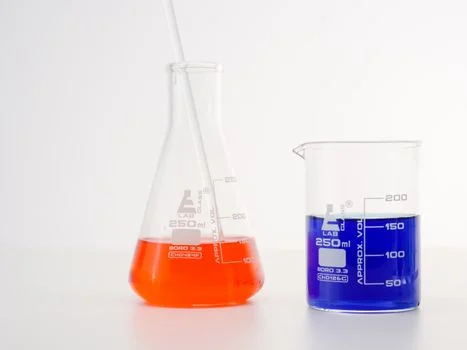
A treatment train that reliably meets QCVN 40 Column A (0.5 mg/L) has five stages, and skimping on any one of them is the most common reason facilities fail DONRE sampling events.
- Equalization and pH raise. Equalize flow over 6–12 h in a lined concrete or FRP tank; raise pH to 9.5–10.5 using NaOH (cleaner sludge, easier pH control) or Ca(OH)₂ (cheaper reagent, higher sludge volume). This stage smooths shock loads and sets up stoichiometric conditions for the precipitation reactor.
- Co-precipitation reactor. Dose NaOH at 0.8–1.2 kg per m³ of wastewater; hold hydraulic residence time (HRT) of 30–45 min in a stirred reactor with a PLC-controlled NaOH dosing loop. The minimum solubility of Ni(OH)₂ sits at pH ~10, so operating on the high side of the window (10.0–10.3) is standard for Column A compliance.
- Lamella clarifier / sedimentation. Use a lamella clarifier for nickel hydroxide settling with 2–4× sludge recirculation for floc maturation; design surface loading 1.5–2.5 m/h. Underflow solids typically run 2–4% dry weight.
- Multi-media sand filter polish. Pass clarified supernatant through a multi-media sand filter for nickel polishing to remove carryover floc; this stage alone typically brings Ni from 0.5–2 mg/L down to 0.2–0.4 mg/L, which is the difference between passing and failing Column A on a bad day.
- Cation ion exchange (Na-form resin) OR reverse osmosis. For plants that must hit the 0.2 mg/L QCVN 14 limit or hold a tighter internal spec, polish with strong-acid cation resin in the sodium form — service life 6–18 months depending on inlet loading and regeneration frequency. For facilities targeting zero liquid discharge (ZLD) or high-purity water reuse — common in semiconductor and battery precursor plants — swap in an RO polish for ZLD or high-purity reuse with 95–98% recovery and permeate <0.05 mg/L Ni.
Throughout the train, reagent accuracy drives both compliance and operating cost — a PLC-controlled NaOH dosing system for pH raise typically pays for itself inside 12 months through reduced NaOH consumption and tighter effluent quality. Ni-bearing hydroxide sludge is classified as hazardous waste under QCVN 50:2013/BTNMT and Decree 08/2022/ND-CP; it must be shipped to a licensed hazardous-waste treatment facility, never landfilled or discharged with the clarifier underflow.
Treatment Technology Comparison: Precipitation vs Ion Exchange vs RO
The polish step is where most of the CAPEX decision lives. Precipitation alone will not clear Column A consistently; the question is whether sand filtration, ion exchange, or RO is the right upgrade for the specific influent strength and target limit. The table below is sized against a 10 m³/h design basis, which is the most common scope for a single plating line in Vietnam.
| Configuration | CAPEX (USD) | OPEX (USD/m³) | Residual Ni (mg/L) | Sludge Volume | Footprint (m²) |
|---|---|---|---|---|---|
| Hydroxide precipitation only | $80,000–$130,000 | $0.25–$0.55 | 0.5–2.0 | High | 25–40 |
| Precipitation + sand filter | $105,000–$175,000 | $0.30–$0.60 | 0.2–0.4 | High | 35–50 |
| Precipitation + ion exchange | $140,000–$240,000 | $0.45–$0.95 | <0.1 | High + brine | 45–70 |
| Precipitation + RO | $220,000–$380,000 | $0.55–$1.10 | <0.05 | High + concentrate | 60–90 |
The decision rule that holds up across the 2024–2026 Dong Nai and Bac Ninh project base: if the influent is <10 mg/L Ni and the permit target is Column A, precipitation plus a multi-media sand filter is the cost-optimum scope. If influent exceeds 10 mg/L, or the target is the 0.2 mg/L QCVN 14 domestic ceiling, add cation ion exchange. RO only earns its CAPEX premium when the plant is also chasing ZLD, water reuse credits, or supplying ultrapure water to a downstream process — for compliance alone, it is over-specified.
2026 CAPEX and OPEX for Nickel Compliance in Vietnam
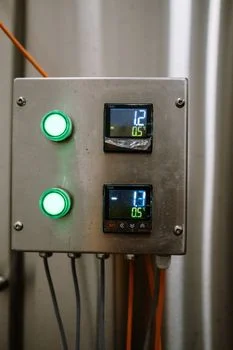
A defensible 2026 budget for a Vietnamese EHS manager to put in front of a factory general manager runs as follows, based on turnkey supply and installation in industrial parks around Hai Phong, Bac Ninh, and Dong Nai:
- 10 m³/h complete train (equalization + precipitation + lamella + sand filter + IX): CAPEX $180,000–$280,000.
- 20 m³/h train, same scope: CAPEX $280,000–$420,000.
- 50 m³/h train with IX and RO (typical for a mid-sized NiSO₄ precursor plant): CAPEX $650,000–$1,100,000.
- OPEX — NaOH: $0.08–$0.15 per m³ treated.
- OPEX — cation resin replacement: $0.04–$0.09 per m³ treated.
- OPEX — hazardous waste sludge disposal at licensed handler rates: $0.12–$0.25 per m³ treated.
- Total OPEX band: $0.45–$0.95 per m³ for an IX-polished train; $0.25–$0.55 per m³ for precipitation-only trains (HydropureWater field data, 2026).
- Annual compliance testing: VND 15–35 million per year for quarterly accredited lab sampling, as required by MONRE Circular 02/2022 for any facility discharging >500 m³/day.
For a 20 m³/h plant running two shifts, this works out to roughly $95,000–$160,000 in annual OPEX plus a VND 15–35M testing line item — a number a GM can benchmark against the cost of a single MONRE non-compliance event, where administrative fines under Decree 45/2022/ND-CP plus production suspension routinely exceed VND 100M and can climb past VND 1B depending on receiving-water impact.
Frequently Asked Questions
Q1: What is the maximum nickel concentration allowed in industrial wastewater in Vietnam?
A: 0.5 mg/L under QCVN 40:2011/BTNMT Column A (discharges to water supply source bodies) and 1.0 mg/L under Column B (discharges to non-source water bodies).
Q2: Does QCVN 14:2008 apply to my factory's wastewater?
A: Only if the discharge is classified as domestic wastewater under the permit. Industrial streams from electroplating, PCB, and battery precursor processes are governed by QCVN 40:2011/BTNMT, not QCVN 14. For facilities producing both streams, the 0.2 mg/L QCVN 14 ceiling becomes the binding limit on the combined outfall if more than 1,000 m³/day is discharged.
Q3: Can hydroxide precipitation alone meet Vietnam's nickel limit?
A: Precipitation at pH 9.5–10.5 reliably hits Column B (1.0 mg/L) but requires sand filter or ion-exchange polishing to consistently meet Column A (0.5 mg/L) or QCVN 14 (0.2 mg/L). For more on how this comparison extends to other metals, see the chromium removal technology comparison for 2026.
Q4: Is nickel-bearing sludge hazardous in Vietnam?
A: Yes. Ni-bearing hydroxide sludge is classified as hazardous waste under QCVN 50:2013/BTNMT and Decree 08/2022/ND-CP, and must be sent to a licensed hazardous-waste treatment facility such as Thanh Huy or Tasco. For a related metals compliance case, see the analysis of zinc discharge limit in Vietnam under QCVN 40 and QCVN 14.
Q5: How often must my facility self-monitor nickel?
A: Under MONRE Circular 02/2022/TT-BTNMT, facilities discharging more than 500 m³/day must self-monitor nickel quarterly at an accredited lab and upload results to the MONRE environmental data portal. Provincial DONRE offices may require monthly external sampling for sites that have failed any parameter in the previous 12 months. For benchmarking against neighbouring regulators, see the parallel nickel discharge limit in Indonesia under PP No. 22.