What a Mining Wastewater Plant Actually Costs to Run
A mining wastewater plant operating cost in 2026 typically runs $0.40–$4.80 per m³ treated, dominated by energy (35–55%), chemicals (15–25%), and sludge dewatering (10–20%). Zero-liquid-discharge (ZLD) systems sit at the high end ($2.50–$4.80/m³) while conventional high-density sludge (HDS) trains run $0.40–$1.20/m³. A 500 m³/h acid mine drainage plant therefore costs $1.7M–$21M per year to operate, before any contingency for reagent spikes or grid outages.
OPEX, for the purposes of this benchmark, includes only the cash a plant spends in a given year: electricity, reagents, sludge transport and disposal, labor, membrane and media replacement, and routine maintenance. Capital amortization, financing, and one-off capex upgrades sit outside this number — including them would roughly double the all-in annual cost of a new ZLD plant but is a different conversation. The EPA's 1997 daily direct cost band of $100–$1,500 still circulates in feasibility studies; even inflated to $190–$2,850/day in 2026 dollars it understates modern ZLD OPEX because it predates thermal crystallizers, high-recovery RO, and current lime and electricity pricing (per EPA 1997 NEPIS report, indexed to U.S. BLS reagent and power inflation 1997–2025).
For a board-level read, treat the $0.40/m³ floor as an HDS-only case with low-iron influent, cheap hydropower, and a beneficial reuse outlet for clarified effluent. Treat the $4.80/m³ ceiling as a ZLD plant running 24/7 on grid power with a mechanical vapor recompression crystallizer. Most operating mines land somewhere between $0.80 and $2.20/m³ once reagent transport and labor in remote jurisdictions are priced in.
OPEX Breakdown by Line Item for 2026
Energy is the single largest line on a 2026 mine water OPEX sheet, accounting for 35–55% of total cost across both HDS and ZLD trains. Specific electrical consumption runs 0.8–2.5 kWh/m³ for an HDS plant and 8–18 kWh/m³ for a ZLD plant with a thermal crystallizer; at $0.07–$0.12/kWh industrial tariffs common in 2026 mining jurisdictions, that translates to $0.06–$0.30/m³ for HDS and $0.70–$1.80/m³ for ZLD before any demand charges (HydropureWater field data, 2026).
Chemicals are the second bucket, at 15–25% of OPEX. Reagent pricing in 2026 sits at roughly lime $120–$180/t, caustic $380–$520/t, and anionic flocculant $2.50–$4.20/kg delivered to most North American mine sites. Acid mine drainage neutralization typically demands 1.5–4.0 kg of hydrated lime per m³ of raw water, plus 0.2–0.6 kg of flocculant per dry tonne of sludge solids — a dosing profile that puts chemical cost at $0.10–$0.55/m³ for most AMD applications. Closed-loop control on an automated chemical dosing skid typically trims reagent spend 10–20% versus manual set-point dosing.
Sludge handling, dominated by dewatering, polymer, and transport-to-impoundment costs, runs 10–20% of OPEX. A plate-and-frame filter press consumes roughly one-sixth the energy of a belt press or decanter centrifuge (per Basics of Mining Wastewater Treatment, top-4 ranking source) and produces cake at 28–35% dry solids versus 18–22% for a typical belt press, which directly reduces tonnage hauled to the tailings facility. Labor and routine maintenance combined account for 10–15% of OPEX, with fully loaded operator cost at $45,000–$85,000/year in major mining jurisdictions such as Australia, Chile, Canada, and the U.S. Southwest.
| Line Item | % of OPEX | 2026 Unit Cost | Typical Dose / Intensity | Indicative $/m³ |
|---|---|---|---|---|
| Energy (HDS) | 35–45% | $0.07–$0.12/kWh | 0.8–2.5 kWh/m³ | $0.06–$0.30 |
| Energy (ZLD w/ thermal) | 45–55% | $0.07–$0.12/kWh | 8–18 kWh/m³ | $0.70–$1.80 |
| Lime (AMD) | 10–18% | $120–$180/t | 1.5–4.0 kg/m³ | $0.18–$0.72 |
| Caustic (pH trim) | 2–6% | $380–$520/t | 0.05–0.30 kg/m³ | $0.02–$0.16 |
| Flocculant | 2–4% | $2.50–$4.20/kg | 0.2–0.6 kg/tDS | $0.01–$0.05 |
| Sludge dewatering + haulage | 10–20% | $8–$25/t wet cake | 2–8 kg DS/m³ | $0.05–$0.30 |
| Labor + maintenance | 10–15% | $45K–$85K/operator | 1–4 operators/shift | $0.05–$0.20 |
HDS vs ZLD: Operating Cost Side-by-Side
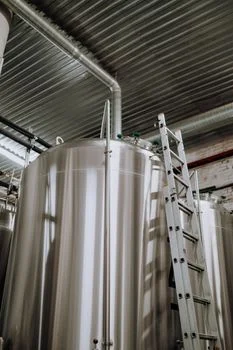
An HDS train — lime neutralization, sludge recycle, clarification, and either discharge or media filtration — delivers OPEX of $0.40–$1.20/m³ with modest CAPEX ($2M–$8M for a 500 m³/h plant) and is the default choice wherever a National Pollutant Discharge Elimination System (NPDES)-style permit is available, or where effluent can be sent to a lined tailings facility. A ZLD train adds reverse osmosis, a brine concentrator, and typically a thermal crystallizer, pushing OPEX to $2.50–$4.80/m³ and CAPEX to $25M–$50M for a 1,000–3,000 GPM (227–680 m³/h) system (per How Much Does an Industrial Water Treatment System Cost?, 2024 industry source, indexed to 2026 reagent and power).
ZLD is economically justified only when discharge is impossible: evaporation-prone endorheic basins in Chile's Atacama, the U.S. Great Basin, and Western Australia, or zero-discharge permits tied to a contaminated site. A frequent middle path is an industrial RO system paired with a solar evaporation pond, which commonly lands at $0.80–$1.50/m³ OPEX and beats full ZLD by 50–65% wherever 20–40 acres of flat, lined basin is available per 100 m³/h of brine.
| Parameter | Conventional HDS | ZLD (RO + thermal) | RO + Solar Pond Hybrid |
|---|---|---|---|
| OPEX ($/m³) | $0.40–$1.20 | $2.50–$4.80 | $0.80–$1.50 |
| CAPEX (500 m³/h) | $2M–$8M | $25M–$50M | $8M–$18M |
| Energy intensity | 0.8–2.5 kWh/m³ | 8–18 kWh/m³ | 2.5–4.5 kWh/m³ |
| Water recovery | 70–85% (as effluent) | 95–99% (crystallized salts) | 80–90% (brine to pond) |
| Footprint | Compact | Compact | Requires 20–40 acres/100 m³/h |
| Permit requirement | NPDES or equivalent | Zero-discharge sites | Lined pond approval |
How Contaminant Profile Changes the Bill
Influent chemistry drives more variance in OPEX than flow rate. Acid mine drainage with high iron (50–500 mg/L) and sulfate (1,000–4,000 mg/L) drives lime consumption 2–3× higher than neutral mine process water because each mg/L of ferric iron consumes roughly 1.4 mg/L of Ca(OH)₂ to precipitate as ferric hydroxide, and sulfate removal as gypsum adds another 0.7 mg/L of lime per mg/L of SO₄²⁻ above background. A copper-zinc concentrator discharging 300 mg/L Fe and 2,500 mg/L sulfate will see chemical OPEX of $0.45–$0.70/m³ versus $0.20–$0.35/m³ for a low-iron quarry dewatering stream at the same flow (HydropureWater field data, 2026).
Heavy metals above 5 mg/L each — zinc, copper, nickel, lead — add an estimated 8–15% to chemical OPEX through staged hydroxide precipitation and sulfide precipitation polishing steps, with NaSH or Na₂S dosing of 1.05–1.10× stoichiometric for the target metal. High total suspended solids (>500 mg/L) inflate sludge OPEX linearly; a lamella clarifier cuts sludge volume roughly 30% versus a conventional center-feed settler by improving settling flux from 1–2 m³/m²/h to 3–6 m³/m²/h. Pre-thickening with a dissolved air flotation unit ahead of the clarifier can lift TSS removal from 70–80% to 90–95% on buoyant clays and colloidal precipitates common in coal-prep and oil-sands circuits.
Seven Engineering Levers That Cut OPEX 25–50%
Cost reduction is not about picking cheaper reagents — it is about re-engineering the unit operations that dominate the bill. The seven interventions below compound; a plant that deploys all seven typically lands 35–50% below its pre-retrofit OPEX baseline within 18 months (HydropureWater field data, 2026).
- VFD fine-bubble aeration: Replacing fixed-blower aeration with VFD-driven fine-bubble diffusers cuts aeration energy 30–45%. A 500 m³/h HDS basin running two 75 kWh blowers continuously drops to ~40 kWh average draw at 0.4–0.6 mg/L residual DO control.
- Closed-loop pH/ORP dosing: On-line sensors tied to an automated chemical dosing skid deliver 10–20% reagent savings versus manual set-point operation by eliminating overdosing on influent swings of ±200 mg/L alkalinity.
- Belt press to plate-and-frame conversion: Energy falls to roughly one-sixth of prior baseline (per Basics of Mining Wastewater Treatment), and cake dryness rises from 18–22% to 28–35% DS, cutting haulage tonnage and polymer use 15–25% on a plate-and-frame filter press.
- RO concentrate heat recovery: A sludge-bundle heat exchanger on the brine line recovers 60–70°C of low-grade heat and preheats crystallizer feed, trimming thermal energy 12–18% on a ZLD plant.
- Pressate reuse as lime-slurry dilution: Centrate from the dewatering press contains 200–600 mg/L TSS and residual alkalinity; routing it back as dilution water for lime slurry cuts fresh water draw 8–12%.
- Sludge co-disposal: Co-placing neutralized AMD sludge with geochemically compatible tailings or bioleach residue eliminates a separate impoundment cell and saves $5–$15/wet tonne in handling cost, provided ABA testing confirms non-acid-generating behavior.
- Interruptible power tariffs: ZLD plants with large thermal loads that can flex crystallizer output by 15–25% during peak grid hours save 6–10% on power by enrolling in utility interruptible or real-time-pricing tariffs common in Chile, South Africa, and ERCOT.
| Lever | Target Line Item | Typical % Reduction | Payback |
|---|---|---|---|
| VFD fine-bubble aeration | Energy | 30–45% | 1.5–2.5 yr |
| Closed-loop pH/ORP dosing | Chemicals | 10–20% | < 1 yr |
| Belt → plate-and-frame | Sludge + energy | 25–40% sludge OPEX | 2–3 yr |
| Brine heat recovery | ZLD thermal energy | 12–18% | 3–4 yr |
| Pressate reuse | Fresh water + lime | 8–12% water, 2–4% lime | < 1 yr |
| Sludge co-disposal | Sludge transport | 20–35% | 1–2 yr |
| Interruptible tariff | ZLD power | 6–10% | Immediate |
For deeper context on sludge OPEX and diffuser selection, see our sludge disposal cost optimization guide, our activated carbon filter OPEX guide, and our fine bubble diffuser vs surface aerator comparison.
Building a 2026 OPEX Model in Five Lines
A defensible annual OPEX estimate fits on one line of spreadsheet math:
OPEX_annual = Q × [E × $/kWh + C × $/kg + S × $/tDS + L × hrs/shift + M × fixed%]
where Q = m³/year, E = kWh/m³, C = kg reagent/m³, S = tonnes dry sludge/m³, L = loaded labor cost per hour, and M is a fixed-percentage maintenance adder (typically 4–7% of mechanical CAPEX/year).
Worked example for a 500 m³/h HDS plant: Q = 500 × 8,000 = 4,000,000 m³/yr. E = 1.8 kWh/m³ × $0.09/kWh = $0.162/m³. Lime = 2.5 kg/m³ × $0.15/kg = $0.375/m³. Sludge = 3 kg DS/m³ × $40/tDS (dewater + haul) = $0.120/m³. Labor + maintenance = $0.18/m³. Total ≈ $0.84/m³, or $3.36M/yr. A blended ZLD plant at $1.10/m³ OPEX = $4.4M/yr on the same flow. Sensitivity: a ±20% swing in energy price moves total OPEX by ±$300K–$500K/yr depending on train — the largest single-variable lever a CFO can act on (HydropureWater field data, 2026).
| Sensitivity Variable | ±10% Impact on HDS OPEX | ±10% Impact on ZLD OPEX |
|---|---|---|
| Electricity price | ±$80K–$120K/yr | ±$280K–$360K/yr |
| Lime price | ±$90K–$150K/yr | ±$90K–$150K/yr |
| Sludge haulage | ±$60K–$100K/yr | ±$60K–$100K/yr |
| Labor wage | ±$30K–$50K/yr | ±$40K–$70K/yr |
Pre-treatment with a multi-media filter ahead of RO is a common upstream lever for ZLD trains: it cuts membrane fouling and extends CIP intervals from 30 to 60–90 days, saving $0.05–$0.12/m³ in membrane replacement and cleaning OPEX.
Frequently Asked Questions
What is the biggest contributor to mining wastewater plant operating cost in 2026? Energy is the largest line item at 35–55% of total OPEX, with HDS plants drawing 0.8–2.5 kWh/m³ and ZLD plants drawing 8–18 kWh/m³. At 2026 industrial tariffs of $0.07–$0.12/kWh, that places energy cost at $0.06–$0.30/m³ for HDS and $0.70–$1.80/m³ for ZLD.
How much does acid mine drainage treatment cost per m³? AMD treatment typically runs $0.60–$1.80/m³ for an HDS-only train in 2026, with the upper end reserved for high-iron (200+ mg/L) and high-sulfate (3,000+ mg/L) influents. Closed-loop pH control and a properly sized dosing skid typically hold the lower end.
Is a plate-and-frame filter press cheaper to run than a belt press? Yes — a plate-and-frame filter press consumes roughly one-sixth the energy of a belt press or decanter centrifuge (per Basics of Mining Wastewater Treatment) and lifts cake dryness from 18–22% to 28–35% DS, reducing polymer use 15–25% and hauled tonnage 30–45% on a per-m³ basis.
When does ZLD beat HDS on OPEX? Almost never on OPEX alone — ZLD runs $2.50–$4.80/m³ versus $0.40–$1.20/m³ for HDS. ZLD is justified by permit constraints, water-recovery value, or site-specific zero-discharge obligations rather than OPEX minimization; a hybrid RO + solar evaporation pond at $0.80–$1.50/m³ is usually the lowest-cost path where land is available.