The best trash rake screen for industrial use balances removal efficiency (95%+ TSS), durability (304/316 stainless steel), and low headloss (<150 mm). Top systems—like HUBER’s RakeMax (4 mm bar spacing) and Lakeside’s Raptor (automatic reversing)—handle flows up to 50,000 m³/h and debris loads of 5–50 kg/m³. CapEx ranges from $25K for small mobile units to $250K for heavy-duty fixed-head systems, with OPEX driven by energy use (0.5–2 kWh/ton debris) and maintenance intervals (3–12 months for rake teeth replacement).
Why Industrial Trash Rake Screens Fail: A Case Study from a Paper Mill
Unplanned downtime in paper mill operations often stems from primary screening failures, where bypass of inorganic solids leads to impeller fouling in downstream centrifugal pumps. In a documented case from a large-scale paper mill in Indonesia, the reliance on a coarse manual bar screen resulted in $1.2M in cumulative repair costs over a 24-month period. The failure occurred when synthetic rags and plastic binding straps bypassed the 25 mm manual gaps, entering the primary clarifier and eventually seizing the impellers of the main sludge pumps. This event caused three days of total facility downtime, costing the operator approximately $400,000 per day in lost production.
Data indicates that facilities utilizing manual cleaning methods face average maintenance costs of $50,000 per year, primarily due to labor and emergency repairs. In contrast, automated systems reduce this figure to approximately $15,000 per year by providing continuous debris removal and preventing the "slug loading" that occurs when manual screens are cleaned infrequently. Automated trash rake screens serve as the first line of defense in food processing wastewater treatment specs for high-solids streams, protecting sensitive downstream equipment such as Dissolved Air Flotation (DAF) units and Membrane Bioreactors (MBRs) from inorganic solids like wood, metal fragments, and plastics.
The role of the trash rake in pretreatment is to intercept these solids before they can cause mechanical wear or biological process interference. By transitioning from a manual or low-efficiency screen to a multi-rake system with 4–10 mm bar spacing, industrial plants can prevent over 90% of downstream mechanical failures. This transition is particularly critical in regions with strict discharge requirements, such as Zarqa’s industrial wastewater treatment specs and compliance requirements, where solid bypass can lead to immediate permit violations.
How Trash Rake Screens Work: Mechanism, Bar Spacing, and Rake Penetration
Mechanical trash rake screens operate using a drive-driven rake assembly that clears debris from a stationary bar rack with spacing typically ranging from 3 mm to 20 mm. The engineering effectiveness of these systems is defined by three core components: the bar screen geometry, the rake tooth penetration, and the drive mechanism. Bar spacing involves a technical trade-off; while narrower spacing (3–6 mm) captures a higher percentage of TSS, it significantly increases headloss and the risk of "blinding" if the rake frequency is insufficient. According to Beaudrey’s engineering benchmarks for high-flow intakes, maintaining headloss below 150 mm is essential for preventing upstream flooding and ensuring consistent flow rates.
Rake penetration depth is the most critical factor for cleaning efficiency. Leading designs, such as the Raptor series, utilize teeth that penetrate the bar openings by 15 mm to 20 mm. This mechanical engagement ensures that compacted debris—such as wet fibers or grease-laden plastics—is physically dislodged rather than merely skimmed. The drive mechanism further dictates durability; stainless steel roller chains are preferred for continuous-duty industrial applications due to their high tensile strength, whereas hydraulic arms are often reserved for heavy-duty, intermittent "grab" raking of large objects like logs or boulders.
| Component | Technical Specification | Industrial Impact |
|---|---|---|
| Bar Spacing | 3 mm – 20 mm | Determines capture rate; 6 mm is standard for pulp/paper rags. |
| Rake Penetration | 10 mm – 20 mm | Prevents "blinding" by clearing the full depth of the bar rack. |
| Drive Type | Chain vs. Hydraulic | Chain allows for multi-rake (continuous); Hydraulic allows for high-torque (heavy debris). |
| Material Grade | 304/316 Stainless Steel | Prevents pitting corrosion in acidic or saline wastewater. |
Top 5 Industrial Trash Rake Screens Compared: Specs, Efficiency, and Cost
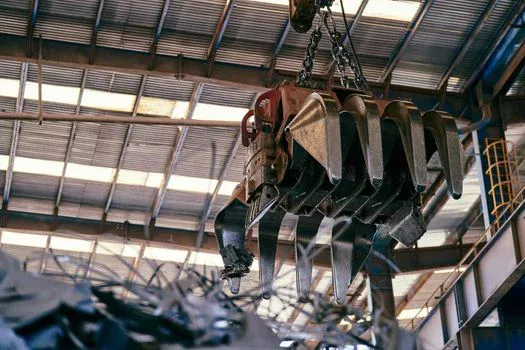
Selecting the optimal trash rake screen requires a performance-to-cost evaluation across leading systems like HUBER, Raptor, and Beaudrey, which vary significantly in debris handling capacity and drive durability. Engineers must distinguish between multi-rake systems, which offer high-frequency cleaning for high-load streams, and fixed-head or mobile systems designed for massive intake volumes or seasonal debris.
| System Model | Max Flow (m³/h) | Min Bar Spacing | Removal Efficiency | Drive Mechanism | Estimated CapEx |
|---|---|---|---|---|---|
| HUBER RakeMax | 15,000 | 4 mm | 96% | Multi-Rake Chain | $80K – $160K |
| Lakeside Raptor | 12,000 | 3 mm | 98% | Stainless Roller Chain | $75K – $145K |
| Beaudrey Fixed-Head | 50,000 | 10 mm | 92% | Cable or Hydraulic | $150K – $250K |
| FlexRake FRHD | 8,000 | 12 mm | 90% | Flexible Link Arm | $40K – $90K |
| Atlas-SSI Landy | 30,000 | 6 mm | 94% | Monorail / Trolley | $60K – $120K |
The HUBER RakeMax is frequently specified for industrial process water due to its ability to handle very fine spacing without excessive headloss. The Lakeside Raptor stands out for its automatic reversing feature, which prevents motor burnout when encountering un-rakeable objects. For massive water intakes, such as those found in mining or power generation, Beaudrey’s fixed-head systems are the industry standard, capable of managing flows up to 50,000 m³/h. Conversely, the FlexRake FRHD is ideal for cooling tower blowdown pretreatment and debris removal where debris types are highly variable, including plastic sheets and organic matter.
Matching Screen Type to Industrial Application: A Decision Framework
Industrial application requirements for screening systems are determined by the specific gravity and physical dimensions of the debris load, ranging from low-density plastics in food processing to high-density minerals in mining. A "one-size-fits-all" approach often leads to premature equipment failure or excessive bypass. Engineers should follow a three-step selection framework: first, define the debris profile (fibrous, abrasive, or bulky); second, calculate the peak flow variability; and third, align the drive mechanism with the corrosive nature of the wastewater.
For high-fiber environments like pulp and paper, a multi-rake system is essential. The high frequency of rake passes prevents the formation of a "mat" on the bars, which would otherwise cause a rapid rise in headloss. In food processing, where fats, oils, and greases (FOG) are present, screens must include self-cleaning brushes and automatic reversing to clear sticky residues. For mining and heavy industrial intakes, a coarse bar screen with a hydraulic grab rake is often more effective at removing heavy items like timber and rocks. HydropureWater’s GX Series Rotary Mechanical Bar Screen for continuous-duty fine screening provides a versatile solution for these applications, particularly when integrated into a comprehensive pretreatment train.
| Industry | Recommended Spacing | Recommended Screen Type | Key Feature Needed |
|---|---|---|---|
| Pulp & Paper | 6 mm – 10 mm | Multi-Rake Chain | High-frequency cleaning |
| Food Processing | 3 mm – 6 mm | Rotary or Multi-Rake | FOG-resistant brushes |
| Mining / Heavy Ind. | 15 mm – 30 mm | Hydraulic Grab Rake | High torque/lift capacity |
| Stormwater/Intake | 10 mm – 20 mm | Mobile Trolley Rake | Large width coverage |
CapEx and OPEX Breakdown: 5-Year TCO for Industrial Trash Rake Screens
The total cost of ownership (TCO) for a heavy-duty trash rake screen is influenced more by long-term OPEX—specifically energy consumption and wear-part replacement—than the initial CapEx. A standard industrial installation (10,000 m³/h capacity) typically involves a CapEx of $120,000 for the equipment, plus an additional 30-40% for civil works, electrical integration, and PLC controls. While mobile units offer a lower entry price ($25K–$50K), their manual operation requirements or lower removal efficiencies can lead to higher downstream costs.
OPEX is dominated by two factors: energy and maintenance. Multi-rake systems utilizing stainless steel roller chains are significantly more energy-efficient than hydraulic systems, typically consuming 0.5–1.5 kWh per ton of debris removed. Maintenance costs include the replacement of rake teeth, which are wear items. In abrasive environments (e.g., mining), teeth may require replacement every 3–6 months, whereas in municipal or light industrial use, they may last 12 months or longer. Using the formula TCO = CapEx + (Annual OPEX × 5), a $150,000 system with $15,000 in annual operating costs results in a 5-year TCO of $225,000. This is a fraction of the cost associated with a single major pump failure or a week of production downtime.
| Cost Category | Estimated Range (USD) | Notes |
|---|---|---|
| Equipment (CapEx) | $25,000 – $250,000 | Mobile vs. Heavy-Duty Fixed |
| Installation & Controls | $15,000 – $70,000 | Civil works and PLC integration |
| Energy (OPEX/yr) | $500 – $3,000 | Based on 0.12/kWh |
| Maintenance (OPEX/yr) | $2,000 – $10,000 | Teeth, chains, and lubrication |
Common Failure Modes and How to Prevent Them
Chain jams and rake tooth wear account for approximately 65% of mechanical failures in automated bar screens, typically resulting from inadequate pre-screening or improper material selection for the rake teeth. A chain jam usually occurs when oversized debris, such as a large timber or a metal pipe, becomes wedged between the bar rack and the rake. To prevent this, engineers should specify "automatic reversing" logic in the PLC, which allows the rake to back off and re-attempt the lift or trigger an alarm before the motor burns out. Additionally, integrating automated chemical dosing for pH adjustment and flocculation downstream can be impacted by screening efficiency, as excessive solids interfere with chemical mixing.
Top 5 Failure Modes & Solutions:
- Chain Stretch/Jams: Caused by heavy loading. Fix: Use 316SS roller chains and monthly tension audits.
- Rake Tooth Wear: Caused by grit and sand. Fix: Specify replaceable hardened stainless teeth.
- Bar Clogging (Blinding): Caused by grease or hair. Fix: Increase rake frequency and install spray bars.
- Corrosion: Caused by H2S or chlorides. Fix: Full 316L stainless construction or epoxy coating.
- Motor Overload: Caused by mechanical obstruction. Fix: Torque-limiting couplings and PLC sensors.
A proactive maintenance checklist should include daily visual inspections of the discharge chute, weekly checks of chain tension, and semi-annual lubrication of all drive bearings. For systems handling corrosive industrial effluent, an annual ultrasonic thickness test of the bar rack is recommended to monitor for erosion.
Compliance and Permitting: What Industrial Buyers Need to Know
Regulatory compliance with EPA 40 CFR Part 403 requires industrial facilities to implement pretreatment technologies that prevent the discharge of solids capable of obstructing municipal sewer flow. In the United States, most municipal discharge permits set a limit for Total Suspended Solids (TSS) and specifically prohibit "pass-through" of inorganic debris larger than 12 mm. Similarly, the EU Urban Waste Water Directive (91/271/EEC) mandates primary screening for all industrial effluents to protect the integrity of public treatment works.
High-efficiency trash rake screens help meet these standards by achieving 95%+ removal of gross solids. for industries dealing with sensitive waste streams, such as compact medical wastewater treatment systems with integrated screening, the removal of solids is a prerequisite for effective disinfection (UV or Ozone). Documentation required for permit audits typically includes vendor-certified removal efficiency reports, headloss calculations at peak design flow, and a rigorous maintenance log demonstrating that the screen is operational 99% of the time.
Frequently Asked Questions
Q: What’s the difference between a trash rake screen and a standard bar screen?
A: A standard bar screen is often a passive or manually cleaned rack, whereas a trash rake screen is an active mechanical system. Trash rakes provide 90-98% removal efficiency and are designed for high debris loads that would quickly overwhelm a manual screen.
Q: How do I choose between a fixed-head and a mobile trash rake?
A: Fixed-head systems are best for continuous, high-flow channels (e.g., primary plant intakes). Mobile units travel on a rail system and are used for multiple parallel channels or seasonal intakes where continuous raking is not required on a single bar rack.
Q: What is the typical lifespan of a stainless steel trash rake?
A: With proper maintenance, a 304 or 316 stainless steel system has a design life of 20–25 years. Wear parts like rake teeth and chain bushings typically require replacement every 2–5 years depending on the abrasiveness of the wastewater.
Q: Can these screens handle oily or greasy wastewater?
A: Yes, but they require specific modifications such as wider bar spacing (6–10 mm) to prevent clogging and the addition of heated spray bars or rotating brushes to clean the rake teeth after each pass.
Q: What is the energy cost per ton of debris removed?
A: Most modern multi-rake systems operate at 0.5–2.0 kWh per ton of debris. For a typical industrial facility, the annual energy cost for a primary screen is usually less than $2,000.