Can Cooling Tower Blowdown Be Recovered for Makeup Reuse?
Cooling tower blowdown recovery specs typically cover influent TDS of 1,200–6,000 mg/L at 4–8 cycles of concentration, RO recovery of 70–85% for feeds below about 5,000 mg/L TDS, and CapEx of $50,000–$500,000 for 50–500 m³/day systems. Pretreatment, membrane flux, and discharge limits set whether RO, evaporation, or hybrid ZLD is workable.
Cooling tower blowdown recovery systems can reclaim up to 80% of blowdown for reuse as make-up. Earlier summaries framed GSA/NREL results as a 16–53% freshwater savings range; the GSA Las Vegas testbed assessed by NREL reported a 53% blowdown cut and a 16% drop in overall cooling-tower water use, with payback under three years at the cited GSA water/sewer rate. Systems treat blowdown with TDS of 1,200–6,000 mg/L at 4–8 cycles of concentration using reverse osmosis (RO), chemical conditioning, or zero liquid discharge (ZLD). Membrane fouling, chloride corrosion, and local discharge permits remain the main design constraints, with CapEx still in the $50K–$500K band by scale and technology.
Why Industrial Plants Prioritize Blowdown Recovery
Cooling tower blowdown recovery cuts freshwater demand and sewer volume when towers run at modest cycles of concentration. Cooling towers account for approximately 40% of global industrial water use (IEA 2023), and blowdown is often 25–30% of makeup loss at only 4 cycles of concentration. Process engineers therefore evaluate cooling tower water reuse when makeup cost, discharge fees, or water-stress rules rise.
Regulatory pressure is rising in parallel. The EPA 2024 Steam Electric ELG revisions under 40 CFR Part 423 tighten selected power-plant wastestreams; they do not rewrite a universal industrial blowdown chloride or TDS table for every sector. The EU Industrial Emissions Directive (2010/75/EU) still pushes water reuse and efficiency in high water-stress regions. On economics, a 1,000 m³/day cooling tower with 80% blowdown recovery can save up to about $120,000 per year at $3.50/m³ freshwater and $2.00/m³ sewer fees. The GSA Las Vegas testbed (NREL evaluation) showed a 53% blowdown reduction, 16% overall water-use reduction, and payback under three years at the reported GSA combined water/sewer rate.
Data centers seeking sustainability water reuse in the US often start with the same CoC, TDS, and recovery math used in manufacturing and power. When blowdown blends with organic-rich process wastewater before recovery, an MBR Membrane Bioreactor Wastewater Treatment System can lower BOD/COD ahead of membranes.
Cooling Tower Blowdown 101: Cycles of Concentration, TDS Limits, and Blowdown Triggers
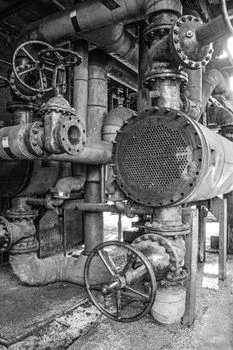
Cooling tower blowdown starts when dissolved solids or ions such as chloride exceed set limits, commonly at 4–8 cycles of concentration. Cycles of concentration (CoC) equal dissolved solids in circulating water divided by dissolved solids in fresh makeup. Evaporation leaves salts behind, so without blowdown the loop scales, corrodes, and loses heat-transfer efficiency.
Blowdown triggers usually follow corrosion, scaling, or sewer limits. Many metallurgy programs keep chloride below 500 mg/L. Calcium carbonate above about 150 mg/L often forces blowdown to limit precipitation. Local sewer permits may require TDS near or below 2,000 mg/L before discharge. Typical industry ranges are shown below.
| Industry Type | Typical Cycles of Concentration (CoC) | Blowdown TDS Range (mg/L) | Common Blowdown Triggers |
|---|---|---|---|
| Data Centers | 4–6 | 1,200–6,000 | Scaling (CaCO₃), Chloride Corrosion |
| Power Plants | 5–8 | 2,000–8,000 | Silica, Hardness, Chloride |
| Manufacturing | 3–5 | 800–4,000 | Organic Fouling, TSS, Specific Contaminants |
Evaporation also concentrates nutrients that feed microbes, so chemical programs and blowdown work together. For high suspended solids that foul downstream membranes, DAF pretreatment for high-TSS blowdown is a common first stage before RO or nanofiltration.
What Scaling Limits Constrain Semiconductor ZLD Reclaim?
Semiconductor zero liquid discharge reclaim projects usually fail first on silica, hardness, and sulfate scaling—not on bulk TDS alone—when brine is pushed past RO into evaporators. Blowdown or reclaim streams with silica above site-specific solubility, hardness above about 300 mg/L as CaCO₃ without softening, or sulfate-driven calcium sulfate risk need antiscalant, softening, or hybrid brine treatment before high recovery. Scaling challenges compound when fluoride, ammonia, or organics from fab wastewater mix with cooling blowdown; those streams often need targeted pretreatment before RO and MVR/MED stages.
If organics dominate the mixed reclaim load, pairing membrane bioreactors with RO protects flux better than RO alone. Plants comparing that path can review an MBR Membrane Bioreactor Wastewater Treatment System as the biological step before high-recovery desalting.
Blowdown Recovery Technologies Compared: RO vs. Evaporation vs. Hybrid Systems
Industrial facilities evaluating cooling tower blowdown recovery systems typically choose RO for lower TDS, evaporation for high TDS and high recovery, or hybrid trains for ZLD. Feed TDS, reuse quality, energy price, and brine disposal rules decide the fit.
- Reverse Osmosis (RO): RO systems for blowdown recovery suit blowdown generally below 5,000 mg/L TDS. Recovery commonly falls in the 70–85% band, and permeate is usually fit for makeup. Suspended solids, hardness, and organics foul membranes, so pretreatment matters. Common steps include DAF pretreatment for high-TSS blowdown or multimedia filtration. Typical RO flux for cooling tower blowdown is 15–25 LMH (liters/m²/hour).
- Evaporation (MVR/MED): Mechanical vapor recompression (MVR) or multi-effect distillation (MED) can treat blowdown with TDS up to 100,000 mg/L. Recovery often reaches 90–95% with near-distilled product water. Energy use is higher, typically 0.02–0.05 kWh/L of treated water (about 10–20 kWh/m³). For design detail on high-TDS trains, see evaporation systems for high-TDS blowdown.
- Hybrid Systems (RO + Evaporation): Hybrid plants recover most volume with RO, then evaporate the smaller brine stream for ZLD. That split lowers energy versus evaporating the full flow. Configurations such as Saltworks’ XtremeRO with BrineRefine illustrate the RO-plus-brine-polish pattern used on complex salts.
Chemical conditioning supports every recovery train, especially RO. Antiscalants (phosphonates or polymers) are dosed at 2–10 ppm to limit mineral scale. Biocides such as biocide dosing for blowdown recovery at 0.5–2 ppm chlorine dioxide control microbes that foul membranes and attack metal.
| Technology | Typical TDS Range (mg/L) | Water Recovery Rate (%) | Energy Intensity (kWh/m³) | Key Advantages | Key Disadvantages |
|---|---|---|---|---|---|
| Reverse Osmosis (RO) | 1,200–5,000 | 70–85 | 0.5–2 | Lower CapEx, lower energy for bulk recovery, high-quality permeate | Requires significant pretreatment, membrane fouling risk, limited TDS tolerance |
| Evaporation (MVR/MED) | 5,000–100,000+ | 90–95 | 10–20 | Handles very high TDS, near-distilled water quality, ZLD capability | High CapEx, very high energy consumption, complex operation |
| Hybrid (RO + Evaporation) | Unlimited (for ZLD) | 95–99+ | 2–10 (overall) | Optimized energy for ZLD, maximum recovery, handles complex brines | Highest CapEx, operational complexity of two systems |
Cooling Tower Blowdown Recovery Specs: TDS, Flux Rates, and Pretreatment
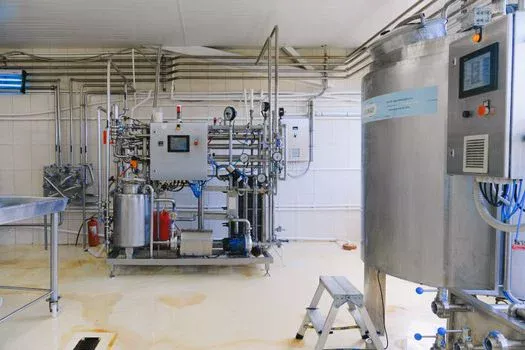
Effective design of cooling tower blowdown recovery systems rests on maximum TDS for each technology, membrane flux, and pretreatment matched to the contaminant profile. Engineers use these parameters to size equipment and to check vendor proposals.
RO systems generally handle up to 5,000 mg/L TDS. Evaporation systems manage concentrations exceeding 100,000 mg/L. Hybrid RO-plus-evaporation trains support ZLD across essentially unlimited influent TDS by concentrating brine to a solid. Typical flux values are:
- Reverse Osmosis (RO): 15–25 LMH for cooling tower blowdown applications.
- Nanofiltration (NF): 20–30 LMH, often for selective hardness or salt removal.
- Ultrafiltration (UF): 30–50 LMH as RO pretreatment for colloids and suspended solids.
Pretreatment protects membrane life. Key thresholds include DAF pretreatment for high-TSS blowdown when TSS >50 mg/L; multimedia filters for turbidity >5 NTU; and softening (lime or ion exchange) when hardness >300 mg/L as CaCO₃. Chemical dosing specs commonly used are:
- Antiscalant: 2–10 ppm, continuously upstream of RO.
- Biocide: 0.5–2 ppm (for example chlorine dioxide), intermittent or continuous.
- pH Adjustment: Often hold pH between 7.5–8.5 for corrosion control and membrane stability.
Designers still use Recovery Rate = (CoC – 1) / CoC when relating tower cycles to evaporative fraction. For 5 CoC, (5–1)/5 = 80%, which is the same numeric target many plants set for blowdown water recovery when sizing RO or hybrid trains.
| Parameter | RO System Specs | Evaporation System Specs | Hybrid System Specs |
|---|---|---|---|
| Max Influent TDS (mg/L) | 5,000 | 100,000+ | Unlimited (for ZLD) |
| RO Membrane Flux Rate (LMH) | 15–25 | N/A | 15–25 (RO stage) |
| Pretreatment for RO | DAF (TSS >50 mg/L), Multimedia (Turbidity >5 NTU), Softening (Hardness >300 mg/L) | Minimal (often just screening) | Same as RO for initial stage |
| Antiscalant Dosing (ppm) | 2–10 | N/A | 2–10 (RO stage) |
| Biocide Dosing (ppm) | 0.5–2 | N/A | 0.5–2 (RO stage) |
CapEx, OPEX, and ROI: How to Justify Blowdown Recovery to Your CFO
Justifying cooling tower blowdown recovery needs clear CapEx, OPEX, and payback against local water and sewer tariffs. For 50–500 m³/day blowdown, RO systems typically cost $50,000–$200,000 installed. Evaporation systems generally fall between $200,000–$500,000. Hybrid ZLD trains often run $300,000–$800,000. Those bands cover core equipment, installation, and commissioning, not major civil works.
OPEX is dominated by energy, chemicals, and membrane replacement. RO energy is generally 0.5–2 kWh/m³ of treated water. Evaporation is typically 10–20 kWh/m³. Chemical cost for antiscalant, biocide, and pH control is often $0.10–$0.30/m³. RO membrane replacement is commonly estimated at $5–$15/m²/year, depending on feed quality and cleaning discipline.
For a 1,000 m³/day tower at 80% blowdown recovery, annual water and discharge savings can reach $120,000 at the unit rates above. A $300,000 RO CapEx then implies about 2.5 years simple payback. Add permitting, training, and install downtime to the model. EPA WATERGY-type tools can help document savings for budget approval. Data-centre projects in high-tariff markets, including many India campuses, use the same drivers—makeup price, sewer fees, and recovery fraction—rather than a single global price list.
| Cost Category | RO System (50–500 m³/day) | Evaporation System (50–500 m³/day) | Hybrid System (50–500 m³/day) |
|---|---|---|---|
| CapEx (Equipment + Install) | $50,000–$200,000 | $200,000–$500,000 | $300,000–$800,000 |
| Energy OPEX (per m³) | $0.05–$0.20 (at $0.10/kWh) | $1.00–$2.00 (at $0.10/kWh) | $0.20–$1.00 (optimized) |
| Chemical OPEX (per m³) | $0.10–$0.30 | $0.05–$0.15 (less membrane chemicals) | $0.10–$0.30 (RO stage) |
| Membrane Replacement OPEX | $5–$15/m²/year | N/A | $5–$15/m²/year (RO stage) |
| Typical Payback Period | 1.5–3 years | 3–6 years | 3–7 years |
Compliance and Discharge Limits: Navigating EPA, EU, and Local Rules
Cooling tower blowdown compliance is set by the applicable ELG, the NPDES or local sewer permit, and metallurgy limits inside the tower—not by a single global chloride or TDS number. Earlier guidance often cited chloride <500 mg/L and TDS <2,000 mg/L as if they were 2024 ELG universal limits. According to 40 CFR Part 423 (eCFR current text), steam-electric cooling tower blowdown BAT limits free available chlorine to 0.5 mg/L maximum, chromium to 0.2 mg/L, and zinc to 1.0 mg/L; the Part 423 blowdown table does not set chloride at 500 mg/L or TDS at 2,000 mg/L. Chloride near 500 mg/L remains a common corrosion control target for many alloys, and TDS near 2,000 mg/L remains a frequent local sewer condition, but both must be confirmed in the site permit.
In the European Union, the Urban Waste Water Treatment Directive (91/271/EEC) and the Industrial Emissions Directive (2010/75/EU) govern industrial discharges. Typical EU targets discussed for treated blowdown still include TDS <1,500 mg/L and chloride <300 mg/L where receiving-water rules are strict, with regional variation. Biological risk, including Legionella, is managed under separate health and cooling-water hygiene programs; discharge specs are site-specific.
In some regions, such as California in the U.S. and certain states in India, industrial plants face zero liquid discharge expectations for selected wastewater streams, including cooling tower blowdown. Hybrid RO-plus-evaporation trains are then the usual path to a solid residual and near-complete water recovery. Audit TDS, chloride, free chlorine, and metals against the strictest applicable limit, then size recovery accordingly. For broader U.S. permitting context, see EPA compliance for blowdown discharge.
Selection Checklist and Next Step
Who this is for: plant engineers, EPC firms, and procurement teams sizing blowdown recovery for data centers, power, manufacturing, or fab utility yards. Who should look elsewhere: sites with no cooling tower, or once-through cooling with no recirculating blowdown stream. Selection checklist: (1) measure blowdown TDS, chloride, hardness, silica, and TSS at current CoC; (2) map sewer or ELG limits; (3) decide reuse quality for makeup; (4) choose RO, evaporation, or hybrid by TDS and ZLD need; (5) lock pretreatment for TSS >50 mg/L or turbidity >5 NTU; (6) model CapEx/OPEX at local water and power tariffs; (7) confirm permits before purchase. HydroPure Water can help translate those field numbers into an equipment train and budget range.
Frequently Asked Questions
What is the maximum TDS for RO-based blowdown recovery?
RO systems typically handle TDS up to 5,000 mg/L on cooling tower blowdown when pretreatment is adequate. Above that band, recovery falls and fouling risk rises, so evaporation or hybrid ZLD is usually preferred. For TSS >50 mg/L, use DAF pretreatment for high-TSS blowdown before the RO skid to protect flux and membrane life at 15–25 LMH design flux.
How much water can I save with blowdown recovery?
Savings depend on CoC and recovery fraction, not a single percentage. Earlier marketing-style ranges cited 16–53% freshwater reduction from GSA/NREL work. The GSA Las Vegas testbed evaluated by NREL reported a 53% blowdown reduction and a 16% reduction in overall cooling-tower water use, with payback under three years at the published GSA water/sewer rate. Higher CoC plus 70–85% RO recovery increases makeup savings further.
What are the energy requirements for blowdown recovery?
RO systems typically use 0.5–2 kWh/m³ of recovered water under cooling-tower blowdown duty. Evaporation systems commonly need 10–20 kWh/m³, which matches the higher 0.02–0.05 kWh/L range used for MVR/MED. Hybrid RO-plus-evaporation trains often land between 2–10 kWh/m³ overall because RO removes most of the volume before brine concentration.
Do I need a permit for blowdown recovery?
Yes, most sites need construction or discharge permit updates when reclaiming blowdown or changing sewer quality and volume. Steam-electric units must also track 40 CFR Part 423 limits such as free available chlorine at 0.5 mg/L maximum in cooling tower blowdown. Involve the environmental compliance owner early so NPDES, pretreatment, or ZLD conditions are written into the design basis.
What are the maintenance requirements for blowdown recovery systems?
RO membranes usually need chemical cleaning every 3–6 months, with more frequent cleans if silt density or hardness spikes. Evaporators need annual descaling and mechanical inspection. Antiscalant and biocide dosing skids should be checked weekly so 2–10 ppm antiscalant and 0.5–2 ppm biocide setpoints stay in range and fouling does not accelerate.