Ecuador wastewater treatment plant costs vary sharply by scale and technology. For industrial buyers in 2026, CAPEX starts near USD 1.8M for a 50 m³/h MBR system (Quito rural project benchmark) and rises to large municipal plants such as Guayaquil's Los Merinos. Earlier briefings cited about USD 212M at 4 m³/s; Guayaquil municipality (January 2026) reports USD 182.8M and 7.26 m³/s. OPEX averages 12–18% of CAPEX annually, with labor and energy costs about 30% higher than in Peru because of Ecuador's import tariffs on equipment. Compliance with Decreto 1053 (2020) adds 5–10% to CAPEX for tertiary treatment and can cut long-term environmental fines by up to 40%.
Why Ecuador's Wastewater Treatment Costs Are Unique: 3 Local Factors Driving Your Budget
Three local factors set Ecuador wastewater treatment plant cost baselines: import duties, tertiary discharge rules, and energy-plus-labor rates. Import tariffs on specialized water treatment equipment currently stand at 15% under Customs Resolution 012-2024, raising the cost of high-performance pumps and membranes versus neighboring markets. Peru and Colombia keep broader free-trade exemptions on environmental technology, so Ecuadorian buyers must price these duties on MBR modules and high-pressure pumps. That tariff structure adds about USD 150,000 to USD 225,000 to mid-sized industrial plant CAPEX and must be isolated in the feasibility study.
Regulatory compliance under Decreto 1053 (2020) mandates tertiary treatment for effluent discharged into sensitive water bodies such as the Guayas River or Amazonian watersheds. According to Ministry of Environment data, meeting these standards usually means adding UV disinfection or advanced filtration, which lifts initial investment by 5–10%. These systems also cut legal exposure; plants that stay in full compliance avoid environmental fines that can reach USD 50,000 per violation, a roughly 40% reduction in long-term liability.
Operational expenditures (OPEX) track local labor and power markets. Per 2025 ILO wage data, qualified WWTP operators in Ecuador earn USD 800 to USD 1,200 per month, about 15–20% above operator costs for Peru's wastewater treatment costs and compliance strategies. Earlier budget models used ARCONEL industrial electricity at USD 0.12–0.15/kWh; Resolution ARCONEL-006/25 sets medium-voltage industrial energy charges at USD 0.1001–0.1318/kWh from July 2025 consumption. For aerobic digestion or high-pressure membrane filtration, energy often becomes the largest annual line item and can reach about 40% of total OPEX. Most plants we size for food processors in the Sierra region run at the lower end of that energy band, but coastal sites with intake pumping usually hit USD 0.14/kWh and above.
| Cost Driver | Ecuador (2026 Est.) | Regional Benchmark (Avg) | Impact on Total Budget |
|---|---|---|---|
| Import Tariffs (Equipment) | 15% (Res. 012-2024) | 0–5% | +10–12% CAPEX |
| Industrial Electricity | USD 0.12–0.15/kWh | USD 0.09–0.11/kWh | +20% OPEX (Aeration) |
| Operator Monthly Wage | USD 800–1,200 | USD 500–900 | +15% OPEX (Labor) |
| Regulatory Compliance | Decreto 1053 (Tertiary) | Secondary (Standard) | +5–10% CAPEX |
Ecuador Wastewater Treatment Plant Cost Breakdown: CAPEX and OPEX by Capacity and Technology
A 50 m³/h MBR-based treatment facility in Ecuador requires about USD 1.8M CAPEX, reflecting membrane prices and local installation premiums. Against cost benchmarks for municipal WWTPs in developing economies, Ecuador projects show higher sensitivity to logistics and specialized labor. For Guayaquil's Los Merinos plant, earlier briefings used USD 212M at 4 m³/s; the municipality's January 2026 update states USD 182.8M and 7.26 m³/s, with advanced sludge digestion and odor control driven by urban density and local environmental law.
Technology selection is the main lever for balancing CAPEX and OPEX. Membrane Bioreactor (MBR) systems typically need 20–30% higher initial investment than conventional Activated Sludge (A/O) systems. A 2024 IDB efficiency report notes that MBR systems cut OPEX by about 15% over a 10-year horizon by reducing sludge production and removing secondary clarifiers. For industrial sites with limited land, a MBR system for water reuse in Ecuador's industrial zones delivers the smallest footprint and can save about 30% in land acquisition or civil works.
For high Fats, Oils, and Grease (FOG) loads—tuna processing in Manta or dairy in Machachi—Dissolved Air Flotation (DAF) is the most cost-effective primary step. A high-efficiency DAF system for Ecuador's food processing plants can cut CAPEX by up to 40% versus biological systems for the same organic load. Buyers must still budget a 25% OPEX increase for coagulants and flocculants. Multilateral loans from IDB and EIB often cover 60–70% of CAPEX for projects that meet sustainability criteria, with 20-year terms at 3–4% interest. For any Ecuadorian WWTP, OPEX typically lands at 12–18% of CAPEX per year over a 20-year asset life.
| Plant Capacity | Technology Type | CAPEX (USD) | OPEX (USD/Year) | Decreto 1053 Compliance |
|---|---|---|---|---|
| 50 m³/h (Industrial) | MBR Integrated | 1.8M – 2.4M | 210K – 280K | Full (Tertiary) |
| 200 m³/h (Industrial) | DAF + A/O | 4.5M – 6.2M | 550K – 720K | Standard (Secondary) |
| 1,000 m³/h (Municipal) | Conventional A/O | 18M – 24M | 2.1M – 2.8M | Requires UV Upgrade |
| 4 m³/s (Large Municipal) | Advanced A/O | 212M (Benchmark) | 25M+ | Full (Sludge Mgmt) |
How to Choose the Right Wastewater Treatment Technology for Your Ecuador Project
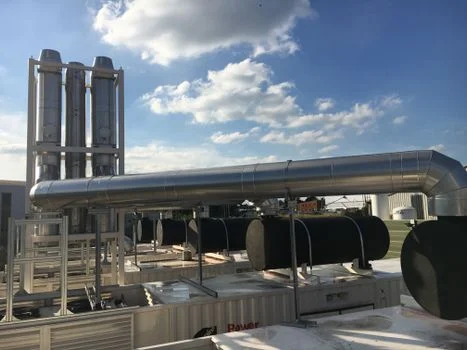
Treatment-train selection must follow influent contaminants and the sensitivity of the discharge point. In food processing, where BOD and FOG are high, a high-efficiency DAF system for Ecuador's food processing plants is the standard pre-treatment. According to 2024 Ministry of Environment enforcement data, facilities using DAF for FOG removal saw a 30% drop in discharge-related fines because secondary biology was not overloaded with lipids.
In urban industrial zones facing water scarcity, MBR offers the strongest reuse return. MBR membranes with pore sizes <1 μm achieve about 99% pathogen removal and produce effluent fit for cooling towers or irrigation, aligning with WHO 2025 reuse guidance. Installing a MBR system for water reuse in Ecuador's industrial zones can cut fresh-water intake by up to 60% where industrial water rates are high. Plants evaluating a cooling tower blowdown recovery system should benchmark cooling tower blowdown recovery system CAPEX OPEX cost data center values against the MBR train, since blowdown is usually the highest-TDS feed on site.
Mining and heavy industry need chemical precipitation for dissolved metals. An automatic chemical dosing system paired with high-efficiency sedimentation can reach about 98% removal of copper, arsenic, and lead. Regional project data show chemical precipitation at roughly 30% lower CAPEX than ion exchange for heavy metals, which fits Ecuador's mining effluent limits. Sites chasing metal recovery or zero-liquid discharge may add RO systems for heavy metal removal in industrial wastewater. For an industrial wastewater treatment benchmark in a similar tariff-driven market, the Rajshahi guide records comparable OPEX inflation.
| Industry | Primary Contaminant | Recommended Tech | Effluent Quality | Cost Profile |
|---|---|---|---|---|
| Food Processing | FOG, High BOD | DAF + A/O | Decreto 1053 Compliant | Moderate CAPEX/High OPEX |
| Textile/Dyeing | Color, COD | Chemical + MBR | Suitable for Reuse | High CAPEX/Moderate OPEX |
| Municipal Rural | Pathogens, TSS | Compact A/O system | Standard Discharge | Low CAPEX/Low OPEX |
| Mining | Heavy Metals | Chemical Precipitation | 98% Metal Removal | Moderate CAPEX/High OPEX |
Ecuador's Regulatory Compliance Costs: What Decreto 1053 Means for Your Budget
Decreto 1053 (2020) sets the baseline for wastewater discharge in Ecuador, with limits that tighten when the receiving body is sensitive (protected mangroves or freshwater sources). Most industrial operators therefore need tertiary stages. An on-site ClO₂ generator for Ecuador's tertiary treatment compliance is a common path to pathogen limits, adding about USD 0.05–0.10/m³ to OPEX while supporting Ministry of Environment audits.
CAPEX impact shows up in solids management and disinfection. A high-efficiency sedimentation tank or sand filter can add 5–10% to total project cost. 2025 enforcement data still show that non-compliance—fines, temporary closures, and remedial engineering—costs more than those upgrades. MBR trains often meet the strictest Decreto 1053 pathogen targets and can cut extra chemical disinfection need by about 30% because the membrane is a physical barrier.
Sludge management is the compliance cost buyers most often miss. Stabilized sludge must go to certified landfills or treatment centers at about USD 150 to USD 200 per ton. A 2024 Guayaquil WWTP audit found seasonal flow swings can raise sludge production by 25%, enough to break an OPEX plan if ignored at design. High-efficiency dewatering cuts volume and disposal fees. A defensible OPEX maintenance model starts with equipment cost (about 2–4% of CAPEX per year for routine parts) and adds labor, energy, and chemicals separately instead of one blended percentage.
| Parameter | Non-Sensitive Body Limit | Sensitive Body Limit | Typical Removal Tech |
|---|---|---|---|
| BOD5 (mg/L) | 100 | 30 | A/O or MBR |
| COD (mg/L) | 250 | 100 | MBR or Chemical |
| TSS (mg/L) | 100 | 30 | Sedimentation/MBR |
| Total Nitrogen (mg/L) | 15 | 10 | Anoxic Denitrification |
| Fecal Coliforms | 2,000 MPN/100ml | 200 MPN/100ml | UV or Chlorine Dioxide |
Step-by-Step Procurement Checklist for Ecuadorian Wastewater Treatment Plants
Procuring a wastewater treatment plant in Ecuador needs a structured path through technical, financial, and regulatory gates. This checklist keeps the selected system inside Decreto 1053 limits while pricing local energy and labor drivers.
- Step 1: Baseline Water Analysis: Run a full lab panel for BOD, COD, TSS, FOG, and heavy metals. Use an accredited Ecuadorian lab such as INH or CENAIM so the data supports Ministry of Environment permit filings.
- Step 2: Capacity and Buffer Planning: Calculate average and peak flow (m³/h). Design with a 20% capacity buffer for production growth or seasonal storm-water infiltration, as recommended by 2024 Guayaquil WWTP design guidelines.
- Step 3: Technology Selection: Match the wastewater profile to the right train. Price the 15% import tariff on membrane or high-tech components and the roughly 20% labor premium for operators.
- Step 4: Vendor Solicitation: Collect detailed quotes from at least three vendors, including HydropureWater and local firms. Require Decreto 1053 compliance language and ISO 14001 certification in every bid.
- Step 5: ROI and Financial Evaluation: Build a 10-year Total Cost of Ownership (TCO). Include avoided fines (up to 40% liability reduction) and reuse savings. Industrial buyers usually target 3–5 year ROI; municipal projects often accept 10–15 year payback.
Who This Is For, Who Should Look Elsewhere, and Next Step
This guide fits industrial procurement managers, EPC contractors, and municipal engineers scoping a plant between 50 m³/h and 4 m³/s in Ecuador. If your project is a small commercial site under 10 m³/h, a packaged compact A/O system is usually the lower-cost path; for ZLD-heavy mining operations, the cross-link to RO systems for heavy metal removal gives the detailed design model. Buyers comparing Latin American markets can also review Puebla wastewater treatment plant costs for a parallel CAPEX/OPEX benchmark, or the Chonburi and Ajman industrial guides for tariff-driven Asian and Gulf comparisons.
Send your influent data, target flow, and discharge point to our Ecuador project desk and we will return a sized CAPEX range plus a 10-year OPEX estimate within five working days.
Frequently Asked Questions
How much does a 100 m³/h wastewater treatment plant cost in Ecuador?
A 100 m³/h A/O system costs between USD 2.5M and USD 3.2M in Ecuador, including 15% import tariffs and Decreto 1053 compliance. MBR systems cost about 25% more at purchase but can shrink the physical footprint by up to 60%.
What are the ongoing costs for a wastewater treatment plant in Ecuador?
OPEX typically averages 12–18% of CAPEX each year. The largest expenses are industrial electricity (budget models often use USD 0.12–0.15/kWh; ARCONEL-006/25 MV industrial energy is USD 0.1001–0.1318/kWh) and labor, with qualified operators at USD 800–1,200 per month per 2025 ILO wage data.
What permits are required for a wastewater treatment plant in Ecuador?
Operators must obtain an environmental license from the Ministry of Environment under Decreto 1053. Separate permits cover sludge disposal, which costs USD 150 to USD 200 per ton at certified facilities.
Can I finance a wastewater treatment plant in Ecuador?
Yes. Municipal projects often secure 60–70% financing from the IDB or EIB at 3–4% interest over 20 years. Industrial buyers can usually access local commercial loans at 8–10% through institutions such as Banco Pichincha.
What is the ROI for a wastewater treatment plant in Ecuador?
Industrial plants usually reach ROI in 3–5 years by avoiding environmental fines and cutting water procurement costs. Municipal plants, focused on public health and long-lived infrastructure, typically show 10–15 year payback.