Why Battery Recycling Wastewater Is a Distinct Treatment Challenge
A battery recycling wastewater treatment supplier engineers multi-stage systems — typically chemical precipitation for fluoride and dissolved heavy metals (Li, Co, Ni, Mn), biological or electrochemical oxidation for residual organics and ammonia, membrane concentration, and MVR crystallization for zero liquid discharge. Effluent targets for 2026 include fluoride below 8–15 mg/L, total Ni/Co/Mn below 0.05–1 mg/L, and sulfate below 200 mg/L for water reuse, depending on jurisdiction.
Battery-recycling effluent is not generic metal-finishing wastewater. Three dominant streams define the chemistry family a vendor must handle: black-mass hydrometallurgy leachate from sulfuric acid leaching of shredded cathodes, CAM precursor wash water from co-precipitation of Ni-Co-Mn hydroxides, and spent-electrolyte contamination carrying carbonate solvents (EMC, DMC, EC) and LiPF₆ hydrolysis products. Industry sampling data (HydropureWater field data, 2026) shows sulfate at 2,000–15,000 mg/L, fluoride at 50–500 mg/L, and individual Li/Co/Ni/Mn concentrations of 10–200 mg/L each, with residual COD from NMP solvent and PVDF binder fragments typically running 200–2,000 mg/L.
Conventional metal-finishing WWTPs fail on three fronts: free fluoride above 30 mg/L inhibits nitrification biology, ammonium bifluoride (NH₄HF₂) complexes pass through standard lime precipitation, and mixed Li/Co/Ni streams co-precipitate as gelatinous hydroxides without staged pH control — losing both selectivity and solids-handling performance. A supplier quoting per-cubic-meter pricing without characterizing the influent first is selling commodity equipment into a non-commodity chemistry problem.
What a Qualified Battery Recycling Wastewater Treatment Supplier Actually Delivers
A full-scope battery recycling wastewater treatment supplier integrates seven unit operations: equalization with sulfide precipitation for residual Cu and Zn, calcium or aluminum coagulation for fluoride removal, staged hydroxide precipitation for Ni/Co/Mn at pH 8.5–9.5, lithium-selective ion exchange or nanofiltration membrane recovery, organics polishing via MBR or BDD electro-oxidation, RO concentration, and MVR crystallization for ZLD. Anything less means the buyer is integrating vendors themselves — a recipe for interface failures and missed guarantees.
The engineering deliverables that separate a system integrator from a box-shipper are: a site-specific treatability study with jar tests on real leachate, a mass-balance model in something the buyer's process team can audit (not a PDF screenshot), a full P&ID, guaranteed influent/effluent numbers in the proposal — not "typical" — and FAT-tested skids documented with video. Suppliers who refuse to put numbers in the contract are not taking the performance risk; the buyer is.
The market splits into three distinct go-to-market categories. Equipment OEMs build one or two unit operations exceptionally well — think MVR crystallizers or BDD cells. EPC contractors integrate the full train but may license the chemistry from a third party. Chemistry licensors own the precipitation and selective recovery IP and partner with EPCs for delivery. A buyer targeting a 500 m³/day NMC black-mass line should shortlist at least one full-scope EPC alongside any specialist OEMs whose unit ops are non-negotiable for the stream.
Process Flow: From Black-Mass Leachate to Reuse-Quality Water
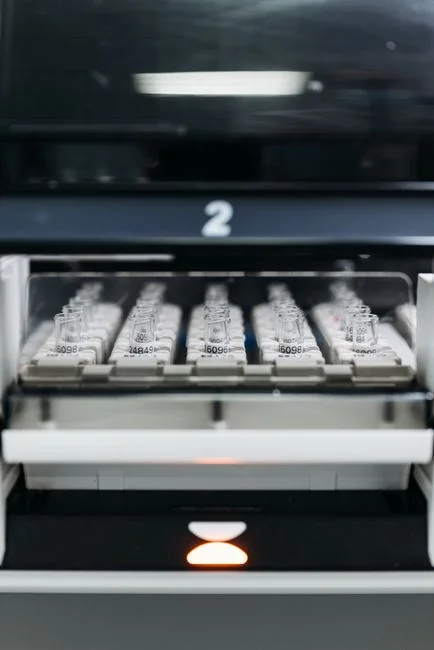
A representative treatment train for a 500 m³/day NMC black-mass hydromet plant runs seven stages. Performance numbers below are typical operating ranges for properly sized equipment (HydropureWater field data, 2026; cross-referenced against Saltworks and Boromond published case data, 2025-2026).
| Stage | Unit Operation | Influent → Effluent | Key Parameter |
|---|---|---|---|
| 1 | Equalization + sulfide precipitation | Cu/Zn 50–200 mg/L → <0.5 mg/L | pH 2–3, NaHS dosing |
| 2 | Calcium chloride or alum coagulation | F⁻ 200–500 mg/L → <15 mg/L | Ca:F molar ratio 2.0–2.5 |
| 3 | Staged hydroxide precipitation (pH 8.5 → 9.5) | Ni/Co/Mn 50–200 mg/L each → <1 mg/L | Sludge-recycle clarifier cuts NaOH 30% |
| 4 | Ammonia stripping or breakpoint chlorination | NH₃-N 100–400 mg/L → <15 mg/L | pH 11, 60–70 °C for stripping |
| 5 | MBR or BDD electro-oxidation | COD 200–2,000 mg/L → <50 mg/L | BDD current density 30–50 mA/cm² |
| 6 | RO + Li-selective IX/NF | TDS 5,000–15,000 mg/L → permeate <200 mg/L; Li recovery 70–85% | RO recovery 85–95% |
| 7 | MVR crystallization (ZLD) | Brine → reusable Na₂SO₄ or mixed salt | SaltMaker-type MVR at 180–350 kWh/m³ feed |
Upstream of Stage 3, a DAF system for suspended solids pre-treatment removes fine sulfide and hydroxide carryover before the lamella clarifier. The clarifier itself — a lamella clarifier for staged metal precipitation — operates with a sludge-recycle loop that returns 30% of settled solids to the reaction zone, cutting NaOH consumption by roughly 30% versus single-pass clarifiers. pH and fluoride dosing require a PLC-controlled chemical dosing system for pH and fluoride control with redundant metering pumps; manual dosing on a multi-stream plant fails within a shift. Downstream organics polishing on Stage 5 typically uses an MBR system for residual organics polishing, with BDD electro-oxidation as the upgrade path when NMP and electrolyte breakdown products push COD above 500 mg/L or when the discharge limit drops below 50 mg/L.
2026 Compliance Limits: What Every Supplier Must Hit
Discharge standards for battery-recycling effluent vary sharply by jurisdiction, and a supplier that defaults to one country's limits is exposing the buyer to permit risk. The table below consolidates the binding 2026 thresholds a treatment system must meet.
| Parameter | China GB 30485-2024 (cathode materials) | EU IED BAT-AEL (2024 update, non-ferrous) | US EPA 40 CFR Part 413 (battery mfg) |
|---|---|---|---|
| Fluoride | ≤8 mg/L | ≤10–15 mg/L (water-body dependent) | Site-specific NPDES |
| Total Ni | ≤0.5 mg/L | ≤0.05–0.3 mg/L (Ni+Co+Mn sum) | ≤0.5–1.0 mg/L (state variance) |
| COD | ≤50 mg/L | ≤50–80 mg/L | Site-specific |
| Ammonia-N | ≤15 mg/L | ≤10–20 mg/L | Site-specific |
| Sulfate | No hard cap; ZLD-driven | BAT-AEL assessment required | No federal cap; state-level |
Beyond concentration limits, geography drives the train selection itself. ZLD or near-ZLD is effectively mandated in China's Inner Mongolia and Qinghai provinces, across Chile's lithium triangle, and in the US Southwest (Arizona, Nevada, Texas) for new battery-material plants permitted in 2026 — the receiving aquifer or surface water body simply cannot accept a continuous brine discharge. For full regulatory context across all three jurisdictions, the 2026 heavy metals discharge standards for battery recycling article maps the limits to specific treatment technologies. Note also that several US states are extending PFAS rules to electrolyte decomposition products (LiPF₆ hydrolysis generates fluorinated organics), which pushes the BDD electro-oxidation step from optional to required in those jurisdictions.
Supplier Types Compared: Electrochemistry Specialist vs ZLD OEM vs Full-Scope EPC
Buyers should evaluate three distinct supplier archetypes before sending the RFQ. Each has a defensible position; none covers the full problem alone.
| Supplier Type | Core Strength | Blind Spot | Typical CAPEX Share | Representative Firms |
|---|---|---|---|---|
| Electrochemistry specialist | Recalcitrant organics, PFAS-like electrolyte breakdown products | Bulk fluoride, high-TDS streams, bulk metal precipitation | $1.5–$4M for the cell line only | Arvia, Boromond |
| Thermal/crystallization OEM | ZLD, salt recovery, water reuse | Upstream chemistry, full-train integration | $3–$15M per MVR train | Saltworks, GEA, Veolia |
| Full-scope EPC / equipment integrator | End-to-end delivery, single point of accountability | May license core chemistry from third parties | $4–$12M for 500 m³/day ZLD plant | Chinese EPCs, De Nora, Hager+Eisner |
| Mobile activated-carbon filtration | Polishing step for trace organics | Not a primary treatment for fluoride or dissolved metals | Service-based, low CAPEX | DESOTEC |
The cost gap between Western OEMs and Asian or Eastern-European full-scope EPCs is real and structural — typically 20–35% lower CAPEX for the same flow, driven by fabrication labor and locally sourced stainless/FRP. The buyer pays for that in longer commissioning windows, more variable documentation quality, and harder warranty enforcement if the supplier lacks a service footprint in the buyer's region. For a first-of-kind plant, the safer procurement pattern is to contract the full-scope EPC for the train and license specialist equipment (BDD cells, MVR crystallizers) as named-sub-suppliers within the EPC's scope.
CAPEX and OPEX Bands: What a Real Plant Costs in 2026
For a 500 m³/day black-mass recycling plant with ZLD and lithium recovery, total installed CAPEX lands in the $4M–$12M range, with the spread driven by Li-recovery inclusion, regional fabrication labor, and the level of skid pre-assembly (HydropureWater field data, 2026; consistent with industrial wastewater OPEX breakdown for 2026). OPEX runs $1.2–$3.0 per m³ treated.
Energy is the dominant OPEX line at 45–60% of the total. A 500 m³/day ZLD plant draws 180–350 kWh per m³, with the MVR crystallizer and RO high-pressure pump as the two load centers. Chemical cost — NaOH for pH staging, CaCl₂ for fluoride precipitation, polymers for solids dewatering, antiscalant for RO — adds $0.30–$0.70 per m³. The offset that often flips the project economics is lithium recovery: at 2026 Li₂CO₃ prices, a side-stream IX or NF recovery loop returning 70–85% of influent Li can offset $0.50–$2.00 per m³ of chemical cost, and at current Li₂CO₃ pricing the payback on the recovery loop is typically 18–36 months. Membrane replacement is a separate line item; the membrane replacement cost optimization guide covers the operating variables that determine whether RO membranes last 18 months or 42.
7-Point Supplier Scorecard for Your RFQ
Paste-ready scoring matrix for shortlisting. Weight reference plants highest — a vendor with a working NMC black-mass line is worth three with only lab data.
| # | Criterion | Weight | Score (0–5) | Notes |
|---|---|---|---|---|
| 1 | Reference plants in battery recycling specifically (not generic metal finishing) | 25% | Ask for site visit, not just list | |
| 2 | Guaranteed effluent numbers in contract, not typical | 20% | Must include Li, F⁻, Ni/Co/Mn, NH₃-N | |
| 3 | In-house fluoride removal AND Li recovery capability | 15% | Licensed tech is acceptable; sub-supplier list mandatory | |
| 4 | ZLD capability if site geography requires it | 10% | MVR or MVC with salt-recovery proof | |
| 5 | FAT-tested skid delivery with video documentation | 10% | Cuts site erection time by 30–40% | |
| 6 | Local service footprint in the plant's region | 10% | Response time <48 h for warranty | |
| 7 | Willingness to do paid treatability study with mass balance before contract | 10% | Red flag if they quote per m³ before seeing influent |
Red flags that should auto-disqualify a candidate: suppliers who quote per m³ without seeing influent chemistry, vendors who push a single-technology solution (e.g., "RO solves everything") for a multi-pollutant stream, and any supplier whose reference list is entirely metal finishing or electroplating with zero battery-recycling lines. The chemistry is different enough that metal-finishing experience transfers only at the unit-operation level, not at the system-integration level.
Frequently Asked Questions
What does a battery recycling wastewater treatment supplier typically deliver in 2026?
A full-scope supplier delivers a seven-stage train — equalization, fluoride coagulation, staged metal precipitation, organics polishing, RO, Li recovery, and MVR crystallization — with a site-specific treatability study, mass-balance model, P&ID, and guaranteed effluent numbers in the contract. Equipment-only OEMs deliver one or two stages and require the buyer to integrate.
How much does a battery recycling ZLD plant cost in 2026?
A 500 m³/day NMC black-mass plant with ZLD runs $4M–$12M CAPEX and $1.2–$3.0 per m³ OPEX, with energy at 45–60% of OPEX. Lithium recovery can offset $0.50–$2.00 per m³ of chemical cost at current Li₂CO₃ prices.
What fluoride limit must a battery recycling effluent meet in 2026?
China GB 30485-2024 sets fluoride at ≤8 mg/L; EU IED BAT-AEL (2024) sets 10–15 mg/L depending on receiving water body. Most well-engineered systems target ≤10 mg/L to give margin across jurisdictions, per the 2026 heavy metals discharge standards for battery recycling reference.
Can MBR alone treat NMC black-mass leachate?
No. MBR handles residual organics polishing to below 50 mg/L COD, but cannot remove fluoride, dissolved heavy metals, or sulfate. It is one stage in a seven-stage train, not a standalone solution.
Is lithium recovery from battery recycling wastewater economic in 2026?
Yes, at current Li₂CO₃ prices a side-stream IX or NF loop recovering 70–85% of influent Li typically pays back the incremental CAPEX in 18–36 months and offsets $0.50–$2.00 per m³ of overall chemical OPEX.