Mexico City’s industrial and municipal sectors face strict wastewater discharge limits under NOM-001-SEMARNAT-1996 (e.g., <30 mg/L TSS for industrial effluent) and LGEEPA, making supplier selection critical. Top suppliers like SAVECO and EcoMex offer DAF systems (92–97% TSS removal), MBR plants (<1 μm filtration), and sludge dewatering presses (30–40% cake solids), but costs vary widely: a 50 m³/h DAF system ranges from $120K–$250K CAPEX, with OPEX of $0.15–$0.30/m³. This guide provides engineering specs, cost benchmarks, and a zero-risk selection framework to align equipment with your project’s compliance, footprint, and budget requirements.
Why Mexico City’s Wastewater Regulations Demand High-Performance Equipment
Mexico City’s strict wastewater discharge limits, particularly those mandated by NOM-001-SEMARNAT-1996, necessitate high-performance treatment equipment for industrial and municipal operations. This regulation sets specific thresholds for various pollutants in discharged wastewater, differentiating between industrial and municipal effluent. For instance, industrial facilities discharging into national waters must meet limits such as less than 30 mg/L for Total Suspended Solids (TSS) and less than 200 mg/L for Chemical Oxygen Demand (COD), while municipal discharges face even stricter limits of less than 20 mg/L TSS and less than 125 mg/L COD (Mexican Official Standard, 1996).
Non-compliance with the General Law of Ecological Balance and Environmental Protection (LGEEPA) can result in severe penalties, including fines up to 50,000 UMAs (Unidad de Medida y Actualización), equivalent to approximately $2.5 million MXN, or even facility shutdowns. Such enforcement actions highlight the financial and operational risks associated with outdated or inefficient wastewater treatment systems. Mexico City faces significant water scarcity, with approximately 70% of its local water supply originating from overexploited aquifers. This critical situation mandates wastewater reuse for industrial cooling, agricultural irrigation, and other non-potable applications, as exemplified by large-scale projects like the Atotonilco WWTP, which treats a substantial portion of the city's wastewater for reuse (Atotonilco WWTP data, 2024).
Industrial facilities in Mexico City also contend with unique influent challenges, including high concentrations of Fats, Oils, and Grease (FOG) from food processing plants, heavy metals from electronics manufacturing, and highly variable flow rates common in municipal sewage systems. Addressing these diverse characteristics requires robust and adaptable treatment solutions to ensure consistent compliance and operational reliability.
| Parameter | Industrial Discharge Limit (mg/L) | Municipal Discharge Limit (mg/L) |
|---|---|---|
| Total Suspended Solids (TSS) | <30 | <20 |
| Chemical Oxygen Demand (COD) | <200 | <125 |
| Biochemical Oxygen Demand (BOD₅) | <60 | <30 |
| Fats & Oils (FOG) | <15 | <10 |
(Source: NOM-001-SEMARNAT-1996, gob.mx/semarnat)
Sewage Treatment Equipment Types: Engineering Specs for Mexico City’s Top 5 Solutions
Selecting the appropriate sewage treatment equipment in Mexico City requires a detailed understanding of each technology's engineering specifications and its suitability for specific influent characteristics and site constraints. Leading manufacturers offer a range of solutions tailored to meet diverse industrial and municipal needs.
-
Dissolved Air Flotation (DAF) Systems: These systems achieve exceptional pollutant removal, with typical TSS removal rates ranging from 92–97% and FOG removal rates often exceeding 95–99%. High-efficiency DAF systems for Mexico City’s food processing and textile industries operate with hydraulic loading rates of 4–8 m/h, making them ideal for treating wastewater with high concentrations of suspended solids, oils, and greases (HydropureWater field data, DAF specs). They are particularly effective for industries like food processing, textile manufacturing, and petrochemicals, where FOG and TSS are primary concerns.
Learn more about high-efficiency DAF systems for Mexico City’s food processing and textile industries. -
MBR Membrane Bioreactors: MBR technology utilizes advanced PVDF membranes with a pore size of 0.1 μm, allowing for superior effluent quality. These compact MBR plants for space-constrained urban industrial sites in Mexico City can operate with high Mixed Liquor Suspended Solids (MLSS) concentrations of 8,000–12,000 mg/L, resulting in a footprint up to 60% smaller than conventional activated sludge systems (HydropureWater MBR product specs). MBRs are best suited for urban industrial parks with limited space or for projects requiring high-quality effluent suitable for water reuse, offering significant advantages in terms of land use and treated water quality.
Explore compact MBR plants for space-constrained urban industrial sites in Mexico City. -
Sludge Dewatering Presses: Sludge dewatering is critical for reducing disposal costs in Mexico City, where landfills charge $150–$250/ton for wet sludge. Plate-and-frame filter presses can achieve cake solids content of 30–40%, while screw presses typically yield 20–25% cake solids. The CAPEX for these systems can range from $50K–$300K depending on capacity (HydropureWater filter press product specs). Efficient dewatering significantly reduces the volume and weight of sludge, leading to substantial savings in transportation and landfill fees.
Discover sludge dewatering presses to reduce Mexico City landfill disposal costs by 40%. - Modular WWTPs: Prefabricated A/O (Anaerobic/Oxic) plants, such as the WSZ series, offer capacities ranging from 1–80 m³/h. These fully automated systems require minimal operator intervention and can be installed rapidly without extensive civil works (HydropureWater product specs). Modular WWTPs are ideal for rural communities, hotels, temporary industrial sites, or remote construction projects requiring quick deployment and reliable performance.
- Chlorine Dioxide Generators: Essential for disinfection, ClO₂ generators provide a powerful oxidant with outputs ranging from 50–20,000 g/h. They achieve a 99.9% microbial kill rate, making them compliant with WHO guidelines for disinfection. These systems are typically required for hospital effluent treatment and municipal wastewater disinfection to eliminate pathogens before discharge or reuse (HydropureWater specs).
| Equipment Type | Key Performance Metric | Typical Range/Value | Ideal Application | Footprint (relative) |
|---|---|---|---|---|
| DAF System | TSS Removal | 92–97% | High FOG/TSS influent (Food, Textile) | Medium |
| MBR Bioreactor | Membrane Pore Size | 0.1 μm | Space-constrained sites, Water Reuse | Small (60% less than CAS) |
| Sludge Dewatering Press | Cake Solids Content | 30–40% (Plate-and-frame) | Sludge volume reduction | Medium |
| Modular WWTP | Capacity | 1–80 m³/h | Remote sites, Temporary projects | Small to Medium (prefabricated) |
| ClO₂ Generator | Microbial Kill Rate | 99.9% | Disinfection (Hospital, Municipal) | Very Small |
2025 Cost Breakdown: CAPEX, OPEX, and ROI for Mexico City Projects
Understanding the comprehensive cost implications, including Capital Expenditure (CAPEX), Operational Expenditure (OPEX), and potential Return on Investment (ROI), is fundamental for evaluating sewage treatment equipment in Mexico City. Project CAPEX can vary significantly based on equipment type, capacity, and supplier. For a 50 m³/h DAF system, the CAPEX typically ranges from $120K–$250K USD, while a 100 m³/h MBR plant can cost between $200K–$500K USD. Sludge dewatering presses, depending on filtration area (1–500 m²), range from $50K–$300K USD (HydropureWater field data, 2025). It is crucial to factor in freight costs to Mexico City, which often add an additional 10–15% to the equipment price.
Operational costs, or OPEX, are measured per cubic meter of treated water and are influenced by energy, chemical, and labor expenses. DAF systems typically incur OPEX of $0.15–$0.30/m³, MBR plants range from $0.25–$0.50/m³, and sludge dewatering presses, due to their specific function, add $0.05–$0.15/m³ to the overall treatment cost (industry benchmarks, 2025). Mexico City presents unique cost factors; electricity rates, for example, are higher than the national average, ranging from $0.12–$0.18/kWh. Water scarcity surcharges can impose a 10–20% premium for systems designed for water reuse, while skilled labor for operators typically costs $15–$25/hour.
Calculating the Return on Investment (ROI) for wastewater treatment projects involves quantifying several key savings. First, compliance savings are realized by avoiding LGEEPA fines, which can reach millions of pesos annually. Second, water reuse savings are substantial, as industrial and municipal users can offset the cost of fresh municipal water, which ranges from $0.50–$1.20/m³. Third, sludge disposal savings are achieved through efficient dewatering, reducing the volume and weight of sludge sent to landfills, thus cutting disposal costs of $150–$250/ton. A detailed cost comparison for sludge thickening options in Mexico City, including a downloadable spreadsheet template, can be found at this link to help procurement teams and engineers project their potential ROI.
| Equipment Type | CAPEX (2025 USD) | OPEX per m³ Treated (2025 USD) | Key Cost Drivers in Mexico City |
|---|---|---|---|
| DAF System (50 m³/h) | $120K–$250K | $0.15–$0.30 | Energy ($0.12–$0.18/kWh), Chemicals |
| MBR Plant (100 m³/h) | $200K–$500K | $0.25–$0.50 | Energy, Membrane Replacement, Labor |
| Sludge Dewatering Press | $50K–$300K | $0.05–$0.15 | Energy, Polymer, Maintenance |
How to Evaluate Suppliers: A Zero-Risk Selection Framework for Mexico City Buyers
A structured supplier evaluation framework is crucial for Mexico City buyers to minimize project risks and ensure long-term operational success in sewage treatment. This framework focuses on technical capabilities, compliance guarantees, and transparent cost structures.
Technical Criteria:
- Equipment Certifications: Verify that equipment meets international standards like ISO 9001 for quality management and NSF/ANSI 61 for components in contact with drinking water (if applicable for reuse projects), as well as relevant Mexican NMX standards.
- Local Case Studies: Prioritize suppliers with a proven track record in Mexico City or similar environments. For example, a supplier involved in significant projects like the Atotonilco WWTP demonstrates capability for large-scale municipal or industrial applications.
- Spare Parts Availability: Reliable suppliers, like WAMGROUP, ensure rapid access to critical spare parts, often with 24-hour delivery, which is vital for minimizing downtime.
Compliance Criteria:
- NOM-001-SEMARNAT-1996 Guarantees: The supplier must provide explicit guarantees that their proposed system will achieve and maintain compliance with Mexico's specific discharge limits.
- AI-Driven Monitoring: Advanced suppliers, such as EcoMex, offer AI-driven monitoring systems that provide real-time optimization, proactive maintenance alerts, and robust data for regulatory reporting.
- Pilot Testing Availability: For complex industrial effluents, suppliers should offer on-site pilot testing to demonstrate performance and validate design parameters before full-scale implementation.
Cost Criteria:
- Transparent Pricing: Demand detailed cost breakdowns that include equipment, installation, commissioning, and explicitly state any freight, import duties, or hidden fees.
- OPEX Guarantees: Look for suppliers willing to provide guarantees on operational costs, such as maximum energy consumption per cubic meter of treated water.
- Financing Options: Inquire about flexible financing solutions, including leasing programs or assistance with identifying government subsidies for water reuse projects.
Red Flags to Watch For:
- No Local Service Team: A supplier without Mexico City-based technicians cannot guarantee rapid response times (e.g., <24 hours) for emergencies, leading to prolonged downtime.
- No References from Similar Industries: If a supplier cannot provide references from projects in your specific industry (e.g., food processing, electronics, automotive), their understanding of your unique challenges may be limited.
- Vague Warranties: Avoid suppliers offering unclear or short-term warranties. Look for comprehensive warranties of 2+ years on equipment and 5+ years on critical components like membranes.
Mexico City Success Stories: How Local Industries Solved Wastewater Challenges
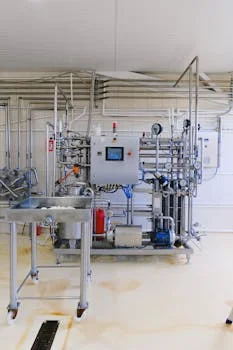
Real-world applications in Mexico City demonstrate how targeted wastewater treatment solutions deliver significant environmental and economic benefits for local industries and municipalities. These success stories highlight effective compliance, operational efficiency, and sustainable water management.
- Food Processing Plant (Peanut Oil): A major peanut oil processing facility in Mexico City faced substantial LGEEPA fines due to high TSS and FOG levels in its effluent. By implementing a high-efficiency DAF system, the plant successfully reduced TSS concentrations from an influent average of 800 mg/L to consistently below the 30 mg/L NOM-001 limit. This operational improvement led to a verifiable reduction in regulatory fines by over $200K USD annually, alongside enhanced operational stability (adapted from SAVECO livestock manure treatment data).
-
Electronics Manufacturer: An electronics manufacturing plant dealing with heavy metal-laden effluent and high COD sought to achieve stringent discharge limits and enable water reuse. The installation of a compact MBR plant for space-constrained urban industrial sites in Mexico City achieved a remarkable 99% COD removal efficiency. The high-quality permeate from the MBR system allowed the manufacturer to reuse treated water for non-potable applications, such as cooling towers, significantly reducing their reliance on fresh municipal water and bolstering their environmental stewardship.
Explore how MBR plants can enable water reuse for cooling towers in electronics manufacturing. -
Automotive Supplier: When an automotive supplier needed a rapid wastewater treatment solution for a temporary production line, a modular WWTP (WSZ series) was deployed. This prefabricated A/O plant, with capacities up to 80 m³/h, was fully installed and operational in just three weeks, meeting NOM-001 standards without requiring extensive civil works. The engineering specs for modular WWTPs in Mexico City’s temporary industrial projects highlight their flexibility and efficiency, making them ideal for dynamic industrial needs.
Discover the benefits of modular WWTPs for temporary industrial projects in Mexico City. -
Municipal Case: Atotonilco WWTP: The Atotonilco Wastewater Treatment Plant, a monumental $1.2 billion project, represents a cornerstone of Mexico City’s municipal wastewater strategy. As the largest wastewater treatment facility globally, it effectively treats 60% of Mexico City’s untreated wastewater, serving a population of 12 million people. The plant's advanced process flow, including primary, secondary, and tertiary treatment stages, significantly improves water quality and facilitates large-scale agricultural reuse in the Mezquital Valley, showcasing a successful model for urban water management and environmental rehabilitation.

(Image: Simplified process flow diagram of the Atotonilco WWTP, illustrating its multi-stage treatment approach.)
Frequently Asked Questions
Q: What are the primary NOM-001-SEMARNAT-1996 limits I need to consider for industrial discharge in Mexico City?
A: For industrial effluent discharged into national waters, key NOM-001-SEMARNAT-1996 limits typically include Total Suspended Solids (TSS) below 30 mg/L, Chemical Oxygen Demand (COD) below 200 mg/L, and Fats & Oils (FOG) below 15 mg/L. These limits can vary based on the receiving body of water.
Q: How can I estimate the CAPEX and OPEX for a new wastewater treatment system in Mexico City?
A: CAPEX for systems like DAF (50 m³/h) can range from $120K–$250K, while MBR (100 m³/h) might be $200K–$500K. OPEX, influenced by Mexico City's higher electricity rates ($0.12–$0.18/kWh) and labor costs ($15–$25/hour), typically ranges from $0.15–$0.30/m³ for DAF and $0.25–$0.50/m³ for MBR. Always request a detailed, transparent quote from suppliers, including freight and installation.
Q: What are the key benefits of MBR technology over conventional activated sludge for Mexico City facilities?
A: MBRs offer a significantly smaller footprint (up to 60% less), produce higher quality effluent suitable for water reuse, and are more resilient to influent fluctuations. This makes them ideal for space-constrained urban industrial parks and for achieving stringent discharge limits or meeting wastewater reuse regulations in Mexico City.
Q: What should I look for in a supplier's compliance guarantee for NOM-001-SEMARNAT-1996?
A: A strong compliance guarantee should explicitly state that the installed equipment will consistently achieve the required NOM-001 discharge parameters for your specific effluent. It should also outline the supplier's responsibility and support in case of non-compliance, including process adjustments or system modifications, and ideally include real-time monitoring capabilities for verification.
Q: How important is local service and spare parts availability for wastewater treatment equipment in Mexico City?
A: It is critically important. Without a local service team, response times for maintenance or emergencies can exceed 24 hours, leading to costly downtime and potential regulatory fines. Similarly, readily available spare parts ensure quick repairs and minimize operational interruptions, which is a key advantage offered by suppliers with a strong local presence and distribution network.
Further Reading
Explore these in-depth articles on related wastewater treatment topics: