Wastewater treatment plant cost in Daegu spans KRW 3B–286B in CAPEX, from a small DAF package to the Korea Water Cluster complex, while OPEX runs USD 0.1–1.2/m³ (KRW 200–1,500/m³) by technology.
The reference points anchor both ends: the 2019 Korea Water Cluster project required KRW 286.1B (USD 215M), while a 2020 electron beam plant for textile dyeing wastewater cost USD 4M to construct with USD 0.3/m³ operating costs. Textile, chemical, and municipal buyers face very different bills, so this guide breaks each one down.
Wastewater Treatment Plant Cost in Daegu: 2026 Benchmarks
Daegu projects run KRW 1.2B–286B in CAPEX and KRW 200–1,500/m³ in OPEX, with electron-beam textile plants near USD 0.3/m³. The 2024 effluent limits — COD ≤50 mg/L, TSS ≤30 mg/L — push an estimated 40% of industrial facilities toward upgrades, and Korea Water Cluster funding can cover 84% of CAPEX.
Daegu's industrial composition drives the premium. The city "is also known as 'Textile City'", and Wikipedia's city profile names the "Seongseo Industrial Complex, West Daegu Industrial Complex and the Daegu Dyeing Industrial Complex" as its main manufacturing zones. The dyeing complexes' 149 factories, employing 2,812 individuals, generate high-strength wastewater with COD of 1,500–3,000 mg/L. That influent demands advanced methods — electron beam or MBR — which typically cost 2–3 times more than conventional municipal sewage treatment in capital and operations combined.
Government incentives shape feasibility as much as technology. The Korea Water Cluster, at a total project cost of KRW 286.1B, saw 84% (KRW 240.9B) covered by state funding, substantially lowering CAPEX for qualifying projects. The cluster's 68% occupancy rate limits how many newcomers can access those terms, so competitive entry is a scheduling issue, not a formality. Companies inside the cluster also benefit from reduced land rent (KRW 968,000/3.3m²), which is why tenants weigh the wait against the discount.
Regulation is the other hard driver. Daegu's 2024 effluent standards mandate COD ≤50 mg/L and total suspended solids (TSS) ≤30 mg/L, requiring significant upgrades at an estimated 40% of industrial facilities. Non-compliance fines reach up to KRW 100M per year under the Daegu Metropolitan City Ordinance. That exposure routinely justifies robust, higher-cost treatment trains on pure risk arithmetic.
The industrial mix then sets the equipment. Facilities with FOG-heavy effluents, common in chemical processes, often find DAF systems the most cost-effective primary treatment. Conversely, MBR systems for Daegu's space-constrained industrial parks win where footprint is tight, delivering high effluent quality in a compact design at a higher per-unit cost. Teams comparing regional playbook differences — including industrial wastewater treatment methods used in Japan — will recognize the same textile-driven cost structure across the region.
One planning note before the numbers: Daegu budgets move together, so isolate variables when comparing quotes. Fix the effluent target first (discharge-grade versus reuse-grade), then compare technologies at equal capacity, and only then let funding and land terms adjust the shortlist. Plants that skip the first step end up comparing an MBR priced for reuse against a DAF priced for pretreatment — a KRW 10B gap that says nothing about either technology.
Industrial Wastewater Treatment CAPEX 2026: Korea Benchmarks by Technology
Industrial wastewater treatment CAPEX in Korea brackets from KRW 1.2B for a 50–300 m³/day DAF plant to KRW 286B for the national cluster program, with technology choice setting the band before capacity does. The subsections below price the four main routes — electron beam, MBR, DAF, and conventional activated sludge — against Daegu's textile, chemical, and municipal influent profiles.
Electron Beam Wastewater Treatment Cost in South Korea
Electron beam CAPEX in South Korea runs USD 4M–8M for a typical 3,000 m³/day system, according to IAEA 2020 data. Textile applications needing dehalogenation modules for complex dyes can add up to 20%, from specialized equipment and increased energy shielding. Operating cost sits near USD 0.3/m³, which is why the technology competes for high-COD refractory streams that biology alone cannot polish. For dyeing complexes sitting at COD 1,500–3,000 mg/L, that operating figure is the anchor number in every feasibility study we review.
Two practical notes apply inside that band. Shielding and safety infrastructure, not the accelerator itself, drive the variance across the USD 4M–8M range, so site layout matters as much as vendor choice. And because electron beam targets refractory organics, pairing it with existing biology — rather than replacing it — is usually the cheaper integration path for dyeing complexes already running conventional trains.
MBR System CAPEX for Textile Wastewater in Korea
MBR CAPEX for textile wastewater in Korea typically ranges from KRW 5B to KRW 15B for capacities of 100–500 m³/day. PVDF membranes, the core component, cost approximately KRW 2M–4M per square meter. According to Wikipedia's membrane bioreactor overview, "compared to the conventional activated sludge process, membrane bioreactors are more compact," and "given the small size of the membrane's pores, the effluent is clear and pathogen free" — both properties that matter for reuse credits. Daegu's cold winters, dropping to -10°C, add around 30% for insulation, heating, and specialized materials to keep biology active.
For textile sites, the compactness premium compounds. Wikipedia's overview lists "reduced footprints and simpler retrofitting" among MBR advantages, and at Daegu land prices of KRW 1.5M–3M/m², every saved square meter of tankage returns money that would otherwise sit under concrete. Most textile MBR quotes therefore recover much of their premium over activated sludge on land alone, before counting any reuse value.
DAF and Conventional Activated Sludge CAPEX
DAF systems for high-TSS or FOG-laden streams typically cost KRW 1.2B–3.5B for 50–300 m³/day, and high-FOG effluents often need chemical dosing skids adding KRW 300M–800M. Conventional activated sludge runs KRW 3B–10B for 1,000–5,000 m³/day. Land decides the second number: at KRW 1.5M–3M/m² in industrial zones, the larger activated sludge footprint can effectively double total CAPEX, which is what pushes compact technologies up the shortlist despite higher unit equipment costs.
CAPEX by Technology and Capacity (KRW, 2026)
| Technology | 100 m³/day | 500 m³/day | 1,000 m³/day | 5,000 m³/day |
|---|---|---|---|---|
| MBR | KRW 5B–7B | KRW 12B–15B | KRW 25B–30B | N/A (typically smaller scale) |
| DAF | KRW 1.2B–1.8B | KRW 3B–3.5B | N/A (typically pre-treatment) | N/A (typically pre-treatment) |
| Electron Beam | N/A (typically larger scale) | N/A (typically larger scale) | KRW 5B–7B (USD 4M–5M) | KRW 9B–11B (USD 7M–8M) |
| Activated Sludge | N/A (less efficient for small scale) | KRW 3B–5B | KRW 6B–10B | KRW 15B–25B |
OPEX Costs: What to Budget for Annual Operations in Daegu
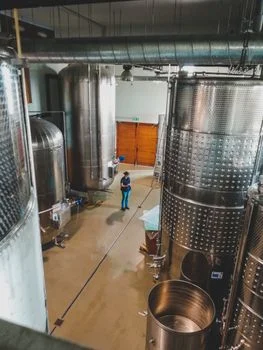
Annual operations for a Daegu plant run KRW 200–1,500/m³ across technologies, split among energy, chemicals, labor, maintenance, and sludge disposal. Electron beam OPEX runs near USD 0.3/m³ (per IAEA 2020 data), with electricity at roughly 60% of it and energy consumption of about 1.2 kWh/m³. Membrane replacement in hybrid systems accounts for another 20%, recurring every 5–7 years. The capex and opex split for India's market shows how the same categories rebalance where labor is cheaper and energy is costlier.
MBR OPEX runs KRW 800–1,500/m³, driven by aeration and membrane scouring at 0.8–1.2 kWh/m³. Membrane replacement is the periodic hit: new membranes cost KRW 500K–1M/m² every 8–10 years, depending on influent quality and operational discipline. Regular cleaning extends membrane lifespan, and skipping it shows up directly in the replacement schedule.
DAF System OPEX in Daegu's Chemical Industry
DAF system OPEX in Daegu's chemical industry runs KRW 300–800/m³, but chemicals can dominate the line. Coagulants and flocculants typically account for KRW 150–400/m³ of treated water, especially on high-FOG chemical wastewater. Sludge disposal adds KRW 200–500/m³ because DAF sludge carries high water content, often requiring further dewatering with plate and frame filter presses to cut volume. Chemical selection and dose optimization are the two levers that move this number most.
Conventional activated sludge offers the lowest OPEX at KRW 200–500/m³, with aeration energy of 0.4–0.6 kWh/m³. Sludge disposal runs KRW 100–300/m³, lower than DAF, because activated sludge produces a more concentrated biomass. The trade-off is footprint and the land-related carrying costs that come with it.
Winter deserves its own line in the OPEX model. Daegu's -10°C design case raises aeration and heating demand at exactly the season when dyeing production peaks, and the combination can push monthly energy bills visibly above the annual average. Plants that budget on summer data alone discover the gap in January.
Labor is a fixed annual line, typically KRW 30M–80M per year for 1–2 operators depending on complexity and automation. Daegu's 2026 minimum wage of KRW 9,860/hour directly impacts these figures; note that Wikipedia's South Korea table lists KRW 9,860 as the 2024 rate, so confirm the current-year figure with the Ministry of Employment and Labor before locking labor budgets. Automated automatic chemical dosing systems and SCADA integration reduce constant manual oversight and flatten that line.
OPEX Breakdown by Technology (KRW/m³, 2026)
| Technology | Energy | Chemicals | Labor | Maintenance | Sludge Disposal | Total OPEX |
|---|---|---|---|---|---|---|
| Electron Beam | KRW 400 (USD 0.3) | KRW 0 | KRW 50 | KRW 100 | KRW 50 | KRW 600 (USD 0.45) |
| MBR | KRW 350–500 | KRW 50–100 | KRW 100–150 | KRW 200–400 | KRW 100–250 | KRW 800–1,500 |
| DAF | KRW 100–200 | KRW 150–400 | KRW 50–100 | KRW 50–100 | KRW 200–500 | KRW 550–1,300 |
| Activated Sludge | KRW 150–250 | KRW 10–50 | KRW 50–100 | KRW 50–100 | KRW 100–300 | KRW 360–800 |
Textile vs. Chemical vs. Municipal: Costs by Industry in Daegu
Textile dyeing wastewater, the dominant Daegu profile, runs COD 1,500–3,000 mg/L with color of 500–2,000 Pt-Co units, and meeting the 2024 limits usually requires electron beam or MBR. For a 500 m³/day textile facility, CAPEX runs KRW 10B–20B. Reuse claws some of it back: 30–50% of treated effluent is recoverable for non-potable uses like process water or cooling, directly cutting freshwater purchases. For a wider comparison set, see the Bali Wastewater Treatment Plant Cost 2026 guide.
Chemical manufacturing effluent typically carries TSS of 500–1,500 mg/L and FOG of 200–800 mg/L, plus assorted organic and inorganic pollutants. DAF for solids and FOG, followed by activated sludge or MBR, is the standard train, with CAPEX of KRW 5B–12B for a 500 m³/day plant. Coagulant and flocculant costs (KRW 200–500/m³) often dominate OPEX, so chemical selection and dosing optimization become the cost-control program. For complex effluents, it is worth studying hybrid treatment systems for high-strength effluents from a neighboring market.
Municipal sewage, with BOD 200–400 mg/L and TSS 250–500 mg/L, commonly uses conventional activated sludge, or MBR for smaller decentralized systems, at KRW 3B–8B CAPEX for a 1,000 m³/day facility. Land costs (KRW 1.5M–3M/m²) are often the primary CAPEX driver because municipal biology and settling demand larger footprints. WSZ underground integrated sewage treatment plants mitigate that constraint for smaller communities, and reuse-grade effluent for irrigation or toilet flushing can be secured with chlorine dioxide generators for wastewater reuse compliance.
Two cross-industry patterns are worth carrying into any Daegu budget. Chemical plants carry the widest OPEX variance because dosing chemistry tracks raw-material changes, so a quarter of jar-test data beats a single sample. Municipal projects carry the least technical risk but the most schedule risk, since land assembly and civil works dominate their timelines.
Industry-Specific Costs (KRW, 2026)
| Industry | Influent Characteristics | Recommended Technology | CAPEX (500 m³/day) | OPEX (KRW/m³) | Compliance Risk |
|---|---|---|---|---|---|
| Textile Dyeing | COD 1,500–3,000 mg/L, Color 500–2,000 Pt-Co | Electron Beam or MBR | KRW 10B–20B | KRW 800–1,500 | High (color, refractory organics) |
| Chemical Mfg. | TSS 500–1,500 mg/L, FOG 200–800 mg/L | DAF + Biological | KRW 5B–12B | KRW 600–1,300 | Medium (specific pollutants, variable loads) |
| Municipal Sewage | BOD 200–400 mg/L, TSS 250–500 mg/L | Activated Sludge or MBR | KRW 3B–8B (for 1,000 m³/day) | KRW 300–800 | Low (consistent, well-understood) |
How to Choose the Right Wastewater Treatment System for Your Daegu Facility
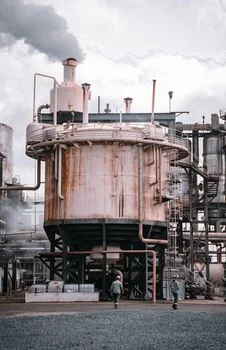
Choosing a Daegu treatment system starts with influent data, not equipment catalogs. Define COD, TSS, FOG, and pH, and set them against the 2024 effluent limits (COD ≤50 mg/L, TSS ≤30 mg/L) — that gap alone dictates the required treatment efficacy. Everything downstream is arithmetic on that gap. Six items settle most Daegu tenders before any datasheet is opened:
- Influent profile: COD, TSS, FOG, pH, and peak-flow factor from at least 12 months of records
- Effluent target in writing: the 2024 discharge limits or a stricter internal reuse standard
- Footprint budget in m², priced at KRW 1.5M–3M/m² before technology selection
- Funding track: Korea Water Cluster eligibility and Daegu Metropolitan City grant windows
- Winterization: a -10°C design case for aeration heating and membrane protection
- Sludge route and disposal cost, benchmarked at KRW 100–500/m³ by technology
Second, size for real flow, not average flow. Estimate daily volume in m³/day and identify peak loads: textile factories commonly see 30% higher flows during specific dyeing cycles, which drives buffer tank sizing. Underestimating peaks shows up later as compliance failures and operational bottlenecks.
Third, audit footprint before shortlisting. MBR needs only 0.2–0.5 m²/m³ of treated water, fitting urban and industrial parks with tight land. Conventional activated sludge demands 0.8–1.5 m²/m³, often prohibitive where land trades at KRW 1.5M–3M/m². High-density sectors can also draw on advanced oxidation for semiconductor wastewater as a space-efficient reference design.
Fourth, compare the CAPEX/OPEX trade-off per technology on a 10-year horizon. Electron beam carries higher initial CAPEX but lower long-run OPEX on energy-heavy applications; DAF is cheap to build but chemical-hungry to run. A financial analysis covering ROI and compliance-fine avoidance settles the total cost of ownership question.
Fifth, line up funding before signing. Korea Water Cluster mechanisms can cover up to 84% of CAPEX for qualifying projects, and Daegu Metropolitan City offers grants of KRW 500M–2B for projects that meet or exceed the 2024 standards. Request a budget quotation with your influent profile and target limits, and use the grant schedules above to anchor the subsidy conversation with the city.
Selection logic in one pass: a working decision tree starts at "define influent and effluent," branches on flow rate, influent type (textile, chemical, municipal), space availability (limited or ample), and budget posture (high CAPEX/low OPEX versus the reverse), and ends at a recommended technology — MBR, DAF, electron beam, or activated sludge — with its cost band and compliance margin attached.
Frequently Asked Questions
What is the average payback period for a wastewater treatment plant in Daegu?
Industrial projects in Daegu typically pay back in 3–7 years, driven by water-reuse savings and avoided compliance fines. Municipal facilities run longer at 10–15 years. Electron beam plants treating complex textile wastewater often reach payback in 4–5 years on treatment efficiency. Model all three horizons against your own fine exposure, and credit the 30–50% reuse recovery where your process allows it.
Are there government subsidies for wastewater treatment in Daegu?
Yes. The Korea Water Cluster covered KRW 240.9B of its KRW 286.1B total — up to 84% of qualifying CAPEX — with state funding. Daegu Metropolitan City adds grants of KRW 500M–2B for projects that meet or exceed the 2024 effluent standards. Apply early, because cluster occupancy already sits at 68%.
How much does it cost to upgrade an existing plant to meet Daegu's 2024 standards?
Expect 30–50% of new-build cost, depending on how far the current train sits from the 2024 limits. MBR retrofits on a 500–1,000 m³/day facility run KRW 1B–5B. DAF pretreatment adds KRW 500M–2B, and electron-beam modules for advanced oxidation run KRW 2B–10B depending on scale and integration complexity.
What are the hidden costs of wastewater treatment in Daegu?
The recurring sleepers are land leases (KRW 968,000/3.3m² at the Korea Water Cluster), fluctuating sludge disposal fees (KRW 200–500/m³), and winter energy. MBR systems can see up to 20% higher OPEX at -10°C from heating and aeration demand. Budget the cold-weather premium explicitly rather than spreading it across the year.
Can I reuse treated wastewater in Daegu?
Yes, for non-potable applications: cooling water, industrial process water, irrigation, and toilet flushing. MBR effluent at COD ≤50 mg/L often meets reuse standards without extensive tertiary treatment. Electron-beam effluent removes pollutants effectively but usually needs a disinfection step, such as chlorine dioxide dosing, to secure microbiological safety for reuse.
Further Reading
Explore these in-depth articles on related wastewater treatment topics: