Wastewater treatment plant cost in São Paulo for 2026 spans R$12,000–R$60,000 per m³/day of CAPEX and R$0.80–R$4.50/m³ of OPEX, set by technology choice. A 500 m³/day MBR system runs R$12M–R$18M in CAPEX; hybrid DAF-MBR trains cut OPEX to R$1.50–R$2.50/m³.
Wastewater Treatment Plant Cost São Paulo 2026: Why Quotes Vary So Widely
São Paulo industrial buyers face CAPEX of R$12,000–R$60,000 per m³/day and OPEX of R$0.80–R$4.50/m³ across five technology families. Quotes vary 40–60% between suppliers because SABESP compliance add-ons, land costs, and import tariffs of 12–18% are priced inconsistently. Technology sets the baseline; compliance scope sets the spread.
The opacity has documented costs. A São Paulo food processing plant absorbed a 300% cost overrun on its treatment project after SABESP compliance upgrades were underestimated (AquaTech Solutions Brasil). Procurement teams across the state see the same pattern: inconsistent quotes, hidden expenses, and no standard breakdown by technology, capacity, or regional rule.
Three drivers hide behind the quotes. Phase IV nutrient limits demand advanced treatment whose upgrade costs often go unquoted. Land prices for above-ground plants inflate civil works, especially for conventional trains with large footprints. Import tariffs of 12–18% on components like membrane modules land on the equipment budget after award.
Supplier quotes for similar projects vary by 40–60%, reflecting non-standard technical specifications, undisclosed OPEX, and regional labor and material gaps — São Paulo versus Minas Gerais being the usual contrast. This guide counters that with São Paulo-specific CAPEX and OPEX tables, explicit compliance add-ons, and a decision framework for low-risk procurement.
CAPEX Breakdown: How Technology and Capacity Drive Plant Costs
Industrial wastewater plant CAPEX in São Paulo for 2026 ranges from R$12,000 to R$60,000 per m³/day of capacity, driven by technology choice and site conditions. The band covers everything from conventional activated sludge to advanced zero-discharge trains. Footprint, treatment efficiency, and compliance scope explain most of the spread between quotes.
The table below breaks down CAPEX per cubic meter per day for the five main technology families at 2026 São Paulo prices:
| Technology Type | CAPEX per m³/day (2026 São Paulo, R$) |
|---|---|
| Conventional Activated Sludge | R$12,000–R$20,000 |
| DAF (Dissolved Air Flotation) | R$15,000–R$25,000 |
| MBR (Membrane Bioreactor) | R$24,000–R$36,000 |
| Hybrid DAF-MBR | R$30,000–R$45,000 |
| Zero-Discharge (DAF-MBR-RO) | R$40,000–R$60,000 |
Four drivers stack on top of equipment pricing. Equipment itself — reactors, pumps, blowers, membranes — takes 40–60% of total cost. Civil works for foundations, tanks, and buildings absorb 20–30%. SABESP compliance upgrades for nutrient removal or disinfection add 10–25%, and land acquisition in dense industrial zones takes 5–15%.
MBR System CAPEX São Paulo Industrial Benchmarks
MBR systems in São Paulo list at R$24,000–R$36,000 per m³/day before compliance add-ons. A 1,000 m³/day MBR plant in Guarulhos cost R$28M in 2025, including R$5M for nutrient removal infrastructure tied to Tietê Phase IV limits (Grupo TYPSA). Compliance scope, not the membranes, drove nearly a fifth of that budget.
CAPEX reduction levers are real but narrow. Modular underground MBR systems for São Paulo's space-constrained sites shrink civil works and land costs through compact pre-fabricated units. Fronting the train with high-efficiency DAF systems for industrial pre-treatment in hybrid configurations unloads the biological stage and reduces its size. Used equipment runs 30–50% cheaper but carries a 30–50% shorter life and heavier maintenance. BNDES Finame lines can finance environmental projects and soften the initial hit.
OPEX Uncovered: Energy, Chemicals, and Labor Costs for Industrial WWTPs
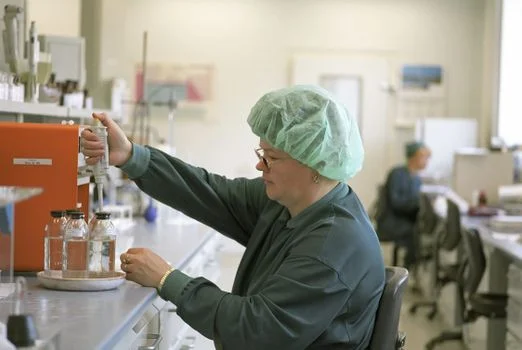
Operating expenses for industrial plants in São Paulo span R$0.80/m³ for DAF systems to R$4.50/m³ for zero-discharge trains, set mainly by energy and chemicals. These recurring costs decide project economics far more than CAPEX does over a ten-year horizon. Forecasting them per technology, before contract signature, is the highest-value budgeting step available.
The table below details OPEX per cubic meter by technology at 2026 São Paulo prices:
| Technology Type | OPEX per m³ (2026 São Paulo, R$) |
|---|---|
| Conventional Activated Sludge | R$1.20–R$2.00 |
| DAF | R$0.80–R$1.50 |
| MBR | R$2.10–R$3.50 |
| Hybrid DAF-MBR | R$1.50–R$2.50 |
| Zero-Discharge (DAF-MBR-RO) | R$2.80–R$4.50 |
Energy takes 40–60% of total OPEX. With industrial electricity tariffs of R$0.60–R$0.85/kWh, membrane plants cost 2–3 times more to run than DAF plants, mostly from aeration blowers and membrane scouring. Energy-efficient blowers and pumps can trim MBR energy costs by 15–25% when specified from the start.
Chemicals account for 20–30% of OPEX. Coagulants run R$5–R$10/kg and flocculants R$8–R$15/kg at DAF and pretreatment stages, while denitrification carbon sources such as methanol add R$3–R$6/kg in nutrient-limited plants. Bulk purchasing secures 15–25% discounts, and PLC-controlled chemical dosing to optimize OPEX in São Paulo's high-tariff environment cuts consumption a further 20–30% by preventing overtreatment.
Labor takes 10–20% of OPEX. Automated DAF units with PLC control run with one operator per shift, while manual conventional plants need 3–4 operators per shift. In a state where wages outpace the national average, that staffing gap compounds every year of operation.
Maintenance runs 5–10% of OPEX. MBR membranes need replacement every 5–7 years at R$2,000–R$4,000 per m² of membrane area. DAF units stay cheaper: annual nozzle cleaning and pump servicing typically cost R$5,000–R$15,000 per year. Remote monitoring and proactive servicing extend equipment life and prevent unscheduled downtime.
SABESP Compliance Costs: What Tietê River Programme Phase IV Means for Your Budget
The Tietê River Programme Phase IV, effective 2026, imposes stricter discharge limits for industrial wastewater in São Paulo and forces specific CAPEX add-ons. Facilities discharging to the Tietê basin must meet tighter nutrient standards or face fines and shutdown risk. Pricing those requirements into the original budget is cheaper than retrofitting under enforcement pressure.
Behind the 2026 limits sits a three-decade cleanup effort. According to Wikipedia's Projeto Tietê entry, the program grew out of a petition campaign that gathered 1.2 million signatures, and by its third phase it had already cost US$2.7 billion (R$8.8 billion). The same entry reports the river's pollution plume shrank from 400 km at the start to 130 km by 2017. Phase IV extends the works into the current permit horizon, and industrial dischargers carry the tighter nutrient limits that follow.
SABESP's scale explains why its thresholds reach so many plants. According to Wikipedia, the utility serves residential, commercial, and industrial users in 363 of the 645 municipalities of São Paulo state and provides water to 26.7 million customers, about 60% of the state population. Dischargers loading that network face the surcharge and retrofit math priced below.
The revised Tietê River Programme Phase IV limits for industrial discharges in São Paulo for 2026 are:
| Parameter | Discharge Limit (2026) | Previous Limit (2020) |
|---|---|---|
| COD (Chemical Oxygen Demand) | <125 mg/L | <250 mg/L |
| BOD (Biochemical Oxygen Demand) | <25 mg/L | <60 mg/L |
| TN (Total Nitrogen) | <10 mg/L | No specific limit |
| TP (Total Phosphorus) | <1 mg/L | No specific limit |
| pH | 6–9 | 6–9 |
The nitrogen and phosphorus caps demand advanced tertiary processes, so plants must budget three CAPEX add-ons:
- Nutrient Removal (TN/TP): Biological nutrient removal (BNR) or chemical precipitation systems add R$3M–R$8M to CAPEX for a typical 500 m³/day MBR or hybrid system, using anaerobic/anoxic zones or chemical dosing for phosphorus.
- Disinfection: Bacteriological standards require disinfection via on-site ClO₂ generation for SABESP-compliant disinfection without chemical storage risks or UV treatment, adding R$1M–R$3M to CAPEX.
- Online Monitoring Systems: Continuous sensors with data logging for SABESP reporting cost R$500K–R$1.5M and deliver real-time compliance verification.
The OPEX impact follows the same upgrades. Denitrification carbon sources raise chemical costs by 20–40%, and nitrification aeration lifts energy draw. A pharmaceutical plant in Barueri spent R$4.5M on tertiary treatment to meet the new TN/TP limits and avoided an estimated R$2M per year in fines (AquaTech Solutions Brasil). Proactive compliance spend, in that case, paid for itself in under three years.
Multinational groups face a parallel tightening in Europe under the EU Urban Wastewater Treatment Directive: Compliance, Deadlines & Tech. Its deadlines and technology expectations move in the same direction as Phase IV. Budget teams that harmonize specs across both regions negotiate better package pricing.
Monitoring Cadence and Operator Log Discipline
Compliance behaves like a process variable, so watch it like one. Operators should log flows, aeration pressure, chemical dose totals, and membrane differential pressure every shift, in the same format each time. Review pH and settling behavior alongside the online sensors feeding SABESP reporting, because sensor drift is caught earliest by a person comparing readings.
Reconcile chemical deliveries against dosing setpoints weekly, and walk the full train monthly — nozzles, valves, scum lines, and air headers included. Keep the logbook with the compliance records. When a dispute or a fine threat arrives, that log is the plant's memory.
Hybrid Systems vs. Single-Technology Plants: A Cost-Benefit Analysis
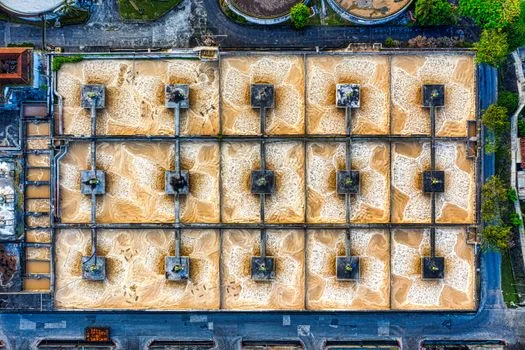
Hybrid wastewater treatment systems demand higher CAPEX but deliver stronger long-term ROI and compliance certainty for São Paulo facilities treating high-strength effluents or chasing zero-discharge goals. Single-technology plants look cheaper upfront yet often miss permit conditions or carry higher operating costs on complex loads. Three scenarios show where each approach wins.
The scenarios below compare options at 2026 São Paulo prices:
| Scenario & Parameters | Technology Option | CAPEX (R$) | OPEX (R$/m³) | Compliance (SABESP) | Water Reuse Potential | ROI (Payback Period) |
|---|---|---|---|---|---|---|
| 1. Food Processing Plant (500 m³/day, COD 2,000 mg/L) |
MBR-only | R$15M | R$3.20 | Yes | 80% | 5 years |
| Hybrid DAF-MBR | R$18M | R$2.10 | Yes | 95% | 3.5 years | |
| 2. Automotive Manufacturing (1,000 m³/day, FOG 500 mg/L) |
DAF-only | R$12M | R$1.20 | No (needs tertiary polishing) | 50% | N/A (Non-compliant) |
| Hybrid DAF-MBR | R$25M | R$1.80 | Yes | 90% | 4 years (due to avoided discharge fees) | |
| 3. Pharmaceutical Plant (200 m³/day, TN 50 mg/L) |
MBR-only | R$8M | R$3.50 | No (needs denitrification) | 85% | N/A (Non-compliant) |
| Hybrid DAF-MBR-RO | R$15M | R$2.80 | Yes (Zero-Discharge) | 99% | 6 years (due to zero-discharge savings) |
In Scenario 1 (Food Processing), an MBR system for high-efficiency COD/TN removal in hybrid configurations alone meets compliance. The hybrid DAF-MBR option costs R$3M more in CAPEX but trims OPEX by R$1.10/m³ and lifts water reuse to 95%. That combination pulls ROI down to 3.5 years versus 5 years for MBR-only.
In Scenario 2 (Automotive Manufacturing), DAF-only cannot reach compliance at 500 mg/L FOG without tertiary polishing. Pairing DAF with an MBR system for high-efficiency COD/TN removal in hybrid configurations delivers full compliance and 90% reuse. The R$25M CAPEX pays back in about 4 years, driven by R$1.5M per year in avoided discharge fees and lower fresh water purchases.
In Scenario 3 (Pharmaceutical Plant), MBR-only misses the TN limits of Phase IV without added denitrification. A DAF-MBR-RO train using RO systems for zero-discharge hybrid configurations in São Paulo's industrial sector reaches 99% reuse and zero discharge. CAPEX nearly doubles to R$15M, yet ROI lands at 6 years on R$2M per year in water savings and avoided fees.
DAF MBR Hybrid OPEX Brazil Benchmarks
DAF MBR hybrid trains hold OPEX between R$1.50 and R$2.50/m³ in Brazilian industrial service, versus R$2.10–R$3.50/m³ for MBR-only plants. Pre-treating FOG and solids upstream protects membranes, cuts scouring air, and trims chemical demand — the three largest OPEX lines. For facilities with COD above 1,000 mg/L or zero-discharge targets, the hybrid premium repays in 3–5 years despite the higher CAPEX.
Single-technology plants still make sense at the margins. DAF-only suits pretreatment-only dischargers with generous municipal limits, while MBR-only fits low-strength effluents already near reuse quality. Everything between those poles — food, automotive, and pharmaceutical loads — favors the hybrid route on ten-year cost.
Who Should Choose Which Train
Choose DAF-only when the discharge permit is lenient and the load is mostly fats, oil, grease, and suspended solids. Choose MBR-only when the effluent is already low-strength and the target is reuse-grade quality without heavy pretreatment. Choose the hybrid DAF-MBR train when COD sits above roughly 1,000 mg/L, when membrane protection against FOG pays for itself, or when discharge fees exceed about R$1.50/m³. Reserve the zero-discharge train for sites where water purchase cost and discharge exposure together justify the premium, as pharmaceutical and high-reuse plants do.
Low-Risk Procurement: A Six-Step Decision Framework for Industrial Buyers
A structured six-step framework cuts procurement risk for wastewater plants in São Paulo by forcing scope, budget, and vendor claims onto one page. It applies to any industrial wastewater treatment project, greenfield or retrofit. The core discipline is comparing capex and opex across a ten-year horizon instead of judging sticker prices. Buyers who follow it sidestep the overrun pattern described above.
- Step 1: Define Your Compliance Baseline. Identify every applicable discharge limit before talking to vendors. That means SABESP limits, the Tietê River Programme Phase IV parameters in the compliance table above, and local municipal codes. A precise regulatory picture is the foundation for technology selection and penalty avoidance.
- Step 2: Calculate Your CAPEX Budget. Start from the tech-specific ranges in the CAPEX Breakdown section. Add a contingency of 15–25%, because São Paulo construction costs run roughly 20% above the Brazilian average and site conditions surprise often. Lock the budget envelope before quotes arrive.
- Step 3: Estimate OPEX Accurately. Forecast with the OPEX table, not vendor brochures. Factor in São Paulo industrial electricity tariffs of R$0.60–R$0.85/kWh, explore bulk chemical discounts of 15–25%, and weigh automation against manual staffing. Energy and chemicals decide the ten-year cost.
- Step 4: Compare ROI for Hybrid vs. Single-Technology Systems. Run the scenarios from the Hybrid Systems section against your own flows. Prioritize water reuse when discharge fees exceed R$1.50/m³, since reuse delivers the fastest payback on higher-CAPEX hybrids. Model at least two technology pairings before shortlisting.
- Step 5: Conduct Rigorous Vendor Selection. Score every bidder on five checks:
- Does the vendor show São Paulo-specific case studies or references, such as AquaTech Solutions Brasil or Grupo TYPSA?
- Are compliance upgrades — nutrient removal, disinfection, monitoring — itemized explicitly in the quote?
- Is the equipment modular for future expansion, for example HydropureWater's WSZ Series?
- Does the vendor offer ongoing OPEX optimization services such as dosing automation or membrane cleaning contracts?
- Can the vendor benchmark São Paulo costs against other hubs like Valencia, and does it have global delivery experience?
- Step 6: Consider Pilot Testing. Plants above 500 m³/day should budget R$500K–R$1.5M for a 3–6 month pilot with the preferred vendor. Pilots validate performance, OPEX assumptions, and compliance behavior under real site conditions. Treat the pilot as inexpensive insurance on a R$15M–R$25M decision.
Three pitfalls cause most budget failures in the region: underestimating SABESP compliance costs, ignoring energy efficiency in membrane-heavy plants, and picking vendors without São Paulo support staff. Local labor runs about 30% above Brazil's average, so slow maintenance response multiplies downtime cost. We quote São Paulo projects with itemized compliance scopes — send flow profiles and discharge permits through the request-a-quote page for a line-item budget.
Commissioning and Startup Sequence
Treat commissioning as a contractual milestone, not a courtesy. Fill the biological train with clean water first, seed it with sludge from a compatible plant, and ramp aeration in steps while watching settling behavior. Bring membrane flux up gradually, holding each step until permeability stays steady under normal scouring air. Only then introduce full-strength production effluent.
Keep the discharge line closed to the river until every permit parameter clears the Phase IV limits in the compliance table. Require the vendor to stay on site through that verification run, with performance tests written into the acceptance criteria. A startup handled this way surfaces design gaps while the contractor still owns them.
Use the startup window to train the operators who will run the plant, not a borrowed engineering crew. Have them perform the routine checks, calibrations, and log entries themselves while the vendor supervises. Stock the spare parts identified during commissioning before the warranty window closes.
Frequently Asked Questions
What is the average cost per m³ for a wastewater treatment plant in São Paulo?
OPEX for industrial plants in São Paulo runs from R$0.80/m³ for DAF-only systems to R$4.50/m³ for zero-discharge hybrids. CAPEX generally falls between R$12,000 and R$60,000 per m³/day of capacity, depending on technology and site conditions. The CAPEX and OPEX tables above give the tech-specific ranges behind those averages.
How much does it cost to upgrade a WWTP for SABESP's Tietê River Programme Phase IV compliance?
Upgrades for TN/TP removal and disinfection add R$3M–R$8M to CAPEX for a 500 m³/day plant, plus online monitoring at R$500K–R$1.5M. OPEX typically rises 20–40% from methanol dosing and heavier aeration. A Barueri pharmaceutical plant spent R$4.5M on tertiary upgrades and avoided an estimated R$2M per year in fines.
Are hybrid DAF-MBR systems worth the higher CAPEX in São Paulo?
Yes, for high-strength wastewater above roughly COD 1,000 mg/L or for zero-discharge targets. Hybrids cut OPEX 30–50% versus single-technology plants and commonly reach payback in 3–5 years through energy, chemical, and reuse savings. For low-strength effluents with lenient permits, single-technology options remain defensible.
What are the hidden costs of wastewater treatment plants in São Paulo?
Four line items hide most often. SABESP compliance upgrades add 10–25% to CAPEX, land acquisition takes 5–15% in industrial zones, import tariffs add 12–18% on components like membranes, and manual plants need 3–4 operators per shift versus 1 for automated ones. Each item is quotable in advance, and each is routinely left out of low bids.
How can I reduce OPEX for my WWTP in São Paulo?
Four levers work reliably. PLC-controlled dosing cuts chemical waste 20–30%; efficient blowers and pumps trim MBR energy 15–25%; water reuse saves R$1.50–R$3.00/m³ in discharge fees and fresh water; and bulk chemical purchasing locks in 15–25% discounts. Stack all four before accepting a vendor OPEX estimate.
What is the SABESP Tietê Phase IV compliance cost for a new 500 m³/day plant?
Plan on R$4.5M–R$12.5M of compliance scope inside a new build: nutrient removal at R$3M–R$8M, disinfection at R$1M–R$3M, and online monitoring at R$500K–R$1.5M. Building it in from day one avoids retrofit premiums and fine exposure. The Guarulhos and Barueri cases above show the same scope priced in practice.
What is the zero discharge WWTP price São Paulo buyers should budget?
Zero discharge trains cost R$40,000–R$60,000 per m³/day of CAPEX and R$2.80–R$4.50/m³ of OPEX at 2026 prices. A 200 m³/day pharmaceutical configuration runs near R$15M fully installed. Reuse savings of about R$2M per year in water and discharge fees bring payback to roughly 6 years.
What do industrial wastewater treatment plant CAPEX OPEX Brazil benchmarks show for 2026?
Brazil benchmarks track São Paulo closely, with CAPEX between R$12,000 and R$60,000 per m³/day and OPEX between R$0.80 and R$4.50/m³ by technology. São Paulo adds roughly 20% to construction costs and 30% to labor versus national averages. Compliance scope, not geography, remains the biggest swing factor.