Hospital Wastewater Treatment Plant Design Manila: 2026 Overview
Hospital wastewater treatment plant design in Manila combines screening, biological treatment, and DOH-mandated tertiary disinfection so effluent meets DENR Class C limits of BOD ≤50 mg/L and TSS ≤70 mg/L. Plants are sized for flows of 500–1,200 L/bed/day at influent COD of 300–1,500 mg/L.
The loading gap against domestic sewage drives every downstream design decision. Hospital effluent carries pathogens such as E. coli above 10⁶ CFU/mL, disinfectant residuals, and pharmaceutical traces, which is why DOH guidelines mandate tertiary treatment—MBR or ozone disinfection—for healthcare facilities. This guide sets out the stage-by-stage specifications, the SBR versus MBR versus A/O trade-off, cost models, and the DENR-EMB compliance path for Manila projects.
The pages below are written for plant engineers, EPC contractors, and procurement managers preparing tenders. Each specification is stated with its operating condition so it can be lifted straight into a design basis memorandum. Where a number is regulatory, the issuing order is named beside it.
Why Manila Hospitals Need Specialized Wastewater Treatment
Hospital effluent in Manila runs 3–5 times stronger than municipal sewage in organic load, with COD of 300–1,500 mg/L and BOD of 200–800 mg/L, as noted in WHO 2024 healthcare effluent guidelines. Pathogen counts are the sharper risk: E. coli often exceeds 10⁶ CFU/mL, a direct threat to receiving waters and community health if discharged untreated. Pharmaceutical residues—ciprofloxacin at 5–50 µg/L—and disinfectant residuals demand removal steps that ordinary sewage plants do not carry.
This loading band overlaps other difficult feed streams, and the design logic in How to Treat High-Strength Organic Wastewater: 2026 Engineering Specs covers comparable COD cases. In our experience sizing hospital plants, kitchen FOG and rags—not bed count—trigger most screening failures. Manila sites add two further constraints: tight urban land and high silt loads in combined drainage.
The consequences of under-treatment reach past the fence line. Effluent quality is tied to the hospital's DOH license to operate, its DENR discharge permit, and the monitoring results filed with EMB each quarter. A plant that misses Class C on paper misses it in the field quickly, because hospital loads shift with admissions and laundry cycles.
DENR-EMB Class C Compliance Hospital Wastewater Standards and Fines
DENR-EMB Administrative Order 2016-08—the Water Quality Guidelines and General Effluent Standards of 2016, issued May 24, 2016 per EMB—sets the Class C effluent limits for discharge into water bodies. The limits are BOD ≤50 mg/L, TSS ≤70 mg/L, fecal coliform ≤1,000 MPN/100mL, and pH 6.5–8.5. Every downstream stage in this guide is sized against these four numbers.
Enforcement sits on top of the standards. Hospitals exceeding limits historically face fines of Php 50,000–100,000 per day under Republic Act 9275, the Clean Water Act, plus possible DOH license suspension. According to the RA 9275 statute text, general violations carry P10,000–P200,000 for every day of violation, and the amounts increase by 10% every two years to compensate for inflation. Gross violations—deliberate toxic discharges or repeated defiance of orders—reach P500,000–P3,000,000 per day, with 6–10 years' imprisonment for responsible officers.
The 2023 enforcement record shows regulators act on these figures. St. Luke’s Medical Center in Quezon City was reportedly fined Php 2.4M for BOD exceedances, according to DENR public records. Read these amounts as recurring daily exposure rather than one-off penalties when building the compliance case.
The two regulators split the work cleanly. DENR-EMB polices the receiving water through effluent limits; DOH polices the facility through its license and treatment-tier mandates. A compliant plant satisfies both files at once, which is why the stages below reference each order by number.
Hospital Wastewater Treatment Stages: Engineering Specs for Manila Facilities
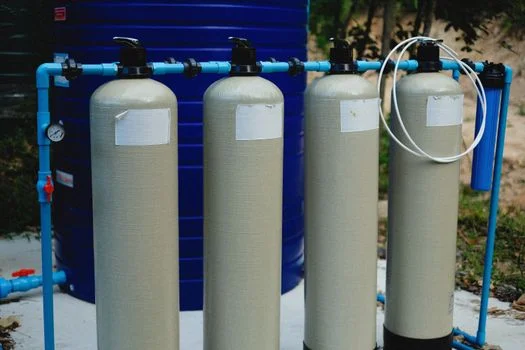
A complete Manila hospital train runs six stages: screening and grit removal, primary sedimentation, biological treatment, tertiary filtration or disinfection, and sludge dewatering. Each stage below carries the sizing numbers we use to hit DENR Class C compliance and DOH tertiary mandates. Treat the values as a starting design envelope, then verify against site sampling; duplex the screen channels so one can be serviced without bypassing the plant.
Pretreatment: Rotary bar screens with 1–3 mm gaps remove rags, plastics, and the fats, oils, and grease (FOG) prevalent in Filipino hospital kitchens. Grit chambers are designed at a velocity of 0.3 m/s so sand and silt settle before they abrade pumps and pipes. Manila's high-silt combined drainage makes this stage non-negotiable. HydropureWater offers robust rotary mechanical bar screens built for these duties.
Primary treatment: Sedimentation tanks hold 2–3 hours of retention to drop settleable solids and part of the organic load. Expect TSS removal of 50–70% and BOD removal around 30–40% at this stage. Primary sludge withdrawn here is the densest in the plant, so route it straight to dewatering.
Secondary treatment: Anoxic/aerobic (A/O) systems are commonly specified with 6–8 hours HRT, MLSS of 3,000–4,000 mg/L, and an F/M ratio of 0.1–0.3 kg BOD/kg MLSS/day. Sequencing batch reactors (SBR) run 4–6 hour cycles at a surface loading rate of 2–3 m³/m²·h. Both routes do the bulk of organic removal in hospital sewage treatment plant design. Watch the F/M ratio during admission swings, because hospital loads move with occupancy and laundry schedules.
Tertiary treatment: Membrane bioreactors (MBR) use 0.1 µm PVDF membranes at a typical flux of 15–25 LMH. Running flux above that band shortens membrane life quickly in FOG-bearing feeds. Ozone disinfection systems dose 0.5–2 mg/L with 10–15 minutes of contact time to knock down pathogens and certain pharmaceutical residues.
Sludge handling: Plate-and-frame filter presses apply 2–5 bar to dewater biological sludge to 20–30% solids. Polyelectrolyte conditioning at 3–5 kg per ton of dry solids improves cake dryness and release. Order polymer make-down capacity for both ends of the dose range, since sludge age shifts seasonally. HydropureWater provides reliable plate-and-frame filter presses for this duty.
Disinfection: On-site chlorine dioxide generators with 50–500 g/h capacity supply residual disinfection for microbial inactivation. Where chlorine-free discharge or reuse is required, UV systems deliver a 254 nm wavelength at a 40 mJ/cm² dose. Verify residual at the contact tank outlet, not the dosing skid, to prove the dose is actually delivered.
The table below consolidates the key engineering specifications for hospital wastewater treatment plant design in Manila.
| Treatment Stage | Key Parameter | Typical Specification for Manila Hospitals | Purpose |
|---|---|---|---|
| Pretreatment | Rotary Bar Screen Gaps | 1–3 mm | Remove large solids, FOG |
| Pretreatment | Grit Chamber Velocity | 0.3 m/s | Settle sand, grit |
| Primary Treatment | Sedimentation HRT | 2–3 hours | Remove settleable solids, initial BOD |
| Secondary (A/O) | HRT | 6–8 hours | BOD, COD, nutrient removal |
| Secondary (A/O) | MLSS | 3,000–4,000 mg/L | Maintain microbial population |
| Secondary (SBR) | Cycle Time | 4–6 hours | Batch biological treatment |
| Tertiary (MBR) | Membrane Pore Size | 0.1 µm (PVDF) | High-quality effluent, pathogen removal |
| Tertiary (Ozone) | Ozone Dose | 0.5–2 mg/L | Disinfection, micropollutant removal |
| Sludge Handling | Filter Press Pressure | 2–5 bar | Dewater sludge to 20–30% solids |
| Disinfection (ClO₂) | ClO₂ Dose | Residual 0.5–1 mg/L | Pathogen inactivation |
| Disinfection (UV) | UV Dose | 40 mJ/cm² | Chlorine-free pathogen inactivation |
SBR vs MBR for Healthcare Wastewater Philippines: Technology Comparison
SBR, MBR, and A/O differ most sharply in footprint and effluent quality: MBR fits 0.1–0.2 m²/m³/day against 0.5–0.8 m²/m³/day for SBR, while MBR effluent COD runs below 30 mg/L. The choice trades CAPEX against land, pathogen removal, and DOH tertiary compliance. Urban Manila hospitals with tight sites usually land on MBR; land-rich sites outside the core often choose SBR.
Sequencing Batch Reactor (SBR): SBR is a batch-operated activated sludge process, proven in municipal service at plants like Ilugin. CAPEX runs low at Php 80,000–120,000 per m³/day of capacity, and fewer mechanical parts simplify day-to-day operation. The footprint is the catch: 0.5–0.8 m²/m³/day is a real constraint for land-scarce urban hospitals. Pathogen removal stays below 99% and manual sludge handling adds labor, so SBR alone may not hold DOH tertiary levels for critical facilities.
Membrane Bioreactor (MBR): MBR couples biological treatment with membrane filtration, delivering effluent with COD typically below 30 mg/L and pathogens under 10 CFU/100mL, suitable for reuse applications. Footprint shrinks to 0.1–0.2 m²/m³/day, which suits congested sites. An MBR system for hospital effluent reuse and DENR compliance also removes many pharmaceutical residues and satisfies DOH tertiary requirements in one step.
The trade-offs are financial: MBR CAPEX runs Php 150,000–250,000 per m³/day, with membrane replacement every 5–7 years at Php 20,000–40,000 per m³ of membrane area. Pairing the bioreactor with a compact hospital wastewater treatment system with ozone disinfection closes the compliance gap in a single package for infectious-disease wards.
Anoxic/Aerobic (A/O): A/O is conventional activated sludge with a front anoxic zone for denitrification, reaching Total Nitrogen below 15 mg/L at a balanced CAPEX of Php 100,000–150,000 per m³/day. Energy use sits below MBR levels. The process still needs a secondary clarifier, which adds footprint, and it removes few pharmaceutical residues, so full DOH tertiary compliance usually requires a further step.
Use-case matching: Urban hospitals with under 500 m² of land and reuse or strict pathogen requirements should specify MBR. HydropureWater's WSZ underground integrated sewage treatment series cuts footprint by a further 60%, which often rescues a tight site. SBR suits rural hospitals with over 1,000 m² of land and tighter budgets, provided disinfection is added. A/O fits nutrient-sensitive discharges such as Laguna de Bay, with tertiary upgrades planned from the start.
Design teams also revisit HRT once membranes enter the flow sheet. The recurring question—is HRT needed for MBR wastewater treatment, or do membranes replace reaction time?—comes up on most hospital projects. In practice the membranes retain the biomass, so HRT can shorten toward the 6–8 hour band while flux and membrane area carry the biological load.
When to Choose an MBR System for Hospital Effluent Philippines
Manila hospitals with under 500 m² of site area, reuse targets, or DOH AO 2022-0043 obligations should put MBR first. Its CAPEX of Php 150,000–250,000 per m³/day buys a Class C margin, pathogen counts under 10 CFU/100mL, and a footprint that fits basement or rooftop installations. Brownfield plants follow a different sequence: existing conventional builds usually add ozone or UV disinfection rather than convert, because civil demolition dominates that cost. Greenfield projects can adopt MBR from day one and bank the land savings.
Here is the comparative picture across the three technologies:
| Parameter | SBR (Sequencing Batch Reactor) | MBR (Membrane Bioreactor) | A/O (Anoxic/Aerobic) |
|---|---|---|---|
| Footprint (m²/m³/day) | 0.5–0.8 | 0.1–0.2 | 0.3–0.6 |
| Effluent Quality (COD mg/L) | 50–100 | <30 | 40–80 |
| Effluent Quality (BOD mg/L) | 10–30 | <5 | 10–20 |
| Effluent Quality (Pathogens CFU/100mL) | 10³–10⁵ | <10 | 10⁴–10⁶ |
| Energy Use (kWh/m³) | 0.3–0.6 | 0.7–1.2 | 0.4–0.8 |
| CAPEX (Php/m³/day) | 80,000–120,000 | 150,000–250,000 | 100,000–150,000 |
| OPEX (Php/m³) | 28–40 | 50–73 | 35–50 |
| DENR/DOH Compliance | Meets Class C (with disinfection) | Exceeds Class C, meets DOH tertiary | Meets Class C (with disinfection), limited DOH tertiary |
Two patterns in the table drive most decisions. Energy spans 0.3–1.2 kWh/m³ across the three options, which matters wherever Manila power tariffs push MBR OPEX upward. Only MBR holds pathogens under 10 CFU/100mL without a separate disinfection stage, a simplification worth real money on licensed healthcare discharges.
Tertiary Treatment Requirements for Manila Hospitals
DOH Administrative Order 2022-0043 requires tertiary treatment—MBR or ozone disinfection—for Philippine hospitals with more than 100 beds or those operating infectious disease wards. This tier sits above the DENR Class C baseline and drives the largest single split in the project budget. Facilities below the 100-bed threshold still often add a tertiary step to protect reuse options and discharge permits.
Two compliance routes dominate in practice. MBR plants deliver reuse-grade effluent with COD below 30 mg/L and pathogens under 10 CFU/100mL in one integrated step. Ozone systems dose 0.5–2 mg/L over 10–15 minutes of contact and retrofit onto existing conventional plants at lower civil cost. For reuse schemes, DENR Administrative Order 2019-19 governs treated-wastewater reuse for toilet flushing, landscape irrigation, and cooling tower make-up.
Ultraviolet disinfection at a 254 nm wavelength and a 40 mJ/cm² dose offers a chlorine-free third route where residual chemicals are unacceptable. For full reuse quality, MBR effluent polished by reverse osmosis reaches COD below 10 mg/L and pathogens below 1 CFU/100mL. Budget an extra Php 5M–10M of CAPEX for the RO stage on a typical Manila flow sheet.
Manila Hospital Wastewater Treatment Costs: CAPEX, OPEX & ROI Models
A 20 m³/h hospital wastewater treatment system in Manila—the right scale for a 100-bed hospital—costs Php 20M–40M in CAPEX, driven mainly by the secondary and tertiary technology mix and site civil works. The itemized breakdown below supports procurement budgets and board-level approval. Costs assume Philippine installation with imported membrane and ozone equipment.
CAPEX breakdown for a 20 m³/h system (100-bed hospital):
- Pretreatment: Php 1.2M–1.8M, including rotary bar screens, grit chambers, and initial pumping stations.
- Secondary treatment: Php 8M–15M.
- SBR: Php 8M–10M
- A/O: Php 9M–12M
- MBR: Php 12M–15M
- Tertiary treatment: Php 3M–6M where required by DOH AO 2022-0043.
- Ozone disinfection: Php 3M–4M
- Integrated MBR (already counted in secondary MBR cost): Php 5M–6M for a standalone polishing unit
- Sludge handling: Php 1.5M–2.5M, covering the plate-and-frame filter press, sludge pumps, and polyelectrolyte dosing units.
- Disinfection: Php 0.8M–1.5M for a chlorine dioxide generator or UV system.
- Civil works: Php 5M–10M for underground tanks, concrete structures, piping, and electrical infrastructure; highly variable with site conditions.
- Total estimated CAPEX:
- SBR-based system: Php 20M–25M
- MBR-based system: Php 30M–40M
OPEX breakdown per cubic meter (Php/m³):
- Energy: Php 15–40.
- SBR: Php 15–20/m³ with lower aeration demand
- MBR: Php 30–40/m³ with higher energy for membranes and aeration
- Chemicals: Php 5–10/m³ for coagulants, polyelectrolytes, and disinfectants such as chlorine dioxide.
- Labor: Php 3–8/m³, based on 1–2 full-time operators for a 20 m³/h system and part-time cover for smaller units.
- Maintenance: Php 5–15/m³, covering routine servicing, spare parts, and MBR membrane replacement amortized over its lifespan.
- Total estimated OPEX:
- SBR-based system: Php 28–40/m³
- MBR-based system: Php 50–73/m³
OPEX is where SBR and MBR truly diverge over a plant's life. Membrane replacement at Php 20,000–40,000 per m³ every 5–7 years dominates the MBR maintenance line, while labor and sludge handling dominate the SBR line. Model both over the same horizon before committing.
ROI calculation: Compliant plants pay back through avoided sewerage fees and avoided fines. Hospitals discharging to municipal sewers typically pay Php 50–100/m³ in fees. A 20 m³/h plant running 24/7 processes 480 m³/day, about 175,200 m³/year.
At an SBR OPEX of Php 35/m³ and sewerage fees of Php 70/m³, annual savings reach (70−35) × 175,200 = Php 6.132M. That implies a 3–5 year payback on SBR CAPEX of Php 20M–25M, before counting avoided DENR-EMB fines of Php 50,000–100,000 per day. The sewerage-fee assumption dominates the model, so confirm the local tariff before the board paper.
Main cost drivers: Five variables move the budget more than anything else. Technology sets the band, with MBR-based totals at Php 30M–40M against Php 20M–25M for SBR at the same 20 m³/h capacity. Civil works swing Php 5M–10M with rock, groundwater, and site access. The disinfection route runs between Php 0.8M–1.5M for ClO₂ or UV and Php 3M–6M for ozone.
Sludge at 2–5% of influent flow sets the dewatering and hauling line. Land value in Manila often settles the MBR question before engineering does. Test pits and percolation data taken early prevent most civil surprises.
Financing options: The DENR's Green Technology Fund occasionally offers 0% interest loans for environmental projects. Programs such as the World Bank's Philippine Sustainable Recovery Program may provide grants or concessional loans for healthcare facilities investing in wastewater infrastructure. Financeability rarely blocks a compliance-driven project; sequencing does.
DENR-EMB Compliance Checklist for Manila Hospitals
Compliance runs from pre-construction permits through continuous monitoring, and skipping any step invites fines or operational disruption. Hospitals elsewhere face the same sequence, as Córdoba hospitals comply with Latin American wastewater regulations under their own regulator. The checklist below follows the Philippine order of operations.
Pre-construction requirements:
- Environmental Compliance Certificate (ECC): Obtain this from DENR-EMB; it assesses the environmental impact of the proposed facility. Processing runs 6–12 months, so file early.
- DOH Certificate of Compliance for healthcare wastewater treatment: Submit detailed engineering plans, influent and effluent specifications, and the proposed technology description to DOH for approval, showing the tertiary treatment required for certain hospital types under AO 2022-0043.
- Local government permits: Secure Manila LGU permits, especially where effluent connects to a municipal sewer system or local waterway.
Operational requirements:
- Monthly effluent testing: Test treated effluent for BOD, TSS, fecal coliform, and pH through DENR-accredited laboratories, at Php 5,000–10,000 per test round.
- Daily operational logs: Record influent and effluent flow rates, chemical dosing volumes, sludge production, and equipment maintenance. These logs underpin DENR and DOH audits.
- Annual renewal of the DOH compliance certificate: Renewal typically involves a DOH inspection against approved plans and standards; an inspection fee of Php 20,000–50,000 may apply.
Reporting:
- Quarterly reports to DENR-EMB: Submit all laboratory results, operational logs, and significant operational events each quarter.
- Immediate notification of spills or non-compliance events: RA 9275 requires immediate notice to DENR-EMB of any spill or violation that could affect water quality; failure to notify adds penalties of Php 100,000 per day.
Common pitfalls to avoid:
- Inadequate pretreatment: FOG clogs membranes while rags and plastics damage pumps and mechanical equipment, causing costly downtime—a common issue that Saudi Arabia's hospital wastewater treatment standards also emphasize.
- Underestimating sludge volume: Sludge typically runs 2–5% of influent flow; underestimating it starves dewatering capacity and forces frequent, costly disposal runs.
- Skipping tertiary treatment: For hospitals above 100 beds or with infectious disease wards, DOH AO 2022-0043 mandates tertiary treatment such as MBR or ozone; skipping it is a direct DOH violation and risks license suspension.
Each pitfall maps to a stage in the design above, which is the point: the engineering specifications exist to keep the compliance file uneventful.
Next Steps for a Manila Hospital Project
Manila hospital projects move fastest when the design basis is fixed before tendering. Use this checklist to brief consultants, evaluate bids, and prepare the board paper. Every line traces back to a specification or regulation in the sections above.
- Fix the design flow at 500–1,200 L/bed/day, cross-checked against water bills.
- Confirm the DOH tier: above 100 beds or infectious wards means mandatory tertiary treatment.
- Measure usable land; under 500 m² points to MBR or an underground WSZ build.
- Set the effluent target: Class C discharge, or reuse under DENR AO 2019-19.
- Budget both sides: CAPEX of Php 20M–40M and OPEX of Php 28–73/m³ for a 20 m³/h plant.
- Plan sludge handling at 2–5% of influent flow, with a dewatering press on site.
- Book DENR-accredited monthly testing and quarterly reporting from day one.
This guide fits mid-size and large hospitals planning either a new plant or a compliance-driven upgrade. Facilities discharging to a managed sewer network should first confirm whether the local sewerage provider already treats to Class C. Contractors bidding packages can lift the stage specifications and tables directly into bills of quantities.
For a packaged route, HydropureWater's Medical & Hospital Wastewater Treatment System covers pretreatment through ozone disinfection in one skid. Share your bed count and site drawings through our request a quote page for a sized proposal with CAPEX and OPEX figures.
Frequently Asked Questions
Manila facility managers and environmental officers most often ask about standards, land, cost, reuse, and penalties for hospital wastewater treatment.
What are the DENR-EMB effluent standards for hospital wastewater in Manila?
DENR-EMB Administrative Order 2016-08 sets Class C limits for discharge to water bodies: BOD at or below 50 mg/L, TSS at or below 70 mg/L, fecal coliform at or below 1,000 MPN/100mL, and pH 6.5–8.5. DOH Administrative Order 2022-0043 then adds tertiary treatment, such as MBR or ozone, for hospitals with more than 100 beds or infectious disease wards. Together the two orders define the disinfection bar for medical wastewater in the Philippines.
How much land is needed for a hospital wastewater treatment plant in Manila?
An SBR plant needs about 240–384 m² for a 20 m³/h system, at 0.5–0.8 m² per m³/day of capacity and 480 m³/day of flow. An MBR plant of the same capacity fits in 48–96 m² at 0.1–0.2 m² per m³/day. Underground integrated units such as the WSZ series cut the visible footprint by up to 60%, which matters where Manila land is tight.
What is the cost of a 10 m³/h hospital wastewater treatment system in Manila?
A 10 m³/h system, about 240 m³/day, costs Php 12M–25M in CAPEX. An SBR-based build runs Php 12M–15M, while an MBR-based build runs Php 18M–25M. OPEX lands at Php 30–70/m³, with SBR near Php 30–40/m³ and MBR near Php 50–70/m³. The figures cover pretreatment, secondary and tertiary treatment, and disinfection.
Can hospital wastewater be reused in Manila?
Yes, reuse is allowed after advanced treatment. MBR effluent polished by reverse osmosis reaches COD below 10 mg/L and pathogens below 1 CFU/100mL, fit for toilet flushing, landscape irrigation, and cooling tower make-up. DENR Administrative Order 2019-19 governs these reuse applications. Budget an additional Php 5M–10M of CAPEX for the RO stage, sized on flow rate.
What are the penalties for non-compliance with hospital wastewater regulations in Manila?
Fines under Republic Act 9275 historically run Php 50,000–100,000 per day for listed violations, and per the statute text, gross violations reach P500,000–P3,000,000 per day with 6–10 years' imprisonment for responsible officers. DOH can also suspend or revoke hospital licenses for repeated violations. St. Luke’s Medical Center was reportedly fined Php 2.4M in 2023 for BOD exceedances, per DENR public records.
Is an MBR system for hospital effluent Philippines projects worth the higher CAPEX?
Yes, when land is scarce or DOH AO 2022-0043 tertiary treatment applies. MBR CAPEX of Php 150,000–250,000 per m³/day buys COD below 30 mg/L, pathogens under 10 CFU/100mL, and a 0.1–0.2 m²/m³/day footprint—roughly a quarter of an SBR's area. For smaller hospitals with land available, SBR plus disinfection usually meets Class C at lower cost.
How often must Manila hospitals test their effluent?
Monthly testing through DENR-accredited laboratories is the baseline, at roughly Php 5,000–10,000 per round, covering BOD, TSS, fecal coliform, and pH. Quarterly reports with lab results and daily operational logs go to DENR-EMB. Spills or non-compliance events must be reported immediately under RA 9275, or added daily penalties of Php 100,000 apply.
How long does the ECC application take for a Manila hospital plant?
Environmental Compliance Certificate processing runs 6–12 months through DENR-EMB, so file before detailed design starts. The application needs the proposed technology, influent and effluent specifications, and site details. Hospitals that sequence the ECC after design usually lose months to re-engineering when requirements change.