Hospital wastewater treatment in Can Tho must meet QCVN compliance limits under QCVN 28:2010/BTNMT: COD ≤ 50 mg/L, BOD ≤ 30 mg/L, TSS ≤ 50 mg/L, and coliforms ≤ 3,000 MPN/100mL. Hybrid MBR-plus-DAF trains clear all four with margin.
What Went Wrong at S.I.S Hospital in Can Tho
Can Tho hospitals treat under QCVN 28:2010/BTNMT, which caps COD at 50 mg/L, BOD at 30 mg/L, TSS at 50 mg/L, and coliforms at 3,000 MPN/100mL. S.I.S Hospital discharged laundry and domestic waste straight into the Nguyen Van Cu Street drain, exceeding the standard more than tenfold. MBR-plus-DAF trains close that gap.
Hospitals in Can Tho must treat wastewater to Vietnam's QCVN 28:2010/BTNMT standard before a single litre leaves the site. S.I.S Hospital became the cautionary tale. Inspectors found the facility discharging untreated laundry wastewater — rich in fats, oils, and grease (FOG) plus detergents — and domestic waste collection points directly into the residential drainage system along Nguyen Van Cu Street.
The unannounced inspection made the case. According to Sài Gòn Giải Phóng (SGGP) news, the city's Economic Police Division announced the findings on May 12. Inspectors collected two samples: one at the discharge point serving the laundry and waste collection areas, and one after the centralized treatment system before the urban drainage connection.
Pollutant levels in the discharged wastewater exceeded QCVN 28:2010/BTNMT by over 10 times, with COD potentially surpassing 500 mg/L against a 50 mg/L ceiling. The Economic Police opened investigations and triggered legal action, mandating immediate compliance, urgent maintenance of the treatment system, and complete waste collection. Foul odors, groundwater contamination risk, and pathogen loads far above the 3,000 MPN/100mL coliform ceiling played out on a residential street.
VACNE's reporting adds a telling detail: the hospital's central wastewater treatment system was operating normally while the bypass ran. The equipment was not the failure — the routing was. That distinction matters for every hospital buying new hardware, because a sound plant with a bypass pipe still violates QCVN.
Hospital Wastewater Treatment Can Tho QCVN Compliance: Limits, Fines, and Enforcement
Hospital wastewater treatment Can Tho QCVN compliance rests on one regulation and one number set. QCVN 28:2010/BTNMT, Vietnam's national technical regulation on medical wastewater, fixes the effluent ceiling at COD ≤ 50 mg/L, BOD ≤ 30 mg/L, TSS ≤ 50 mg/L, and coliforms ≤ 3,000 MPN/100mL, with pH held between 6 and 9. Every process choice downstream of that table either meets it or does not.
Enforcement in Can Tho is hands-on. The Department of Natural Resources and Environment (DONRE) runs unannounced inspections and direct effluent sampling, exactly as the S.I.S Hospital case showed. Repeat violations draw fines of up to ₫1 billion under Decree 45/2022/ND-CP, plus mandatory system upgrades and public disclosure of non-compliance. Hospitals discharging to municipal sewers face pretreatment duties too — FOG below 100 mg/L and no visible solids. On-site treatment plants file quarterly compliance reports to DONRE, which keeps the record transparent and the pressure constant.
| Parameter | QCVN 28:2010/BTNMT Limit | Typical Hospital Influent Range (Untreated) | Significance |
|---|---|---|---|
| COD (mg/L) | ≤ 50 | 150 - 1000+ | Measures organic pollution from pharmaceuticals, disinfectants, and general waste. High COD depletes dissolved oxygen in receiving waters. |
| BOD (mg/L) | ≤ 30 | 70 - 500+ | Indicates biodegradable organic matter. High BOD signifies significant oxygen demand. |
| TSS (mg/L) | ≤ 50 | 100 - 600+ | Includes suspended particles from lab waste, cleaning, and biological processes. High TSS reduces light penetration and can clog aquatic habitats. |
| Coliform (MPN/100mL) | ≤ 3,000 | >106 - 109+ | Indicator of fecal contamination and potential presence of pathogenic microorganisms. Critical for public health. |
| FOG (mg/L) | (Pre-treatment requirement: <100) | Up to 500+ (Laundry) | Fats, Oils, and Grease from laundry detergents and food waste. Can cause pipe blockages and operational issues. |
| pH | 6 - 9 | 5 - 10 | Acidity or alkalinity. Extreme pH levels are toxic to aquatic life. |
Monitoring Cadence and the Operator Log
Quarterly DONRE reports write themselves when the log discipline exists the rest of the year. Sample influent and effluent each shift for visual checks and pH, run the full parameter panel on the schedule the permit states, and record every disinfectant dose alongside it. Log abnormal events — laundry surges, chemical outages, membrane cleanings — at the moment they happen, with initials. Inspectors respect a bound, contemporaneous record; they distrust anything assembled the week before their visit.
Assign a named owner for the log and a trained deputy. When DONRE arrives unannounced, that person answers sampling questions directly instead of routing them through administration.
Treatment Technologies for QCVN 28:2010/BTNMT: MBR vs DAF vs A/O
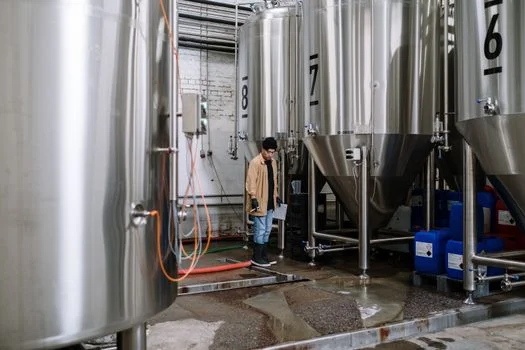
Technology selection for Can Tho hospitals comes down to matching process capability to pollutant load. Membrane bioreactors (MBR), dissolved air flotation (DAF), and anoxic/oxic (A/O) biology each own a different fraction of the problem. HydropureWater builds all three for medical facilities. Pick by influent character, not by brochure.
MBR System for Hospital Wastewater Vietnam: Sizing and Effluent Quality
Vietnamese hospitals typically deploy an MBR system for hospital wastewater duty using PVDF membranes at roughly 0.1 μm pore size, achieving over 99% pathogen removal and effluent COD below 30 mg/L. That clears the 50 mg/L QCVN ceiling with real margin. MBR suits high-strength organic streams from surgical units and laboratories, where complex organics and pathogens arrive together. The trade-offs are skilled maintenance and membrane fouling management; the payoffs are a compact footprint and the best effluent quality of the three options.
DAF Pretreatment Hospital Laundry Wastewater Vietnam: Sizing Notes
DAF pretreatment for hospital laundry wastewater handles the FOG and TSS fraction before it chokes downstream biology. DAF removes 90–95% of FOG and TSS by releasing microbubbles that attach to suspended particles and float them for skimming. Laundry streams at S.I.S-scale hospitals can carry FOG above 500 mg/L, so this step protects both the sewer pretreatment threshold (FOG below 100 mg/L) and any downstream bioreactor. Plan chemical dosing — coagulants and flocculants — as a permanent OPEX line, not an occasional top-up.
Traditional A/O (anoxic/oxic) biological systems cover general organic loads at 85–92% COD removal and the lowest entry price: ₫1.5 billion to ₫10 billion CAPEX. They need more land and produce more sludge than MBR. For mixed streams — laundry plus domestic plus medical — hybrid trains win: DAF strips FOG and TSS first, then MBR finishes organics and pathogens. That combination is the configuration we quote most often for Vietnamese hospital campuses.
| Technology | Primary Application | Typical Effluent Quality (COD mg/L) | Pathogen Removal (%) | CAPEX Range (₫ Billion) | Key Advantages | Key Disadvantages |
|---|---|---|---|---|---|---|
| MBR (Membrane Bioreactor) | High BOD/Pathogen loads (e.g., surgical, labs) | < 30 | > 99% | 15 - 25 | Compact footprint, superior effluent quality, high pathogen removal | Higher CAPEX, requires skilled maintenance, membrane fouling potential |
| DAF (Dissolved Air Flotation) | High FOG & TSS loads (e.g., laundry) | (Variable, reduces FOG/TSS significantly) | (Indirect, relies on downstream treatment) | 2.5 - 8 | Effective FOG/TSS removal, scalable | Requires chemical dosing, sludge disposal |
| A/O (Anoxic/Oxic) | General organic loads | 30 - 60 | 85 - 92% | 1.5 - 10 | Lower CAPEX, proven technology | Larger footprint, higher sludge production, less effective for high pathogen loads |
For Can Tho hospitals facing difficult influent, DAF pre-treatment of laundry wastewater followed by MBR biological and membrane filtration is the robust solution. Disinfection on the back end completes the train and holds every QCVN 28:2010/BTNMT parameter with margin. HydropureWater's MBR systems for hospital wastewater treatment in Can Tho and DAF systems for hospital laundry wastewater in Can Tho are engineered for exactly these duties.
Who Should Choose MBR, and Who Should Stay Simpler
Match the train to the site's real constraints before the tender goes out. Choose MBR where land is tight, reuse is planned, or pathogen margins must be wide — surgical and laboratory campuses are the usual case. Stay with A/O where land is available, loads are domestic-strength, and staffing is thin, accepting the larger footprint and sludge volume. Choose the hybrid train where laundry FOG rides on top of a medical load, because neither stage alone survives that mix economically.
Commissioning Sequence for a New Hospital Train
Bring the plant up in a fixed order, and write the order into the supply contract. The sequence below keeps biology alive and gives you acceptance data from the first week.
- Flush and water-test every tank, pipe, and valve before seeding, with instruments checked against a reference.
- Divert laundry flows until the biological stage is established, so FOG never reaches a young biomass.
- Seed and ramp load in steps, confirming each parameter holds before pushing higher.
- Prove DAF skimming on real laundry effluent before connecting it to the main train.
- Start disinfection last, verify residual in the contact line, and sample coliforms across a full operating week.
- Close with documented operator training on the installed plant, not on a generic simulator.
- Hand over as-built drawings, setpoint records, and cleaning procedures with the plant itself.
Disinfection Systems: Chlorine Dioxide vs Ozone vs UV
Disinfection is the final barrier between hospital effluent and the 3,000 MPN/100mL coliform limit. Three technologies compete for that step in Can Tho: chlorine dioxide generators, ozone systems, and UV units. Each trades cost against residuals against chemical handling in a different way.
Chlorine Dioxide Disinfection Hospital Wastewater Vietnam: Residual Advantage
Chlorine dioxide disinfection for hospital wastewater is typically ClO₂ dosing at 99.9% kill across bacteria, viruses, and protozoa — including antibiotic-resistant strains. Its decisive edge is residual: ClO₂ keeps disinfecting in downstream piping and drainage, which matters in Can Tho's tropical climate where microbial regrowth runs fast. On-site generators keep supply safe and continuous, and the technology aligns with WHO drinking-water guidelines while holding QCVN 28:2010 coliform limits. HydropureWater's chlorine dioxide disinfection for hospital wastewater in Can Tho packages this duty for medical loads.
Ozone suits large facilities. Above roughly 500 m³/day, ozone delivers 99.99% virus and bacteria inactivation with no chemical residual, at ₫3–15 billion CAPEX; OPEX can undercut chlorine dioxide at very large flows because no chemicals are purchased. Ozone disinfection for hospital wastewater is the reference comparison for facilities prioritizing a chemical-free process. Search traffic also lands on chlorine dioxide treatment for lyme 2026 queries — a separate clinical topic, though the dosing economics there overlap.
UV disinfection damages microbial DNA without chemicals, but its efficacy depends on water clarity: turbidity must sit below roughly 10 mg/L TSS, which demands robust pre-filtration. UV leaves no residual, so regrowth in warm, humid drainage stays unprotected. That is why many Can Tho hospitals accept ClO₂'s chemical handling in exchange for residual protection downstream.
| Disinfection Technology | Typical Disinfection Rate | Residual Effect | CAPEX Range (₫ Billion) | Key Considerations |
|---|---|---|---|---|
| Chlorine Dioxide (ClO₂) | 99.9% | Yes (in piping) | 1 - 5 | Effective against resistant pathogens, preferred for residual protection in tropical climates. |
| Ozone (O₃) | 99.99% | No | 3 - 15 | Chemical-free, effective for large flows, higher CAPEX. |
| UV (Ultraviolet) | 99.9% (at optimal conditions) | No | 0.5 - 3 | Chemical-free, requires low turbidity (<10 mg/L TSS), no residual protection. |
Troubleshooting the Disinfection Stage
Coliform failures at the outfall are almost always upstream of the contact tank. First check turbidity — UV loses reach when solids climb, and even chemical disinfection weakens in murky water. Then verify dose and contact time against the commissioning baseline before touching anything mechanical. If chlorine dioxide residual disappears partway along the drainage line, suspect regrowth or a dosing interruption, correct that cause, and resample the same afternoon.
Keep a retained verification sample from every positive result. When a reading looks wrong, retest from the retained sample before escalating — probe drift and dirty cuvettes cause more false alarms than genuine process upsets.
Hospital Wastewater Treatment Cost Can Tho 2026: CAPEX and OPEX
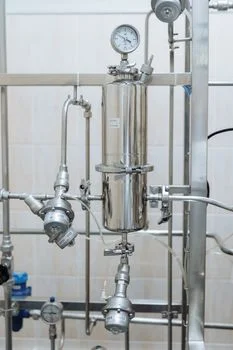
Hospital wastewater treatment costs in Can Tho fall into four technology bands. MBR systems run ₫15–25 billion CAPEX for 50–500 m³/day capacity, with annual OPEX of ₫50–200 million driven by membrane replacement every 5–8 years plus energy. DAF systems cost ₫2.5–8 billion for 4–300 m³/h, with ₫30–100 million annual OPEX across chemicals, power, and sludge labor. Chlorine dioxide generators sit at ₫1–5 billion CAPEX with lean ₫20–80 million OPEX, mostly salt and electrolyte. Ozone systems carry ₫3–15 billion CAPEX for chemical-free operation.
Cost-control levers exist at every band. Modular systems let hospitals scale capacity instead of over-investing on day one. Energy-efficient blowers cut OPEX by up to 30% against standard models. Automated chemical dosing trims waste while tightening compliance. A 150-bed hospital running an advanced train can save roughly ₫300 million per year through avoided fines and optimized water use — payback lands in 3–5 years on a ₫15 billion MBR investment.
| Technology | CAPEX Range (₫ Billion) | Capacity Range | Annual OPEX Range (₫ Million) | Key OPEX Components |
|---|---|---|---|---|
| MBR System | 15 - 25 | 50 - 500 m³/day | 50 - 200 | Membrane replacement, energy, maintenance |
| DAF System | 2.5 - 8 | 4 - 300 m³/h | 30 - 100 | Chemicals, energy, sludge disposal |
| Chlorine Dioxide Generator | 1 - 5 | (Varies with flow rate) | 20 - 80 | Salt/electrolyte, maintenance |
| Ozone Generator | 3 - 15 | (Varies with flow rate) | (Lower than ClO₂ for very large flows, but chemical-free) | Energy, maintenance |
The Medical & Hospital Wastewater Treatment System integrates these technologies into a compact train sized for Vietnamese hospital loads. For procurement teams benchmarking across markets, Hospital Wastewater Treatment in Morocco: 2026 Engineering Specs, Comp documents comparable hybrid configurations and compliance costs abroad. Regional parallels sharpen the business case at home.
Where the Budget Actually Moves
Three lines decide hospital OPEX more than any others. Energy for aeration dominates, so meter the blowers separately and question every setpoint. Chemicals scale with laundry load and storm dilution, so tie dosing to measured flow rather than to the clock. And membrane life is a purchasing decision — pre-treatment quality and cleaning discipline set replacement dates, so buy spares against the projected schedule rather than after the first alarm.
Hold a written spares strategy from day one. Membranes, dosing pump wet ends, and skimmer blades are the parts that stop compliance when they fail — keep them on the shelf with replacement intervals documented.
Low-Risk Equipment Selection: Matching Technology to Hospital Loads
Low-risk selection runs in five steps, each one narrowing the field before budget moves. The sequence assumes nothing about your hospital until the data says so.
Step 1: Characterize influent. Measure COD, BOD, TSS, FOG, and coliform indicators across representative operating days. The S.I.S case showed laundry FOG above 500 mg/L alongside domestic pathogen loads — one composite number hides both. Characterization is the foundation of the whole design.
Step 2: Match technology to pollutants. High FOG and TSS from laundry point to DAF first. Elevated BOD and pathogens from surgical or domestic streams point to MBR. A/O handles general organics at lower cost but needs augmentation for stubborn loads. Mixed streams justify hybrid DAF-plus-MBR trains.
Step 3: Size for peak flow. A 200-bed Can Tho hospital can approach 500 m³/day, but confirm with site-specific logging — peak laundry hours and monsoon-season water use shift the curve. Slight oversizing keeps performance stable during demand spikes.
Step 4: Incorporate disinfection. Every train ends in disinfection to hold coliform limits. Chlorine dioxide adds residual protection for tropical drainage; ozone suits large chemical-free plants; UV works where pre-treatment achieves very low turbidity.
Step 5: Validate with pilot testing. A 30-day MBR pilot confirms fouling rates, tunes operating parameters, and produces real performance data before full-scale commitment. Hospital wastewater treatment Can Tho QCVN compliance is too expensive to verify by surprise — pilot first, then commit. For a sized configuration and budget, send flow data and discharge limits through the request-a-quote worksheet.
Operator Skills a Hospital Train Needs
Hospital plants fail quietly when only a single technician understands them. Staff a licensed operator in charge plus a trained deputy, and put both through the supplier's commissioning program. Operators should read trend charts, run membrane clean-in-place cycles, calibrate dosing pumps, and execute the disinfection contingency without calling for help. Rotate maintenance staff through the same training so leave and turnover never leave the plant unattended in practice.
Budget the refresher as an annual line, not a startup cost. Skills decay faster than membranes foul, and inspectors ask operators questions no manual can answer for them.
Frequently Asked Questions
What are the penalties for hospital wastewater violations in Can Tho?
Penalties for hospital wastewater violations in Can Tho follow Decree 45/2022/ND-CP, with fines up to ₫1 billion for repeat offenses. Authorities can also mandate immediate system upgrades, impose operational restrictions, and publicly disclose non-compliance. For wider context, see global hospital wastewater compliance benchmarks and EPA hospital wastewater treatment guidelines on international practice.
How often should hospital wastewater treatment systems be maintained?
Maintenance intervals follow the technology. MBR membranes need monthly clean-in-place cycles and periodic integrity testing. DAF systems need weekly skimming of floated sludge plus routine checks on dosing pumps and air saturation. Chlorine dioxide generators should be calibrated quarterly and inspected per manufacturer specifications to keep performance and compliance stable.
Can treated hospital wastewater be reused in Can Tho?
Yes, treated hospital wastewater can be reused in Can Tho for non-potable duties when it meets quality standards. MBR effluent with COD below 30 mg/L can be further disinfected with chlorine dioxide or UV for landscape irrigation, toilet flushing, or cooling tower makeup. Reuse cuts freshwater dependence and lowers the hospital's operating cost base.
What's the payback period for a hospital wastewater treatment system in Can Tho?
Payback for a hospital wastewater treatment system in Can Tho typically runs 3 to 5 years for advanced MBR configurations around ₫15 billion CAPEX. Savings come from avoided fines and reduced water consumption, with sludge disposal gains possible. A 150-bed hospital can recover roughly ₫300 million annually through compliance and efficiency.
How do I choose between MBR and DAF for my hospital?
The MBR-versus-DAF choice follows your wastewater profile. MBR treats high pathogen and BOD loads from surgical units and domestic streams; DAF removes high FOG and TSS from laundry effluent. Hospitals with mixed streams get the most compliant result from a hybrid train — DAF for initial FOG and TSS removal, MBR for advanced organic and pathogen treatment downstream.