What Does Perth Industrial Wastewater Treatment Compliance Require?
Perth industrial wastewater treatment compliance is set by two documents: a site-specific DWER environment licence for discharge to land or water, and a Water Corporation trade waste permit for discharge to sewer. Typical environment-licence planning values sit at TSS < 30 mg/L, COD < 150 mg/L, BOD < 20 mg/L, FOG < 5 mg/L and pH 6.5–8.5.
DAF systems typically remove about 95% FOG at industrial food sites. MBR membranes provide < 1 μm filtration for near-reuse effluent. RO trains recover 90–95% of feed water when pretreatment is adequate. Stage these unit operations toward the licence discharge point rather than buying them as isolated products.
Western Australia’s supply mix has already shifted away from dams. Earlier summaries often said surface water supplied under 10% of Perth’s needs. According to Water Corporation’s Drinking Water Quality Annual Report 2024–25, the Integrated Water Supply Scheme (IWSS) drew 13.8% surface water, 41.5% desalinated seawater and 43.6% groundwater including replenishment. For plants in Kwinana, Canning Vale and Perth-managed mining hubs, onsite recycle is an operations issue, not only a sustainability goal.
DWER licences under the Environmental Protection Act 1986 set environment-discharge limits case by case, while sewer discharge needs a Trade Waste Permit. One Perth food plant cited in prior case notes faced fines exceeding $250,000 after repeated TSS and BOD exceedances overloaded municipal capacity. Food processors in Swan Valley and O’Connor still face high FOG loads. Pilbara and Goldfields operations managed from Perth deal with metals and salinity, so size pretreatment trains on measured peaks, not brochure averages.
What Are the DWER Discharge Limits for Industrial Wastewater in Perth?
DWER discharge limits for industrial wastewater in Perth are conditions written onto each environment licence under Part V of the Environmental Protection Act 1986, not a single statewide table. According to the ABLIS business licensing summary, prescribed premises are defined in Schedule 1 of the Environmental Protection Regulations 1987. A works approval authorises construction first, and a licence or registration then authorises ongoing operations.
Works Approvals are therefore required before treatment equipment is installed. For national context on industrial waste water discharge requirements, compare WA licence wording with the broader Australian frameworks before freezing design assumptions. The checklist and table below summarise thresholds many Perth plants use for planning; final permit numbers always override typical values.
| Parameter | DWER Environment Limit (Typical) | Water Corp Trade Waste Limit (Metro) | Monitoring Frequency |
|---|---|---|---|
| Total Suspended Solids (TSS) | < 30 mg/L | < 600 mg/L (surcharge applies) | Weekly/Continuous |
| Chemical Oxygen Demand (COD) | < 150 mg/L | < 1,200 mg/L | Weekly |
| Biological Oxygen Demand (BOD) | < 20 mg/L | < 600 mg/L | Weekly |
| Fats, Oils, and Grease (FOG) | < 5 mg/L | < 100 mg/L | Daily (Visual/Probe) |
| pH Level | 6.5 – 8.5 | 6.0 – 10.0 | Continuous |
| Total Dissolved Solids (TDS) | < 1,500 mg/L | Case-by-case (site specific) | Monthly |
Keep the planning thresholds above as design anchors, then reconcile them with the current Water Corporation acceptance criteria for trade waste (Pub 6). That published criteria set system maximums of suspended solids 1,500 mg/L, COD 6,000 mg/L, BOD5 3,000 mg/L and emulsified oil and grease 500 mg/L, with pH 6–10 and temperature ≤ 38 °C. Most metro permits still apply tighter site limits near the older TSS < 600 mg/L and COD < 1,200 mg/L bands. Design to the permit, not the absolute Pub 6 ceiling.
How long does each WA approval step take?
The permitting sequence in WA is usually three steps. First, characterise raw wastewater over about 14 days to capture peak and average load. Second, lodge a Works Approval with DWER, including drawings and expected removal efficiencies; review commonly takes 60 to 120 days. Third, after commissioning, an operating licence requires Annual Environmental Reports (AER).
Order long-lead membranes against that full approval path, not against the delivery date alone. A works approval that lags equipment shipment strands crated steel on site while licence conditions are still moving.
Metro and regional expectations diverge. Kwinana trains often align with Sepia Depression Long Ocean Outfall (SDLOO) nitrogen and phosphorus controls. Remote mining sites more often need reuse-grade effluent to cut borefield make-up.
Plants may compare notes with Industrial Wastewater Treatment in Sydney: Compliance Guide with Costs and Equipment or Adelaide industrial wastewater engineering checklists. WA Works Approval timing and Water Corporation surcharge logic remain the binding local constraints.
What Are the Water Corporation Trade Waste Permit Requirements in Perth?
Water Corporation trade waste permit requirements in Perth begin with an individual assessment of each business. The permit then records acceptance limits, pretreatment duties and monitoring obligations. The utility’s guidance states that pre-treatment may be required before discharge to sewer. The same page notes that pretreatment can range from simple gravity settling to chemically assisted removal using dissolved air flotation (DAF) units.
Beyond the common parameters, Pub 6 sets further system maximums that catch saline and chemical trades. Total dissolved solids is capped at 20,000 mg/L, chloride at 15,000 mg/L, and ammonia at 200 mg/L as nitrogen when pH is not greater than 8. Mass limits are determined by system capacity case by case. The criteria also state that mass loads associated with the first 600 mg/L of concentration will be excluded in determining a customer’s compliance.
What do trade waste permits and surcharges cost?
According to Water Corporation’s current charge schedule, the annual permit charge is $265.74 per year, and new permit assessments bill at $158.11 per hour. Quality-quantity rates price volume at $1.732/kL, BOD at $1.446/kg up to 5,000 mg/L and $2.951/kg above it, and suspended solids at $1.971/kg up to 2,000 mg/L and $3.967/kg above it. Oil and grease steps from $1.780/kg to $3.489/kg and then $7.037/kg across three concentration bands. The FOGMan charge adds $106.17 per individual grease arrestor per year.
Where sampling is required, a grab sample costs $536.03 and a composite sample costs $849.20, both GST inclusive. Most plants we cost for Perth food sites lose more money in the oil-and-grease step-up than in the annual permit fee. FOG removal at the first barrier therefore pays for itself before any reuse case is counted.
How Is Perth Food Processing Wastewater FOG Treatment Designed?
Perth food processing wastewater FOG treatment usually starts with dissolved air flotation, because grease, not salinity, is the first sewer risk at a food site. Micro-bubbles of 20–50 μm from high-efficiency DAF systems for Perth’s food processing and pulp & paper industries typically deliver 92–97% TSS removal and about 95% FOG removal at 4–300 m³/h and 0.5–1.2 kWh/m³. Most plants we size for Perth food sites run toward the lower end of that energy band when oil loading is steady and chemical dose is controlled.
Keep dishwasher and hot washwater out of the grease arrestor, because the acceptance criteria reject discharge above 38 °C and hot water carries grease downstream instead of trapping it. Commercial kitchens are pointed to a grease trap, and automotive shops to an oil separator, under the same criteria. Larger food sites need the full DAF-plus-dosing train rather than a passive pit.
Engineering Specs for MBR, RO and Sludge Handling After the FOG Barrier
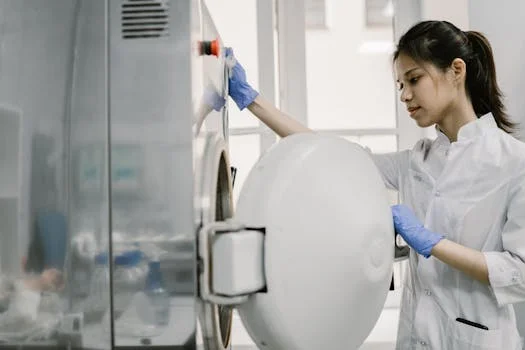
MBR, RO and filter presses cover the duties DAF does not finish: dissolved organics, TDS and cake dryness. Selection starts with removal efficiency, energy intensity (kWh/m³) and footprint against the discharge point named on the licence or Trade Waste Permit. Closed-loop trains that stage these unit processes are increasingly specified where groundwater allocations are tight. Most urban Perth yards cannot fit a conventional clarifier beside the factory.
When do municipal and industrial wastewater treatment share one train?
Municipal and industrial wastewater treatment converge where an industrial estate feeds a shared package plant, or where a factory mirrors sewage duty with FOG on top. The train order stays screening, biological treatment, then membrane or media polishing. Industrial loads simply add FOG, metals or TDS stages at the front and back of that sequence.
For secondary and tertiary polishing, compact MBR systems for Perth’s pharmaceutical and municipal pre-treatment applications cut footprint by about 60% versus conventional activated sludge. PVDF or PES membranes provide < 1 μm filtration and about 99% pathogen removal at 0.8–1.5 kWh/m³, depending on aeration demand. Where sewer access is limited or reuse is required, package biological plants help. The Underground Package Sewage Treatment Plant (WSZ Series) is sometimes paired upstream of membranes for compact municipal and industrial wastewater treatment duty.
High-recovery high-recovery RO systems for Perth’s mining and brackish water treatment needs remove TDS and produce process-grade water at 90–95% recovery under suitable pretreatment. Energy typically sits at 2.0–4.0 kWh/m³, so RO is justified when freshwater purchase cost or bore allocation risk exceeds the membrane OPEX. TDS-heavy trades near the 20,000 mg/L sewer ceiling often have no cheaper polishing route.
| Technology | TSS Removal | Footprint | Energy Use (kWh/m³) | Primary WA Use Case |
|---|---|---|---|---|
| DAF | 95%+ | Moderate | 0.5 – 1.2 | Food Processing / FOG Removal |
| MBR | 99%+ | Compact | 0.8 – 1.5 | Pharmaceutical / Reuse |
| RO | 99.9% (TDS) | Modular | 2.0 – 4.0 | Mining / Desalination |
| Filter Press | 30-40% Solids | Large | 0.2 – 0.4 | Sludge Dewatering |
Sludge handling closes the mass balance. For Perth industrial sludge that needs high cake dryness, sludge dewatering solutions for Perth’s industrial wastewater treatment plants based on plate-and-frame presses are preferred over belt presses when disposal cost is driven by cake mass. A 30-40% solids cake from a press cuts haulage mass sharply compared with a thickened sludge stream.
Which Wastewater Treatment Technology Is Right for Your Perth Facility?
Choosing among DAF, MBR and RO for a Perth facility depends on the discharge point and influent chemistry, not brand preference. Food plants in Perth’s northern suburbs usually need FOG and TSS reduction to stay inside trade-waste limits. DAF is then the first unit because it tolerates flow swings and organic spikes better than membranes alone.
- Is your primary goal sewer compliance for FOG/TSS? → Select DAF.
- Do you need to remove dissolved organics and nutrients for environmental discharge? → Select MBR.
- Is your goal >90% water recovery and TDS removal for process reuse? → Select RO (post-MBR).
- Is site footprint extremely limited (e.g., urban Perth)? → Prioritize MBR over Clarifiers.
| Industry Segment | Recommended Tech Train | Maintenance Level | Water Reuse Potential |
|---|---|---|---|
| Food & Beverage | DAF + Chemical Dosing | Low - Moderate | Low (without MBR) |
| Mining (Saline) | Chemical Precipitation + RO | High (Membrane Cleaning) | High |
| Pharmaceutical | MBR + UV Disinfection | Moderate | Medium - High |
| General Mfg | DAF + Sand Filtration | Low | Medium |
Maintenance load also drives selection. DAF skids are mechanically robust but need consistent coagulant and flocculant control. MBR and RO shift labour into membrane cleaning schedules and spare-module logistics. Most urban Perth sites we lay out pick MBR only after the clarifier footprint fails, not because the brochure looks smaller.
What Does Industrial Wastewater Equipment Cost in Western Australia?
Industrial wastewater equipment cost in Western Australia splits into CAPEX and OPEX that keep the plant inside permit limits. The CAPEX ranges below are planning bands for industrial-grade systems supplied into Western Australia. Site civils, power upgrades and sludge disposal sit outside these envelopes. Quote the permit limit in the same line as the price, or the cheaper skid will miss the sample point.
How do Perth DAF, MBR and RO equipment costs compare?
| System Type | CAPEX Range (AUD) | OPEX (AUD/m³) | Estimated Payback (Years) |
|---|---|---|---|
| DAF (Complete System) | $150,000 – $1,200,000 | $0.10 – $0.35 | 1.5 – 3.0 |
| MBR (Integrated) | $300,000 – $2,500,000 | $0.25 – $0.55 | 2.5 – 4.5 |
| RO (High Recovery) | $200,000 – $2,000,000 | $0.35 – $0.85 | 2.0 – 4.0 |
ROI for Perth facilities is usually driven by three cash items: avoided Water Corporation trade-waste surcharges, reduced scheme or bore water purchases, and avoided regulatory fines or shutdown risk. A working estimate is ROI = (Annual Trade Waste Savings + Annual Water Purchase Savings) / (Annual OPEX + Annualised CAPEX). Payback of 1.5–3.0 years for DAF is common where FOG surcharges dominate. MBR and RO stretch to 2.0–4.5 years when reuse value is counted.
Selection checklist before issuing a purchase order:
- 14-day influent characterisation covering peak FOG, TSS, COD/BOD and TDS.
- Written discharge point: sewer (Trade Waste Permit) versus environment (DWER licence).
- Energy budget in kWh/m³ at design flow, not nameplate only.
- Sludge cake target (% solids) and off-site disposal path.
- Spare-parts lead time for membranes, diffusers and polymer dosing.
- Works Approval drawings and AER monitoring points locked before civil tender.
- Commissioning sampling plan aligned to weekly/continuous permit frequencies.
Who This Guide Is For and Next Steps
This guide serves plant engineers, EPC contractors and procurement managers sizing trains for Perth metro industry or WA mining camps run from Perth. Look elsewhere if the duty is domestic sewage only, with no industrial FOG or TDS load, or if a current DWER licence forbids onsite discharge changes. The written licence or permit stays the binding constraint for every site this note covers. For a duty-specific CAPEX and OPEX build against your permit limits, submit the influent data through our request-quote workflow for Perth industrial wastewater projects.
Frequently Asked Questions
How much does industrial wastewater treatment equipment cost in Perth?
Complete DAF systems for Perth industry typically budget AUD $150,000–$1,200,000 in CAPEX with OPEX about $0.10–$0.35 per m³. Integrated MBR packages often sit at $300,000–$2,500,000 and $0.25–$0.55 per m³. High-recovery RO commonly ranges from $200,000–$2,000,000 with $0.35–$0.85 per m³. Final cost tracks flow in m³/h, influent FOG or TDS, and whether civils sit inside the price.
What discharge limits apply to industrial wastewater in Western Australia?
Environment licences from DWER are site-specific, and sewer discharge needs a separate Water Corporation trade waste permit. Many industrial designs still plan around TSS < 30 mg/L, COD < 150 mg/L, BOD < 20 mg/L, FOG < 5 mg/L and pH 6.5–8.5. Pub 6 lists maximums such as suspended solids 1,500 mg/L, COD 6,000 mg/L and BOD5 3,000 mg/L. Emulsified oil and grease is capped at 500 mg/L, while most metro permits keep tighter bands near TSS < 600 mg/L.
Is DAF or MBR better for a Perth food processing plant?
DAF is usually the better first stage when FOG and TSS drive trade waste compliance at a Perth food plant. Micro-bubble DAF at 20–50 μm commonly removes about 95% FOG and 92–97% TSS at 0.5–1.2 kWh/m³. Add MBR when dissolved organics, nutrients or filtrate below 1 μm is the real duty. Most Perth food sites we size start with DAF and add membranes only after the surcharge maths justify the extra OPEX.
Why is water reuse important for Perth industrial sites?
Perth’s IWSS now relies mainly on desalination and groundwater rather than dams. Water Corporation’s 2024–25 report shows 13.8% surface water, 41.5% desalinated seawater and 43.6% groundwater including replenishment. When bore allocations tighten, reclaiming process water with MBR and RO protects production continuity more than relying on scheme supply alone. Reuse is therefore a capacity decision, not a branding exercise.
How long does a DWER Works Approval take for treatment equipment?
Plan a 60 to 120 day review window for a Works Approval after a 14-day wastewater characterisation, then hold DWER to its published decision target for the application. Commissioning then leads to an operating licence with Annual Environmental Reports. Build that window into procurement so equipment delivery does not outrun the approval path.
Do I need both a DWER licence and a trade waste permit in Perth?
Most industrial sites need only one of the two, because the discharge point decides the document. Discharge to land or water requires a DWER environment licence under the Environmental Protection Act 1986. Discharge to sewer requires a Water Corporation trade waste permit with its own acceptance limits. Sites with both a licensed outfall and a sewer connection maintain two compliance files.
What is the FOGMan charge and when does it apply?
The FOGMan charge is Water Corporation’s annual fee of $106.17 per individual grease arrestor, billed alongside the $265.74 annual permit charge. It applies to food businesses that hold grease arrestors as their pretreatment. Plants that upgrade to a DAF train still carry permit and quality-quantity charges, so weigh the fee against the surcharge bands before choosing passive traps.
How much water can RO recover from industrial effluent in Perth?
High-recovery RO trains reclaim 90–95% of feed water as process-grade permeate when pretreatment is adequate. Energy typically runs 2.0–4.0 kWh/m³, so the business case depends on avoided scheme or bore water purchases. Saline trades near the 20,000 mg/L sewer TDS ceiling often find RO the only route to both compliance and reuse.