Georgia’s Industrial Wastewater Permitting: What EPD Requires in 2025
The Georgia Environmental Protection Division (EPD) administers all industrial wastewater permits under a formal delegation of the federal Clean Water Act, requiring a mandatory two-step approval process for new or expanding discharges. For industrial facility managers, this means navigating both the initial permit application and a rigorous technical design review that typically spans 6 to 12 weeks. In 2024, the EPD updated its Industrial Pretreatment Manual, setting stricter thresholds for specific sectors: poultry processors must now maintain effluent at <200 mg/L Total Suspended Solids (TSS) and <300 mg/L Chemical Oxygen Demand (COD), while metal finishing facilities face limits of <2 mg/L for chromium and <1 mg/L for lead.
Failure to comply with these standards carries significant financial risk. According to EPD enforcement data from 2023, TSS exceedances accounted for 42% of all industrial permit violations, followed by Fats, Oils, and Grease (FOG) at 28% and pH fluctuations at 15%. EPD enforcement actions can result in fines of up to $25,000 per day per violation, or in extreme cases, the total revocation of discharge permits. To avoid these outcomes, facilities must identify the correct permit type early in the engineering phase: National Pollutant Discharge Elimination System (NPDES) permits for direct discharge into state waters, Land Application Permits (LAP) for irrigation-based disposal, or Underground Injection Control (UIC) permits for deep-well disposal.
The timeline for securing these permits is non-negotiable. A standard NPDES application takes 90 to 120 days for approval, but the technical design review—where EPD engineers scrutinize process flow diagrams and equipment specifications—can add another 3 months to the project schedule. Engaging a Georgia-licensed professional engineer (PE) to submit a comprehensive engineering report is the only way to minimize "requests for additional information" (RAIs) that often stall industrial projects in the Atlanta and Savannah corridors.
| Permit Type | Primary Application | EPD Review Timeline | Key Compliance Metric |
|---|---|---|---|
| NPDES (Direct) | Discharge to rivers/streams | 90–120 Days | Toxicity & Dissolved Oxygen |
| Pretreatment (Indirect) | Discharge to municipal sewer | 60–90 Days | Local Limits (TSS, FOG, COD) |
| Land Application (LAP) | Industrial spray irrigation | 120–180 Days | Nutrient Loading (N, P) |
| UIC Permit | Underground injection wells | 180+ Days | Groundwater Protection |
Industrial Wastewater Characteristics in Georgia: Pollutant Profiles by Industry
Industrial wastewater profiles in Georgia are heavily concentrated in the poultry, textile, and metal finishing sectors, where influent TSS concentrations often exceed 1,000 mg/L before pretreatment. In the Gainesville area, often cited as the "Poultry Capital of the World," processors generate high-strength streams characterized by FOG levels between 200 and 500 mg/L and Biological Oxygen Demand (BOD) reaching up to 2,000 mg/L. For these facilities, DAF systems for Georgia’s poultry and food processing industries are essential, achieving up to 95% FOG removal efficiency to meet municipal pretreatment standards.
The textile industry, centered largely in Northwest Georgia, presents a different set of challenges. Effluent from these plants often contains high color intensity (500–2,000 ADMI units) and complex COD ranging from 1,000 to 3,000 mg/L. Because many textile dyes are resistant to conventional biological treatment, facilities often require advanced oxidation or specialized chemical dosing for Georgia metal finishing compliance and color removal. Georgia’s chromium pretreatment standards for electronics manufacturers and textile mills require heavy metal concentrations to be reduced to <0.5 mg/L through precise pH adjustment and coagulation.
Metal finishing and automotive parts manufacturing in the I-85 industrial corridor produce wastewater with low pH (2–4) and high concentrations of nickel, zinc, and hexavalent chromium. Treatment for these streams involves a two-stage process: cyanide oxidation at a high pH (10–11) followed by metal precipitation at a neutral to slightly basic pH (8–9). Without automated monitoring, these facilities risk exceeding EPD’s daily maximum limits, which are significantly more stringent than monthly averages. Food and beverage facilities, conversely, manage high-BOD loads (up to 4,000 mg/L), where anaerobic digestion or Membrane Bioreactors (MBR) provide the most efficient footprint-to-removal ratio.
| Industry Sector | Key Pollutants | Typical Influent (mg/L) | EPD Target (mg/L) | Primary Technology |
|---|---|---|---|---|
| Poultry Processing | FOG, TSS, BOD | FOG: 400 | TSS: 1,100 | FOG: <50 | TSS: <200 | DAF + Screening |
| Textile Mills | Color, COD, Metals | COD: 2,500 | Color: 1,500 | COD: <300 | Color: <50 | MBR + Chemical Prec. |
| Metal Finishing | Cr, Ni, Zn, Cyanide | Metals: 50–100 | Metals: <1.0 | 2-Stage Chem. Prec. |
| Food & Beverage | BOD, TSS, pH | BOD: 3,000 | TSS: 800 | BOD: <250 | TSS: <200 | MBR or UASB |
Treatment Technology Comparison: DAF vs. MBR vs. Chemical Precipitation for Georgia Industries
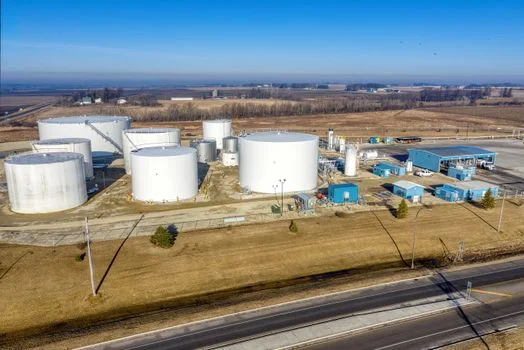
Selecting between Dissolved Air Flotation (DAF), Membrane Bioreactors (MBR), and chemical precipitation depends on the specific removal efficiency required for Georgia’s 2024 pretreatment standards. Dissolved Air Flotation (DAF) is the engineering gold standard for removing non-soluble organics and solids. HydropureWater DAF systems utilize micro-bubbles (20–50 microns) to float FOG and TSS to the surface for mechanical skimming. This technology is particularly effective for Georgia’s food processing sector because it can handle significant flow fluctuations (4–300 m³/h) while maintaining 95% efficiency in oil removal.
For facilities with high-BOD wastewater and limited land area, MBR systems for space-constrained Georgia facilities offer a superior alternative to conventional activated sludge. MBR combines biological treatment with ultrafiltration, using flat-sheet membranes with a 0.1 μm pore size. This results in 99.9% TSS removal and high-quality effluent suitable for water reuse. While the footprint of an MBR system is roughly 60% smaller than traditional clarifiers, the operational complexity is higher, requiring automated cleaning cycles and precise dissolved oxygen control to prevent membrane fouling.
Chemical precipitation remains the most cost-effective method for heavy metal removal in Georgia’s automotive and electronics sectors. The process relies on chemical dosing for Georgia metal finishing compliance, where reagents like lime, ferric chloride, or sodium sulfide are added to convert dissolved metals into insoluble particles. These particles are then removed via sedimentation or filtration. When comparing these technologies, engineers must evaluate the trade-off between CAPEX and OPEX: DAF has a moderate initial cost and low chemical demand, whereas MBR has a higher CAPEX but produces effluent that can significantly reduce municipal sewer surcharges.
| Technology | Best For... | Removal Efficiency | Footprint | Typical CAPEX ($/m³/day) |
|---|---|---|---|---|
| DAF | FOG, TSS, Poultry | 90–95% TSS/FOG | Medium | $1,200 – $2,500 |
| MBR (DF Series) | High BOD, Reuse | 99.9% TSS | 98% BOD | Small | $2,500 – $4,000 |
| Chem. Precipitation | Heavy Metals | 99% Metals | Medium | $800 – $1,500 |
Cost Breakdown: CAPEX, OPEX, and ROI for Industrial Wastewater Systems in Georgia
Capital expenditure (CAPEX) for industrial wastewater systems in Georgia typically ranges from $850,000 for small-scale DAF units to over $12 million for advanced MBR facilities. These costs are influenced by Georgia-specific labor rates and regional logistics; for instance, projects within the Atlanta metro area often see a 15% premium on installation labor compared to rural sites. A 50 m³/h DAF system generally requires a CAPEX of $1.2M to $1.8M, including site preparation and EPD-mandated monitoring equipment.
Operating expenditure (OPEX) is primarily driven by energy consumption, chemical usage, and sludge disposal. For MBR systems, energy accounts for nearly 40% of OPEX due to the aeration required for membrane scouring. In contrast, chemical precipitation systems are chemical-intensive, with coagulants and polymers making up 30% of the daily running costs. On average, Georgia facilities can expect to pay $0.80 to $2.50 per 1,000 gallons treated. However, the ROI for these systems is increasingly driven by water reuse. By implementing reverse osmosis for industrial water reuse, a poultry processor in Gainesville can reduce municipal water purchases by 30%, potentially saving over $120,000 annually.
the Georgia EPD’s 2024 Water Reuse Grant program offers incentives that can cover up to 50% of the costs for systems designed for non-potable reuse, such as cooling tower makeup or floor wash-down. When factored alongside the avoidance of EPD fines—which can exceed $100,000 for a single month of non-compliance—the payback period for advanced treatment systems often falls within 3 to 5 years. Evaluating how Georgia’s permitting process compares to other states also reveals that Georgia’s lower utility costs often lead to a faster ROI for energy-intensive technologies like MBR.
| Cost Category | DAF Systems | MBR Systems | Chem. Precipitation |
|---|---|---|---|
| Energy (% of OPEX) | 20% | 40% | 10% |
| Chemicals (% of OPEX) | 10% | 5% | 30% |
| OPEX ($/1,000 gal) | $0.50 – $1.20 | $1.00 – $2.50 | $0.30 – $0.80 |
| ROI Period (Years) | 2 – 4 | 4 – 6 | 3 – 5 |
Step-by-Step Guide to Zero-Risk Permitting for Georgia Industrial Facilities
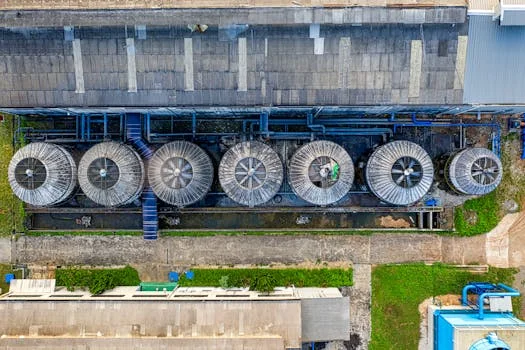
Zero-risk permitting in Georgia requires a 180-day lead time to accommodate both the EPD’s technical design review and the mandatory public comment period for NPDES applications. The process begins with a comprehensive wastewater characterization study. Facilities must collect 24-hour composite samples to determine peak loading rates for TSS, COD, and industry-specific toxins. This data forms the basis of the Engineering Report, which must be stamped by a Georgia-licensed PE and include detailed process flow diagrams and mass balance calculations.
Once the characterization is complete, the facility submits Form EPD-WP-001 along with the appropriate filing fee (ranging from $500 to $5,000 based on flow). During the 6 to 12-week technical review, EPD engineers will evaluate the selected technology’s ability to meet effluent limits under "worst-case" hydraulic loading. For facilities using modular systems for Georgia’s expanding industrial facilities, providing pilot test data or performance certifications can significantly accelerate this review phase.
After the permit is issued, compliance shifts to operational monitoring. This includes installing a mechanical bar screen for industrial pretreatment to protect downstream sensors and implementing a chemical dosing for Georgia metal finishing compliance to ensure pH stability. Facilities are required to maintain a compliance calendar, documenting weekly sampling results and submitting Discharge Monitoring Reports (DMRs) via the EPD’s online portal. Missing a single reporting deadline is considered a "paperwork violation" and can trigger an on-site inspection, making automated data logging a critical component of a zero-risk strategy.
Frequently Asked Questions
How long does it take to get a wastewater discharge permit from Georgia EPD?
The standard timeline is 90 to 120 days for the permit application, plus an additional 6 to 12 weeks for the technical design review. For complex systems like MBR or those requiring land application permits, the total process can take 6 to 9 months. Pre-application meetings with EPD staff are recommended to avoid delays.
What are the 2024 pretreatment standards for poultry processors in Georgia?
Under the latest EPD guidelines, poultry facilities must typically meet <200 mg/L TSS and <300 mg/L COD for discharge to municipal systems. However, local limits in high-density areas like Gainesville may be more stringent. DAF systems are the primary technology used to achieve these levels by removing up to 95% of FOG and suspended solids.
What is the average cost per gallon for industrial wastewater treatment in Georgia?
Operating costs typically range from $0.80 to $2.50 per 1,000 gallons treated. This includes energy, chemicals, and sludge disposal. DAF systems are on the lower end ($0.50–$1.20), while MBR systems are higher ($1.00–$2.50) due to energy-intensive membrane aeration. ROI can be improved through EPD water reuse grants.
Does Georgia EPD require a licensed operator for industrial wastewater plants?
Yes, Georgia law requires that industrial wastewater treatment plants be operated by a person holding a valid Industrial Wastewater Operator certification issued by the State Board of Examiners. The required grade (Class I, II, or III) depends on the complexity of the treatment process and the volume of discharge.
Further Reading
Explore these in-depth articles on related wastewater treatment topics: