Modular sewage treatment systems (STPs) utilize pre-engineered, factory-assembled units to treat wastewater efficiently in 4–6 hours—50% faster than conventional activated sludge processes (ASP). These systems integrate screening, biological treatment (MBBR or MBR), and disinfection within a compact footprint (up to 10x smaller than ASP), achieving over 95% BOD removal and effluent quality often below 50 ppm TSS. Ideal for diverse industrial and municipal applications, modular STPs offer scalable capacities from 5 m³/day to 2 MLD, often with 30% lower energy consumption and potential for near-zero sludge generation in advanced configurations.
Why Modular Sewage Treatment Systems Are Replacing Conventional Plants
Modular sewage treatment plants require up to 10 times less physical footprint compared to conventional activated sludge processes (ASP), a critical advantage for urban or retrofitted industrial sites where land is scarce and expensive. This drastic reduction in required area directly addresses one of the primary constraints faced by industrial facilities and municipalities alike.
The imperative for faster and more efficient wastewater treatment is driven by stringent regulatory frameworks, such as China’s GB 18918-2002 and the EU Urban Waste Water Directive 91/271/EEC. These regulations mandate specific effluent quality standards and often impose tight deadlines for compliance, which conventional civil-based plants struggle to meet due to their extended construction timelines. Modular systems, with their inherently shorter hydraulic retention times (HRT), are engineered to achieve these compliance targets rapidly.
For instance, a 500 m³/day textile factory in Zhejiang, facing severe space limitations and a looming discharge permit renewal, successfully reduced its required land use for wastewater treatment from an estimated 2,000 m² for a conventional ASP to a mere 200 m² by implementing a modular Moving Bed Biofilm Reactor (MBBR) system. This transition not only solved the space problem but also resulted in a 40% reduction in upfront capital expenditure (CapEx) for civil works due to the minimized footprint and simplified installation.
The "plug-and-play" advantage of modular STPs, where factory-assembled units are delivered ready for connection, significantly reduces on-site construction time by 60–80% compared to traditional civil-based plants. This accelerated deployment minimizes project risks, reduces labor costs, and allows facilities to achieve regulatory compliance and operational readiness much faster, directly impacting time-to-market for industrial processes or public service delivery for municipal projects.
Step-by-Step: How Modular Sewage Treatment Systems Work
Modular sewage treatment systems operate through a meticulously engineered sequence of physical, chemical, and biological processes designed for high-efficiency contaminant removal, enabling them to meet stringent discharge or water reuse requirements.
- Screening and Grit Removal: The initial stage involves removing large solids and abrasive grit to protect downstream equipment. Rotary mechanical bar screens, such as HydropureWater’s GX Series, effectively remove over 95% of solids larger than 3 mm. Following this, grit chambers utilize vortex separation technology to achieve 90% grit removal for particles as small as 0.2 mm, operating at flow rates optimized to settle inorganic particles while keeping organic matter in suspension.
- Primary Sedimentation: After coarse solids removal, wastewater flows into primary sedimentation tanks, often utilizing high-efficiency lamella clarifiers. HydropureWater’s high-efficiency sedimentation tanks achieve 50–70% total suspended solids (TSS) removal and 25–35% biochemical oxygen demand (BOD) reduction at typical surface loading rates of 20–40 m/h. Influent TSS concentrations typically range from 150–300 mg/L, reduced to 50–100 mg/L in the effluent, preparing the water for biological treatment. For a more detailed understanding of this stage, refer to our engineering guide to high-efficiency sedimentation tanks.
- Biological Treatment: This is the core of the wastewater treatment process, where microorganisms break down organic pollutants. Modular STPs commonly employ two advanced biological sewage treatment technologies: Moving Bed Biofilm Reactors (MBBR) and Membrane Bioreactors (MBR).
- MBBR Technology: In MBBR technology, microorganisms grow on small plastic carriers suspended in the wastewater. This allows for a high concentration of biomass. Typical Mixed Liquor Suspended Solids (MLSS) in MBBR systems range from 3,000–5,000 mg/L, with a hydraulic retention time (HRT) of 4–6 hours. MBBR systems generally achieve 85–95% Chemical Oxygen Demand (COD) removal, with energy consumption around 0.3–0.5 kWh/m³ of treated wastewater.
- Membrane Bioreactor (MBR): Membrane bioreactor systems integrate biological treatment with membrane filtration. HydropureWater’s MBR system for modular sewage treatment operates with higher MLSS concentrations, typically 8,000–12,000 mg/L, and an HRT of 6–8 hours. MBR achieves superior COD removal (95–99%) and produces exceptionally high-quality effluent. The DF Series membranes operate with a typical flux of 15–25 LMH (liters per square meter per hour), ensuring efficient filtration and solids separation. For in-depth information, explore our detailed guide on submerged membrane bioreactors (MBR).
- Disinfection: The final stage ensures the removal of pathogens before discharge or reuse.
- Chlorine Dioxide (ClO₂) Generators: On-site ClO₂ generation for modular STP disinfection achieves 99.99% pathogen kill, including bacteria and viruses, at a dosage of 0.5–2 mg/L. ClO₂ is effective over a wide pH range and produces fewer disinfection byproducts than chlorine.
- UV Systems: Ultraviolet (UV) disinfection provides a chemical-free alternative, delivering a 40 mJ/cm² dose to achieve 99.9% E. coli removal. UV systems are often chosen for sensitive receiving waters or water reuse systems where chemical residuals are undesirable.
| Process Stage | Key Function | Typical Parameters/Efficiency | HydropureWater Product Example |
|---|---|---|---|
| Screening & Grit Removal | Removes large solids, grit | >95% solids >3mm; 90% grit >0.2mm | Rotary Mechanical Bar Screen (GX Series) |
| Primary Sedimentation | Settles suspended solids | 50–70% TSS removal; 20–40 m/h surface loading | High-Efficiency Sedimentation Tank |
| Biological Treatment (MBBR) | Organic pollutant degradation | MLSS 3,000–5,000 mg/L; HRT 4–6h; COD removal 85–95%; Energy 0.3–0.5 kWh/m³ | Modular MBBR system |
| Biological Treatment (MBR) | Organic degradation & filtration | MLSS 8,000–12,000 mg/L; HRT 6–8h; COD removal 95–99%; Membrane flux 15–25 LMH | MBR Integrated Wastewater Treatment System |
| Disinfection (ClO₂) | Pathogen inactivation | 99.99% pathogen kill; 0.5–2 mg/L dosage | Chlorine Dioxide Generator |
MBBR vs. MBR vs. ASP: Head-to-Head Technology Comparison
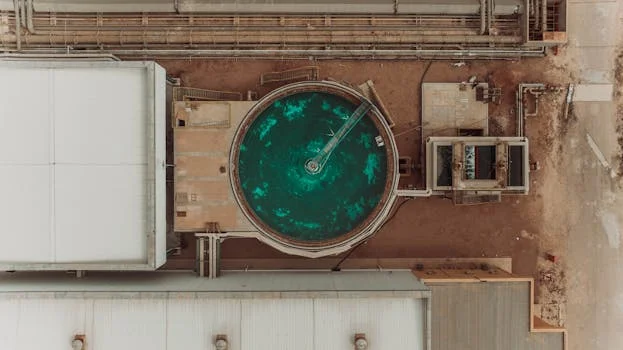
Selecting the optimal biological treatment technology for a modular sewage treatment system hinges on a detailed comparative analysis of performance, footprint, operational costs, and specific application requirements. While Activated Sludge Process (ASP) represents conventional treatment, Moving Bed Biofilm Reactors (MBBR) and Membrane Bioreactors (MBR) are prevalent in modular designs, each offering distinct advantages.
| Parameter | MBBR (Moving Bed Biofilm Reactor) | MBR (Membrane Bioreactor) | ASP (Activated Sludge Process) |
|---|---|---|---|
| Effluent Quality (BOD/TSS mg/L) | 20–30 / 20–30 | <10 / <5 | 20–40 / 20–30 |
| Footprint (m² per m³/day) | 0.1–0.2 | 0.15–0.3 | 1–2 |
| Energy Use (kWh/m³) | 0.3–0.5 | 0.6–0.8 | 0.4–0.6 |
| Sludge Production (kg TSS/kg BOD removed) | 0.2–0.3 | 0.1–0.2 | 0.4–0.6 |
| CapEx ($ per m³/day) | 1,200–1,800 | 2,000–3,000 | 1,500–2,500 |
| OpEx ($/m³) | 0.15–0.25 | 0.25–0.40 | 0.20–0.35 |
MBBR systems are highly suitable for industrial effluent treatment, particularly for applications with high organic loads, such as food processing or textile industries, where they can efficiently handle fluctuating influent characteristics while maintaining compliance. Their robust nature and relatively lower CapEx make them a cost-effective choice for many industrial sites.
MBR technology, exemplified by HydropureWater’s MBR system for modular sewage treatment, excels in applications requiring superior effluent quality, making it ideal for water reuse systems. Municipalities or industries targeting stringent discharge limits or seeking to recycle treated wastewater for irrigation, cooling towers, or other non-potable uses often opt for MBR due to its exceptional removal of suspended solids, pathogens, and often nutrients. The compact footprint of MBR also makes it a preferred choice for urban areas with limited space.
Conventional ASP remains a viable option for very large-scale municipal applications where land availability is not a primary concern and where initial capital costs might be spread over a vast capacity. However, its larger footprint, higher sludge production, and longer HRT make it less appealing for the rapid deployment and space-constrained scenarios where modular MBBR and MBR systems truly shine.
Modular STP Selection Framework: Matching System to Application
Effective selection of a modular sewage treatment system requires a systematic framework that aligns specific wastewater characteristics, compliance mandates, site constraints, and financial parameters with available technological solutions. This structured approach minimizes risks and optimizes long-term performance.
- Step 1: Characterize Wastewater. The initial and most critical step involves a comprehensive analysis of the influent wastewater. This includes quantifying flow rate, BOD/COD levels, TSS, pH, nutrient concentrations (nitrogen, phosphorus), and presence of heavy metals or specific industrial pollutants. For example, textile wastewater often presents with high COD (e.g., 1,000 mg/L) and moderate TSS (e.g., 300 mg/L), along with color and specific chemicals. Such characteristics would necessitate an MBBR or MBR system, potentially augmented with automated chemical dosing for pH adjustment or coagulation, to effectively pretreat or treat the effluent.
- Step 2: Define Effluent Requirements. Clearly establish whether the treated water will be discharged to a receiving body or reused. Discharge to sensitive environments or for water reuse systems (e.g., irrigation, cooling tower makeup, process water) demands more stringent effluent quality, typically met by MBR technology or advanced disinfection methods like UV or on-site ClO₂ generation for modular STP disinfection. Less stringent requirements might be met by MBBR.
- Step 3: Evaluate Site Constraints. Assess available space, power supply reliability, and operator availability. Modular MBBR systems typically require a footprint of 0.1 m²/m³/day, making them highly compact. MBR systems, while also compact, demand slightly more space at around 0.15 m²/m³/day, but deliver superior effluent quality. Automated modular systems require minimal operator intervention, reducing labor costs, whereas more complex systems might require dedicated, skilled personnel.
- Step 4: Compare CapEx and OpEx. Conduct a detailed financial analysis. MBBR systems generally have a lower capital expenditure (CapEx) ranging from $1,200–$1,800 per m³/day of capacity, but their operational expenditure (OpEx) can be influenced by higher sludge disposal costs. MBR systems, conversely, have a higher CapEx ($2,000–$3,000 per m³/day) due to membrane costs, but often incur lower sludge production and thus reduced disposal fees, potentially offsetting the initial investment over time. Consider the total cost of ownership (TCO) over the system's lifespan.
- Step 5: Assess Scalability. Modular systems inherently offer flexibility for future expansion. Evaluate the potential for increased wastewater flow and how easily additional modules can be integrated. Most modular STPs allow for capacity expansion in increments of 50–100 m³/day without requiring complete system shutdowns, ensuring operational continuity as facility needs evolve.
Cost Breakdown: Modular STP CapEx, OpEx, and ROI by System Size
Understanding the financial implications of modular sewage treatment systems, including both capital expenditure (CapEx) and operational expenditure (OpEx), is critical for accurate budgeting and demonstrating return on investment (ROI) for industrial and municipal stakeholders. These costs vary significantly based on system size, technology, and specific site conditions.
For a typical 100 m³/day modular STP utilizing MBBR technology, the CapEx breakdown is as follows:
- Equipment: $120,000–$180,000 (equivalent to $1,200–$1,800 per m³/day). This includes all pre-engineered and factory-assembled treatment units.
- Installation: $30,000–$50,000, typically representing 20–30% of the equipment cost. This covers on-site assembly, piping, electrical connections, and commissioning.
- Civil Works: $20,000–$40,000, or 15–25% of the equipment cost. This is significantly lower than conventional plants due to the compact footprint and reduced foundation requirements.
- Total CapEx: The overall capital expenditure for a 100 m³/day modular MBBR system ranges from $170,000 to $270,000, or $1,700–$2,700 per m³/day.
Annual operational expenditure (OpEx) is typically calculated per cubic meter of treated wastewater:
- Energy: $0.10–$0.15 per m³ (based on 0.3–0.5 kWh/m³ at an average electricity cost of $0.10/kWh). This is primarily for aeration and pumping.
- Chemicals: $0.03–$0.05 per m³, covering coagulants, flocculants, and disinfectants. This cost can be managed with efficient automated chemical dosing for modular STPs.
- Maintenance: $0.02–$0.04 per m³. This includes routine checks, minor repairs, and for MBR systems, membrane replacement every 5–7 years.
- Labor: $0.01–$0.02 per m³. Highly automated modular systems significantly reduce the need for constant operator presence.
- Total OpEx: The combined operational expenditure typically falls between $0.16 and $0.26 per m³ of treated wastewater.
Return on Investment (ROI) Calculation:
Consider a 200 m³/day modular MBBR system with a total CapEx of $340,000 (at $1,700/m³/day). If this system enables water reuse for non-potable applications, it can generate substantial savings:
- Freshwater Savings: Reusing 200 m³/day of treated water can save approximately $50,000 per year, assuming a municipal freshwater cost of $0.70/m³.
- Discharge Fee Avoidance: Eliminating or significantly reducing discharge to municipal sewers can save an additional $20,000 per year, based on typical industrial discharge fees.
- Total Annual Savings: $70,000.
- Payback Period: With an initial investment of $340,000 and annual savings of $70,000, the system yields a payback period of approximately 4.5 years ($340,000 / $70,000 per year). This demonstrates a compelling financial incentive for modular STP adoption, especially for facilities with high water usage and discharge costs.
| Cost Category | 100 m³/day Modular MBBR STP | Notes |
|---|---|---|
| Capital Expenditure (CapEx) | ||
| Equipment | $120,000–$180,000 | Pre-engineered units |
| Installation | $30,000–$50,000 | 20–30% of equipment cost |
| Civil Works | $20,000–$40,000 | 15–25% of equipment cost, minimized footprint |
| Total CapEx | $170,000–$270,000 | $1,700–$2,700 per m³/day |
| Operational Expenditure (OpEx) per m³ | ||
| Energy | $0.10–$0.15 | 0.3–0.5 kWh/m³ at $0.10/kWh |
| Chemicals | $0.03–$0.05 | Coagulants, disinfectants |
| Maintenance | $0.02–$0.04 | Routine checks, membrane replacement (for MBR) |
| Labor | $0.01–$0.02 | Minimal for automated systems |
| Total OpEx | $0.16–$0.26 | Per cubic meter treated |
Frequently Asked Questions
Modular sewage treatment systems are increasingly adopted, prompting common inquiries regarding their operational differences, space requirements, treatment capabilities, longevity, and regulatory compliance.
1. What is the difference between modular and conventional sewage treatment systems?
Modular STPs are factory-assembled, pre-engineered units, allowing for rapid deployment (60-80% faster installation) and a compact footprint (up to 10x smaller) compared to conventional civil-based plants. They offer faster treatment times (4-6 hours vs. 8-12 hours for ASP) and easier scalability.
2. How much space does a modular sewage treatment system require?
Modular STPs require significantly less space. An MBBR-based system typically needs 0.1–0.2 m² per m³/day of capacity, while MBR systems require 0.15–0.3 m² per m³/day. This compact design is ideal for urban areas or industrial sites with limited land availability.
3. Can modular STPs handle industrial wastewater with high organic loads?
Yes, modular STPs, particularly those employing MBBR or MBR technology, are highly effective for industrial wastewater. MBBR systems are robust for high-load industrial effluents (e.g., food processing), while MBR offers superior treatment for complex industrial wastewater, achieving 95-99% COD removal.
4. What is the lifespan of a modular sewage treatment system?
With proper maintenance, a modular sewage treatment system typically has a design lifespan of 15–25 years for its structural components. Critical components like membranes in MBR systems require replacement every 5–7 years, and other mechanical parts are designed for long-term operation with routine servicing.
5. Are modular STPs compliant with environmental regulations?
Yes, properly designed and operated modular STPs are engineered to consistently meet or exceed stringent environmental discharge regulations, such as China’s GB 18918-2002 and the EU Urban Waste Water Directive 91/271/EEC. MBR systems, for example, can achieve effluent quality below 10 mg/L BOD and 5 mg/L TSS, suitable for direct discharge or reuse.