Why Uganda’s Industries and Municipalities Are Turning to Package Wastewater Treatment Plants
Uganda faces a significant wastewater management challenge, with 80% of industrial effluent discharged untreated and 60% of municipal sewage released raw, according to NEMA’s 2023 report and World Bank 2024 data, respectively. This widespread non-compliance leads to severe environmental degradation and public health risks, pushing businesses and local authorities towards more efficient and compliant solutions. Package wastewater treatment plants in Uganda address these critical issues by offering robust, compact, and compliant treatment options. Land scarcity, particularly in rapidly urbanizing areas like Kampala, Jinja, and Mbarara, further exacerbates the problem, making compact sewage treatment Uganda solutions highly desirable. For instance, the Kisoro package plant occupies only 15 m² for a 100 m³/day capacity, significantly less than traditional setups. NEMA’s intensified enforcement crackdown in 2023, which saw over 300 factories fined for exceeding effluent limits (BOD > 50 mg/L, TSS > 30 mg/L), underscores the urgent need for reliable treatment. Beyond compliance, traditional wastewater treatment plants frequently generate odor complaints, such as the 2022 shutdown of Bugolobi’s facility due to hydrogen sulfide levels exceeding 10 ppm. Package plants, with their enclosed designs and advanced odor control mechanisms, mitigate such issues. A notable example is Fort Portal’s package plant, which reduced land use by 70% compared to a conventional activated sludge system while effectively treating municipal wastewater. These compelling factors position package wastewater treatment plants as a strategic choice for achieving environmental compliance and operational efficiency across Uganda.How Package Wastewater Treatment Plants Work: Process Flow and Engineering Parameters
Package wastewater treatment plants utilize a multi-stage process to consistently achieve NEMA-compliant effluent discharge, often integrating biological and physical-chemical methods within a compact footprint. A typical process flow, exemplified by the Kisoro plant design, begins with influent wastewater entering a screening stage to remove large solids, preventing damage to downstream equipment and reducing maintenance. Following screening, the wastewater flows into an anoxic/aerobic (A/O) biological treatment tank, where microorganisms break down organic pollutants. The anoxic zone facilitates denitrification, removing nitrates, while the aerobic zone uses diffused air to promote the growth of aerobic bacteria, which consume BOD and COD. This biological stage is crucial for achieving high removal rates. After biological treatment, a sedimentation tank (clarifier) separates the treated water from the biomass (sludge). The clarified water then undergoes tertiary treatment, typically involving sand and activated carbon filtration to remove residual suspended solids and trace organic compounds. Finally, the water is disinfected using UV irradiation or chlorine to eliminate pathogens before discharge or reuse. This sequential process ensures high-quality effluent. HydropureWater's WSZ series underground package sewage treatment plant integrates these stages into a single, pre-fabricated unit. Key engineering parameters for these systems demonstrate their efficiency:- Removal rates: Package plants typically achieve BOD removal of 90-95%, COD removal of 85-90%, TSS removal of 92-97%, and ammonia removal of 80-90%, meeting NEMA’s 2023 benchmarks (HydropureWater field data, 2025).
- Hydraulic retention time (HRT): For municipal sewage, HRT typically ranges from 6-12 hours, while industrial applications (e.g., textile, food processing) may require 12-24 hours due to higher pollutant concentrations.
- Footprint: These compact systems require significantly less space, typically 8-15 m² per 100 m³/day capacity; the Kisoro plant operates effectively within 15 m² for its 100 m³/day capacity.
- Energy consumption: Package plants are designed for energy efficiency, consuming approximately 0.3-0.6 kWh/m³ treated, which is considerably lower than the 0.8-1.2 kWh/m³ often required by conventional activated sludge systems.
Table 1: Typical Engineering Parameters for Package Wastewater Treatment Plants
| Parameter | Range (Municipal) | Range (Industrial) | NEMA 2023 Benchmark |
|---|---|---|---|
| BOD Removal | 90-95% | 85-95% | >90% |
| COD Removal | 85-90% | 80-90% | >85% |
| TSS Removal | 92-97% | 90-95% | >90% |
| Ammonia Removal | 80-90% | 75-85% | >80% |
| Hydraulic Retention Time (HRT) | 6-12 hours | 12-24 hours | N/A |
| Footprint (per 100 m³/day) | 8-15 m² | 10-20 m² | N/A |
| Energy Consumption | 0.3-0.6 kWh/m³ | 0.4-0.7 kWh/m³ | N/A |
Package vs. Conventional Wastewater Treatment Plants: A Decision Framework for Ugandan Buyers
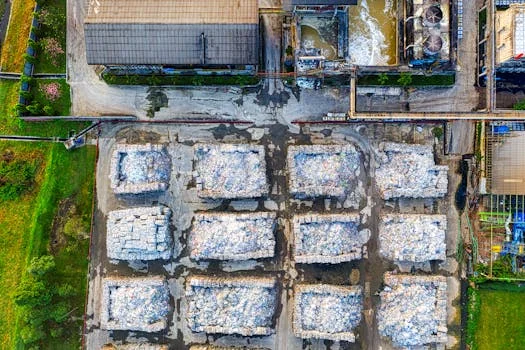
Table 2: Package vs. Conventional Wastewater Treatment Plants Comparison
| Feature | Package Wastewater Treatment Plant | Conventional Wastewater Treatment Plant |
|---|---|---|
| Typical Flow Rate | 50-500 m³/day | >1,000 m³/day |
| Land Requirements | 8-15 m²/100 m³/day (60-80% less) | 30-50 m²/100 m³/day |
| Installation Time | 4-8 weeks (pre-fabricated) | 6-12 months (extensive civil works) |
| Compliance with NEMA | High (often faster permitting) | High (requires detailed design review) |
| Scalability | Modular, easy to expand | Requires significant redesign for expansion |
| Odor Control | Excellent (enclosed, activated carbon) | Can be challenging (open-air systems) |
| Initial Capital Cost (Capex) | Lower per unit capacity | Higher per unit capacity |
| Operational Complexity | Simpler, automated | More complex, higher labor needs |
Cost Breakdown: Package Wastewater Treatment Plants in Uganda (2025 Data)
The total cost of a package wastewater treatment plant in Uganda encompasses both capital expenditure (Capex) and operational expenditure (Opex), with significant variations based on capacity, technology, and effluent quality requirements. As of 2025, Capex for a standard package plant typically ranges from $1,200-$2,500 per m³/day capacity. For example, a 100 m³/day package plant might cost around $120,000-$250,000, which is generally lower than a comparable conventional plant that could cost upwards of $200,000 for the same capacity due to extensive civil works. Operational expenses (Opex) are a critical long-term consideration, averaging $0.20-$0.50 per m³ treated. This includes energy costs ($0.10-$0.20/m³), chemical consumption for disinfection and pH adjustment ($0.05-$0.15/m³), and labor for monitoring and maintenance ($0.05-$0.15/m³). If advanced treatment like Reverse Osmosis (RO) is required for wastewater reuse Uganda, as seen in EnviroServ’s 450 m³/day plant in Kampala, Opex can increase by an additional $0.80-$1.50/m³ due to membrane replacement and higher energy demands, reaching up to $1.20/m³ treated. Annual maintenance costs typically fall within 2-5% of the initial Capex, which is lower than the 5-10% often associated with more complex conventional plants. For industrial applications, particularly those aiming for water recycling, the Return on Investment (ROI) can be achieved within 3-5 years, especially for facilities like textile factories that can recycle up to 80% of their treated effluent. Various financing options are available, including NEMA grants covering up to 30% of Capex and World Bank loans with interest rates typically between 5-7%.Table 3: Estimated Cost Comparison (2025 Data)
| Cost Category | Package Plant (100 m³/day) | Conventional Plant (100 m³/day) | Notes |
|---|---|---|---|
| Capital Expenditure (Capex) | $120,000 - $250,000 | $200,000 - $400,000 | Excludes land acquisition |
| Operational Expenditure (Opex) | $0.20 - $0.50 per m³ | $0.40 - $0.80 per m³ | Includes energy, chemicals, labor |
| RO System Add-on (Opex) | +$0.80 - $1.50 per m³ | N/A (often integrated into large plants) | For near-reuse quality water |
| Annual Maintenance | 2-5% of Capex | 5-10% of Capex | Includes parts, minor repairs |
| Typical ROI (Industrial Reuse) | 3-5 years | 5-8 years | Dependent on water savings |
Complying with Uganda’s Wastewater Regulations: NEMA Standards and Permitting Checklist
- Biological Oxygen Demand (BOD): < 50 mg/L
- Chemical Oxygen Demand (COD): < 100 mg/L
- Total Suspended Solids (TSS): < 30 mg/L
- pH: 6-9
- Ammonia: < 10 mg/L
- Fecal Coliform: < 1,000 CFU/100 mL
- Conduct a comprehensive Environmental Impact Assessment (EIA) and submit it to NEMA.
- Obtain a NEMA discharge permit before commencing operations.
- Ensure your wastewater treatment plant is designed to meet all NEMA 2023 effluent standards.
- Install online pH and ammonia monitors for continuous data collection.
- Implement daily BOD and TSS testing protocols.
- Perform weekly pH and ammonia monitoring.
- Conduct quarterly heavy metals analysis if discharging industrial wastewater.
- Train operational staff on NEMA sampling protocols and reporting requirements.
- Maintain accurate records of all monitoring data and submit regular compliance reports to NEMA.
- Develop an emergency response plan for any non-compliance incidents or system failures.
Real-World Case Studies: Package Wastewater Treatment Plants in Uganda
Real-world applications of package wastewater treatment plants across Uganda demonstrate their effectiveness in achieving compliance, reducing operational costs, and supporting water reuse initiatives. The Kisoro Compact Wastewater Treatment Plant, a pioneering project, successfully treats 100 m³/day of municipal sewage, achieving a remarkable 95% BOD removal rate. This plant had a Capex of approximately $150,000 and achieved a 3-year ROI through water reuse for non-potable applications by local hotels. Initially, the Kisoro plant experienced minor odor issues, which were resolved by integrating activated carbon filters into the system. Another successful deployment is the Fort Portal Package Plant, designed for 200 m³/day capacity, demonstrating 92% TSS removal. With a Capex of around $220,000, this municipal sewage treatment facility achieved a 4-year ROI. Operators at Fort Portal encountered scaling issues in some pipes due to hard water, which was effectively managed through a consistent antiscalant dosing regimen. For industrial applications, EnviroServ Uganda’s RO Plant in Kampala, treating 450 m³/day, stands out for its advanced capabilities. This facility achieves 99% TDS removal, producing near-potable quality water suitable for industrial reuse, particularly valuable for reducing freshwater consumption. The EnviroServ plant involved a Capex of $1.2M and operates at an Opex of $1.20/m³, demonstrating the higher investment and operational costs associated with advanced reuse technologies but also the significant benefits of water conservation and reduced discharge fees. These case studies highlight the adaptability and measurable benefits of package wastewater treatment plants in diverse Ugandan contexts.Common Mistakes and How to Avoid Them: A Troubleshooting Guide for Ugandan Operators