Industrial Wastewater Treatment in Alaska USA: Compliance, Technology & Costs 2025
Industrial wastewater treatment in Alaska USA requires APDES-permitted systems that remove 92–97% of TSS and handle 4–300 m³/h flows. Dissolved Air Flotation (DAF) and Membrane Bioreactor (MBR) systems are most effective for cold-climate industrial dischargers, with project costs ranging from $150,000 for small DAF units to $2.1M for full MBR plants, per 2025 benchmarks.
Alaska’s Industrial Wastewater Regulations: APDES, NPDES & DEC Enforcement
18 AAC 83.015 mandates that any point source discharge into U.S. waters in Alaska must first obtain an Alaska Pollutant Discharge Elimination System (APDES) permit. This regulation forms the legal baseline for industrial wastewater discharge in the state, ensuring environmental protection and compliance with federal Clean Water Act standards. APDES permits are the primary mechanism, and discharges authorized by valid National Pollutant Discharge Elimination System (NPDES) permits may continue in effect under 18 AAC 83.155, reflecting the jurisdictional transition and equivalence between state and federal programs for industrial wastewater discharge in Alaska.
The Alaska Department of Environmental Conservation (DEC) enforces these regulations. Their services include providing essential pre-application assistance, conducting thorough technical reviews of proposed treatment systems, and performing on-site inspections to verify ongoing compliance. These measures are designed to help industrial facilities meet stringent discharge limits and prevent environmental harm. Failure to comply with APDES or NPDES permit conditions can lead to severe enforcement actions, including Clean Water Act complaints filed by the U.S. Department of Justice (DOJ), as demonstrated by the 2011 case against the City of Unalaska for persistent wastewater violations. Understanding these Alaska DEC wastewater regulations is paramount for any industrial operator to avoid significant legal and financial penalties.
For industrial dischargers, the distinction between APDES and NPDES compliance in Alaska often involves historical permitting. While Alaska now issues its own APDES permits, these are functionally equivalent to federal NPDES permits, ensuring a consistent regulatory framework across the nation. Industrial facilities must navigate these regulations carefully, recognizing that both general permits and individual permits are issued, each with specific monitoring and control requirements to protect Alaska’s sensitive aquatic environments.
Top Treatment Technologies for Alaska’s Industrial Sector
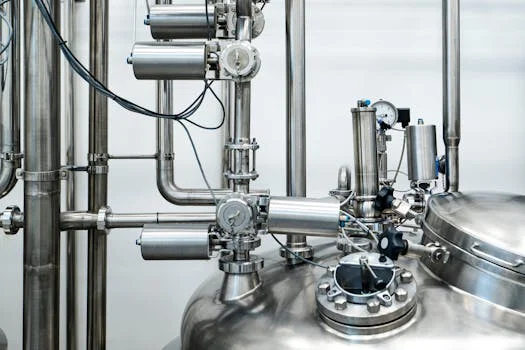
Dissolved Air Flotation (DAF) systems consistently remove 92–97% of suspended solids, fats, oils, and grease (FOG), making them highly effective for industrial wastewater in Alaska's cold climate. These high-efficiency DAF systems are particularly well-suited for industries such as food processing, metalworking, and petrochemical operations, where high concentrations of these contaminants are common. HydropureWater's DAF units offer a wide capacity range from 4–300 m³/h across 13 standard models, providing scalable solutions for diverse industrial needs, including remote or modular deployment where infrastructure is limited.
Membrane Bioreactor (MBR) systems represent an advanced treatment option, combining biological degradation with ultra-fine 0.1 μm PVDF membrane filtration. This integration produces exceptional effluent quality, often suitable for reuse, with a significantly smaller physical footprint—up to 60% less than conventional activated sludge plants. The compact MBR system with 0.1 μm filtration for reuse-quality effluent is ideal for sites with space constraints or those requiring stringent discharge limits, particularly relevant for industrial wastewater discharge in Alaska where environmental sensitivity is high.
Chemical dosing systems, typically controlled by Programmable Logic Controllers (PLCs), are critical auxiliary technologies. They are essential for precise pH adjustment, coagulation, and flocculation, especially in industries like mining and pulp & paper where specific contaminants require chemical precipitation or neutralization. In cold conditions, process parameters such as hydraulic retention time (HRT) may need adjustment for biological systems like MBRs to maintain optimal microbial activity, while DAF systems benefit from insulated tanks and heated enclosures to prevent freezing and maintain separation efficiency. Sludge production and energy use per m³ also vary, with MBR systems generally producing less but more concentrated sludge, and DAF systems having lower energy demands per cubic meter treated for solids removal.
| Technology | TSS/FOG Removal Efficiency | Typical Footprint (vs. Conventional) | Effluent Quality | Cold Climate Performance | Energy Use (per m³) | Typical Sludge Production |
|---|---|---|---|---|---|---|
| Dissolved Air Flotation (DAF) | 92–97% | Moderate (Compact for primary) | Primary treated (low TSS/FOG) | Effective with insulation/heating | Low to Moderate | High (concentrated float sludge) |
| Membrane Bioreactor (MBR) | >99% (TSS, BOD, pathogens) | 60% smaller | High-quality (reuse-ready) | Requires careful temperature management | Moderate to High (for membranes) | Low (stabilized biosolids) |
| Chemical Dosing | Variable (depends on target) | Small (auxiliary) | Pre-treatment/pH adjustment | Unaffected (chemical reactions) | Very Low (for pumps/controls) | High (chemical sludge) |
For more detailed information on specific products, consider exploring our high-efficiency DAF system for oil, grease, and suspended solids removal or our compact MBR system with 0.1 μm filtration for reuse-quality effluent.
How to Match Technology to Your Industry and Flow Rate
Selecting the optimal wastewater treatment technology for an Alaskan industrial facility hinges on specific influent characteristics, daily flow rates, and the industry’s unique contaminant profile. For food processing plants, particularly seafood processors, the wastewater is typically characterized by high concentrations of FOG and Biochemical Oxygen Demand (BOD). A DAF + MBR hybrid system is often recommended, offering a robust solution that can achieve over 95% Chemical Oxygen Demand (COD) removal. The DAF unit efficiently removes FOG and suspended solids upfront, protecting the downstream MBR system, which then handles the biological load and produces high-quality effluent.
Metalworking facilities often contend with oils, suspended solids, and potentially cyanide. Here, a DAF system with chemical pretreatment is essential. This typically involves pH adjustment to optimize precipitation of metals, followed by oxidation for cyanide removal, and then DAF for effective solids and oil separation. For the mining sector, which generates sulfate and metal-rich wastewater, innovative approaches are necessary. Research from the University of Alaska Fairbanks Institute of Northern Engineering (UAF INE) highlights sulfidogenic bioremediation technology as a promising solution for these complex wastewaters. This bioremediation can be effectively coupled with chemical dosing for targeted metal precipitation and a DAF system for final solids removal, ensuring stringent APDES permit compliance.
Flow rate is a primary driver for equipment sizing. For industrial facilities with flow rates under 50 m³/h, cost-effective options include HydropureWater's DAF-4 to DAF-30 models, which are compact and efficient. Alternatively, a WSZ-10 buried package plant offers an integrated solution with minimal above-ground footprint, ideal for cold climates where insulation and protection from freezing are critical. For larger industrial wastewater operations with flows ranging from 50–300 m³/h, scalable DAF or MBR systems are available, designed with modular expansion capabilities to accommodate future growth or fluctuating demands. These systems can be customized with cold-weather packages, including heated enclosures, insulated tanks, and trace heating for piping, to ensure reliable operation even in extreme Alaskan temperatures.
Costs and ROI of Industrial Wastewater Systems in Alaska 2025
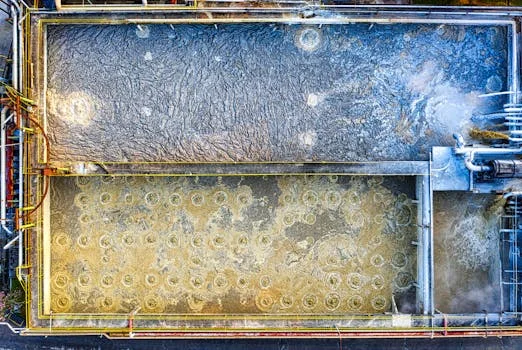
Small Dissolved Air Flotation (DAF) systems for industrial wastewater in Alaska, handling 4–30 m³/h, typically range from $150,000 to $400,000 for installed costs in 2025. These systems offer a rapid return on investment (ROI) within an average of 2.1 years, primarily driven by significant reductions in sludge hauling costs and the avoidance of costly compliance fines associated with APDES permit violations. The operational simplicity and high efficiency of DAF units make them a cost-effective choice for many industrial wastewater treatment applications in Alaska, especially where solids and FOG removal are primary concerns.
Mid-size MBR plants, designed for flows between 100–500 m³/day, represent a higher initial capital investment, ranging from $800,000 to $1.5 million. However, these advanced systems typically achieve a payback period of approximately 3.5 years. The ROI for MBR systems is primarily realized through the production of reuse-quality effluent, which can significantly reduce fresh water consumption and associated costs, alongside lower chemical usage compared to conventional biological treatment processes. For detailed MBR system cost and performance data, refer to real-world MBR system cost and performance data.
Full-scale integrated industrial wastewater systems, capable of treating 1,000–2,000 m³/day, involve a capital expenditure ranging from $1.8 million to $2.1 million. These comprehensive solutions often include advanced automation, remote monitoring capabilities, and multiple treatment stages tailored to complex influent streams. Operating costs for DAF systems average around $0.38/m³, while MBR systems incur higher operating costs at approximately $0.52/m³, which includes the periodic replacement of membranes every 5 years. For a detailed DAF system pricing and ROI analysis by capacity, consult the Pressure Flotation System Cost Price: 2025 B2B Pricing & ROI Guide.
Several factors affect industrial wastewater treatment cost in Alaska. Cold-weather insulation for tanks and piping, buried installation options, and trailer-mount configurations for modular or remote deployment can add to the initial investment but provide long-term operational resilience and compliance certainty in Alaska's unique environment.
| System Type & Capacity | Estimated Installed Cost (USD) | Typical ROI Period | Primary ROI Drivers | Estimated Operating Cost (per m³) |
|---|---|---|---|---|
| Small DAF (4–30 m³/h) | $150,000 – $400,000 | 2.1 years | Reduced sludge hauling, avoided compliance fines | $0.38 |
| Mid-size MBR (100–500 m³/day) | $800,000 – $1,500,000 | 3.5 years | Water reuse, lower chemical use | $0.52 (incl. membrane replacement) |
| Full-scale Integrated (1,000–2,000 m³/day) | $1,800,000 – $2,100,000 | 4.0 – 5.0 years | Comprehensive compliance, resource recovery, minimized risk | Variable (depends on tech mix) |
Implementation Timeline and Compliance Readiness
Navigating the APDES permit application process for industrial wastewater discharge in Alaska typically requires 6–9 months, a timeframe that can be optimized with pre-application assistance from the Alaska Department of Environmental Conservation (DEC). This initial phase involves detailed site characterization, influent analysis, and the development of a comprehensive treatment process description and monitoring plan. Following permit submission, equipment delivery for standard DAF or MBR units generally takes 12–16 weeks, while custom-engineered MBR modules or larger integrated systems may require 20 or more weeks due to specialized fabrication.
Installation and commissioning of the wastewater treatment equipment