Across the state, municipal sewage treatment in Maryland covers more than 60 NPDES-permitted POTWs regulated by the Maryland Department of the Environment (MDE). The largest are the 100 MGD Back River plant in Dundalk and the Patapsco plant serving Baltimore City plus parts of three counties. Trains combine physical, biological, and chemical steps to meet Clean Water Act and MDE limits for BOD, TSS, nitrogen, and phosphorus. The $1.3B Baltimore Headworks project is scheduled for completion by 2026.
What defines Maryland POTW capacity and compliance?
Maryland POTWs treat domestic sewage, permitted industrial discharges, and wet-weather flows under MDE NPDES permits. Flagship design capacity ranges from under 1 MGD at small southern Maryland works to 100 MGD at Back River. Nutrient limits drive BNR upgrades, disinfection renewals, and headworks projects statewide.
All Maryland POTWs must meet EPA Clean Water Act requirements and MDE permit conditions. Those permits set numeric limits for BOD, TSS, and nutrients that shape process selection, aeration energy, and solids handling. Most plants we size upgrades for already run near the lower end of their permitted capacity during dry weather, then see sharp wet-weather spikes from inflow and infiltration.
Key Facilities for Municipal Sewage Treatment in Maryland
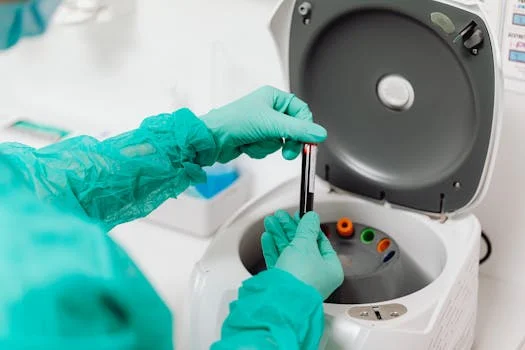
The Back River Wastewater Treatment Plant in Dundalk is Maryland’s largest municipal facility, engineered for an average 100 million gallons per day (MGD). It serves a large share of the Baltimore metropolitan area. The Patapsco Wastewater Treatment Plant treats wastewater from Baltimore City and portions of Baltimore, Howard, and Anne Arundel counties, supporting over 180,000 residents. The La Plata Wastewater Treatment Plant at 6505 Curley Hall Road, La Plata, MD 20646, anchors Charles County service. Leonardtown WWTP (NPDES MD0024767) and Swan Point WWTP (NPDES MD0057525) are important southern Maryland contributors. The table below lists major plants, NPDES IDs, estimated flows, and service areas from MDE and ArcGIS data used in the original inventory.
| Plant Name | Location | NPDES Permit ID | Estimated Flow (MGD) | Service Area |
|---|---|---|---|---|
| Back River WWTP | Dundalk, Baltimore County | MD0020002 | 100 | Baltimore City, Baltimore County |
| Patapsco WWTP | Baltimore City | MD0020003 | 60 (estimated) | Baltimore City, Baltimore, Howard, Anne Arundel Counties |
| La Plata WWTP | La Plata, Charles County | MD0021981 | 1.5 (estimated) | Town of La Plata, Charles County |
| Leonardtown WWTP | Leonardtown, St. Mary's County | MD0024767 | 1 (estimated) | Town of Leonardtown, St. Mary's County |
| Swan Point WWTP | Charles County | MD0057525 | 0.5 (estimated) | Southern Charles County |
| City of Salisbury WWTP | Salisbury, Wicomico County | MD0021571 | 10 (estimated) | City of Salisbury, Wicomico County |
| Ocean City WWTP | Ocean City, Worcester County | MD0020044 | 8 (estimated) | Town of Ocean City |
| Hagerstown WWTP | Hagerstown, Washington County | MD0020007 | 12 (estimated) | City of Hagerstown, Washington County |
Treatment Technologies Used in Maryland Facilities
Maryland’s larger municipal plants typically use conventional activated sludge or anoxic/aerobic (A/O) trains for BOD and nitrogen removal. Back River and Patapsco apply primary clarification to settle solids, then secondary biological treatment in aeration basins. Enhanced nutrient removal often adds anoxic zones for denitrification and anaerobic zones for biological phosphorus uptake.
Headworks and pre-treatment now matter more where commercial FOG loads are high. High-efficiency DAF systems for FOG and solids removal are used ahead of biological reactors when fats, oils, grease, and fine solids would overload primary tanks. Disinfection still includes chlorine at many sites, while others move to UV or an advanced chlorine dioxide generator for disinfection to limit byproducts. Large plants such as Back River stabilize biosolids with anaerobic digestion and biogas recovery. Dewatering then uses belt presses or robust plate and frame filter presses for sludge dewatering to cut haul volume.
How do primary, secondary, and tertiary upgrades differ?
Primary, secondary, and tertiary upgrades on US municipal wastewater facilities target different pollutants and capital priorities. Primary work renews screens, grit, and clarifiers to protect downstream assets. Secondary upgrades rebuild aeration, return sludge, and BNR zones for BOD and nutrient control. Tertiary steps add filtration, membranes, or advanced disinfection when permits tighten below conventional secondary quality.
On Maryland sites facing chronic inflow and infiltration, primary headworks upgrades usually come first. Fine screens and grit systems cut abrasion and ragging that drive blower and pump failures. Secondary BNR retrofits follow when nitrogen or phosphorus limits drop. Tertiary polishing, including MBR or filtration, is reserved for plants with footprint limits or reuse-quality effluent goals.
Modernization Projects and Infrastructure Upgrades

The Baltimore Headworks Improvement Project is a $1.3 billion program aimed at chronic inflow and infiltration at the city’s primary wastewater facilities. Full completion is expected by 2026. Scope includes new fine screens and advanced grit removal to protect downstream equipment from abrasive wear. SCADA and automation are part of the same package, giving operators centralized control and real-time process data.
For primary filtration, a reliable rotary mechanical bar screen for primary filtration is a common first install. Plants that already run drum screens can follow a comprehensive maintenance guide for rotary drum screens to keep capture rates stable. Elsewhere in Maryland, utilities are piloting Membrane Bioreactor (MBR) trains where nutrient limits and land constraints rule out larger conventional basins.
Comparison of Treatment Systems for Plant Upgrades
Membrane Bioreactor (MBR) systems show about a 60% smaller footprint than conventional activated sludge while producing effluent with <1 μm filtration quality. A compact MBR system for high-quality effluent and space-constrained sites fits plants that need tight nutrient control without expanding the site boundary. For satellite communities, rural clusters, or temporary duty, integrated WSZ series sewage treatment plants cover roughly 1 to 80 m³/h in a modular package. Where industrial FOG enters the municipal sewer, DAF usually outperforms plain sedimentation for floatables and suspended solids. An automatic chemical dosing system for optimized coagulant use can improve coagulant efficiency by 25–30%, as reported in 2024 MDE case studies cited in the source article.
| Technology | Key Benefit | Application | Typical Capacity Range | HydropureWater Solution |
|---|---|---|---|---|
| Membrane Bioreactor (MBR) | 60% smaller footprint, <1 μm effluent quality | High-quality effluent, space-constrained sites | 0.1 - 10 MGD | Integrated MBR Wastewater Treatment |
| Integrated Package Plants (WSZ Series) | Compact, modular, easy installation | Rural communities, satellite plants, temporary use | 1 - 80 m³/h | WSZ Underground Integrated Sewage Treatment |
| Dissolved Air Flotation (DAF) | Superior FOG and suspended solids removal | Pre-treatment for high FOG/TSS influent (e.g., mixed industrial/municipal) | 10 - 1000 m³/h | Dissolved Air Flotation (DAF) Machine |
| Automatic Chemical Dosing System | 25-30% improved coagulant efficiency | Optimized chemical addition for coagulation/flocculation | Scalable to plant size | Automatic Chemical Dosing System |
What equipment do municipal facilities usually specify?
Municipal facilities usually specify equipment by permit limit, peak wet-weather flow, and solids disposition—not by brand lists. Screens and grit come first for reliability. Biological trains and BNR zones follow for BOD and nutrients. Disinfection, sludge dewatering, and chemical feed close the train once effluent and biosolids paths are fixed.
Selection checklist for Maryland and similar US POTW upgrades:
- Confirm NPDES BOD, TSS, nitrogen, and phosphorus limits and any seasonal caps.
- Size headworks for peak wet-weather flow, not average dry-day flow alone.
- Decide BNR vs. MBR from footprint, effluent quality, and O&M staffing.
- Match disinfection (chlorine, ClO₂, or UV) to byproduct and residual rules.
- Plan sludge digestion and dewatering capacity with hauling or reuse contracts.
- Budget SCADA, spare screens, and chemical dosing redundancy before civil works.
Who this is for / Next step
This overview is for plant engineers, EPC contractors, and procurement managers comparing Maryland POTW capacity, process options, and upgrade packages. Look elsewhere if you need only residential septic design or non-permitted package units under 1 m³/h. For a sized headworks, MBR, DAF, or dosing package matched to your flow and permit, request a technical quote with flow and effluent limits.
Frequently Asked Questions
How many wastewater treatment plants are in Maryland? Over 60 municipal facilities are currently active and permitted across Maryland. They treat urban and suburban wastewater under MDE NPDES permits. Capacities range from sub-1 MGD community plants in southern counties to the 100 MGD Back River works that serve the Baltimore metro area.
Is the Baltimore Headworks project completed? No. The Baltimore Headworks project remains ongoing, with full completion expected by 2026. The $1.3 billion program targets inflow and infiltration with new fine screens, grit systems, and SCADA upgrades. Those headworks renewals protect downstream aeration and clarification assets at the city’s primary facilities.
What is a municipal wastewater treatment plant? A municipal wastewater treatment plant treats domestic sewage from homes, businesses, and institutions with physical, biological, and chemical processes. Its job is to produce effluent that meets discharge standards and protects receiving waters. In Maryland that duty sits under an MDE-issued NPDES permit with numeric BOD, TSS, and nutrient limits.
What is the largest municipal sewage treatment plant in Maryland? The Back River Wastewater Treatment Plant in Dundalk is Maryland’s largest, with a design average of 100 million gallons per day (MGD). It serves a major share of the Baltimore metropolitan service area under NPDES permit MD0020002. Patapsco is the next large regional plant at about 60 MGD estimated flow.
Do Maryland plants use MBR technology? Some Maryland wastewater plants are piloting Membrane Bioreactor (MBR) systems rather than running them plant-wide. Adoption is rising where nutrient limits and footprint force higher effluent quality. For a data-driven MBR comparison versus conventional alternatives, review side-by-side capacity, footprint, and effluent metrics before selecting a train.