Hospital wastewater treatment in Brisbane must satisfy the Environmental Protection Act 1994 general environmental duty and Urban Utilities trade-waste rules before sewer discharge. Typical design targets still cited for sensitive receiving waters include BOD₅ ≤10 mg/L, TSS ≤15 mg/L and fecal coliforms ≤10⁴ CFU/100 mL. MBR trains commonly deliver about 95% COD reduction and 99.9% pathogen removal under hospital load; ClO₂ dosing at 2–5 mg/L with 30 minutes contact supports disinfection without THM formation. CAPEX for packaged plants runs roughly $250K at 50 m³/day to $4.2M at about 500 m³/day, with OPEX often $0.80–$1.50/m³ treated.
Hospital Wastewater Treatment in Brisbane: Decision Baseline
Brisbane hospital effluent needs on-site pretreatment when strength, pathogens or medical residues would breach Urban Utilities sewer acceptance criteria or site licence conditions. Most plants we size for South East Queensland hospitals run MBR or DAF-plus-MBR, then ClO₂ polishing, rather than municipal STPs alone. Pretreatment protects Luggage Point and Eagle Farm catchments and cuts wet-weather overflow risk in summer storms.
Why Brisbane Hospitals Need Specialized Pretreatment
Hospital effluent in South East Queensland carries pathogens, pharmaceuticals and imaging residues that municipal STPs are not designed to neutralize at the source. Under the Environmental Protection Act 1994, healthcare facilities hold a general environmental duty to prevent environmental harm, including multi-drug resistant organisms and chemotherapy residues. Non-compliance remains expensive: corporations face fines up to $1.25M for unauthorized discharge, and individuals up to $250K, under the Act's penalty framework.
Urban Utilities classifies hospitals as high-risk trade-waste generators. Facilities above domestic-strength loads need a Trade Waste Approval and, where flows exceed about 25 kL/day or 25 kg/day BOD, Category 3A monitoring. Earlier guidance used BOD₅ 300 mg/L and TSS 400 mg/L as surcharge triggers; the Urban Utilities Trade Waste Sewer Acceptance Criteria (PRO703, active 18 August 2023) sets BOD₅ at 1000 mg/L with a 25 kg/day mass-load limit, SS at 500 mg/L, COD at 2000 mg/L and ammonia (as N) at 150 mg/L. Pathological, infectious and cytotoxic wastes are prohibited in sewer except under NHMRC clinical-waste rules, and unused pharmaceuticals must not be dumped to drain.
A mid-sized Fortitude Valley hospital scenario in the original brief shows how a failed primary clarifier in a high-flow event pushed fecal coliforms 400% over limit, triggered QLD EPA notification, and drove roughly $180K in fines plus remediation totaling over $450K. That exceeds the cost of a modern automated disinfection upgrade and is why redundant hospital trains are treated as operations insurance, not optional polish.
QLD EPA Effluent Limits for Healthcare Facilities
The Environmental Protection (Water and Wetland Biodiversity) Policy 2019 sets water quality objectives (WQOs) for the Brisbane River sub-basin and Moreton Bay. Those WQOs guide environmental values; end-of-pipe licence limits are still set case by case and should not be copied blindly from receiving-water objectives. For hospitals aiming to cut trade-waste risk or seek tighter internal standards, the table below remains the engineering baseline used in this article.
Hospitals aligning with indirect reuse also reference the Australian Drinking Water Guidelines (ADWG) and the 2023 WHO Guidelines for the Safe Use of Wastewater. Urban Utilities specifically tracks COD and ammonia to protect Luggage Point and Eagle Farm STP performance. Missing pretreatment conditions can suspend a trade-waste approval.
| Parameter | QLD EPA Limit (Discharge) | ADWG Guideline | WHO Guideline (2023) | Urban Utilities Pretreatment |
|---|---|---|---|---|
| BOD₅ (mg/L) | ≤10 | N/A | ≤30 | ≤300 (Base) |
| TSS (mg/L) | ≤15 | N/A | ≤30 | ≤400 |
| Fecal Coliforms (CFU/100mL) | ≤10⁴ | 0 | ≤10³ | N/A |
| pH | 6.5–8.5 | 6.5–8.5 | 6.0–9.0 | 6.0–10.0 |
| COD (mg/L) | ≤60 | N/A | N/A | ≤500 |
| Ammonia (mg/L) | ≤2 | ≤0.5 | N/A | ≤50 |
| FOG (mg/L) | ≤2 | N/A | N/A | ≤100 |
Keep the table values as the article baseline, then overlay the 2023 Urban Utilities SAC numbers above when writing approval conditions. SAC pH is 6.0–10.5 and total oil and grease is 200 mg/L unless a correctly sized grease arrestor is accepted as compliant.
Process Train: Step-by-Step Engineering Specs
Effective hospital trains need staged solids removal, biological oxidation and verified disinfection. The flow below is sized for Brisbane sewer discharge plus tighter internal targets.
- Stage 1: Screening: Mechanical pretreatment protects membranes. rotary mechanical bar screens remove medical plastics, rags and solids larger than 6 mm at about 95% capture efficiency, with screen channel HRT of 1–2 minutes at peak flow.
- Stage 2: Primary Sedimentation: Where cafeteria FOG and solids dominate, high-efficiency sedimentation tanks or lamella clarifiers cut TSS by 50–70% at surface loading rates of 20–40 m³/m²·h.
- Stage 3: Biological Treatment: Core biology is usually a membrane bioreactor. MBR systems for medical wastewater in SEQ hospitals target about 95% COD removal and 99.9% pathogen reduction at HRT 6–8 hours, which also helps break down complex pharmaceuticals.
- Stage 4: Disinfection: To hold fecal coliforms within the QLD baseline, chlorine dioxide generators for hospital wastewater disinfection are preferred over free chlorine. ClO₂ avoids THMs and supports a 99.99% kill claim for viruses and bacteria at 2–5 mg/L with 30 minutes contact.
- Stage 5: Sludge Handling: plate and frame filter presses dewater sludge to 25–30% solids, cutting haul volume by about 90% through Brisbane urban traffic routes.
Integrated skids such as the Medical & Hospital Wastewater Treatment System combine screening, biology and disinfection in a smaller plant room footprint. For managers benchmarking overseas rules, EPA standards for hospital wastewater treatment remain a useful performance ceiling check.
Why investigate nanofiltration design flow failures?
Nanofiltration underperformance from day one usually signals a structural design or pretreatment gap, not a temporary operating glitch. Restoring nominal pressure and temperature alone rarely recovers design permeate flow if membranes were fouled, undersized or fed without adequate solids and FOG control. Investigate root causes—screen aperture, DAF/MBR upstream quality, scaling indices—before upsizing pumps or adding downstream units.
How does sulfide precipitation remove arsenic?
Sulfide precipitation converts dissolved arsenic into low-solubility arsenic sulfide solids that settle or float for removal, often targeting 99.9% removal in dedicated industrial trains when pH and sulfide dose are controlled. Typical Brisbane hospital sewer programs do not centre on arsenic sulfide circuits; isolate any arsenic-bearing lab or remediation streams and treat them separately before they dilute into the main medical wastewater header.
MBR vs DAF vs Chlorine Dioxide: Which System Fits?
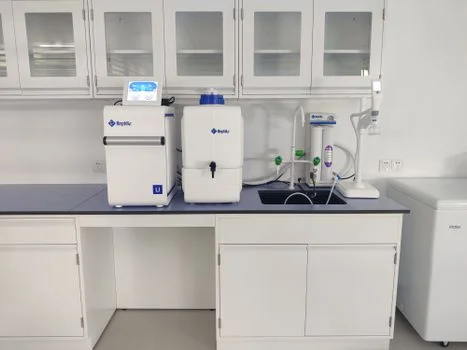
Technology choice tracks bed count, kitchen FOG load and available plant-room area. Compact MBR packages suit dense Brisbane CBD sites that need COD ≤50 mg/L and TSS ≤5 mg/L class effluent. High cafeteria FOG loads need DAF systems for high-FOG hospital wastewater ahead of membranes so grease does not blind the cassette.
Chlorine dioxide generators work as final polish or as a standalone disinfection step for small clinics already meeting organic limits. ClO₂ has the lowest OPEX band in the comparison table, but it does not remove BOD or COD by itself. Match the train to the risk profile of infectious-disease wards versus outpatient clinics.
| System Type | CAPEX (100 m³/day) | OPEX ($/m³) | Footprint (m²) | Effluent Quality | Best For |
|---|---|---|---|---|---|
| MBR System | $1.2M – $2.5M | $1.10 – $1.50 | 40 – 60 | COD ≤50, TSS ≤5 | Space-constrained urban hospitals |
| DAF System | $500K – $1.1M | $0.90 – $1.20 | 80 – 120 | TSS ≤30, FOG ≤10 | High-fat loads (Cafeterias/Kitchens) |
| ClO₂ Generator | $80K – $180K | $0.15 – $0.30 | 5 – 10 | Disinfection only | Small clinics / Final polishing |
Decision framework:
- If the hospital has <50 beds and limited space → integrated MBR.
- If the facility has >200 beds with large kitchens → DAF + MBR + ClO₂ disinfection.
- If organics are already low and budget is tight → chlorine dioxide standalone for disinfection only.
Cost Breakdown for Brisbane Hospital Projects
CAPEX tracks access, redundancy and automation. A 50 m³/day surgical-centre package typically starts near $250K; a 500 m³/day teaching-hospital plant can reach $4.2M. OPEX is driven by MBR aeration energy and by chemical use on DAF or ClO₂ dosing skids.
Sludge haulage still dominates five-year TCO. Brisbane landfill fees for dewatered sludge in the 2025 planning figures sit around $120–$200 per tonne. High-efficiency dewatering can cut that annual line by up to 60%. MBR biology usually yields about 30% less waste sludge than conventional activated sludge, which shows up in haul contracts more than in the brochure.
| System Size (m³/day) | CAPEX ($) | OPEX ($/m³) | Annual Sludge Cost | 5-Year TCO |
|---|---|---|---|---|
| 50 (Small Clinic) | $250K - $450K | $1.40 | $8,000 | $420K - $620K |
| 200 (Mid-Size) | $1.5M - $2.2M | $1.10 | $28,000 | $2.1M - $2.8M |
| 500 (Large Hospital) | $3.5M - $4.2M | $0.85 | $65,000 | $4.6M - $5.4M |
When stress-testing budgets, compare how other regions handle hospital wastewater compliance against your expansion CAPEX and OPEX envelopes.
Equipment Selection Checklist for Brisbane Hospitals
Procurement should score vendors against local approval conditions and measurable effluent data, not brochure claims.
- Verify QLD and Urban Utilities alignment: Demand third-party lab reports showing BOD₅ ≤10 mg/L and fecal coliforms ≤10⁴ CFU/100 mL under variable load when those are your internal targets, and confirm sewer discharge will stay inside the 2023 SAC ceilings.
- Measure footprint: Urban Brisbane plant rooms are tight. MBR packages save about 60% of the area needed by conventional secondary clarifiers on retrofit jobs.
- Compare OPEX chemicals: Modern ClO₂ generators can cut annual chemical spend by about 40% versus sodium hypochlorite at equal disinfection duty because dose rates are lower.
- Require PLC/SCADA: Fully automated trains with remote alarms cut on-site labour about 25% and leave an audit trail for EPA or Urban Utilities inspections.
- Ask for SEQ references: Request operating data from similar bed counts in South East Queensland, including climate and wet-weather hydraulic peaks.
- Pilot high-risk wards: Infectious or oncology drains deserve on-site pilot testing before full membrane commitment.
- Check Australian Standards: Reject bids that cannot show AS/NZS 1546.3 alignment or clear membrane warranty hours.
Red flags: No pilot offer for high-risk wards, vague membrane life warranties, or inability to address medical-waste prohibition clauses in the Urban Utilities SAC.
Who This Is For / Next Step
This guide is for Brisbane hospital facility managers, EPC process engineers and procurement teams specifying pretreatment before Urban Utilities sewer connection. Look elsewhere if you only need municipal STP advice with no on-site medical stream. For a duty-sized package around the Medical & Hospital Wastewater Treatment System, send flow, COD and bed-count data via our request a hospital wastewater quote form.
Frequently Asked Questions
What are the penalties for non-compliance with QLD hospital wastewater limits?
Under the Environmental Protection Act 1994, corporations face fines up to $1.25M and individuals up to $250K for unauthorized discharge. The regulator can also issue Environmental Protection Orders that force costly corrective works and public disclosure of the breach.
Can hospital wastewater be discharged directly to the sewer in Brisbane?
Only with a Trade Waste Approval and only if the discharge meets Urban Utilities sewer acceptance criteria. Hospitals above domestic strength almost always need on-site pretreatment; flows over about 25 kL/day or 25 kg/day BOD fall into Category 3A monitoring, and infectious or cytotoxic solids remain prohibited.
How much does a hospital wastewater treatment plant cost in Brisbane?
CAPEX typically ranges from about $250,000 for a 50 m³/day clinic package to over $4.2M for a large ~500 m³/day teaching-hospital plant. Operating costs generally fall between $0.80 and $1.50 per cubic metre treated, depending on MBR aeration energy and chemical dosing.
What is the best disinfection method for hospital wastewater?
Chlorine dioxide is the usual engineering preference for Brisbane hospital effluent disinfection. It supports a 99.99% pathogen kill claim, including chlorine-resistant Cryptosporidium, at 2–5 mg/L with 30 minutes contact, and avoids THM by-products associated with free chlorine.
How often should hospital wastewater treatment equipment be serviced?
MBR membranes need monthly chemical cleans and quarterly integrity tests under typical hospital duty. DAF units need weekly skimmer checks and monthly dosing-pump calibration so FOG removal stays inside design TSS and FOG envelopes.