MBR for municipal sewage treatment in Ireland targets BOD ≤ 25 mg/L and TSS ≤ 35 mg/L under Uisce Éireann consents. New works budget €1,000–€3,000 per PE. MBR trains cut footprint about 60% but draw 0.5–0.6 kWh/m³.
Why Irish Municipal Plants Still Miss EU Standards
Ireland's municipal plants still miss EU standards at two points: 15 towns and villages discharged raw sewage daily in mid-2025, and 14 large urban areas failed basic UWWTD treatment standards in 2024. Fixing both takes PE sizing, nutrient limits, and storm handling rather than new reactors alone. The compliance gap is now concentrated in a short list of named sites, not the national fleet.
Ireland's municipal plants must hit UWWTD secondary limits of BOD ≤ 25 mg/L and TSS ≤ 35 mg/L, with tighter NH₄-N and phosphorus limits on sensitive waters. Typical new-build CAPEX runs €1,000–€3,000 per PE, or about €5M–€200M by plant size. At 10–15°C, nitrifying SRT of 10–20 days is the usual design band for stable ammonia removal under Irish winter loads.
Earlier commentary cited roughly 38 towns still lacking secondary treatment. According to the EPA (2025), 15 towns and villages still discharged raw sewage daily in mid-2025, down from 19 early in 2024. Daily raw-sewage volume roughly halved since early 2024. Fourteen large towns and cities failed basic Urban Waste Water Directive 91/271/EEC standards in 2024, and six of those had complied in 2023.
Ringsend still treats about 40% of Ireland's public wastewater and handles hydraulic loads reported up to 1.2 million m³/day. Earlier reporting described operation near 120% of prior capacity. Uisce Éireann's €550 million Ringsend programme targets 2.4 million PE capacity while restoring UWWTD compliance (Uisce Éireann, 2025). Earlier capital planning signalled about €1.5 billion for wastewater upgrades for PE > 2,000. In 2024 alone the utility invested over €481.4 million in wastewater works, part of more than €2 billion since 2020.
Uisce Éireann Discharge Limits for BOD, TSS, and NH₄-N
Uisce Éireann discharge limits for municipal works centre on BOD ≤ 25 mg/L and TSS ≤ 35 mg/L, with NH₄-N ≤ 5 mg/L and total phosphorus ≤ 1 mg/L on many sensitive discharges. These consents implement Directive 91/271/EEC and site-specific EPA discharge licences. The original Directive applies waste water collection and treatment to agglomerations with a population equivalent of over 2,000, and requires more advanced treatment in places above 10,000 PE in sensitive areas (Wikipedia, Urban Waste Water Treatment Directive).
Typical Irish municipal influent sits at COD 300–800 mg/L, TSS 200–400 mg/L, and NH₄-N 20–50 mg/L. Conventional activated sludge HRT is usually 6–12 hours. Space-tight sites often select MBR systems for space-constrained Irish municipal plants (e.g., Ringsend, Dublin) with HRT 4–8 hours. SRT of 10–20 days at 10–15°C remains the practical nitrification window. Most plants we size for rural Irish PE run toward the upper end of that band in winter.
High rainfall and combined sewers create hydraulic shock and dilution. Storm separation and robust headworks matter as much as the secondary process. For small and medium PE clusters, underground integrated sewage treatment plants for small to medium Irish municipalities keep footprint and civil cost down when land is scarce.
| Parameter | Typical Influent (Municipal) | Uisce Éireann 2025 Effluent Limits (Standard) | Uisce Éireann 2025 Effluent Limits (Sensitive Areas) |
|---|---|---|---|
| BOD₅ (mg/L) | 200-400 | ≤ 25 | ≤ 25 |
| COD (mg/L) | 300-800 | ≤ 125 | ≤ 125 |
| TSS (mg/L) | 200-400 | ≤ 35 | ≤ 35 |
| NH₄-N (mg/L) | 20-50 | ≤ 15 (Large Plants) | ≤ 5 |
| Total P (mg/L) | 4-10 | N/A | ≤ 1 |
| Hydraulic Load (m³/day) | Varies by PE (e.g., 150-200 L/PE/day) | ||
| HRT (hours) | Conventional: 6-12; MBR: 4-8 | ||
| SRT (days) | Nitrification: 10-20 (at 10-15°C) | ||
MBR for Municipal Sewage Treatment in Ireland: Energy and Footprint Facts
Membrane bioreactor trains deliver about 95% COD removal and 99% TSS removal under the HydropureWater MBR series design envelope, which suits bathing-water and reuse duties. MBR for municipal sewage treatment in Ireland trades energy for land: specific energy is typically 0.5–0.6 kWh/m³, about 30% above conventional aeration trains, while land use drops by about 60% versus conventional activated sludge. That trade is what makes MBR viable on constrained Dublin sites.
Day-to-day, membrane fouling control sets the maintenance calendar. Screening quality upstream, scour aeration, and periodic chemical cleans decide whether the 0.5–0.6 kWh/m³ figure holds or drifts upward. Plants we audit that skip fine screening before membranes always pay for it in cleaning frequency and flux loss.
MBR vs Conventional Activated Sludge in Ireland: Where SBR Fits
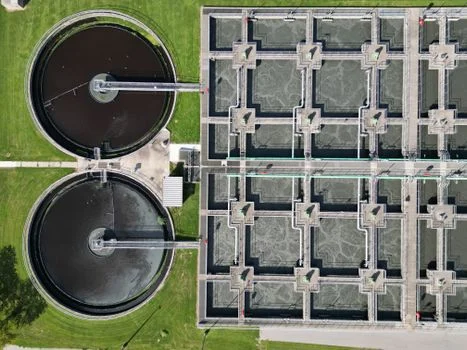
Sequencing batch reactors suit small to medium towns with swing loads. Packaged SBR units such as Molloy's Chieftain are quoted for about 14–50 PE at roughly €1,200–€1,800/PE. Energy usually lands at 0.4–0.5 kWh/m³. Arklow's new works used an SBR core with tertiary polishing when raw discharge to the Irish Sea had to stop.
Conventional activated sludge needs 30–50% more land than MBR but runs nearer 0.3–0.4 kWh/m³. CAPEX is often 20–30% below MBR, which fits rural sites with spare land. Extra stages are still needed for tight NH₄-N and phosphorus limits. Technology choice for an Irish municipal plant should follow PE, land, receiving-water class, and whole-life energy, not brochure claims, and the same Irish municipal plant technology choice logic applies when comparing bidder claims.
| Feature | MBR (Membrane Bioreactor) | SBR (Sequencing Batch Reactor) | Conventional Activated Sludge |
|---|---|---|---|
| Effluent Quality | Excellent (95% COD, 99% TSS removal) | Very Good (High BOD/TSS, good nutrient removal) | Good (High BOD/TSS removal) |
| Footprint | Very Small (60% less than conventional) | Small to Medium | Large (30-50% more than MBR) |
| Energy Consumption | High (0.5-0.6 kWh/m³) | Moderate (0.4-0.5 kWh/m³) | Low (0.3-0.4 kWh/m³) |
| CAPEX/PE | Highest (€1,500-€3,000) | Moderate (€1,200-€1,800) | Lowest (€1,000-€2,500) |
| OPEX/m³ | Highest (€0.20-€0.35) | Moderate (€0.15-€0.25) | Lowest (€0.15-€0.25) |
| Use Case (Irish Conditions) | Space-constrained sites, sensitive receiving waters, water reuse (e.g., Ringsend) | Small towns, fluctuating loads, good nutrient removal (e.g., Arklow) | Rural areas, ample land, less stringent effluent requirements |
| Key Advantages | Superior effluent, compact, stable operation | Flexible, good nutrient removal, lower CAPEX than MBR | Lowest energy, proven technology, simple operation |
| Key Disadvantages | High energy, membrane fouling, higher CAPEX | Batch operation, requires skilled operators | Large footprint, less adaptable, can struggle with nutrient removal |
Municipal Wastewater Treatment Plant CAPEX in Ireland
What Drives the CAPEX and OPEX Breakdown?
CAPEX and OPEX for Irish municipal works are driven first by PE, process choice, and nutrient limits, not by brand labels. New municipal sewage treatment works in Ireland still budget about €1,000–€3,000 per PE, or €5M–€200M total by size and technology. MBR packages usually sit 20–30% above conventional activated sludge because membranes and controls dominate the mechanical bill.
Energy is typically 40–50% of OPEX. Chemicals take 10–20%, labour 15–25%, and maintenance 10–15%. Treated-water energy cost often falls near €0.15–€0.25/m³ for conventional trains and €0.20–€0.35/m³ for MBR at Irish power tariffs. Cross-check those bands against CAPEX/OPEX benchmarks for European municipal plants before freezing a tender model.
Biogas from sludge digestion, automated chemical dosing for Uisce Éireann compliance and OPEX reduction, and modular underground integrated sewage treatment plants cut civil time and chemical waste.
Efficient dewatering with plate and frame filter presses shrinks haulage tonnes and tip fees. Sludge handling is the line item municipal tenders most often under-scope, and it shows up later as the largest controllable OPEX line.
| Cost Category | Conventional Activated Sludge | SBR System | MBR System |
|---|---|---|---|
| CAPEX/PE (approx.) | €1,000 - €2,500 | €1,200 - €1,800 | €1,500 - €3,000 |
| Total CAPEX (5,000 PE) | €5M - €12.5M | €6M - €9M | €7.5M - €15M |
| Total CAPEX (50,000 PE) | €50M - €125M | €60M - €90M | €75M - €150M |
| OPEX Breakdown: Energy | 40-50% | 40-50% | 45-55% |
| OPEX Breakdown: Chemicals | 10-20% | 10-15% | 15-25% |
| OPEX Breakdown: Labor | 15-25% | 15-25% | 15-20% |
| OPEX Breakdown: Maintenance | 10-15% | 10-15% | 10-15% |
| Energy Cost/m³ (approx.) | €0.15 - €0.25 | €0.15 - €0.25 | €0.20 - €0.35 |
Uisce Éireann Compliance Checklist for 2025 Discharge Limits
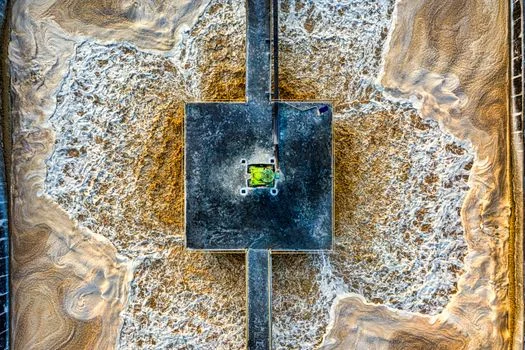
Uisce Éireann discharge consents for municipal works still centre on BOD ≤ 25 mg/L and TSS ≤ 35 mg/L. NH₄-N ≤ 5 mg/L and total phosphorus ≤ 1 mg/L apply on many sensitive waters under Directive 91/271/EEC. Uisce Éireann reported 92% of treatment plants fully compliant with the Directive in 2024. EPA licence consistency remained weaker at many sites. According to the European Commission, the revised Urban Wastewater Treatment Directive entered into force on 1 January 2025 and extends collection and treatment to all urban areas of more than 1,000 inhabitants. Until 2028, Member States still report implementation under the old Directive's rules, so Irish plants face two parallel compliance tracks during procurement.
Operational practice still quotes daily BOD and TSS sampling and weekly NH₄-N and phosphorus checks via accredited labs, with monthly discharge reports and annual audits. Cold-weather nitrification failure, poor settleability, and storm dilution remain the three most common consent breaches on Irish PE plants we review.
Corrective packages often add sand filtration, on-site chlorine dioxide generators for Irish municipal disinfection or UV, plus SRT tuning. Stronger preliminary treatment with rotary mechanical bar screens also helps.
Storm separation matters as much as reactors. Cold-climate lessons from how Vermont's municipal plants handle cold climates—lessons for Ireland transfer well to Irish winters.
Is sulfide precipitation used in municipal plants?
Sulfide precipitation for arsenic is not a standard unit process on Irish municipal sewage works. Municipal trains target BOD, TSS, ammonia, and phosphorus under UWWTD and EPA licences. Arsenic and other metals belong in industrial pretreatment before sewer discharge. For metals-heavy industrial streams, review monocrystalline silicon wastewater treatment or Silicon Wafer Wastewater Treatment System designs. Those flowsheets are not municipal PE plants.
- Confirm PE, dry-weather flow, and storm multiples against the EPA licence
- Lock BOD/TSS/NH₄-N/P limits and sampling frequency before process selection
- Size SRT for 10–20 days at the coldest month mixed-liquor temperature
- Budget energy at 0.3–0.6 kWh/m³ by process family
- Include sludge dewatering, odour, and storm overflow upgrades in CAPEX
- Prove headworks capacity before adding secondary intensification
- Document monthly reporting and spare-parts lead times for critical assets
Case Study: Arklow's New Plant and Town Growth
Arklow's new wastewater treatment plant, commissioned in 2023 and cited again in EPA (2025) progress notes, ended more than 50 years of raw sewage discharge. It reported about 99% compliance with Uisce Éireann effluent limits. Design PE was 35,000 with expansion room. The train used an SBR (Molloy Chieftain) core, tertiary sand filtration, and UV disinfection for bathing-water class effluent.
Seasonal tourism can lift local PE from about 2,000 to over 10,000, so swing-load biology and coastal storm management were design constraints. Measured performance included about 95% BOD removal and 98% TSS removal. Local reporting linked the works to over €50 million in enabled development. Modular expansion capacity and storm separation were the two lessons most plants we size for coastal Irish towns now copy.
Who this is for: municipal engineers, EPC contractors, and procurement teams sizing Irish PE upgrades under Uisce Éireann and EPA licences. Who should look elsewhere: buyers seeking arsenic sulfide precipitation or semiconductor metals recovery as the primary process. That duty is industrial, not municipal. Next step: send PE, influent COD/TSS/NH₄-N, land area, and consent limits via request a project quote. Process family and CAPEX band can then be checked against your site.
Frequently Asked Questions
How much does a new Irish PE plant cost?
CAPEX for a new Irish PE plant typically ranges from €1,000–€3,000 per PE, with total project costs about €5M–€200M by size and technology. MBR systems are generally 20–30% more expensive in CAPEX than conventional activated sludge. Energy share of OPEX is often 40–50%, so whole-life cost can reverse a low civil bid within a few years.
What is the best technology for a small Irish town (5,000 PE)?
SBR systems are usually the balanced choice for a 5,000 PE Irish town with moderate land and swing loads. Quoted CAPEX is about €1,200–€1,800/PE with OPEX near €0.15–€0.25/m³. MBR still wins when footprint or reuse quality dominates, but specific energy of 0.5–0.6 kWh/m³ must clear the OPEX model first.
How do I comply with EU Urban Waste Water Directive 91/271/EEC?
Meet the consented BOD ≤ 25 mg/L, TSS ≤ 35 mg/L, and any NH₄-N or phosphorus limits on the EPA licence, then keep monthly reporting current. Hold nitrifying SRT at 10–20 days at 10–15°C through winter. Add tertiary filtration and disinfection when bathing-water or sensitive-area clauses apply, and fix storm dilution before blaming the secondary reactors.
What are energy consumption benchmarks for Irish municipal plants?
Conventional activated sludge typically uses 0.3–0.4 kWh/m³, SBR about 0.4–0.5 kWh/m³, and MBR about 0.5–0.6 kWh/m³ under Irish municipal duty. At local tariffs that often maps to roughly €0.15–€0.35/m³ for the energy line alone. Always state average versus peak flow when comparing bidder figures.
What changed in Ireland's compliance picture after 2024?
According to the EPA (2025), 15 towns and villages still discharged raw sewage daily in mid-2025, while 14 large urban areas failed UWWTD treatment standards in 2024. Uisce Éireann reported 92% plant-level Directive compliance and over €481.4 million wastewater capital spend in 2024. Licence consistency remains the harder bar: 59% of plants failed to meet EPA licence standards consistently that year.
What are Uisce Éireann discharge limits for BOD, TSS, and NH₄-N?
Standard Uisce Éireann consents set BOD ≤ 25 mg/L and TSS ≤ 35 mg/L for secondary treatment. Sensitive-area licences tighten NH₄-N to ≤ 5 mg/L and total phosphorus to ≤ 1 mg/L, while large-plant ammonia consents commonly sit at ≤ 15 mg/L. Confirm the exact values on your EPA licence before process design, because site-specific clauses override these generic bands. Sampling is typically daily for BOD and TSS, weekly for nutrients.
Is MBR or conventional activated sludge cheaper for Irish plants?
Conventional activated sludge is cheaper to build, typically 20–30% below MBR on CAPEX and near €1,000–€2,500 per PE. MBR for municipal sewage treatment in Ireland costs €1,500–€3,000 per PE but saves about 60% of footprint. Run the whole-life model: MBR energy of 0.5–0.6 kWh/m³ against conventional 0.3–0.4 kWh/m³ often decides the tender on constrained urban sites.