Erbil’s Industrial Wastewater Crisis: Why Treatment is Urgent in 2025
Erbil’s industrial sector faces critical wastewater treatment challenges: no central WWTP, discharge of untreated effluent into the environment, and reliance on mobile or decentralized systems. The planned Erbil Wastewater Treatment Plant (Phase 2) will recycle 840,000 m³/day, but industrial facilities—refineries, food processors, and textiles—need tailored solutions today. Key specs for Erbil projects: influent COD 500–5,000 mg/L, TSS 200–1,500 mg/L, and effluent compliance with Kurdistan Region discharge limits (COD ≤ 150 mg/L, TSS ≤ 50 mg/L). This guide provides 2025 engineering specs, cost data, and a zero-risk equipment selection framework.
Currently, Erbil City lacks a central wastewater treatment plant (WWTP) capable of handling industrial-grade effluent. Most municipal and industrial wastewater is discharged untreated into local seasonal streams or injected into the subsurface, posing significant risks to the region’s groundwater table (Kurdistan Chronicle, 2025). For facility managers in the Kawergosk or Gazna industrial zones, the absence of public infrastructure means the burden of treatment falls entirely on the private sector. Relying on the government’s Phase 2 project is not a viable short-term strategy, as that facility is primarily designed for municipal loads and will not accommodate the high Chemical Oxygen Demand (COD) and Total Suspended Solids (TSS) typical of industrial discharge.
Industrial sectors in Erbil, particularly refineries and food processing plants, generate wastewater with COD levels ranging from 500 to 5,000 mg/L and TSS concentrations between 200 and 1,500 mg/L, according to Kurdistan Environmental Board 2024 benchmarks. Discharging these pollutants without treatment results in severe environmental degradation and increasing regulatory pressure. The Kurdistan Regional Government (KRG) has intensified its oversight, with the Environmental Board now enforcing discharge limits of COD ≤ 150 mg/L and TSS ≤ 50 mg/L. Non-compliance in 2025 carries the risk of heavy administrative fines, mandatory facility shutdowns, and the revocation of operational licenses. For EPC contractors and procurement teams, implementing decentralized or mobile solutions is no longer an optional environmental gesture but a core operational necessity to ensure business continuity.
Engineering Specs for Industrial Wastewater Treatment in Erbil: Influent, Effluent & Process Parameters
Engineering a wastewater system in Erbil requires a precise understanding of the influent characteristics which vary significantly by sector. Refineries deal with high hydrocarbon loads and emulsified oils, while food processing plants face high organic nitrogen and BOD. To meet the Kurdistan Region discharge limits, a multi-stage treatment train is required. This usually involves a primary physical-chemical stage to remove solids and oils, followed by a secondary biological stage for organic degradation, and a tertiary stage for polishing and disinfection.
| Parameter | Refinery Influent | Food Processing Influent | Textile Influent | KRG Discharge Limit (2025) |
|---|---|---|---|---|
| COD (mg/L) | 800 – 2,500 | 2,000 – 5,000 | 1,000 – 3,000 | ≤ 150 |
| BOD (mg/L) | 300 – 800 | 1,000 – 3,000 | 400 – 1,200 | ≤ 30 |
| TSS (mg/L) | 200 – 600 | 500 – 1,500 | 300 – 800 | ≤ 50 |
| Oil & Grease (mg/L) | 100 – 500 | 50 – 200 | < 20 | ≤ 10 |
| pH | 6.0 – 9.0 | 4.5 – 11.0 | 8.0 – 12.0 | 6.0 – 9.0 |
A typical treatment train for an Erbil refinery includes a high-efficiency DAF system for Erbil’s high-TSS industrial wastewater to remove free and emulsified oils, followed by a biological reactor. For facilities with limited land, a compact MBR system for Erbil’s land-constrained industrial zones is the preferred secondary treatment, as it combines aeration and membrane filtration into a single footprint.
Energy consumption is a critical engineering benchmark. In Erbil, where industrial electricity rates are a significant OPEX factor, choosing the right technology is vital. Based on EPA 2024 data adapted for local conditions, MBR systems consume 0.8–1.2 kWh/m³, while DAF systems are more energy-efficient for solids removal at 0.3–0.5 kWh/m³. Sequential Batch Reactors (SBR) typically fall in the middle at 0.6–1.0 kWh/m³. Sludge production must also be calculated; given Erbil’s high-TSS influent, engineers should budget for 0.4–0.5 kg TSS per kg of BOD removed to ensure adequate dewatering capacity is installed.
Technology Comparison: MBR vs DAF vs SBR for Erbil’s Industrial Wastewater
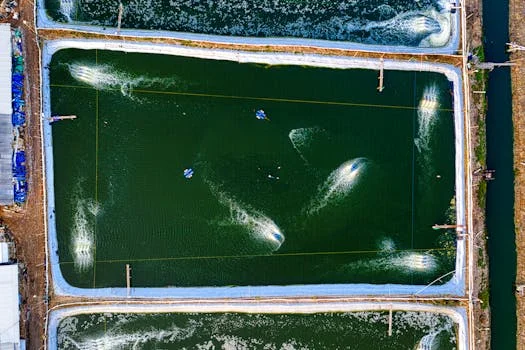
Selecting the appropriate technology depends on effluent requirements, available space, and budget. In Erbil, where many industrial sites are located in densely packed zones, footprint is often the deciding factor. Membrane Bioreactors (MBR), Dissolved Air Flotation (DAF), and Sequencing Batch Reactors (SBR) represent the three most common technologies deployed in the Kurdistan Region.
| Feature | MBR (Membrane Bioreactor) | DAF (Dissolved Air Flotation) | SBR (Sequencing Batch Reactor) |
|---|---|---|---|
| Effluent Quality | Ultra-high (Reuse ready) | Good (Pre-treatment) | High (Discharge ready) |
| Footprint | Minimal (60% smaller) | Small to Medium | Large |
| CAPEX | High ($1.5M – $5M) | Low ($500K – $1.5M) | Medium ($1M – $3M) |
| OPEX | High (Energy/Membranes) | Medium (Chemicals) | Low to Medium |
| Scalability | Modular/High | Low | Moderate |
MBR technology offers a distinct advantage for Erbil’s industrial facilities because it produces effluent with turbidity < 1 NTU, making the water suitable for onsite reuse in cooling towers or irrigation. This is highly valuable in a region where water scarcity is an increasing concern. However, the higher CAPEX and energy demand (0.8–1.2 kWh/m³) must be weighed against these benefits. For a deeper look at physical-chemical processes, consult this detailed DAF engineering guide for Erbil’s industrial applications.
DAF is the "workhorse" for primary treatment in Erbil’s food processing and refinery sectors. It excels at removing TSS and FOG (Fats, Oils, and Grease) that would otherwise foul biological membranes or overwhelm an SBR. While the CAPEX is lower, the requirement for constant chemical dosing (coagulants and flocculants) results in an OPEX of $0.30–$0.80/m³. SBR systems remain a popular choice for larger textile factories in Erbil due to their operational flexibility and lower energy consumption, though they produce more sludge (0.3–0.5 kg TSS/kg BOD) and require significantly more land. For facilities requiring high-purity process water from treated effluent, a secondary stage involving a detailed RO purification engineering guide may be necessary.
Cost Breakdown for Industrial Wastewater Treatment in Erbil: CAPEX, OPEX & ROI
Procurement teams in Erbil must account for both the initial investment and the long-term operational costs, which are influenced by local chemical availability and electricity prices. CAPEX for industrial-scale systems varies widely based on technology and capacity. Mobile plants, which are increasingly popular for smaller refineries and remote sites, range from $300,000 to $800,000. Fixed installations for larger facilities generally start at $1 million and can exceed $5 million for advanced MBR configurations.
| System Type | Capacity (m³/day) | CAPEX Range (USD) | OPEX ($/m³) |
|---|---|---|---|
| Mobile DAF/Chemical | 100 – 500 | $300K – $800K | $1.00 – $2.00 |
| Fixed DAF System | 1,000 – 5,000 | $500K – $1.5M | $0.30 – $0.80 |
| Fixed MBR Plant | 500 – 2,500 | $1.5M – $5.0M | $1.20 – $2.50 |
| Fixed SBR Plant | 1,000 – 5,000 | $1.0M – $3.0M | $0.60 – $1.10 |
OPEX in Erbil typically falls between $0.80 and $2.50 per cubic meter of treated water. This is composed of energy costs ($0.30–$1.20/m³), chemical consumables ($0.20–$0.80/m³), and local labor ($0.30–$0.50/m³). When compared to global cost benchmarks for industrial wastewater treatment projects, Erbil’s OPEX is slightly higher due to the logistics of importing specialized membranes and chemicals.
The Return on Investment (ROI) for these systems is calculated through three primary drivers: avoided environmental fines, reduced water procurement costs through recycling, and operational uptime. A case study of a mobile plant implemented for an Erbil refinery (Green Recycling, 2024) showed a CAPEX of $450,000 and an OPEX of $1.20/m³. By achieving 95% TSS removal and recycling 40% of the effluent for utility use, the facility reached a full payback in just 3.5 years. Generally, Erbil industrial projects see a payback period of 3 to 7 years.
Compliance & Discharge Standards for Industrial Wastewater in Erbil

The Kurdistan Environmental Board has established strict discharge standards that align more closely with international benchmarks than many realize. For 2025, any industrial facility discharging into a waterway or public sewer system must meet specific chemical and physical thresholds. Failure to document compliance through regular laboratory testing can lead to immediate site closure.
| Contaminant | Kurdistan Limit (2025) | EU Standard (Ref) | US EPA (Ref) |
|---|---|---|---|
| COD | ≤ 150 mg/L | 125 mg/L | Variable |
| BOD5 | ≤ 30 mg/L | 25 mg/L | 30 mg/L |
| TSS | ≤ 50 mg/L | 60 mg/L | 30 mg/L |
| pH | 6.0 – 9.0 | 6.5 – 9.5 | 6.0 – 9.0 |
| Chromium (Cr) | ≤ 0.5 mg/L | 0.5 mg/L | 0.5 mg/L |
| Lead (Pb) | ≤ 0.1 mg/L | 0.2 mg/L | 0.1 mg/L |
Interestingly, Kurdistan’s limits for TSS (50 mg/L) are actually stricter than some EU general discharge standards (60 mg/L), though the COD limit (150 mg/L) is slightly more lenient than the EU’s 125 mg/L. Heavy metals are strictly regulated; for example, Lead (Pb) must be below 0.1 mg/L, which requires advanced precipitation or ion exchange if the primary treatment is insufficient.
To achieve and maintain compliance in Erbil, facilities should follow a three-step framework: 1. Pre-treatment: Installation of screening and oil-water separators to protect downstream biological units. 2. Continuous Monitoring: Real-time pH and flow meters at the discharge point to prevent accidental "slug" loads from reaching the environment. 3. Documentation: Maintaining a minimum of 24 months of lab-certified effluent data to present during Environmental Board inspections.
Zero-Risk Equipment Selection Guide for Erbil’s Industrial Facilities
Choosing a wastewater system in the Erbil market requires a decision-making framework that accounts for the region's unique logistical and environmental constraints. Procurement teams should first decide between a fixed installation or a modular system. If the facility is located on a short-term lease or requires rapid deployment, a buried WSZ series for Erbil’s decentralized industrial wastewater treatment or a containerized mobile plant offers the lowest risk.
When evaluating suppliers, use the following checklist to ensure long-term reliability:
- Certifications: Does the equipment carry ISO 9001 and CE certifications?
- Local References: Can the supplier provide case studies from within the Kurdistan Region? For example, Water Power Company’s SBR/MBR systems in Erbil (2022) demonstrated 90% COD removal and 95% TSS removal in local textile applications.
- After-Sales Support: Is there a technician available in Erbil for membrane cleaning or pump repairs?
- Compliance Guarantee: Does the supplier provide a written guarantee that the effluent will meet the 2025 KRG limits?
Red flags to avoid include suppliers who cannot provide a detailed mass balance for the proposed treatment train or those who offer "universal" solutions without analyzing your specific influent chemistry. For refineries and food processors, the inclusion of a high-efficiency DAF system for Erbil’s high-TSS industrial wastewater is almost always a requirement; any supplier suggesting a biological-only approach for high-oil influent is a significant risk. By following this engineering-first approach, Erbil’s industrial managers can secure their operations against regulatory shifts while contributing to the region's water security.
Frequently Asked Questions
Q: What are the discharge limits for industrial wastewater in Erbil?
A: As of 2025, the Kurdistan Region limits for industrial discharge are COD ≤ 150 mg/L, TSS ≤ 50 mg/L, BOD ≤ 30 mg/L, and pH between 6 and 9. Heavy metals like Lead (Pb) and Chromium (Cr) are capped at 0.1 mg/L and 0.5 mg/L, respectively.
Q: How much does a mobile wastewater treatment plant cost in Erbil?
A: CAPEX for mobile plants typically ranges from $300,000 to $800,000 depending on capacity and technology. A 2024 refinery project in Erbil by Green Recycling utilized a mobile system with a CAPEX of $450,000 and an OPEX of $1.20/m³.
Q: Can MBR systems handle Erbil’s high-TSS wastewater?
A: Yes, MBR systems are highly effective but require robust pre-treatment if influent TSS exceeds 1,000 mg/L. Utilizing a DAF system as a primary stage is recommended to prevent membrane fouling. MBRs consistently achieve >99% TSS removal.
Q: What is the payback period for industrial wastewater treatment in Erbil?
A: The typical ROI occurs within 3 to 7 years. Mobile plants often see shorter payback periods (2–4 years) due to lower CAPEX and the ability to be relocated or resold if facility needs change.
Q: Are there local suppliers for wastewater treatment equipment in Erbil?
A: Yes, several firms like Water Power Company and Green Recycling operate in Erbil. When selecting a supplier, prioritize those with documented performance metrics in the Kurdistan Region and local after-sales support teams.