Wastewater treatment plant cost in KPK Pakistan runs from PKR 15 million for a 50 m³/day DAF system to PKR 500 million for a 5,000 m³/day MBR plant in 2026 CAPEX benchmarks.
Why KPK's Wastewater Crisis Demands Immediate Action
KPK treats almost none of its industrial effluent, so compliance risk, not water quality alone, now drives treatment budgets. The original benchmark states that only 1% of KPK's industrial wastewater receives any form of treatment (GMI 2020). It also estimates that textile and tannery units in the Hayatabad Industrial Estate in Peshawar and the Nowshera Industrial Area discharge an estimated 150,000 m³/day of untreated effluent (EPD KPK 2023). National data points the same way: Wikipedia's water and sanitation review records a Ministry of Water and Power report that only 1% of domestic and industrial wastewater received treatment, and that several major cities have no treatment plants at all.
Those figures are planning evidence from the original article and public reviews, not a substitute for a site survey. A buyer still needs a flow profile, composite samples, discharge location, and written permit conditions before selecting a process. Most plants we size for mixed industrial wastewater run at the lower end of a nominal design range until equalization and production scheduling are understood.
Under the KPK Environmental Protection Act 2014, amended in 2022, the original article reports that penalties for discharging untreated effluent range from PKR 5 million to PKR 10 million per violation, with the EPD holding authority to seal industrial units indefinitely. It also attributes approximately 30% of KPK's groundwater contamination to industrial wastewater infiltration (UNICEF 2021) and a public healthcare burden of PKR 2 billion annually (World Bank). Verify the current penalty schedule and permit basis with EPD and counsel before pricing risk.
For exporters in Gadoon Amazai, EU REACH obligations and GSP+ buyer expectations make documented effluent treatment a market-access requirement rather than a discretionary upgrade. The original article values regional textile exports at PKR 50 billion annually (TDAP 2023). The practical procurement question is therefore narrow: which treatment train meets the receiving-water or reuse requirement at the lowest verified total cost, with samples and operating records that survive an audit?
Wastewater Treatment Plant Cost in KPK Pakistan: 2026 CAPEX Breakdown by Technology
For the 2026 benchmark, a KPK wastewater treatment plant costs PKR 15M–PKR 500M across the stated 50 m³/day to 5,000 m³/day examples. A DAF train concentrates on oil, grease, and suspended solids; activated sludge supplies biological removal where land and stable aeration exist; MBR combines biology with membrane separation when footprint or reuse quality dominates. The cost ranges below are planning benchmarks, not quotations, and should be re-priced after confirming civil conditions, import duties, electrical scope, sludge handling, commissioning, and performance testing.
| Technology Type | Capacity Range (m³/day) | Estimated CAPEX (PKR Million) | Cost per m³/day (PKR) |
|---|---|---|---|
| Dissolved Air Flotation (DAF) | 50 – 500 | 15M – 80M | 160,000 – 300,000 |
| Activated Sludge (ASP) | 100 – 3,000 | 20M – 300M | 100,000 – 200,000 |
| Membrane Bioreactor (MBR) | 50 – 5,000 | 40M – 500M | 80,000 – 120,000* |
*Note: MBR cost per m³ decreases significantly at higher scales due to membrane manifold efficiencies.
Component allowances explain why two plants with the same hydraulic capacity produce different bids. In an MBR system, membranes account for PKR 25,000 to PKR 40,000 per m³/day of capacity. In activated sludge systems, high-efficiency blowers and aeration diffusers range from PKR 5,000 to PKR 10,000 per m³/day. DAF systems require specialized skimmers and saturation vessels costing PKR 3,000 to PKR 7,000 per unit of capacity.
Site conditions add another layer. The original article places civil works in Peshawar or Risalpur at PKR 12,000/m³ compared with PKR 8,000/m³ in Lahore, citing terrain and the cost of transporting specialized construction materials. It also states that rocky soil in Nowshera can increase excavation costs to PKR 4,000/m³, doubling sandy-soil rates. High chromium from tannery effluent or complex textile dyes can add 10–15% to CAPEX for pretreatment that protects downstream biology.
MBR Plant Cost per m3 in Peshawar
MBR plant cost per m³ in Peshawar benchmarks at PKR 80K–120K per m³/day of capacity in the opening cost model, which lands at PKR 80M–120M installed for a 500 m³/day plant including civil works, electro-mechanical equipment, and commissioning. The installed-cost table holds a broader PKR 40M–500M range across 50–5,000 m³/day because membrane manifold efficiencies pull unit cost down at scale. Peshawar-area civil rates of PKR 12,000/m³ sit well above Lahore's PKR 8,000/m³, so containment depth and tank geometry are worth optimizing early in the layout.
MBR vs. DAF vs. Activated Sludge: Side-by-Side Comparison for KPK Buyers
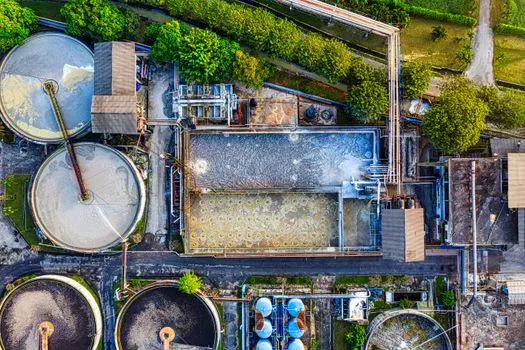
Selecting a process means balancing footprint, pretreatment, effluent quality, and operator capability. MBR systems for KPK's reuse standards (COD <50 mg/L) require the highest initial investment in the comparison, but their membrane barrier can support reuse in cooling towers or boiler-feed applications when the complete water-quality specification is satisfied.
Dissolved air flotation works by dissolving air in water or wastewater under pressure and releasing it at atmospheric pressure in a flotation basin, where tiny bubbles adhere to suspended matter and float it to a skimming device (Wikipedia, Dissolved air flotation). That mechanism is why DAF systems for KPK's tannery and textile pre-treatment are a strong first barrier for tannery, food, and textile wastewater: they strip suspended solids and fats, oils, and grease before biology. DAF alone cannot meet EPD KPK's BOD limits, so it pairs with a biological stage.
| Parameter | MBR | DAF | Activated Sludge |
|---|---|---|---|
| Effluent COD (mg/L) | < 50 | < 150 (Pre-treat) | < 80 |
| Effluent TSS (mg/L) | < 10 | < 30 | < 20 |
| Footprint (m²/m³/day) | 0.2 | 0.5 | 1.2 |
| Energy Use (kWh/m³) | 0.8 – 1.2 | 0.3 – 0.5 | 0.4 – 0.6 |
Activated sludge remains the workhorse where land is available. Those design anchors explain the 0.4–0.6 kWh/m³ energy band and the 1.2 m²/m³/day footprint in the table above: biology needs time, air, and volume. Its flexibility also suits the seasonal load swings of KPK's fruit-processing sector.
MBR becomes attractive where land is scarce, discharge quality is tight, or reuse is part of the business case. The original article cites groundwater decline of 1-2 meters annually and says MBR "Class C" reusable water could cut fresh-water intake by up to 70%. Treat those as project assumptions requiring confirmation through the site water balance, reuse class, and permit conditions.
Activated Sludge vs MBR Cost Pakistan 2026
Activated sludge vs MBR cost in Pakistan in 2026 trades lower initial outlay against footprint and reuse performance. The opening model lists activated sludge at PKR 30K–50K/m³/day and MBR at PKR 80K–120K/m³/day, while the installed-cost table carries PKR 20M–300M for ASP and PKR 40M–500M for MBR. Compare land, energy, membrane replacement, sludge, operators, and water-reuse value before choosing. Energy at PKR 15–25/m³ for MBR versus PKR 8–12/m³ for DAF or ASP narrows the gap year by year.
DAF System CAPEX for Pakistan Tanneries
DAF system CAPEX for Pakistan tanneries benchmarks at PKR 20M–40M for 500 m³/day as primary pre-treatment. Tannery effluent brings chromium, sulfides, and fine solids, so the DAF is the front of the train, not the whole train: biological treatment and contaminant-specific polishing follow to reach the EPD KPK 2023 limits cited in the original article, such as Chromium <0.1 mg/L, Sulfides <1 mg/L, and BOD <30 mg/L. Equalization, chrome handling, sludge pressing, and standby power move the installed total above the bare equipment allowance.
EPD KPK Wastewater Compliance Cost Guide: Meet Standards Without Overpaying
EPD KPK compliance cost depends on the actual receiving environment, permit, industry, and monitored parameters. The original article cites a federal inland-water BOD limit often quoted at <80 mg/L and describes cases where EPD KPK requires <30 mg/L for discharge into sensitive irrigation channels. Provincial standards under the KPK Environmental Protection Act 2014 are set for different sources, areas, and conditions, so the project team must obtain the applicable written requirement before locking the process design.
A phased compliance strategy controls capital. Phase 1 establishes screening, equalization, primary treatment, and secondary biology for the main COD and TSS load. Phase 2 adds tertiary stages—sand filters, carbon adsorption, or chlorine dioxide generators for disinfection—only when discharge limits or reuse needs dictate. The original article estimates that tertiary additions represent 15–20% of CAPEX, roughly PKR 5M–20M for a 1,000 m³/day plant, spread over 24 months.
For clinics and small hospitals in Swat or Abbottabad, medical wastewater treatment systems need a disinfection design matched to the permit and pathogen-control objective; the original article describes EPD KPK zero-pathogen discharge requirements and notes that MBR ultrafiltration can reduce the need for separate tertiary clarifiers and sand filters. Test that saving against membrane replacement, cleaning chemicals, energy, and residuals handling. The comparison with Haryana's compliance strategies for textile wastewater is useful for process thinking, but it does not establish KPK law; a defensible compliance file contains the permit, sampling plan, certified laboratory results, operating logs, calibration records, sludge manifests, and corrective-action history.
OPEX in KPK: How to Cut Lifecycle Costs by 30%
Operating cost is governed by actual flow, load, electricity, chemical dose, sludge yield, staffing, and equipment availability. The article places KPK industrial electricity at PKR 22 to PKR 28 per kWh and estimates energy at 40-60% of total OPEX, with MBR energy cost at PKR 15–25/m³ and DAF or activated sludge at PKR 8–12/m³. Replace those planning assumptions with the tariff and operating schedule in your financial model. HydropureWater field data cited in the article suggests variable frequency drives and high-efficiency screw blowers can cut energy consumption by up to 20%—a saving that depends on blower turndown, dissolved-oxygen control, diffuser condition, and the real aeration load.
| OPEX Category | Estimated Annual Cost (1,000 m³/day Plant) | Percentage of Total |
|---|---|---|
| Electricity | PKR 3.5M – 6.0M | 50% |
| Chemicals (Coagulants/Flocculants) | PKR 1.2M – 2.0M | 20% |
| Labor (3 Operators + 1 Supervisor) | PKR 2.0M – 3.0M | 20% |
| Maintenance & Sludge Disposal | PKR 1.0M – 1.5M | 10% |
The OPEX table assumes a 1,000 m³/day plant and should not be scaled linearly without checking utilization. A plant operating at 30% of design flow carries a much higher cost per m³ because labor, laboratory, standby power, and maintenance stay largely fixed. A consistently loaded plant may reach the lower end of the stated ranges after commissioning.
Chemical prices in the source article are PKR 500–800/kg for Alum or PAC and up to PKR 1,800/kg for specialized flocculants. Chemical dosing systems to cut KPK's OPEX by 15% reduce manual over-dosing when pumps run on tested jar-test settings. Sludge handling matters just as much: a plate and frame filter press is reported to cut disposal volumes by 70%, against municipal-landfill transport at PKR 5,000–8,000 per truckload. Technical labor runs PKR 40,000 to PKR 60,000 per month for experienced WWTP operators, and automation or remote monitoring could save PKR 1 million annually for mid-sized plants—credible only if alarms are actionable, instruments are calibrated, and someone owns the daily process decisions.
Industrial WWTP CAPEX Breakdown KPK: Procurement Checks That Protect the Budget
A wastewater plant is a 15-year asset, so procurement must test operability as well as purchase price. The following five checks convert the benchmark into a bid-comparison method:
- Step 1: Characterize Influent: Do not rely on "average" textile or tannery data. Conduct a 7-day composite sampling campaign of your specific discharge that captures production peaks in COD, BOD, TSS, oil and grease, color, salinity, pH, and heavy metals.
- Step 2: Technology Matching: Choose MBR if land is scarce or reuse is required. Choose DAF + ASP if land is available and the project prioritizes lower CAPEX with a separate biological stage.
- Step 3: Vendor Site Visits: Inspect at least two functional plants installed by the vendor in KPK. Check membrane fouling specifically if using MBR in regions with high calcium carbonate and hard water.
- Step 4: Contracted Performance: Put the effluent quality, sampling method, test laboratory, reporting period, and remedy into the contract. If the plant fails to meet EPD KPK BOD <30 mg/L, define responsibility for corrective work and any contractual remedy.
- Step 5: Power Resilience: KPK faces frequent load shedding. Include a backup power strategy using dedicated generators, solar integration, or another tested arrangement so biological colonies and critical pumps survive extended outages.
For a cross-market perspective, the original article compares local economics with how Kampala's WWTP costs compare to KPK's, and buyers benchmarking municipal builds can read the Tokyo Wastewater Treatment Plant Cost 2026: CAPEX, OPEX & Tech-Specific Breakdown companion. The commercial lesson repeats in every market: match scope before comparing totals.
KPK textile, tannery, food, and municipal wastewater each need their own laboratory data and design basis.
Before issuing a purchase order, request a process-flow diagram, hydraulic profile, mass balance, equipment schedule, electrical load list, civil drawings, chemical-consumption basis, sludge-disposal route, spare-parts list, commissioning plan, training scope, and acceptance-test protocol. The final offer should state design flow, peak factor, influent assumptions, outlet limits, operating hours, and exclusions in one signed schedule.
Who this is for: plant engineers, EPC contractors, and procurement managers in KPK evaluating DAF, activated sludge, or MBR investments against 2026 budgets. Send the design flow, laboratory results, discharge point, reuse objective, available footprint, and power conditions through the wastewater treatment project request page, and a process engineer will separate confirmed requirements from assumptions before a budgetary proposal is priced.
Frequently Asked Questions
What is the cost of a 500 m³/day wastewater treatment plant in KPK?
For 2026, a 500 m³/day MBR plant in KPK costs between PKR 80M and PKR 120M, while an activated sludge plant of the same capacity ranges from PKR 30M to PKR 50M. These estimates include civil works, electro-mechanical equipment, and initial commissioning. Soil conditions, pretreatment depth, standby power, import duties, and acceptance testing move the final number, so treat the range as a screening band rather than a quotation.
How much does it cost to operate a WWTP in KPK per year?
For a 1,000 m³/day plant, annual OPEX is typically PKR 5M to PKR 15M, split across electricity (PKR 3M–6M), chemicals (PKR 1M–2M), and skilled labor (PKR 1M–3M). Energy carries roughly half the total at PKR 22–28 per kWh industrial tariffs. Costs vary with influent complexity, load factor, and how much sludge is dewatered on site before haulage.
What are KPK's wastewater discharge limits for tanneries?
EPD KPK 2023 regulations cited in the benchmark mandate Chromium <0.1 mg/L, Sulfides <1 mg/L, and BOD <30 mg/L for tannery discharge. Failure to meet these standards can result in fines of PKR 5M–10M or immediate plant closure. Confirm the current written standard and its monitoring frequency with EPD before design, because limits vary by receiving water and permit conditions.
Can I reuse treated wastewater in KPK?
Yes. EPD KPK encourages reuse for non-potable applications like irrigation, cooling towers, and floor washing. Reuse requires treated water to meet NEQS Class C standards, which typically necessitates MBR technology or a combination of activated sludge and tertiary UV or ultrafiltration. With groundwater dropping 1-2 meters annually in parts of the province, reuse also hedges water risk, cutting fresh-water intake by up to 70% in the benchmark's estimate.
What's the cheapest WWTP technology for KPK's textile industry?
The most cost-effective compliant setup is a DAF system for primary pre-treatment (PKR 20M–40M for 500 m³/day) followed by an activated sludge system for secondary treatment (PKR 30M–50M). Total CAPEX for such a system averages PKR 50M–90M depending on site conditions. Skimping on equalization or sludge handling is where cheap plants turn expensive within two years.
What reporting does a KPK industrial plant owe after commissioning?
Pakistan's federal self-monitoring framework requires industrial units to submit periodic environmental monitoring reports supported by certified laboratory tests, with tanning and textile processing among the more closely watched categories. Confirm the applicable reporting category, parameters, and frequency with EPD KPK in writing. Operating logs, calibration records, and sludge manifests belong in the same compliance file, because they are what an inspector asks for first.