Industrial wastewater treatment equipment Finland plants install for 2026 compliance targets TSS below 35 mg/L, COD below 125 mg/L, and phosphorus 30% under 2020 averages, with CapEx of €50K–€2M and OPEX of €0.15–€0.50/m³ across DAF, MBR, and dosing trains.
Tampere Industrial Wastewater Compliance 2026: The Regulatory Baseline
Tampere industrial facilities discharging in 2026 face TSS below 35 mg/L, COD below 125 mg/L under Finland's updated Water Services Act, and phosphorus 30% below 2020 averages for Lake Pyhäjärvi catchments. Sewer fees of €2.10/m³ push flows above 100 m³/day toward on-site treatment. CapEx runs €50K–€2M by technology.
Finland's updated Water Services Act imposes effluent quality standards that all industrial discharges in Tampere must meet by 2026: a Total Suspended Solids (TSS) limit of <35 mg/L and a Chemical Oxygen Demand (COD) limit of <125 mg/L. Industries discharging into sensitive receiving waters like Lake Pyhäjärvi face an additional 30% reduction in phosphorus below 2020 averages. Non-compliance with these Finnish Ministry of Environment (2023) mandates can bring penalties potentially reaching €100,000 annually.
The 2025 phosphorus reduction mandate in particular is driving investment in advanced treatment. Chemical precipitation, often ferric chloride dosed at 50–100 mg/L, is the common route to the required removal, typically adding 15% to operational expenditures (OPEX). The EU frame reinforces the local one: Council Directive 91/271/EEC mandates collection and treatment of urban wastewater plus treatment of wastewater from certain industrial sectors, with more advanced treatment above 10,000 p.e. in sensitive areas.
Municipal sewer fees amplify the financial case. Tampereen Vei's tariff stands at €2.10/m³, so facilities processing more than 100 m³ of wastewater per day find on-site treatment demonstrably cost-competitive. Recent cost models from Kreate (2024) indicate a typical return on investment under three years for such systems. Compliance audits were set to commence in the first quarter of 2025, prioritizing high-load industries such as paper mills and food processing plants.
| Regulation | Parameter | Limit | Applicability | Enforcement Date | Potential Impact |
|---|---|---|---|---|---|
| Finland Water Services Act (2023) | TSS | < 35 mg/L | All Industrial Discharges | 2025 | Fines up to €100K/year, increased treatment costs |
| Finland Water Services Act (2023) | COD | < 125 mg/L | All Industrial Discharges | 2025 | Fines up to €100K/year, increased treatment costs |
| EU Directive 91/271/EEC & Local Mandate | Phosphorus Reduction | 30% below 2020 levels | Discharges to Lake Pyhäjärvi | 2025 | 15% increase in OPEX (chemical dosing), potential need for new systems |
| Tampereen Vei Sewer Tariffs | Discharge Fee | €2.10/m³ | Municipal Sewer Use | Ongoing | Incentivizes on-site treatment for flows > 100 m³/day (ROI < 3 years) |
Industrial Wastewater Profiles in Tampere: COD, TSS, and Nutrient Loads by Sector
Influent characteristics vary sharply by industry in Tampere, and effective treatment starts from a precise profile of each site. Valmet-linked paper mills generate wastewater with COD of 1,500–3,000 mg/L, TSS of 300–800 mg/L, and substantial fiber content. Meeting the <125 mg/L COD limit there needs robust biology, such as advanced MBR systems achieving up to 99% TSS removal.
Atria food processing plants present a different challenge: COD of 500–1,200 mg/L, TSS of 200–500 mg/L, and Fats, Oils, and Grease (FOG) between 100–300 mg/L. Dissolved Air Flotation (DAF) is the standard pre-treatment step, removing 92–97% of TSS and a significant share of FOG before secondary biology. Metalworking facilities, including Tampere's precision engineering plants, run lower COD (200–600 mg/L) but carry heavy metals. Compliance for those streams, governed by EU Directive 86/278/EEC, requires chemical precipitation followed by sedimentation.
Fiber-heavy flows punish downstream equipment when screening is skipped. Rotary mechanical bar screens like the GX series catch that load first and prevent pump and valve damage. Most paper-mill retrofit scopes we see in Finland begin exactly there, before any biology is touched.
| Industry Sector | Typical Influent COD (mg/L) | Typical Influent TSS (mg/L) | Typical Influent FOG (mg/L) | Key Pollutants | Compliance Threshold (mg/L) | Recommended Pre-treatment |
|---|---|---|---|---|---|---|
| Pulp & Paper (e.g., Valmet) | 1,500–3,000 | 300–800 | 50–150 | Fibers, lignin, BOD | TSS < 35, COD < 125 | Screening, DAF, Biological (MBR) |
| Food Processing (e.g., Atria) | 500–1,200 | 200–500 | 100–300 | FOG, BOD, nutrients | TSS < 35, COD < 125 | Screening, DAF, Biological |
| Metalworking & Engineering | 200–600 | 50–200 | 20–100 | Heavy metals, oils, solvents | TSS < 35, COD < 125, Metal limits | Chemical Precipitation, Sedimentation, Filtration |
| Textiles | 300–800 | 100–300 | 30–80 | Dyes, chemicals, BOD | TSS < 35, COD < 125 | Coagulation/Flocculation, Biological |
| Pharmaceuticals | 400–1,000 | 50–150 | 20–50 | APIs, solvents, BOD | TSS < 35, COD < 125 | Advanced Oxidation, Biological (MBR) |
DAF vs MBR vs Chemical Precipitation: Head-to-Head for Tampere Plants
DAF systems such as HydropureWater's occupy the value end of the market: CapEx of €50,000–€500,000 and OPEX of €0.15–€0.40/m³. They remove 92–97% of TSS and excel on food-processing wastewater because they strip FOG alongside solids. A typical 100 m³/h DAF train needs a footprint of 50–100 m².
MBR systems, exemplified by integrated MBR units, demand more capital: from €200,000–€2M with OPEX of €0.25–€0.50/m³. Their advantage is near-complete TSS removal (99%) and effluent COD below 50 mg/L, which suits direct-discharge compliance and space-constrained urban sites. MBRs occupy up to 60% less space than conventional activated sludge, and their PVDF membranes typically last 5–8 years with proper maintenance.
Chemical precipitation, usually built around automatic dosing units like PLC-controlled ferric chloride dosing, carries the lowest entry cost: CapEx €30,000–€200,000 and OPEX €0.10–€0.30/m³. It removes 80–90% of phosphorus, works as a polishing step or on low-COD streams, but increases sludge volume by 20–30% through added coagulants. For wider international benchmarks, our industrial wastewater treatment guide for Auckland compares the same technology stack under a different fee structure.
| Parameter | DAF System | MBR System | Chemical Precipitation |
|---|---|---|---|
| Typical CapEx (for 100 m³/h) | €50K–€500K | €200K–€2M | €30K–€200K |
| Typical OPEX (€/m³) | €0.15–€0.40 | €0.25–€0.50 | €0.10–€0.30 |
| Footprint (relative) | Medium (50-100 m² for 100 m³/h) | Small (60% less than conventional) | Small to Medium |
| TSS Removal (%) | 92–97% | >99% | Variable (depends on flocculation) |
| COD Removal (%) | 30–60% (pre-treatment) | >95% (effluent <50 mg/L) | Low (primarily for nutrient removal) |
| Phosphorus Removal (%) | Low | High (with biological nutrient removal) | 80–90% |
| FOG Removal | Excellent | Good | Limited |
| Maintenance Complexity | Moderate | High (membrane cleaning) | Moderate (chemical handling) |
| Chemical Use | Coagulants/flocculants (optional) | Minimal (disinfectants) | High (coagulants, pH adjusters) |
| Sludge Production | Moderate | Low (biomass) | High (precipitated solids) |
DAF System for Food Processing Wastewater Finland Duty: Expected Removal
Food-processing effluent at 500–1,200 mg/L COD with 100–300 mg/L FOG sits squarely in DAF territory, and Finnish plants typically see 92–97% TSS removal plus most free FOG in one pass. Pairing that with secondary biology covers the <125 mg/L COD duty. Most food plants we size run DAF chemistry lean—coagulant only—once equalization flattens the morning fat surge.
How to Select Industrial Wastewater Treatment Equipment Finland Plants Need: 5 Steps
Equipment selection for Tampere's compliance deadlines follows five sequential gates: characterize, footprint, cost, compliance risk, scalability.
Step 1—Characterize the influent. Measure COD, TSS, FOG, and nutrient loads against the sector benchmarks above. A paper mill with influent COD above 2,500 mg/L inherently needs advanced biology such as MBR, while a metalworking plant at 200–600 mg/L starts with metals precipitation.
Step 2—Assess the footprint. Urban Tampere sites pay a premium for area, which is why MBR—up to 60% smaller than conventional biology—often wins new installations. DAF still needs 50–100 m² for 100 m³/h. Where surface area is simply unavailable, the Underground Package Sewage Treatment Plant (WSZ Series) places the treatment train below grade.
Step 3—Calculate CapEx and OPEX together. A 50 m³/h DAF system might carry €150,000 CapEx at €0.20/m³ OPEX, while a same-size MBR runs €500,000 at €0.35/m³. Factor in installation, commissioning, energy, chemicals, and maintenance over a 10-year window, not the invoice alone.
Step 4—Evaluate compliance risk. Direct discharge to sensitive waters favors systems holding effluent quality with low variance—MBRs at COD <50 mg/L carry a lower risk profile than DAF plus less-advanced biology when permits tighten mid-asset-life.
Step 5—Plan for scalability. Tampere's industrial base keeps shifting, so modular builds such as containerized MBR units let capacity grow without civil redesign. The same logic applies across borders: compare our analysis of Wastewater Treatment Plant Cost in Prague 2026 and the Ajman Industrial Effluent Guide: 2026 Specs and Compliance for how other hubs structure the same trade-offs.
Phosphorus Removal Chemical Precipitation Finland Regulation in Practice: Tampere Mill Retrofit
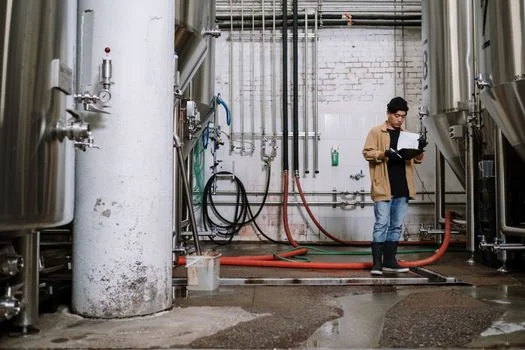
A medium-sized Tampere paper mill processing roughly 120 m³/h of wastewater failed its 2024 environmental audit on phosphorus. Effluent measured 2.1 mg/L against the newly established 2025 limit of 1.4 mg/L—a 30% reduction from 2020 levels. The existing activated sludge system had no phosphorus-removal capability at all.
The retrofit installed an automatic ferric chloride dosing system with inline pH adjustment. Commissioned at a 75 mg/L dosing rate, it cut effluent phosphorus to 1.1 mg/L—a 48% reduction that restored full compliance. CapEx for the dosing retrofit was €80,000, and the operational cost increase ran about €0.08/m³, or an additional €8,640 per year at the mill's flow.
Precipitation side-effects arrived on schedule: the extra solids load raised sludge volume by 25%. Handling it required a plate-and-frame filter press that added €50,000 to the CapEx. Implementing the automatic chemical dosing system and appropriate dewatering equipment, such as the plate-and-frame filter press, proactively is the lesson.
Delay carries a measurable premium. Late retrofits often cost up to 30% more through expedited shipping, emergency contractor rates, and limited vendor availability. Early phosphorus testing and strategic planning consistently beat that arithmetic.
Who This Is For / Next Step
Plant engineers, EPC contractors, and procurement managers sourcing industrial wastewater treatment equipment Finland sites depend on for 2026 discharge duties are the readers this guide serves. Look elsewhere if your load is domestic-strength sewage only, or if your sewer agreement already caps fees below on-site treatment cost. For a duty-specific DAF, MBR, or dosing shortlist matched to your lab data and permit draft, send the project details through our request a quote form.
Frequently Asked Questions
What is the MBR system cost for paper mill wastewater?
An MBR system for paper mill wastewater costs €200,000–€2M CapEx depending on capacity, with OPEX of €0.25–€0.50/m³. Mills at 1,500–3,000 mg/L influent COD need the biology plus membrane barrier to hold effluent COD below 50 mg/L. PVDF membranes typically run 5–8 years before replacement. Most mill retrofits we size land mid-range once screening and equalization are already in place.
What are the 2025 wastewater discharge limits for industrial facilities in Tampere?
Industrial facilities in Tampere must comply with TSS <35 mg/L and COD <125 mg/L, as stipulated by Finland's Water Services Act (2023). A 30% reduction in phosphorus below 2020 averages is also mandated for discharges into sensitive areas like Lake Pyhäjärvi. Binding values sit in each site's environmental permit and utility agreement, so confirm them before ordering equipment.
How much does an industrial wastewater treatment system cost in Tampere?
CapEx for industrial wastewater treatment systems in Tampere ranges from €50,000 for smaller DAF units at food processors to €2 million for advanced MBR systems required by paper mills. OPEX typically falls between €0.15–€0.50/m³, driven by technology choice and influent quality. Chemical precipitation sits lowest at €0.10–€0.30/m³ but handles nutrients rather than bulk COD.
Can I discharge industrial wastewater to Tampere's municipal sewer?
Yes, industrial wastewater can go to the municipal sewer system managed by Tampereen Vei. The current discharge fee is €2.10/m³, so facilities with daily flows exceeding 100 m³ often save by treating on site. Typical ROI periods run under three years. Trade-off: the sewer agreement still caps your pollutant concentrations, so pre-treatment rarely disappears entirely.
How do I reduce phosphorus in wastewater to meet Tampere's 2025 mandate?
Chemical precipitation is the most common route: ferric chloride dosed at 50–100 mg/L, lifting OPEX by roughly 15%. The Tampere mill retrofit above reached 1.1 mg/L from 2.1 mg/L at 75 mg/L dosing. MBR systems also achieve low phosphorus through integrated biological nutrient removal, a longer-term option when sludge handling is already tight.
Further Reading
Explore these in-depth articles on related wastewater treatment topics: