What Drives Wastewater Treatment Plant Cost in Prague in 2026?
Wastewater treatment plant cost in Prague in 2026 runs €80–120 million CAPEX at municipal scale (1.2 million PE), with OPEX of €0.35–0.50/m³. Industrial plants of 50–500 m³/h cost €1.5–10 million CAPEX. Energy prices, underground construction, and EU compliance drive both numbers.
EU rules set the compliance floor. The legacy Urban Waste Water Directive 91/271/EEC shaped the permit targets behind these cost models, including 97% COD removal and 99.9% pathogen inactivation. Its recast, Directive (EU) 2024/3019, entered into force on 1 January 2025 (European Commission). The recast extends collecting systems to all agglomerations of 2,000 p.e. and above, brings 1,000–2,000 p.e. agglomerations in by 31 December 2035, adds quaternary micropollutant treatment financed through extended producer responsibility, and targets energy-neutral plants by 2045 (EUR-Lex).
Energy and enforcement set the local premium. Prague electricity has often been planned at €0.12/kWh, roughly 30% above the EU average in earlier comparisons. Eurostat's latest non-household price, including non-recoverable taxes, averaged €0.1837/kWh across the EU in the second half of 2025, so budget on the tariff in your actual supply contract, not a rule of thumb (Eurostat). Enforcement adds hard risk: the Czech Environmental Inspectorate (ČIŽP) fined a Prague hospital €50,000 in 2023 for exceeding fecal coliform limits.
Geography compounds the regulatory load. Prague treats for 1.2 million PE across a compact footprint, with the Vltava river basin setting receiving-water limits that tertiary and quaternary stages increasingly address. Under-slab and basement plants are the norm for new hospital and industrial sites, moving civil costs ahead of process costs in the budget.
Prague Municipal Wastewater Treatment Plant Cost 2026: The €80M–€120M Baseline
Municipal CAPEX for Prague's 1.2 million PE falls between €80 million and €120 million in 2026. The split runs roughly 40% civil works (heavily influenced by underground construction), 30% mechanical and electrical including blowers and pumps, 20% automation and SCADA, and 10% permitting and engineering. WTE Wassertechnik's €110 million project for the Prague Central WWTP anchors the upper half of the range. Municipal OPEX averages €0.35–0.50/m³: energy about 40%, labor 25%, chemicals 20%, maintenance 15%.
WTE Wassertechnik's operation of the Central WWTP is the reference case: four biological treatment lines delivering a 22% reduction in energy costs. That benchmark frames what buyers should demand from any 2026 proposal.
OPEX tells the operating story more honestly than CAPEX. The €0.35–0.50/m³ municipal average covers a fully staffed plant with SCADA, scheduled maintenance, and sludge handling. Industrial sites below 100 m³/h often sit above that band because fixed labor spreads over less volume — one reason skid-mounted, low-attention designs win small Prague projects.
Underground WWTP Cost Premium in Prague
Underground construction adds a 15–20% CAPEX premium in Prague, driven by density rather than geology. The Central WWTP's Císařský ('imperial island') site makes the space logic explicit: there is no adjacent land to expand onto. Urban hospitals face the same constraint, which is why compact MBR footprints dominate that segment.
Industrial WWTP CAPEX/OPEX in the Czech Republic: €1.5M–€10M
Industrial WWTP CAPEX in the Czech Republic spans €1.5–10 million for flows of 50–500 m³/h, with technology doing most of the pricing. DAF systems run €1.8–4 million, MBR €2.5–6 million, and conventional activated sludge €1.2–3 million. Hospital plants, at 10–100 m³/h, cost €500,000–2 million before the underground premium. Disinfection adds line items: about €80,000 for chlorine dioxide generation, €120,000 for ozone, or €300,000 for a hospital-scale MBR.
Industrial OPEX runs €0.40–0.70/m³, sensitive to technology choice and influent strength; typical industrial BOD sits at 200–500 mg/L. Energy costs come in near €0.15/kWh for DAF versus as low as €0.12/kWh for optimized MBR. Hidden costs deserve their own budget line: permitting €50,000–200,000 and urban soil remediation up to €200,000–1 million. The 2023 ČIŽP fine of €50,000 to a Prague hospital shows what compliance risk costs when it lands.
| Facility Type | Flow Rate (m³/h) | Estimated CAPEX (€) | Estimated OPEX (€/m³) | Key Cost Drivers |
|---|---|---|---|---|
| Municipal WWTP | ~354,240 m³/day (avg) | 80M – 120M | 0.35 – 0.50 | Civil works (underground), mechanical/electrical, automation, permits |
| Industrial WWTP | 50–500 | 1.5M – 10M | 0.40 – 0.70 | Technology (MBR, DAF, Activated Sludge), influent strength, automation |
| Hospital WWTP | 10–100 | 0.5M – 2M | 0.45 – 0.75 | Underground design (15-20% premium), disinfection (ClO₂, Ozone), MBR, pathogen inactivation |
CAPEX allocation explains why two plants with identical process trains can price differently. Underground share moves the 40% civil-works block fastest, since the 15–20% construction premium lands there; automation share climbs where labor is scarce. Buyers comparing bids should normalize quotes to €/m³/h and to footprint, not to headline totals.
Cost comparisons travel well across borders. Our reporting on Tokyo Wastewater Treatment Plant Cost 2026: CAPEX, OPEX & Tech-Specific Breakdown gives an Asian-market benchmark, and the India-focused guide to capex and opex for treatment plants shows how labor rates move the same line items.
MBR vs DAF Cost for Prague Hospital Wastewater
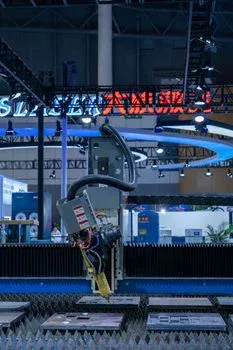
MBR systems clear every Prague parameter in one pass: COD below 50 mg/L, TSS below 5 mg/L, and compliance with EU urban wastewater rules for all parameters without tertiary add-ons. Footprint runs about 0.5 m²/m³/h — decisive for hospital basements. Budget €50,000 per m³/h CAPEX and roughly €0.30/m³ OPEX. For hospitals, that footprint is the difference between a basement retrofit and a new land purchase, and membrane replacement belongs in the maintenance line of the comparison.
DAF systems remove up to 95% of TSS, with effluent typically below 100 mg/L COD and 20 mg/L TSS. They meet COD and TSS targets but need tertiary stages for nitrogen and phosphorus compliance. CAPEX runs €36,000 per m³/h with OPEX near €0.35/m³, driven by chemical consumption. The 1.2 m²/m³/h footprint suits industrial pre-treatment at food processing and metalworking sites more than urban hospitals, and coagulant-polymer dosing is the OPEX line most often underestimated at bid stage.
Conventional activated sludge carries the lowest CAPEX at about €24,000 per m³/h and the largest footprint at 2.0 m²/m³/h. Effluent of below 120 mg/L COD and 30 mg/L TSS usually needs denitrification and phosphorus removal filters to comply. OPEX near €0.45/m³ is the highest of the three. Prague's Central WWTP runs activated sludge as a hybrid with tertiary treatment — compliance is reachable, at the cost of extra stages.
| Technology | CAPEX (€/m³/h) | OPEX (€/m³) | Footprint (m²/m³/h) | Effluent Quality (COD/TSS) | Compliance with EU 91/271/EEC |
|---|---|---|---|---|---|
| MBR | 50,000 | 0.30 | 0.5 | <50 mg/L / <5 mg/L | Meets all parameters |
| DAF | 36,000 | 0.35 | 1.2 | <100 mg/L / <20 mg/L | Meets with tertiary treatment for N/P |
| Activated Sludge | 24,000 | 0.45 | 2.0 | <120 mg/L / <30 mg/L | Requires upgrades for N/P removal |
Energy Efficiency: How Prague WWTPs Cut Costs by 20–25%
Prague's Central WWTP cut energy costs 22% with high-efficiency blowers at roughly €120,000 per unit plus plant-wide automation. The four biological lines now adapt to influent variability instead of running flat. A typical 50 m³/h industrial plant splits energy across aeration 50%, pumping 25%, mixing 15%, and other processes 10%. MBR designs trim aeration energy by up to 30% against conventional activated sludge, compounding the saving.
Efficiency upgrades carry short, calculable paybacks in Prague's price environment. High-efficiency blowers pay back in 3–5 years at €0.12/kWh planning prices. Variable Frequency Drives (VFDs) on pumps and motors return in 2–3 years by matching motor speed to process demand. For a quick screen on any single upgrade, use (Annual Savings / Upfront Cost) * 100 before running the full model below.
One Prague hospital cut OPEX 25% by switching disinfection from ozone to chlorine dioxide. That upgrade cost €80,000 CAPEX and returns €20,000 per year, with the required 99.9% pathogen inactivation maintained and chemical consumption reduced. Blower control deserves the same attention as blower selection — audits of fixed dissolved-oxygen setpoints routinely find recoverable efficiency.
Step-by-Step ROI Calculation for Industrial WWTPs
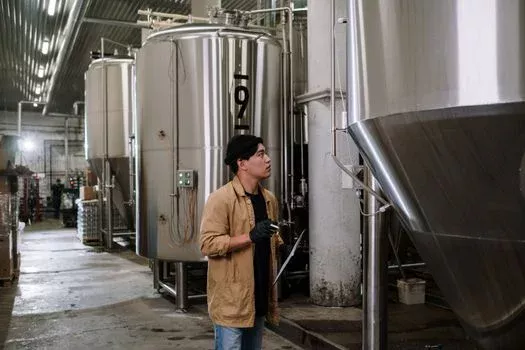
Return on investment for a Prague WWTP investment follows one formula: (Annual OPEX Savings + Compliance Avoidance) / (CAPEX + Annual Maintenance) * 100. Each term pulls Prague-specific values — energy tariff, technology OPEX, and ČIŽP exposure. Worked through, the model keeps procurement and operations arguing from the same numbers.
Step 1: Calculate Annual OPEX Savings. Take the OPEX difference between the current and proposed systems, multiplied by daily flow and days per year. Switching from activated sludge at €0.45/m³ to MBR at €0.30/m³ for a plant treating 50 m³/h yields (€0.45 - €0.30) * 50 m³/h * 24 h/day * 365 days/year = €27,375 per year.
Step 2: Quantify Compliance Avoidance. This term prices the fines a compliant plant avoids. ČIŽP penalties, such as the €50,000 fecal coliform fine from 2023, set the scale. MBR and DAF reduce that exposure by holding effluent inside permit limits consistently.
Step 3: Determine Total CAPEX and Annual Maintenance. For a 50 m³/h plant, budget €2.5 million for MBR, €1.8 million for DAF, and €1.2 million for activated sludge. Annual maintenance typically runs 5–10% of CAPEX — €125,000–250,000 for the MBR case.
Worked Example: Consider a 50 m³/h food processing plant in Prague that is upgrading from an activated sludge system to a DAF system.
CAPEX: €1.8 million
Annual OPEX Savings: €27,375 (assuming similar flow rate and comparable technology differences as the MBR example for illustrative purposes)
Compliance Avoidance: €50,000 (potential fine avoidance)
Annual Maintenance: Let's assume 7% of CAPEX = €126,000
Total Annual Cost of New System: (€1.8M CAPEX / 5 years assumed lifespan for calculation) + €126,000 = €360,000 + €126,000 = €486,000
Total Annual Benefit: €27,375 (OPEX Savings) + €50,000 (Compliance Avoidance) = €77,375
Simple ROI Calculation (using annual cash flow): (€77,375 Annual Benefit / €486,000 Annual Cost) * 100 = approximately 15.9% ROI annually. This suggests a payback period of roughly 6.3 years.
For a more personalized analysis, download our ROI Calculator Spreadsheet Template and enter your own flow rates, influent characteristics, and technology choices. The model above is deliberately simple so procurement can sanity-check vendor proposals in one sitting.
Selection Checklist Before You Sign
- Confirm the design flow against metered production data, not nameplate estimates, because every cost line scales with the flow you actually treat.
- Normalize competing bids to euros per cubic meter of design flow and to footprint, so the comparison survives vendor packaging.
- Ask each bidder to separate underground civil works from process scope, and to state the assumed ground conditions behind that number.
- Verify the effluent limits written into the quote against your discharge permit, including nitrogen and phosphorus where they apply.
- Require an energy model per train covering aeration, pumping, and mixing, backed by the tariff in your actual supply contract.
- Fix sludge handling and disposal as a priced line, with tonnage and destination named, before award.
- Lock the automation scope, remote access, and alarm routing, because labor savings live or die in that scope.
The main cost drivers, ranked, are technology selection, underground civil share, energy tariff, and labor. Technology sets the floor because it fixes both the purchase and the chemistry or membrane spend that follows. Civil share then multiplies whatever the site forces underground, and the energy tariff compounds daily for the life of the plant. Labor closes the list, and it is the line where automation scope quietly decides the winner between otherwise equal bids.
Choosing between the three technologies follows the site, not the brochure. Pick MBR where the footprint is fixed and reuse-grade effluent is wanted; pick DAF where the stream is loaded with solids and grease ahead of biology; pick conventional activated sludge where land exists and capital is the binding constraint. When two of those conditions collide, let the underground premium decide, because it moves the total faster than any process choice.
Commissioning deserves a written sequence and a hold-point discipline. Fill, leak-test, and flush the civil volumes first, then take mechanical equipment through dry runs before process water enters. Seed and ramp biology gradually, holding each loading step until effluent repeats, and validate disinfection last against the permit's pathogen requirement. Document every hold-point sign-off, because that file becomes the baseline the operator team inherits.
After handover, set a monitoring cadence that matches the permit, not the calendar. Logged readings each shift, a weekly calibration pass on instruments and dosing pumps, and a monthly review of energy and chemical use against commissioning baselines is the routine that holds Prague plants inside their limits. Feed every exceedance, however small, into the operator log with time, cause, and corrective action. That log is the first document an inspector asks for, and the cheapest defense a plant can keep.
Troubleshooting cost overruns follows the same discipline. Recheck the dosing and aeration setpoints first, because drift there inflates the two largest operating lines. Then compare actual against design flow and load, since running far below design wastes fixed cost per cubic meter. Escalate to process changes only after the log shows the plant was operated as designed.
Equipment Matched to Prague Duty
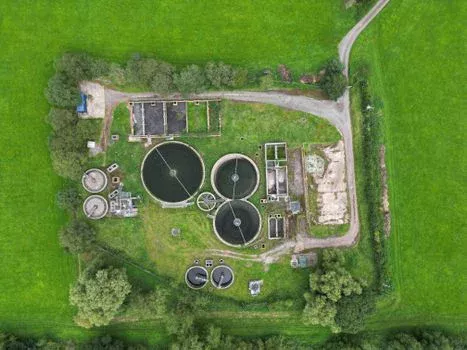
Scale decides the shortlist before any vendor is called. Municipal buyers live in the €80–120 million band and buy hybrid biology with tertiary — and soon quaternary — stages. Industrial buyers at 50–500 m³/h choose DAF for pre-treatment value or MBR for reuse-grade effluent on tight sites. Hospital engineers should budget the underground civil premium early and let footprint pick the technology.
Three product families cover these duties. The MBR systems for Prague’s urban WWTPs deliver reuse-grade effluent from the smallest footprint, while DAF systems for industrial pre-treatment in Prague strip TSS and FOG ahead of biological stages — view specifications, capacity range, and technical data for each.
Hospitals pair compact biology with chlorine dioxide generators for hospital WWTPs in Prague for the final disinfection barrier. Wastewater treatment plant cost in Prague closes fastest when the quotation reflects your actual flow and pollutant profile — request a free quote with your design flow and influent parameters for a line-item budget.
Frequently Asked Questions
What is the average cost per m³ for wastewater treatment in Prague?
Municipal plants run €0.35–0.50/m³ and industrial plants €0.40–0.70/m³, with technology setting the spread. MBR averages about €0.30/m³, DAF €0.35/m³, and activated sludge €0.45/m³. Energy prices — historically €0.12/kWh in Prague planning — and influent strength, typically 200–500 mg/L BOD for industry, drive most of the variance between sites and between bids.
How much does a hospital wastewater treatment plant cost in Prague?
Hospital WWTPs handling 10–100 m³/h cost €500,000–2 million CAPEX, before the 15–20% underground premium common at urban sites. Disinfection adds €80,000 for chlorine dioxide, €120,000 for ozone, or €300,000 for hospital-scale MBR. Permits require fecal coliform below 1,000 CFU/100mL under EU-driven rules, which shapes the disinfection choice as much as the biology does.
What are the penalties for non-compliance with Prague’s wastewater regulations?
The Czech Environmental Inspectorate (ČIŽP) enforces discharge limits with direct fines and operational orders. In 2023 it issued a €50,000 penalty to a Prague healthcare facility for exceeding fecal coliform limits. Hospitals and industrial plants must meet EU urban wastewater requirements, now recast under Directive (EU) 2024/3019, or budget for both financial penalties and production disruption.
Is MBR or DAF better for industrial wastewater in Prague?
MBR wins on effluent quality and space: COD below 50 mg/L from a 0.5 m²/m³/h footprint, at CAPEX about 30% above DAF. DAF wins on upfront cost (€36,000 versus €50,000 per m³/h) and 95% TSS removal, which suits food processing and metalworking pre-treatment. OPEX splits narrowly the other way: €0.35/m³ for DAF against €0.30/m³ for MBR, with chemicals versus membrane maintenance deciding the winner site by site.
How can I reduce energy costs for my WWTP in Prague?
Start with aeration, which takes 50% of energy at a typical 50 m³/h industrial plant. High-efficiency blowers at about €120,000 per unit cut aeration costs 20–25% and pay back in 3–5 years; VFDs return in 2–3 years. MBR cuts aeration energy by up to 30% versus activated sludge. Prague's Central WWTP proves the ceiling, with a 22% total reduction in energy costs across its four biological lines.