Why Plants Choose Sulfide Precipitation for High-Arsenic Wastewater
Arsenic sulfide precipitation removes more than 99.9% of dissolved As(III) and As(V) from acidic industrial wastewater at pH 1.0–3.0 when sulfide dose matches speciation. Residual arsenic after clarification is typically below 0.05 mg/L for As(III)-dominant feeds and below 0.10 mg/L for As(V)-rich feeds at 20–40°C. Untreated sludge still fails landfill tests until hydrothermal crystallization cuts leachable arsenic below 5.0 mg/L.
The process converts arsenic into insoluble As₂S₃ on high-load streams of 50–5,000 mg/L As, common in nonferrous smelting and mining at 10–50 m³/h. Target S:As molar ratios are 1.2–1.5 for As(III) and 1.8–2.2 for As(V) after solid–liquid separation is complete.
Earlier plant literature often cited a blanket 0.5 mg/L to 0.1 mg/L industrial arsenic cut under a mislabeled 40 CFR 420.13 reference; that section covers iron and steel cokemaking BAT parameters, not smelter arsenic. Smelting discharges are set by site NPDES or pretreatment permits.Many smelters we size still design the sulfide stage to ≤0.1 mg/L as an internal buffer above local permit values.
Lime neutralization alone often leaves 0.5–2.0 mg/L arsenic because calcium arsenate solubility remains high in acid circuits. A lead–zinc smelter treating 1,200 mg/L influent arsenic with sulfide precipitation held effluent below 0.05 mg/L and avoided an estimated $1.2M per year in non-compliance exposure. The core reactions are AsO₄³⁻ + 3H₂S → As₂S₃↓ + 6OH⁻ for As(V) and AsO₃³⁻ + 3H₂S → As₂S₃↓ + 6OH⁻ for As(III). The same chemistry supports sulfide precipitation for copper and arsenic co-removal when several metals share one train.
Engineering Specs for Arsenic Sulfide Precipitation of As(III) and As(V)
Reaction pH for arsenic sulfide precipitation peaks between 1.0 and 3.0. Below pH 1.0, H₂S off-gassing rises and reagent waste climbs. Above pH 3.0, As₂S₃ solubility increases and residual arsenic climbs. At pH 2.0 and 20–35°C, removal often reaches 99.9%; at pH 1.0 about 98.5%; by pH 5.0 efficiency can fall below 85%.
Sulfide dose is the next control lever. As(III) needs S:As = 1.2–1.5. As(V) needs 1.8–2.2 because part of the sulfide first reduces As(V) to As(III). Over-dosing forms soluble thioarsenite complexes. PLC-controlled sulfide dosing systems for arsenic precipitation hold those ratios in continuous stirred tanks and cut operator lag during influent swings.
| Parameter | Optimal Range for As(III) | Optimal Range for As(V) | Impact of Deviation |
|---|---|---|---|
| Reaction pH | 1.0 – 2.5 | 1.5 – 3.0 | >3.0: Increased solubility; <1.0: H₂S gas risk |
| S:As Molar Ratio | 1.2 : 1.0 – 1.5 : 1.0 | 1.8 : 1.0 – 2.2 : 1.0 | Underdose: Incomplete removal; Overdose: Thio-complexes |
| Reaction Time | 30 – 45 minutes | 45 – 60 minutes | <15 min: 90% removal only |
| Temperature | 20°C – 35°C | 25°C – 40°C | <10°C: 20% reduction in kinetics |
| Residual Arsenic | <0.05 mg/L | <0.10 mg/L | Depends on effective solid-liquid separation |
About 90% of arsenic precipitates in the first 15 minutes at 25°C in a CSTR, yet the last push to 99.9% needs 30–45 minutes residence. At 10°C, extend contact time by about 50%. Cu, Pb, and Cd usually drop 95–99% in the same acidic stage. After solids capture, a Dissolved Air Flotation (DAF) System can thicken fine As₂S₃ flocs before dewatering when settler overflow still carries turbidity.
What pH precipitates nickel sulfide?
Nickel sulfide is not precipitated in the same pH 1–3 window used for arsenic. Most plants we stage keep arsenic sulfide in the acid reactor, then raise pH in a downstream sulfide contactor so nickel and other base-metal sulfides form after arsenic is already locked as As₂S₃. Exact nickel setpoints stay stream-specific; staged sulfide precipitation for nickel and co-contaminant removal avoids redissolving arsenic while finishing Ni, Cu, and Zn.
Arsenic Sulfide Sludge (ASS): Characteristics, Risks, and Stabilization Methods
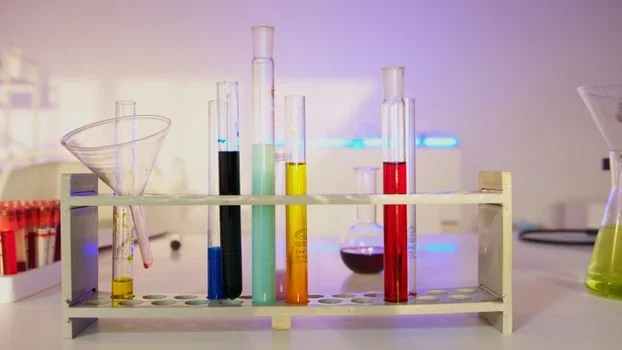
Raw arsenic sulfide sludge often assays about 46.9% arsenic and 32.6% sulfur by weight. Field TCLP extracts from untreated ASS have reached 702 mg/L arsenic—far above the toxicity characteristic regulatory level of 5.0 mg/L for arsenic under 40 CFR 261.24 (EPA eCFR). Amorphous As₂S₃ oxidizes and redissolves if landfilled without phase change.
Hydrothermal stabilization at 200°C for 4 hours, L/S = 1:1, and pH 2.0 converts amorphous As₂S₃ toward crystalline orpiment. XRD-confirmed crystallinity brings arsenic leaching below 5 mg/L, which is the disposal gate most hazardous-waste landfills require. Volume falls about 91.67% as density rises from 1.20 g/cm³ to 2.29 g/cm³ and moisture drops from 62.59% to 6.50%.
| Stabilization Method | Arsenic Leaching (mg/L) | Volume Change | Relative CAPEX | Technical Risk |
|---|---|---|---|---|
| Hydrothermal Treatment | < 5.0 | 91.67% Reduction | High | Low (Phase transformation) |
| Cement Solidification | 10.0 – 50.0 | 40% Increase | Low | High (Long-term leaching) |
| Vitrification | < 1.0 | 50% Reduction | Very High | Medium (Energy intensive) |
| Encapsulation (Polymer) | 5.0 – 15.0 | 20% Increase | Medium | Medium (UV degradation) |
Stabilized cake is dewatered on heavy-duty filter presses for arsenic sulfide sludge dewatering and volume reduction. Cement solidification still increases mass and often fails long-term leach tests, so hydrothermal treatment remains the preferred permanent path for high-arsenic smelting ASS.
Sulfide Precipitation vs. Alternative Arsenic Removal Methods: A Decision Matrix
Technology choice tracks influent arsenic, permit limit, and sludge handling budget. Sulfide precipitation fits high-concentration feeds above about 500 mg/L As from copper, lead, and zinc primary smelting. Dilute groundwater or polishing duties favor ion exchange or iron-based adsorption. The matrix below uses the same engineering benchmarks carried in the prior revision of this page.
| Method | Removal Efficiency | Influent Range (mg/L) | OPEX ($/m³) | Sludge Profile |
|---|---|---|---|---|
| Sulfide Precipitation | 99.9% | 50 – 5,000 | $0.80 – $1.50 | High toxicity (requires stabilization) |
| Ion Exchange | 95% | 1 – 50 | $0.50 – $1.00 | Zero sludge (regenerant waste) |
| Iron Oxide Adsorption | 90% | 1 – 100 | $0.30 – $0.80 | Medium volume (spent media) |
| Reverse Osmosis (RO) | 99% | 1 – 1,000 | $1.00 – $2.50 | Concentrated brine |
Is chemical precipitation effective for heavy metals?
Chemical precipitation remains the workhorse for concentrated heavy-metal wastewater because reagent cost is low and reactors are simple to operate at 10–50 m³/h. For arsenic above 50 mg/L, sulfide precipitation outperforms hydroxide or lime routes on residual concentration. Plants needing reuse-quality water often add RO systems for polishing arsenic effluent to <0.01 mg/L after the sulfide stage—aligned with the U.S. drinking-water arsenic MCL of 0.010 mg/L described in EPA’s adsorptive-media design manual (EPA/600/R-03/019).
Can ferric-modified ion exchange remove arsenic?
Ferric-modified ion-exchange resins loaded with FeCl₃·6H₂O target arsenate on dilute streams in the 1–50 mg/L band, where the decision matrix lists about 95% removal. They are polishing or groundwater tools, not substitutes for sulfide precipitation on 500–5,000 mg/L smelter liquor. Hybrid trains—sulfide bulk removal, then IX or adsorption—keep regenerant volumes manageable. Chromium co-treatment can share upstream chemistry via sulfide precipitation for chromium removal in industrial wastewater.
CAPEX and OPEX Breakdown: Sulfide Precipitation System Costs for 2026

For a 100 m³/h sulfide precipitation train, total CAPEX typically lands between $250,000 and $450,000. Drivers are 316L reactor metallurgy, closed-head H₂S containment, dosing automation, and any hydrothermal unit. Fully automated dosing raises CAPEX but cuts overtime during night shifts.
OPEX is mostly Na₂S and hydrothermal energy. Sodium sulfide usually contributes $0.30–$0.60 per m³, scaled to arsenic load and S:As ratio. Holding 200°C for 4 hours adds about $0.20–$0.40 per m³. Combined OPEX of $0.80–$1.50 per m³ is common. Payback inside 12–18 months is typical when avoided fines exceed $1M per year on a large smelter.
| Cost Component (100 m³/h System) | Estimated CAPEX | Estimated OPEX (per m³) |
|---|---|---|
| Reactor & Mixing Tanks (316L) | $80,000 – $120,000 | -- |
| Automated Dosing & pH Control | $50,000 – $90,000 | $0.40 – $0.80 (Reagents) |
| Hydrothermal Stabilization Unit | $100,000 – $200,000 | $0.20 – $0.40 (Energy) |
| Filter Press & Dewatering | $20,000 – $40,000 | $0.10 – $0.30 (Disposal) |
| Total | $250,000 – $450,000 | $0.80 – $1.50 |
Compliance Checklist: Meeting EPA, WHO, and Local Arsenic Discharge Limits
Permit limits are site-specific. Design the aqueous stage for peak load and a residual buffer (many plants use ≤0.1 mg/L), then prove every ASS batch meets the 5.0 mg/L TCLP arsenic gate in 40 CFR 261.24 before shipment. Use the checklist below as an operating gate, not a substitute for counsel review of your permit.
- Characterize Influent: Run quarterly As(III)/As(V) speciation. Speciation sets the S:As stoichiometry and prevents chronic under-dosing.
- Verify Dosing Ratios: Hold S:As at 1.2–1.5 for As(III) and 1.8–2.2 for As(V) with redundant PLC metering pumps.
- Standardize Sludge Stabilization: Hydrothermal treatment at 200°C for 4 hours; TCLP every batch until arsenic leaching is <5 mg/L.
- Monitor Effluent Quality: Online arsenic analyzers on a ≤15-minute cycle; recycle to influent if effluent exceeds 0.08 mg/L.
- Document Disposal: Keep manifests for all ASS generated, treated, and landfilled under EU IED 2010/75/EU or China’s GB 25466-2010 where those rules apply.
- Final Polishing: For ultra-low limits near 0.01 mg/L, add oxidation/disinfection such as disinfection and oxidation systems for final effluent compliance, then media or RO. Fine solids after oxidation can be captured again on a Dissolved Air Flotation (DAF) System before discharge.
Who This Is For / Who Should Look Elsewhere / Next Step
This page is for EHS and process engineers on acidic, high-arsenic smelting or mining wastewater above about 50 mg/L As who must also stabilize ASS. Look elsewhere if your feed is dilute groundwater below 1 mg/L As with no sulfide-compatible metals—adsorption or IX will cost less. To size reactors, dosing, and hydrothermal duty for your flowsheet, send influent data through our request a sulfide precipitation design review form.
Frequently Asked Questions
What is the primary advantage of sulfide precipitation over lime neutralization for arsenic?
Sulfide precipitation reaches much lower residual arsenic, typically below 0.05 mg/L, while lime neutralization often leaves 0.5–2.0 mg/L because calcium arsenate stays relatively soluble in acid smelting wastewater. As₂S₃ has a far lower effective solubility in the pH 1–3 window. Selective sulfide stages can also recover copper and zinc as separate sulfide products when the flowsheet is staged by pH.
Does sulfide precipitation work for both As(III) and As(V)?
Yes, with different stoichiometry. As(III) reacts directly to As₂S₃ at S:As 1.2–1.5. As(V) needs partial reduction by sulfide first, so operators run S:As 1.8–2.2 and allow 45–60 minutes contact at 25–40°C. Skipping that reduction step is a common root cause of incomplete precipitation and permit exceedances on pentavalent-dominant feeds.
Is the H₂S gas generated during the process manageable?
Yes, when pH stays between 1.0 and 3.0 inside a closed reactor with scrubbing. At those setpoints most sulfide stays dissolved or reacts with arsenic before it vents. Spec packages include NaOH/NaOCl scrubbers on the headspace and continuous H₂S monitoring so workers stay inside plant air-quality limits during normal operation and upset dumps.
How much does hydrothermal treatment reduce the cost of sludge disposal?
Hydrothermal treatment cuts ASS volume by about 91.67% when density rises from 1.20 to 2.29 g/cm³ and moisture falls to 6.50%. A plant making 10 tons per day of raw ASS can shrink disposal mass to under 1 ton. After energy at $0.20–$0.40 per m³ of wastewater treated, net hazardous-waste transport and landfill fees often drop 60–70% versus shipping raw amorphous sludge.
What TCLP arsenic limit applies to stabilized ASS before landfill?
According to 40 CFR 261.24, a waste exhibits the toxicity characteristic for arsenic when the TCLP extract is at or above 5.0 mg/L (EPA HW No. D004). Hydrothermal crystallization targets leachable arsenic below that 5.0 mg/L gate so each batch can clear hazardous-waste landfill acceptance testing before shipment.