Copper Wastewater Treatment by Sulfide Precipitation: 2026 Engineering Specs, Costs & Zero-Risk Compliance Blueprint
Sulfide precipitation removes copper from industrial wastewater with 99.9% efficiency by forming insoluble CuS (solubility product Ksp = 6.3 × 10−³&sup6;). Optimal pH ranges from 2 to 4, and reagent costs average $0.80–$2.50 per kg of copper removed, depending on the sulfide source (Na²S, H²S, or CaS). This method outperforms hydroxide precipitation in acidic effluents and meets EPA discharge limits (<1.3 mg/L Cu) when paired with downstream filtration. Key advantages include selective metal targeting, lower sludge volume, and potential metal recovery.
Why Sulfide Precipitation Outperforms Hydroxide for Copper Wastewater Treatment
Metal sulfide precipitates exhibit significantly lower solubility limits than hydroxides, with CuS achieving a solubility product (Ksp) of 6.3 × 10−³&sup6; compared to 2.2 × 10−²&sup0; for Cu(OH)². This 16-order-of-magnitude difference allows engineers to achieve residual copper concentrations below 0.1 mg/L, a threshold nearly impossible to maintain with hydroxide precipitation alone, which typically plateaus at 1–5 mg/L. In high-flow industrial settings like semiconductor fabrication or acid mine drainage, this efficiency is the difference between consistent compliance and costly fines.
Beyond solubility, the physical characteristics of the resulting sludge offer a distinct operational advantage. According to EPA technical reports, copper sulfide sludge is 30–50% denser than copper hydroxide sludge. Hydroxide flocs are notoriously "fluffy" and water-retentive, leading to high volumes of hazardous waste that increase dewatering costs. In contrast, CuS precipitates form compact crystalline structures that settle rapidly and dewater effectively, reducing the total mass of sludge for disposal. This density also facilitates the use of fluidized bed crystallization for mixed-metal wastewater (e.g., copper + fluoride), where high-purity pellets can be recovered for smelting.
The pH dependency of the sulfide process is particularly beneficial for acidic industrial effluents. While hydroxide precipitation requires raising the pH to 8.0–10.0, sulfide precipitation is most effective at pH 2.0–4.0. This eliminates the need for massive caustic dosing in acidic streams, such as those found in mining operations. by carefully controlling the pH and oxidation-reduction potential (ORP), engineers can selectively precipitate copper while leaving other metals like zinc or nickel in solution, as highlighted in the Nature Index for selective metal recovery.
| Parameter | Hydroxide Precipitation [Cu(OH)²] | Sulfide Precipitation [CuS] |
|---|---|---|
| Solubility Product (Ksp) | 2.2 × 10−²&sup0; | 6.3 × 10−³&sup6; |
| Typical Residual Cu (mg/L) | 1.0 – 5.0 | < 0.05 – 0.1 |
| Optimal pH Range | 8.5 – 9.5 | 2.0 – 4.0 |
| Sludge Characteristics | Voluminous, amorphous, high water content | Dense, crystalline, low water content |
| Selectivity | Low (precipitates most metals at pH 9) | High (pH/ORP controlled) |
Engineering Specs for Copper Sulfide Precipitation: pH, Reagent Dosing, and Mixing Requirements
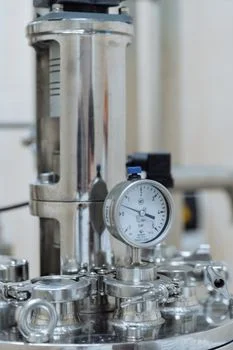
Effective copper sulfide precipitation requires a stoichiometric dosing ratio of 1.1 to 1.3 moles of sulfide per mole of copper to ensure complete reaction while minimizing excess reagent off-gassing. For an influent stream containing 100 mg/L of dissolved copper (1.57 mmol/L), the required sulfide dosage would be approximately 1.88 mmol/L. If using sodium sulfide (Na²S, MW 78.04), this equates to a dosing rate of approximately 147 mg/L of reagent. Over-dosing beyond a 1.5 ratio is discouraged as it increases the risk of generating toxic hydrogen sulfide (H²S) gas and can lead to the formation of soluble polysulfide complexes.
Mixing intensity is a critical design parameter to prevent the localized acidification that triggers H²S release. Engineers should design the primary reaction tank for a velocity gradient (G-value) of 800–1200 s−¹ for the initial 2–5 minutes of rapid mixing. This high-energy input ensures the reagent is dispersed before it can react with the acidic bulk liquid to form gas. Following rapid mix, a flocculation stage with a lower G-value of 20–50 s−¹ for 10–15 minutes is recommended to encourage particle agglomeration. The total hydraulic retention time (HRT) in the precipitation circuit should range from 15 to 30 minutes for flows between 10 and 100 m³/h.
To meet the strictest discharge limits, such as the EPA’s 1.3 mg/L or the EU’s 0.2 mg/L, the precipitation tank must be followed by high-efficiency solids separation. While gravity clarifiers are traditional, the small particle size of CuS often necessitates advanced separation. We recommend a DAF system for copper sulfide sludge separation, which uses micro-bubbles to float the dense sulfide particles, achieving much higher overflow rates than conventional sedimentation. If the plant targets water reuse, the DAF effluent can be further polished using MBR systems for polishing sulfide-treated copper wastewater.
| Design Parameter | Specification Range | Engineering Note |
|---|---|---|
| Process pH | 2.0 – 4.0 | Adjust with H²SO² or Lime; monitor via dual pH probes |
| Stoichiometric Ratio | 1.1:1 to 1.3:1 (S²−:Cu²¹) | Avoid >1.5:1 to prevent H²S off-gassing |
| Rapid Mix G-Value | 800 – 1200 s−¹ | Prevents reagent "hot spots" |
| Retention Time (HRT) | 15 – 30 minutes | Dependent on influent concentration and flow stability |
| Flocculant Dose | 1.0 – 5.0 mg/L | Anionic polymer typically works best for CuS |
Sulfide Reagents Compared: Na²S vs. H²S vs. CaS for Industrial Copper Wastewater
Sodium sulfide (Na²S) remains the most common industrial reagent due to its low cost ($0.80–$1.20/kg), though it requires stringent pH control to prevent the release of toxic H²S gas. Na²S is highly soluble and easy to dose via a PLC-controlled sulfide dosing system for precise copper removal. However, its addition causes a significant upward shift in pH, which may necessitate secondary acid adjustment to maintain the optimal reaction range of 2–4. For plants with existing alkaline wastewater, this pH shift can be a secondary benefit.
Hydrogen sulfide (H²S) gas is occasionally used in large-scale mining operations because it introduces no cations (like Na²¹ or Ca²¹) into the water, resulting in the highest purity copper sludge. While the reagent cost is moderate ($2.00–$2.50/kg), the CapEx for gas handling, leak detection, and safety scrubbing is significantly higher. Conversely, Calcium Sulfide (CaS) is favored in applications where H²S risk must be minimized. CaS is a "slow-release" reagent; it dissolves slowly, providing a steady supply of sulfide ions that reduces the risk of gas spikes. The trade-off is a higher reagent cost ($1.50–$2.00/kg) and an increase in sludge volume due to the presence of calcium.
Recent innovations highlighted by MDPI include encapsulated sulfide donors. These reagents use a polymer coating to control the release rate of sulfide based on the solution’s copper concentration. In a semiconductor plant case study, switching from liquid Na²S to encapsulated CaS reduced fugitive H²S emissions by 90% while maintaining copper removal efficiency. While these encapsulated reagents carry a premium price ($3.00–$5.00/kg), they significantly lower the insurance and safety compliance costs for urban industrial facilities.
| Reagent | Cost ($/kg Cu) | Safety Risk | Sludge Volume | Primary Advantage |
|---|---|---|---|---|
| Sodium Sulfide (Na²S) | $0.80 – $1.20 | Moderate (H²S risk) | Low | Lowest cost; easy automation |
| Hydrogen Sulfide (H²S) | $2.00 – $2.50 | High (Toxic gas) | Minimal | Highest purity; no metal ions added |
| Calcium Sulfide (CaS) | $1.50 – $2.00 | Low | Moderate | Slow-release; safer handling |
| Encapsulated Donors | $3.00 – $5.00 | Very Low | Moderate | Zero fugitive emissions; high precision |
Cost Breakdown: CapEx, OpEx, and ROI for Copper Sulfide Precipitation Systems

Capital expenditures for automated sulfide dosing and precipitation systems range from $20,000 to $150,000 for flow rates between 10 and 100 m³/h, depending on the level of sensor integration and H²S scrubbing requirements. A standard system includes a pH/ORP-controlled reaction tank, a chemical dosing skid, and a solids separation unit. Modular systems are increasingly popular, allowing semiconductor or electroplating plants to scale their treatment capacity as production lines expand. The inclusion of a safety scrubber typically adds $10,000 to $50,000 to the initial CapEx but is often a prerequisite for local air quality permits.
Operational expenses are dominated by reagent costs, which typically range from $0.80 to $2.50 per kilogram of copper removed. For a mid-sized electroplating facility treating 50 m³/h with an influent copper concentration of 100 mg/L, the daily copper load is 120 kg. Using Na²S, the daily reagent cost would be approximately $120–$150. Labor costs are relatively low for automated systems, averaging $0.10–$0.30 per m³ of treated water. The most significant OpEx saving compared to hydroxide precipitation comes from sludge disposal; because CuS sludge is denser, disposal costs ($0.05–$0.15 per kg of dry solids) are often reduced by 40%.
The Return on Investment (ROI) for switching to sulfide precipitation is typically realized within 18 to 24 months for high-concentration streams. This is driven by three factors: reduced chemical consumption (sulfide works at lower pH, requiring less acid/base), lower sludge disposal fees, and the potential for selling high-purity copper sludge to recyclers. In the 50 m³/h example, the annual savings in sludge disposal and compliance-related downtime can exceed $45,000, quickly offsetting the CapEx of the dosing and separation equipment.
| Cost Category | Estimated Range | Details / Assumptions |
|---|---|---|
| CapEx (10-100 m³/h) | $20,000 – $150,000 | Includes tanks, mixers, PLC dosing, and DAF |
| Reagent OpEx | $0.80 – $2.50 / kg Cu | Varies by sulfide source (Na²S vs. CaS) |
| Sludge Disposal | $0.05 – $0.15 / kg | Dry solids basis; 30-50% less volume than hydroxide |
| Maintenance & Labor | $0.10 – $0.30 / m³ | Sensor calibration and pump maintenance |
| Safety Scrubbing | $10,000 – $50,000 | One-time CapEx for H²S off-gas treatment |
Compliance Checklist: Meeting EPA, EU, and Local Copper Discharge Limits
The United States EPA establishes a maximum daily discharge limit of 1.3 mg/L for copper under 40 CFR Part 433 (Metal Finishing) and Part 440 (Mining), while the European Union’s Directive 2000/60/EC often mandates more stringent thresholds as low as 0.2 mg/L for sensitive water bodies. In China, the GB 8978-1996 Integrated Wastewater Discharge Standard sets a limit of 0.5 mg/L for Grade I discharge. Achieving these targets requires not just the precipitation chemistry, but a robust monitoring and validation framework. For facilities in North America, understanding Washington state’s copper discharge limits and compliance strategies provides a useful benchmark for the most rigorous regional standards.
- Daily Monitoring: Implement daily influent and effluent testing using Inductively Coupled Plasma Optical Emission Spectroscopy (ICP-OES) or Atomic Absorption Spectroscopy (AAS) to ensure residual Cu is <1.3 mg/L.
- ORP/pH Control: Maintain ORP between -200mV and -400mV to ensure excess sulfide is present without over-dosing. Use redundant pH probes to stay within the 2.0–4.0 range.
- Sludge Leachability: Conduct Toxicity Characteristic Leaching Procedure (TCLP) tests on the CuS sludge. While CuS is stable, some jurisdictions require verification that the sludge remains non-hazardous for landfilling.
- H²S Air Permits: Document the efficiency of the off-gas scrubbing system. Many local air boards require <10 ppm H²S at the stack.
- Permit Documentation: Keep a 3-year log of stoichiometric dosing ratios and flow rates to demonstrate "Best Available Technology" (BAT) during regulatory audits.
Troubleshooting Guide: Common Issues in Copper Sulfide Precipitation and How to Fix Them
Fugitive hydrogen sulfide (H²S) emissions occur when the bulk solution pH drops below 4.0 or when mixing intensity is insufficient to keep the reagent in the aqueous phase. If odors are detected, the first step is to verify the G-value of the rapid mix zone; if it is below 800 s−¹, reagent "hot spots" are likely forming gas. If pH control is stable but emissions persist, consider installing an H²S scrubber for sulfide precipitation off-gas treatment or transitioning to a slow-release calcium sulfide reagent.
Residual copper levels exceeding 1.0 mg/L are typically caused by insufficient retention time or reagent under-dosing. If the influent copper concentration spikes, the PLC-controlled sulfide dosing system for precise copper removal should automatically adjust the pump speed based on real-time ORP readings. If the system is dosing correctly but copper remains high, check for the presence of chelating agents (like EDTA) which may require a higher sulfide-to-metal ratio or a pre-treatment step to break the chelate bond.
Sludge scaling in pipes and pumps is a common issue in plants with high calcium or magnesium (hard water) in the influent. This is often exacerbated by the use of lime for pH adjustment. To mitigate scaling, implement a routine acid-wash cycle for the delivery lines or dose a specialized anti-scalant chemical at 5–10 mg/L. Poor sludge settling is another frequent problem, usually resulting from inadequate flocculation. Ensure that the anionic polymer is being dosed at 1–5 mg/L in a low-shear flocculation tank with at least 10 minutes of residence time to build robust flocs for the DAF or clarifier.
Frequently Asked Questions
Can sulfide precipitation recover copper for resale?
Yes. Unlike hydroxide sludge, which is a complex mixture of metal hydroxides and carbonates, sulfide precipitation can be tuned to produce high-purity CuS (covellite). When using H²S or Na²S at controlled pH, the resulting sludge can contain over 60% copper by dry weight, making it a valuable feedstock for copper smelters. This transforms a waste disposal cost into a potential revenue stream.
Is the risk of H²S gas too high for urban industrial plants?
The risk is manageable with modern automation. By using a closed-tank design, redundant pH/ORP sensors, and a safety scrubber, H²S emissions can be kept well below OSHA and environmental limits. For maximum safety, many urban plants use calcium sulfide or encapsulated reagents, which significantly slow the reaction kinetics and prevent the rapid gas evolution associated with liquid sodium sulfide.
How does sulfide precipitation handle chelated copper from electroplating?
Sulfide precipitation is often more effective than hydroxide for chelated metals because the extremely low Ksp of CuS provides a stronger driving force to "pull" the copper out of the chelate complex. While hydroxide may fail to break an EDTA-Cu bond at pH 9, sulfide can often achieve successful precipitation. In extreme cases, a 1.5x stoichiometric excess of sulfide or a 5-minute pre-treatment at pH 2.0 is required to fully displace the chelating agent.