This secondary vs tertiary wastewater treatment comparison starts with the effluent obligation, not the equipment label. Secondary treatment reduces BOD by 85–95% and TSS by 90–95%, typically using activated sludge or MBBR, and brings effluent to 20–30 mg/L BOD. Tertiary treatment further reduces BOD to <5 mg/L and TSS to <5 mg/L using filtration, disinfection, or membrane processes, meeting reuse or strict discharge standards such as China GB 18918-2002 Class A. The choice depends on the receiving environment, the reuse target, and the regulatory limit the plant must hit on its worst day, not its best.
secondary vs tertiary wastewater treatment comparison: what changes in practice?
Secondary treatment uses biological conversion and settling to reduce biodegradable organics and solids; tertiary treatment adds filtration, nutrient removal, disinfection, or membranes to meet a defined reuse or discharge target. The correct boundary is the permit and end use: secondary may satisfy ordinary discharge, while tertiary is selected for tighter nutrients, pathogens, turbidity, or dissolved-salt control.
Secondary treatment uses aerobic biology to degrade the dissolved and colloidal organics that escape primary physical separation. A well-tuned activated sludge or MBBR train removes 85–95% of BOD and 90–95% of TSS, with effluent typically in the 20–30 mg/L BOD and 20–35 mg/L TSS range at HRT 4–8 h and MLSS 2,000–4,000 mg/L. Tertiary treatment then applies physical and chemical processes to remove what biology cannot: residual organics to BOD <5–10 mg/L, TSS <5 mg/L, TN <15 mg/L, and TP <1 mg/L, with disinfection and, where required, RO polishing.
The practical boundary is set by end use. Secondary effluent can be discharged to large receiving waters with high dilution, subject to the permit, while tertiary effluent is commonly selected for industrial reuse, sensitive-ecosystem discharge, or a zero-liquid-discharge (ZLD) train in textile, pharma, or semiconductor plants. Most plants we size for electronics or pharma run the biological stage near its stable loading range and leave polishing capacity for shock loads.
The US EPA describes secondary treatment for publicly owned treatment works as a technology-based minimum expressed through BOD5, TSS removal, and pH. That framing is useful, but it is not a universal industrial-reuse specification; an industrial permit or reuse rule can impose additional nutrient, microbial, turbidity, or dissolved-solids requirements.
mbr vs activated sludge effluent quality: which is cleaner?
MBR vs activated sludge effluent quality differs mainly at the solids-separation boundary: an MBR retains biomass with a 0.1–0.4 μm membrane, while conventional activated sludge relies on a secondary clarifier. The biological reactions can be similar, but the membrane barrier produces much lower suspended solids and turbidity when it is operated within its flux, fouling, and cleaning limits.
In modern designs the line blurs. An MBR performs secondary biological degradation and tertiary-grade filtration in a single basin, replacing the gravity clarifier with a 0.1–0.4 μm membrane barrier that holds TSS and turbidity near zero. Most plants we size for electronics or pharma still stack an MBR ahead of RO and evaporation, because RO cannot tolerate the SDI that even a good secondary clarifier lets through. The MBR is therefore a hybrid process classification, not proof that every downstream reuse target has been met.
Standard secondary effluent is limited by biological floc settleability. In an activated sludge plant running at conventional MLSS, effluent typically holds BOD 20–30 mg/L and TSS 20–35 mg/L. Nutrient removal is inconsistent: TN often lands at 15–40 mg/L and TP at 2–8 mg/L unless a dedicated anoxic or anaerobic zone is tuned with care.
Tertiary stages close that gap with sand filtration, membrane filtration, or chemical precipitation, reaching BOD and TSS <5 mg/L and providing a barrier against residual particles and some trace contaminants. AOP and RO can cut microplastics, pharmaceuticals, and endocrine disruptors by 60–90%, a reduction secondary biology cannot deliver on its own. Those removal percentages depend on the contaminant, dose, membrane integrity, contact time, and influent matrix, so the buyer should request a contaminant-specific pilot or performance basis.
| Parameter | Raw Influent (Typical Industrial) | Secondary Effluent (ASP/MBBR) | Tertiary Effluent (MBR/RO/Filtration) |
|---|---|---|---|
| BOD₅ (mg/L) | 250 – 600 | 20 – 30 | < 5 |
| TSS (mg/L) | 200 – 400 | 20 – 35 | < 2 |
| Total Nitrogen (mg/L) | 40 – 80 | 15 – 40 | < 10 |
| Total Phosphorus (mg/L) | 5 – 15 | 2 – 8 | < 0.5 |
| Fecal Coliform (CFU/100ml) | 10⁶ – 10⁸ | 10⁴ – 10⁶ | < 10 (with disinfection) |
For a procurement manager, these numbers separate a stable permit margin from a process that fails during a loading swing. A secondary system claiming 90% removal still discharges roughly 50 mg/L BOD from a 500 mg/L influent, which breaches many Class A limits. Tertiary polishing absorbs influent swings so a single bad day does not become a permit excursion. Plants planning reuse should also expect tertiary turbidity below 1 NTU and SDI low enough to feed cooling towers and boilers without rapid scaling.
tertiary treatment for industrial water reuse: what is required?
Tertiary treatment for industrial water reuse is defined by the receiving process and its exposure pathway, not by the word tertiary alone. The US EPA's industrial-reuse resource page identifies cooling, energy generation, food and beverage production, mining, and manufacturing as distinct application contexts, and directs practitioners to end-use-specific guidance rather than one universal water-quality recipe.
California's industrial-reuse summary illustrates the distinction. For disinfected tertiary recycled water, the cited treatment path combines filtration and disinfection, requires a 5-log removal or inactivation demonstration for a specified virus surrogate, and sets filter-effluent turbidity at ≤2 NTU in the stated category. The same summary distinguishes industrial uses that create mist or involve worker contact from uses that do not. Those figures are jurisdiction-specific examples, not automatic requirements for every country or every factory.
For cooling-tower makeup, the design basis normally includes cycles of concentration, corrosion control, biocide compatibility, silica, hardness, conductivity, and aerosol exposure. Boiler feed adds stronger dissolved-solids and silica constraints. Textile dyeing and process reuse may instead be governed by color, surfactants, trace metals, and product-contact rules. A tertiary train can therefore include coagulation, filtration, MBR, disinfection, RO, or an advanced oxidation process, but the final selection must follow a water balance and a full influent analysis.
Which Technologies Sit Behind Each Stage?

Secondary systems depend on a healthy biomass. The activated sludge process uses aeration basins followed by secondary clarifiers at HRT 4–8 h and MLSS 2,000–4,000 mg/L, while MBBR boosts loading capacity by suspending plastic carriers that increase biofilm surface area. Many operators upgrade the clarification step with an integrated MBR system for tertiary-grade effluent, which drops a 0.1–0.4 μm membrane module in place of the settler and locks TSS and turbidity near zero. For FOG and floatable flocs that escape the biology, a high-efficiency DAF system for tertiary solids and FOG removal is often staged downstream to protect sensitive membranes.
Disinfection and chemical polishing finish the tertiary train. An on-site ClO₂ generator for tertiary disinfection delivers a 99.9% pathogen kill at 5–15 mg/L with 30 minutes of contact time, and avoids the trihalomethanes that form with standard chlorination. High-purity reuse loops add RO with pores <1 nm to strip dissolved salts and metals, which is why the upstream tertiary stage must already be tight enough to keep fouling rates manageable.
Process selection should also account for failure modes. Clarifiers need reliable settling and sludge wasting; MBRs need membrane integrity monitoring, air scour, and cleaning; filters need backwash capacity; chemical precipitation needs alkalinity, dosing control, and sludge handling; and disinfection needs residual or dose verification. A polished design documents the normal range and the upset response instead of quoting only a single guaranteed outlet value.
gb 18918-2002 class a compliance tertiary treatment: what must be met?
GB 18918-2002 Class A compliance tertiary treatment is a regulatory and end-use question, because the standard's Class A row is tied to municipal wastewater plant discharge and reuse conditions. The current Ministry of Ecology and Environment electronic file is the formal standard text with the 2006 and 2025 amendments included; it identifies Class A as the basic requirement when treated effluent is used as reclaimed water or for specified sensitive receiving waters.
The official table shows TN at 15 mg/L for Class A and shows TP at 0.5 mg/L for facilities built from 2006-01-01, with a separate note for earlier construction dates. The source also states that industrial wastewater entering a municipal plant must meet the applicable GB 8978, sector, local, and total-load requirements. Therefore, a buyer should not treat the phrase Class A as a substitute for checking plant age, permit conditions, sampling rules, and the industry standard.
The China GB 18918-2002 Class A limits and compliance guide sets TN ≤15 mg/L and TP ≤0.5 mg/L as daily-average Class A caps for the relevant case. A standard biological stage will not hold those caps during a temperature swing or toxic shock. Chemical precipitation for phosphorus and denitrification filters for nitrogen are the usual way to bank that compliance 365 days a year, provided the design includes chemical residuals, sludge, alkalinity, and monitoring controls.
Regulatory language also affects acceptance testing. The GB file specifies daily-average concentration tables and points to defined sampling and monitoring methods, so a commissioning test should identify the sampling point, composite or instantaneous basis, operating window, and required number of valid samples. A process that reaches a target in a jar test but misses the permit's averaging basis is not a compliant design.
when is tertiary treatment required over secondary?
When is tertiary treatment required over secondary? Tertiary treatment is required when the receiving permit, reuse specification, pathogen barrier, nutrient target, or ZLD pretreatment limit cannot be held by secondary treatment across normal and upset conditions. Technology preference alone is not a sufficient reason; the target should be written as a verified outlet condition with a sampling basis.
Internal reuse is the second pressure point. Cooling tower makeup, boiler feed, and textile dyeing demand SDI and turbidity under 1 NTU, which secondary effluent cannot supply without rapid heat-exchanger scaling. A tertiary MBR plus filtration train can recover up to 85% of the wastewater for non-potable reuse, cutting raw water costs in the process. The trade-offs in practice are laid out in the practical guide to choosing between secondary and tertiary treatment, which maps equipment selection to a facility's water balance.
For sectors under ZLD mandates, electronics and pharma in particular, the secondary stage is just a precursor: MBR, RO, and evaporation form the tertiary train, and without high-efficiency organics and solids removal the evaporators foam and fail. Facilities with ordinary discharge and no reuse demand can often stop at a stable secondary process, but that conclusion must be checked against the actual permit and receiving-water classification.
A practical screening checklist has five questions: What is the worst-day influent load? Which outlet values are daily averages and which are instantaneous? Does the reuse user control turbidity, SDI, conductivity, silica, or pathogens? What happens during a toxic shock or membrane cleaning cycle? Is there enough space and operator capacity for chemical storage, sludge handling, instruments, and bypass protection? Answers to those questions usually narrow the process train before equipment quotations begin.
tertiary treatment cost and footprint comparison
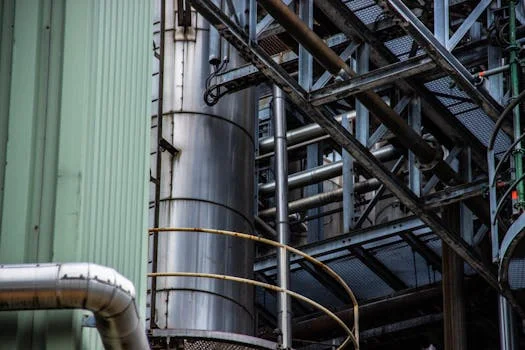
Tertiary treatment cost and footprint comparison depends on the polishing duty, but the source ranges show the basic trade: conventional secondary treatment uses more land, while advanced barriers add energy, chemical, and control requirements. A standard activated sludge train takes 2–3 m² per m³/day of capacity, mostly because of the secondary clarifiers. CAPEX runs $150–$300 per m³, with energy use at 0.8–1.2 kWh/m³ and OPEX dominated by aeration and sludge disposal.
Adding tertiary treatment adds $100–$250 per m³ of CAPEX and lifts OPEX by 30–60% from coagulants, CIP chemicals, and higher pumping pressure, but an MBR-based train can cut total plant footprint by up to 60% against a conventional secondary plus sand-filter layout. Engineers weighing the jump should review the MBR vs CAS efficiency, footprint, and OPEX comparison for the long-term ROI picture.
| Metric | Secondary (Conventional) | Tertiary (Advanced/MBR) |
|---|---|---|
| CAPEX ($/m³ capacity) | $150 – $300 | +$100 – $250 (Additional) |
| Energy Use (kWh/m³) | 0.8 – 1.2 | 1.5 – 2.5 |
| Footprint (m²/m³/day) | 2.0 – 3.0 | 0.8 – 1.2 (MBR Integrated) |
| Chemical Demand | Low (Nutrients only) | High (Coagulants, CIP, ClO₂) |
| Operator Skill Level | Moderate | High (Automation/Sensors) |
The procurement case for tertiary is rarely lower OPEX. It is risk mitigation and resource recovery: one day of production shutdown from a discharge violation usually costs more than a year of tertiary chemical budget, and reuse credits can turn the wastewater plant from a cost center into a process-water utility. Engineers evaluating clarifier design across primary, secondary, and tertiary duty points can compare the enhanced secondary and tertiary treatment processes in water treatment sites overview before locking in a configuration.
Who this is for, and the next step
This comparison fits procurement managers, plant engineers, and EPC contractors sizing biological plus polishing trains for textile, food and beverage, pharma, electronics, or municipal-industrial hybrids facing strict nutrient or reuse limits. Facilities with only legacy municipal discharge permits and no reuse demand can usually stop at a well-tuned secondary stage. Anyone targeting Class A discharge, cooling-tower or boiler reuse, or ZLD should plan tertiary from day one.
Before requesting a budget, assemble the design flow, peak flow, pH, temperature, COD, BOD, TSS, TN, TP, ammonia, oil and grease, conductivity, hardness, silica, color, microbiology, current permit, and desired reuse ratio. Send the influent profile, target effluent limits, and reuse ratio to our engineering team for a sized process proposal and ROI estimate. The quotation should state assumptions, guaranteed parameters, sampling basis, exclusions, consumables, membrane replacement, sludge disposal, and commissioning tests.
Frequently Asked Questions
What is the main difference between secondary and tertiary treatment?
Secondary treatment uses biological processes to remove biodegradable organic matter and settleable suspended solids, while tertiary treatment adds polishing barriers for tighter targets. Secondary effluent commonly remains around 20–30 mg/L BOD and 20–35 mg/L TSS in the source design range, whereas tertiary filtration or membranes can reach BOD and TSS <5 mg/L when the upstream biology and operating conditions are controlled.
Which is better: SBR or MBBR?
SBR handles highly variable flows well because it processes batch cycles in a single tank, while MBBR suits plants with limited space and high organic loads. The choice is a hydraulic and loading decision, not a universal ranking. Compare equalized flow, peak load, HRT 4–8 h, MLSS 2,000–4,000 mg/L where applicable, operator coverage, sludge handling, and the required downstream polishing barrier.
Can tertiary treatment remove viruses and microplastics?
Tertiary treatment can reduce viruses and microplastics, but the result depends on the complete barrier train and verification method. A tertiary MBR stage at 0.1 μm pore size can retain many particles, while disinfection supplies the pathogen-inactivation step. The original process basis cites 99.9% microplastic removal and 99.99% virus inactivation; buyers should require integrity, dose, contact-time, and sampling evidence before accepting those claims.
Is MBR secondary or tertiary treatment?
MBR is a hybrid process because it performs secondary biological degradation and uses tertiary-level membrane filtration instead of gravity settling. Its membrane barrier is typically 0.1–0.4 μm, so effluent can have very low TSS and turbidity. MBR does not automatically remove dissolved salts, so RO, ion exchange, or another polishing step may still be required for high-purity reuse or ZLD.
What industries need tertiary treatment?
Industries need tertiary treatment when their permit or process-water specification demands tighter nutrients, pathogens, turbidity, dissolved solids, or trace-contaminant control than secondary treatment can reliably provide. Food and beverage, pharmaceuticals, electronics, textile manufacturing, and municipal-industrial hybrids commonly evaluate it for reuse or ZLD. Cooling towers that create mist and worker-contact process water can also trigger stricter disinfected-tertiary requirements in some jurisdictions.