Display panel electroplating wastewater contains heavy metals (Cu, Ni, Cr up to 500 mg/L) and TMAH (50–500 mg/L), exceeding China’s GB 21900-2008 limits (0.5 mg/L for Cu/Ni, 0.1 mg/L for Cr(VI)). In 2025, integrated systems combining chemical precipitation (99% metal removal), dissolved air flotation (DAF, 95% TSS reduction), and membrane bioreactors (MBR, <1 μm filtration) achieve zero liquid discharge (ZLD) while recovering 90%+ of process water. Pre-engineered modules like HydropureWater’s DAF modules for 95% TSS removal in display panel wastewater reduce CAPEX by 30% compared to custom builds, with OPEX as low as $0.80/m³ for water reuse.
Why Display Panel Electroplating Wastewater is a Regulatory and Operational Crisis
Display panel manufacturing generates 3–10 m³ of wastewater per m² of panel produced, often containing copper and nickel concentrations that exceed regulatory discharge limits by a factor of 1,000. Under China’s GB 21900-2008 Table 3 standards, the discharge limit for copper and nickel is strictly capped at 0.5 mg/L, while hexavalent chromium Cr(VI) is limited to 0.1 mg/L. Failure to meet these thresholds carries severe financial and operational penalties; in 2023, a display panel facility in Shenzhen was issued a $2 million fine and forced into a 45-day production halt following persistent heavy metal violations. This regulatory pressure is compounded by the fact that untreated effluent containing Cu and Ni accelerates municipal sewer pipe degradation by up to 300%, according to EPA 2024 corrosion studies.
Beyond heavy metals, the presence of tetramethylammonium hydroxide (TMAH) at levels between 50 and 500 mg/L presents a unique challenge for TFT-LCD wastewater treatment. TMAH is highly toxic to aquatic life, with an LC50 ranging from 1 to 10 mg/L for various fish species, making it a primary target for environmental auditors. the high organic loads—COD levels often peak at 5,000 mg/L—from photoresist and solvent residues can cripple standard municipal treatment plants. In regions like Taiwan and South Korea, where industrial water utility costs have risen to $3.50–$5.20/m³, the economic incentive for wastewater reuse in display panel plants has shifted from a CSR initiative to a core financial requirement. Achieving >90% reuse targets is now the industry benchmark for maintaining operational resilience against water scarcity.
Contaminant Profile: What’s in Display Panel Electroplating Wastewater?
Effective OLED manufacturing wastewater management begins with a precise characterization of the waste streams, which are typically divided into concentrated plating baths, acidic/alkaline etching rinses, and CMP (Chemical Mechanical Polishing) slurries. Heavy metals such as Copper (Cu), Nickel (Ni), and Chromium (Cr) are the most critical contaminants, originating from the metallization and etching phases. While primary plating baths may contain metals in the thousands of mg/L, the combined rinse water typically sees Cu at 10–500 mg/L and Ni at 5–300 mg/L. These must be reduced to sub-ppm levels to meet electroplating effluent compliance. Accurate dosing via a PLC-controlled chemical dosing for pH adjustment and coagulation in electroplating wastewater is essential to handle these fluctuations.
The secondary challenge is the organic and solids load. TMAH, used as a developer and etchant, contributes significantly to both nitrogen and COD loads. Suspended solids (TSS) from CMP slurries, often ranging from 100 to 2,000 mg/L, consist of fine abrasive particles that pose a severe fouling risk to downstream membranes. pH extremes (ranging from 2 to 12) require robust neutralization systems to prevent infrastructure corrosion. Understanding these parameters is vital for implementing TMAH removal strategies for display panel and PCB wastewater.
| Contaminant | Typical Concentration (mg/L) | GB 21900-2008 Limit (mg/L) | Primary Source |
|---|---|---|---|
| Copper (Cu) | 10 – 500 | 0.5 | Etching, Plating, CMP |
| Nickel (Ni) | 5 – 300 | 0.5 | Electroless Plating |
| Chromium (Cr VI) | 2 – 100 | 0.1 | Surface Treatment |
| TMAH | 50 – 500 | 0.5 (Local Guidance) | Developer / Etchant |
| COD | 500 – 5,000 | 80 | Photoresist, Solvents |
| TSS | 100 – 2,000 | 30 | CMP Slurry, Hydroxides |
Treatment Technologies Head-to-Head: DAF vs. MBR vs. Electrocoagulation vs. Ion Exchange
Selecting the optimal technology for display panel electroplating wastewater treatment requires balancing removal efficiency against lifecycle costs. Chemical precipitation remains the baseline for heavy metal removal, achieving 99% efficiency when pH is maintained between 8.5 and 9.5. However, this process generates significant sludge volumes, with disposal costs reaching $200–$500 per ton. To mitigate this, many plants are moving toward electrocoagulation, which can reduce sludge volume by 40% compared to traditional chemical methods, though it introduces electrode replacement costs of approximately $0.10–$0.30/m³.
For solids and organic removal, DAF modules provide 95% TSS reduction and 90% FOG removal, serving as an ideal pre-treatment for membrane systems. When high-quality effluent is required for reuse, MBR systems for <1 μm filtration and 90%+ water reuse in TFT-LCD/OLED plants are superior to conventional clarifiers. MBRs provide effluent COD ≤50 mg/L and heavy metal levels <0.1 mg/L, though they require careful management of TMAH to prevent membrane fouling. For ultra-high purity requirements or zero liquid discharge engineering, ion exchange resins can achieve 99.9% metal recovery, though the high CAPEX ($2M–$5M for 100 m³/h) often limits their use to polishing stages. Engineers should also consult guides on how MBR systems work for industrial wastewater treatment to optimize energy consumption, which typically ranges from 0.8 to 1.2 kWh/m³.
| Technology | Metal Removal Eff. | OPEX ($/m³) | Footprint | Key Limitation |
|---|---|---|---|---|
| DAF | 70-85% (as solids) | 0.15 - 0.25 | Small/Modular | Requires pre-precipitation |
| MBR | 95-99% | 0.40 - 0.70 | Medium | Fouling from TMAH/Slurry |
| Electrocoagulation | 99% | 0.30 - 0.50 | Small | Electrode consumption |
| Ion Exchange | 99.9% | 0.50 - 1.00 | Large | High CAPEX; Resin regen |
Zero Liquid Discharge (ZLD) for Display Panel Manufacturers: Engineering Blueprint and Cost Breakdown
A 2025-standard ZLD system for display panel wastewater follows a multi-stage approach designed to maximize water recovery while minimizing waste. The process begins with primary treatment using DAF or electrocoagulation to remove the bulk of TSS and precipitated metal hydroxides. This is followed by a secondary biological or membrane stage, typically an MBR, to degrade organics and provide ultra-fine filtration. Tertiary treatment involves Reverse Osmosis (RO) to remove total dissolved solids (TDS), followed by an evaporator or crystallizer for the brine. To manage the resulting solids, a filter press for sludge (90% dry solids) is used to dewater the precipitate into a handleable cake, significantly reducing disposal volumes.
The CAPEX for a 100 m³/h ZLD system typically ranges from $2.5M to $4.5M, depending on the complexity of the influent. However, utilizing pre-engineered modules like HydropureWater’s integrated DAF and MBR units can reduce these costs by up to 30% compared to custom on-site builds. OPEX is generally distributed between chemical dosing (20%), energy for RO and aeration (30%), labor (10%), and sludge disposal (15%). Achieving 90–95% water recovery is feasible, but specialized polishing like activated carbon or advanced oxidation may be required if TMAH levels in the RO permeate exceed 0.5 mg/L. For detailed comparisons, engineers often reference PCB electroplating wastewater treatment specs and ZLD blueprints as the contaminant profiles are analogous.
| System Component | Equipment Type | Function | Estimated CAPEX Share |
|---|---|---|---|
| Pre-treatment | DAF / Chemical Dosing | TSS/Metal Removal | 20% |
| Secondary Treatment | MBR System | COD / Fine Filtration | 25% |
| Water Recovery | RO Purification | Desalination / Reuse | 30% |
| Solid Waste Mgmt | Plate & Frame Filter Press | Sludge Dewatering | 10% |
| Control/Automation | PLC / SCADA | System Monitoring | 15% |
Case Study: ZLD System for a 100 m³/h TFT-LCD Plant in Taiwan
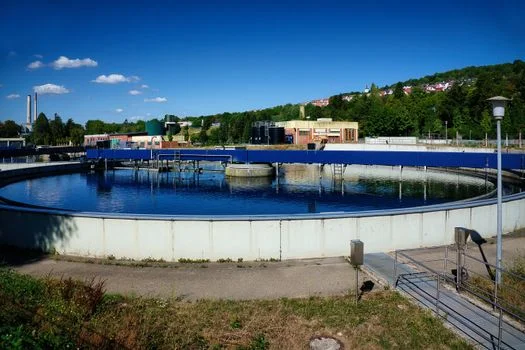
A leading TFT-LCD manufacturer in Taiwan faced escalating water costs ($3.50/m³) and tightening limits on TMAH and heavy metals. The facility’s influent was characterized by Cu at 300 mg/L, Ni at 200 mg/L, and TMAH at 200 mg/L. The implemented treatment train utilized a DAF for initial solids separation, followed by an MBR for organic removal and a two-stage RO system for water recovery. To handle the concentrated metal stream, a selective ion exchange system was installed as a final polish for the reuse water, ensuring it met ultrapure water (UPW) feed specifications.
The results were transformative: effluent copper and nickel levels dropped to <0.1 mg/L, and TMAH was reduced to <0.5 mg/L, comfortably meeting GB 21900-2008 standards. The total CAPEX was $2.8M, approximately 30% lower than the $4M quoted for a traditional custom-engineered plant. With an OPEX of $0.90/m³ and a water recovery rate of 92%, the plant achieved a full ROI in just 3.2 years. A key lesson learned during the pilot phase was that MBR fouling from TMAH could be mitigated by implementing automated pH control in the pre-treatment stage, which stabilized the biological activity within the MBR tank.
| Parameter | Influent (Pre-Treatment) | Effluent (Post-ZLD) | Removal Efficiency |
|---|---|---|---|
| Copper (Cu) | 300 mg/L | <0.1 mg/L | 99.97% |
| Nickel (Ni) | 200 mg/L | <0.1 mg/L | 99.95% |
| TMAH | 200 mg/L | <0.5 mg/L | 99.75% |
| COD | 3,000 mg/L | <50 mg/L | 98.33% |
How to Select the Right Treatment System for Your Display Panel Plant
Selecting a heavy metal removal efficiency strategy requires a data-driven decision framework. Step 1 involves a comprehensive characterization of your influent, specifically mapping the concentrations of metals, TMAH, and COD across different production shifts. Use the "Contaminant Profile" data above to benchmark your facility. Step 2 requires defining your compliance and reuse goals; for example, rinsing processes may only require 90% recovery, while CMP slurry makeup might demand 95% or higher purity. Step 3 is a head-to-head evaluation of technologies using the parameter tables provided, focusing on footprint and sludge disposal costs.
In Step 4, it is highly recommended to conduct pilot testing with 1–3 m³/h skid-mounted units to verify the compatibility of DAF+MBR vs. electrocoagulation+RO for your specific chemical matrix. Finally, in Step 5, calculate the ROI by factoring in OPEX and water savings. For a 100 m³/h plant in a water-scarce region, a 90% recovery rate can generate over $1.2M in annual savings. Ensuring your system includes a PLC-controlled chemical dosing for pH adjustment will safeguard these savings by preventing membrane damage and ensuring consistent compliance.
Frequently Asked Questions
What is the most effective way to remove TMAH from display panel wastewater?
TMAH is best removed through a combination of biological treatment (MBR) and advanced oxidation or activated carbon polishing. While MBR can degrade TMAH, high concentrations require careful acclimation of the biomass and pH stabilization to prevent toxicity to the microbes.
How does DAF compare to traditional clarification for CMP slurry removal?
DAF is significantly more efficient for CMP slurries because the fine particles often have low settling velocities. By using micro-bubbles to float the particles, DAF achieves 95% TSS removal in a much smaller footprint than a traditional gravity clarifier.
What are the typical maintenance requirements for a ZLD system in an OLED plant?
Maintenance focuses on membrane cleaning (CIP) for MBR and RO units, electrode inspection if using electrocoagulation, and regular calibration of pH and ORP sensors in the chemical dosing system. Automated systems reduce labor but require quarterly technical audits.
Can heavy metals be recovered for profit in display panel wastewater treatment?
While technically possible using ion exchange or electrowinning, the high purity required for electronics-grade metals means that recovery is usually focused on reducing hazardous waste disposal costs rather than direct resale profit.