Why TFT-LCD Wastewater Compliance Is a 2025 Crisis for Manufacturers
TFT-LCD wastewater discharge standards vary globally: China’s GB 8978-2024 sets fluoride limits at 10 mg/L (Class I) and COD at 60 mg/L, while the EPA’s Effluent Guidelines (40 CFR Part 469) require <1.0 mg/L total toxic organics. The EU’s Industrial Emissions Directive (2010/75/EU) mandates zero liquid discharge (ZLD) for new plants. Achieving compliance demands tailored treatment—e.g., electro-Fenton for COD (92-97% removal) or MBR for fluoride (99.9% reduction)—with CapEx ranging from $500K–$2M depending on plant size and technology stack.
Failure to meet the 10 mg/L fluoride limit under China’s GB 8978-2024 can result in daily-accrued fines and immediate operational shutdowns for TFT-LCD facilities. A recent enforcement action at a TFT-LCD plant in Suzhou serves as a warning to the industry; the facility was fined $1.2M after a surprise inspection revealed fluoride exceedances and was forced to halt production for 30 days to overhaul its treatment train. This is not an isolated incident. According to a 2023 Ministry of Ecology and Environment (MEE) report, 43% of TFT-LCD plants in China failed unannounced audits, highlighting a systemic gap between existing infrastructure and tightening 2025 regulatory benchmarks.
The compliance crisis is driven by three primary pain points: the extreme stringency of fluoride limits (10 mg/L in China vs. no specific EPA limit), the high variability of Chemical Oxygen Demand (COD) which can swing from 50 mg/L to 5,000 mg/L depending on the production cycle, and the mounting pressure for Zero Liquid Discharge (ZLD) in the European market. These challenges are compounded by the high cost of non-compliance. Beyond regulatory fines, manufacturers face severe reputational damage and supply chain disruptions. For example, Samsung’s 2022 EU market recalls were partially attributed to wastewater violations at upstream component facilities, demonstrating that environmental compliance is now a prerequisite for global market access.
TFT-LCD Wastewater Discharge Standards: China GB vs. EPA vs. EU Limits (2025 Update)
Global discharge standards for TFT-LCD manufacturing fluctuate significantly between jurisdictions, with China imposing concentration-based limits while the EPA focuses on technology-based toxic organic controls. For environmental engineers and procurement teams, understanding these differences is critical for designing a future-proof treatment system. The following table provides a direct comparison of the 2025 limits across the three major regulatory regions.
| Pollutant | China GB 8978-2024 (Class I) | EPA 40 CFR Part 469 (BAT) | EU IED 2010/75/EU (ZLD) |
|---|---|---|---|
| COD (Chemical Oxygen Demand) | 60 mg/L | Case-by-case (local) | <30 mg/L (pre-ZLD) |
| BOD5 | 20 mg/L | No standard | <10 mg/L |
| Fluoride (F-) | 10 mg/L | No explicit limit* | ZLD Required |
| Total Toxic Organics (TTO) | <1.0 mg/L | <1.37 mg/L | <0.5 mg/L |
| Total Phosphorus (TP) | 0.5 mg/L | No standard | <0.2 mg/L |
| Total Nitrogen (TN) | 15 mg/L | No standard | <5.0 mg/L |
| Heavy Metals (Cu, Ni) | <0.5 mg/L | <0.5 mg/L | <0.1 mg/L |
| pH | 6.0–9.0 | 6.0–9.0 | 6.5–8.5 |
Footnotes: (1) China’s Class I standards apply to direct discharge into surface water, while Class II (20 mg/L fluoride) applies to municipal sewer discharge. (2) EPA limits are primarily technology-based (Best Available Technology) rather than fixed concentration limits for inorganic pollutants. (3) EU ZLD mandates require <1% liquid discharge for all new facilities commissioned after 2024. To compare TFT-LCD and PCB wastewater standards, engineers must account for the higher organic solvent load typical of LCD etching processes.
Enforcement trends indicate a tightening grip by regulators. The China MEE 2024 crackdown on electronics manufacturing in Guangdong revealed a 37% non-compliance rate, leading to the adoption of continuous online monitoring for fluoride and COD. Meanwhile, the EU's 2025 ZLD deadline is forcing manufacturers to transition from traditional chemical precipitation to high-efficiency membrane systems. China’s fluoride limit of 10 mg/L is effectively 10 times stricter than the implicit limits typically seen in US Publicly Owned Treatment Works (POTWs), making it the most difficult hurdle for global manufacturers operating in Asia.
TFT-LCD Wastewater Types and Pollutant Profiles: What’s in Your Effluent?
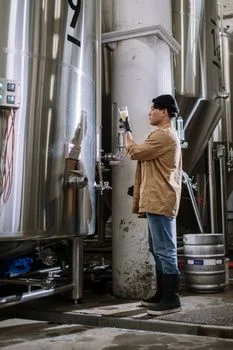
TFT-LCD manufacturing generates high-volume effluent streams characterized by complex organic solvents, heavy metal ions, and fluoride concentrations often exceeding 500 mg/L. To select the appropriate technology, engineers must first segregate wastewater based on its chemical profile. Most modern facilities categorize their discharge into three main streams: fluorine-containing, organic, and acid/alkali wastewater.
| Wastewater Type | Key Pollutants | Typical Concentration | Treatment Challenge |
|---|---|---|---|
| Fluorine-containing | Fluoride, Phosphate, Nitrate | 50–500 mg/L (F-) | Precipitation inefficiency at low pH |
| Organic Wastewater | RGB dye, Acetone, Formamide | 500–5,000 mg/L (COD) | High toxicity to bio-cultures |
| Acid/Alkali | H2SO4, NaOH, H2O2 | pH 1.0–13.0 | Extreme corrosive potential |
| Stripping/Etching | Photoresist, TMAH | Variable COD/Nitrogen | Resistant to standard oxidation |
The production stages define the pollutant load. For example, the etching process is the primary source of fluoride wastewater, while cleaning and photoresist stripping stages generate massive COD loads from surfactants and organic solvents like acetone. A case study of a 50,000 m² TFT-LCD plant in Hefei illustrates this complexity: the facility generates 200 m³/day of fluorine-rich wastewater with average fluoride levels of 300 mg/L. Traditional lime precipitation in this facility failed to consistently reach the 10 mg/L China GB limit, necessitating a transition to DAF pretreatment for TFT-LCD TSS and oil removal combined with secondary polishing.
the presence of scale inhibitors and RGB dyes in the organic stream can interfere with traditional flocculation, leading to high turbidity in the final effluent. Understanding these profiles is the first step in avoiding "treatment shock," where unexpected spikes in pollutant concentration overwhelm the biological or chemical systems, leading to immediate compliance failure.
Treatment Technologies for TFT-LCD Wastewater: Efficiency, Costs, and Compliance ROI
Implementing a multi-stage treatment train using electro-Fenton and MBR technology can achieve a 97% reduction in COD and 99.9% fluoride removal, ensuring compliance with the strictest EU ZLD mandates. Choosing between these technologies requires a balance of Capital Expenditure (CapEx) and Operational Expenditure (OpEx). The decision matrix below outlines the performance and cost data for the most effective 2025 technologies.
| Technology | Target Pollutant | Removal Efficiency | CapEx ($/m³) | OpEx ($/m³) |
|---|---|---|---|---|
| Electro-Fenton | Refractory COD | 92–97% | $8,000 | $1.20 |
| MBR (Membrane) | Fluoride/COD | 99.9% | $12,000 | $0.90 |
| DAF + RO | TSS/Fluoride | 90–95% | $9,000 | $1.50 |
| Chemical Precip. | Fluoride | 80% | $3,000 | $0.80 |
Electro-Fenton technology has emerged as a leader for organic removal because it generates hydroxyl radicals in-situ, effectively breaking down complex RGB dyes and formamide that biological systems cannot process. For a 100 m³/h plant, an electro-Fenton system requires approximately $800,000 in CapEx, with OpEx driven primarily by electricity and FeSO4 dosing. However, to meet the 10 mg/L fluoride limit, MBR systems for TFT-LCD fluoride and COD removal are often necessary. These systems achieve near-total removal by combining biological degradation with physical membrane barriers, though they require membrane replacement every five years.
For facilities aiming for EU ZLD or China Class I compliance, a hybrid approach is the most cost-effective. A 200 m³/h plant utilizing reverse osmosis for final polishing and a primary MBR + electro-Fenton stack would require a total CapEx of approximately $2.5M. While the initial investment is high, the OpEx of $1.10/m³ is significantly lower than using chemical dosing alone, which often produces excessive sludge and fails to meet 2025 standards. You can learn how MBR systems achieve 99.9% fluoride removal to understand why they are the preferred choice for high-precision manufacturing.
Step-by-Step Compliance Blueprint: From Wastewater Analysis to Zero-Risk Discharge
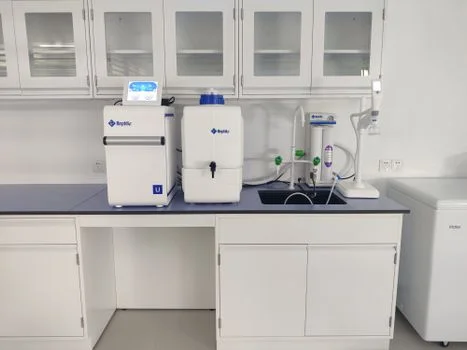
Achieving zero-risk compliance requires a validated five-step engineering roadmap that transitions from 30-day wastewater characterization to full-scale automated system integration. This blueprint ensures that no technical or regulatory detail is overlooked during the upgrade of a TFT-LCD facility.
Step 1: Wastewater Characterization – Conduct a rigorous 30-day sampling campaign to profile COD, fluoride, pH, and heavy metals. It is essential to use EPA Method 1312 for fluoride and APHA 5220 for COD to ensure data validity for international regulators.
Step 2: Standard Selection – Identify your discharge destination. If discharging to surface water in China, you must meet the Class I 10 mg/L fluoride limit. If your plant is in the EU, you must plan for ZLD. Calculate your TFT-LCD wastewater treatment plant size based on these peak flow and concentration requirements.
Step 3: Technology Stack Design – Engineer a multi-barrier system. Start with DAF for TSS removal, followed by electro-Fenton for COD reduction, and finish with MBR for fluoride polishing. Incorporate PLC-controlled chemical dosing for fluoride precipitation to handle influent variability automatically.
Step 4: Pilot Testing – Never move directly to full-scale implementation. Run a 3-month pilot using 10% of your actual wastewater flow. This validates removal efficiencies under real-world conditions, targeting <10 mg/L fluoride and <60 mg/L COD before the final CapEx commitment.
Step 5: Permitting and Monitoring – Submit the validated pilot data to environmental regulators for permit approval. Install online sensors for pH, fluoride, and COD to provide continuous compliance reporting and prevent the "surprise" exceedances that led to the Suzhou plant shutdown.
Compliance Checklist:
[ ] 30-day wastewater sampling plan completed
[ ] Regulatory standard selection matrix finalized
[ ] Technology ROI analysis (CapEx vs. OpEx) performed
[ ] 3-month pilot test protocol established
[ ] Automated permit application and monitoring system ready
Frequently Asked Questions
Q: What is the fluoride limit for TFT-LCD wastewater in China?
A: China’s GB 8978-2024 sets a fluoride limit of 10 mg/L for Class I discharge (surface water) and 20 mg/L for Class II (municipal sewers). For comparison, the EPA has no explicit fluoride limit for this category but requires <1.0 mg/L for many POTW discharge permits under 40 CFR Part 469.
Q: How much does it cost to treat TFT-LCD wastewater to meet EU ZLD requirements?
A: A 100 m³/h MBR + RO system for EU ZLD compliance typically costs between $1.5M and $2M in CapEx. OpEx ranges from $1.20 to $1.80/m³, depending on the influent fluoride and COD levels. Hybrid systems incorporating electro-Fenton can often reduce OpEx by up to 20% by reducing membrane fouling.
Q: Can biological treatment (A/O SBR) alone meet TFT-LCD wastewater discharge standards?
A: No. While biological A/O SBR achieves 85–90% COD removal, it is largely ineffective at removing fluoride to the 10 mg/L level required in China. Biological systems must be paired with chemical precipitation or advanced membrane filtration (MBR) to achieve full compliance.
Q: What are the most common TFT-LCD wastewater treatment mistakes?
A: The three most common errors are: (1) Underestimating fluoride variability (spikes from 50 to 500 mg/L), which overloads precipitation systems; (2) Failing to adjust pH to the 3.0–4.0 range before electro-Fenton treatment; and (3) Skipping pilot testing, which often results in actual removal efficiencies being 30% lower than laboratory projections.
Q: How do I select between DAF and MBR for TFT-LCD wastewater?
A: Use DAF for pretreatment if your influent has high TSS (>500 mg/L) or significant oil/grease. Use MBR for secondary polishing of fluoride and COD. While DAF CapEx is roughly 40% lower ($500K vs. $800K for 100 m³/h), MBR is the only technology that can consistently achieve 99.9% fluoride removal.