Why Photovoltaic Organic Wastewater Treatment Fails Without ZLD Systems
Photovoltaic manufacturing generates wastewater with fluoride concentrations up to 1,000 ppm and high ammonia-nitrogen levels, requiring advanced treatment to meet discharge limits (e.g., China GB 8978-1996: fluoride <10 ppm, ammonia <15 ppm). Conventional chemical precipitation methods typically achieve only 70–80% fluoride removal, which leaves effluent concentrations far above the 10 ppm threshold required for legal discharge or the <1 ppm levels required for internal reuse. Without a Zero Liquid Discharge (ZLD) framework, these facilities face escalating operational risks, including frequent production halts and significant environmental fines.
The failure of traditional photovoltaic organic wastewater treatment systems often stems from the inability to handle the complex chemistry of modern solar cell production. For instance, a 500 MW solar cell plant in Jiangsu faced $2M in fines in 2023 because its treatment system could not mitigate fluoride exceedances during peak production. The plant’s reliance on simple lime precipitation led to severe scaling in downstream pipes and failed compliance tests, as the residual fluoride remained at 25–40 ppm. conventional systems treat fluoride and ammonia as waste products rather than recoverable assets, missing the opportunity to stabilize operational costs through the production of high-value byproducts like cryolite (Na₃AlF₆).
In 2026, the transition to global discharge standards for photovoltaic wastewater necessitates a shift toward solar-integrated ZLD systems. These systems combine selective contaminant extraction (SCE) and reverse osmosis (RO) to achieve 99.9% removal of fluoride and ammonia while recovering up to 85% of wastewater for reuse. By integrating on-site solar PV, manufacturers can reduce chemical usage by 40% and energy costs by 30%, transforming a compliance liability into a circular economy advantage.
Solar-Integrated ZLD Systems: Engineering Process Flow and Key Technologies
Selective Contaminant Extraction (SCE) technology serves as the primary technical barrier in modern ZLD systems, utilizing ion-exchange resins to remove 99.5% of fluoride and 99% of ammonia-nitrogen before the wastewater reaches the membrane stages. By removing these ionic loads early, the system significantly reduces the osmotic pressure requirements and scaling potential on downstream high-recovery RO systems for photovoltaic wastewater treatment. This sequence is critical because high fluoride concentrations in PV wastewater are often accompanied by high silica levels, which can irreversibly foul membranes if not managed through precise pretreatment.
The engineering process flow for a 2026-spec solar-integrated ZLD system follows a rigorous multi-stage path: Pretreatment (pH adjustment and coagulation) → SCE → Ultrafiltration (UF) → Reverse Osmosis (RO) → Evaporation/Crystallization. The UF stage utilizes PVDF hollow-fiber membranes with a 0.03 μm pore size, operating at a transmembrane pressure of 1–3 bar. These membranes achieve 98% Total Suspended Solids (TSS) removal and are maintained via automated backwash cycles every 30–60 minutes to ensure consistent flux. For the RO stage, high-recovery spiral-wound membranes, such as the Dow Filmtec BW30-400, are deployed with precise chemical dosing for fluoride and ammonia removal, specifically antiscalants at 2–5 ppm, to maintain an 85% recovery rate.
Energy consumption is the largest operational hurdle for ZLD, but integration with on-site solar PV arrays provides a sustainable offset. A 1 MW solar system can power the RO pumps and SCE units for a 500 m³/day plant, covering 30–100% of the wastewater treatment plant’s energy demand depending on geographic location. This integration is not merely environmental; it provides a hedge against volatile industrial electricity prices. The following table details the engineering specifications for a standard solar-integrated ZLD module:
| Component | Technical Specification | Performance Metric |
|---|---|---|
| SCE Resin Unit | Selective Fluoride/Ammonia Resin | 99.5% Fluoride Removal |
| UF Membrane | PVDF Hollow-Fiber (0.03 μm) | 98% TSS Removal; 1-3 bar Op. |
| RO Membrane | Spiral-Wound (High-Rejection) | 85% Water Recovery Rate |
| Chemical Dosing | Antiscalant (2-5 ppm); NaOH (pH 6-7) | <15% Annual Flux Decline |
| Solar PV Array | 1 MW Monocrystalline System | 30-50% Grid Energy Offset |
Resource Recovery Routes: Cryolite vs. Fluorspar vs. Ammonium Chloride – Which Pays Off?
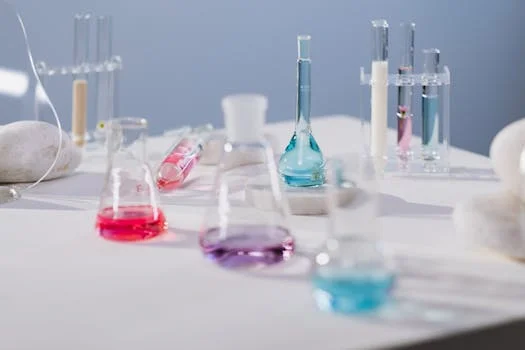
Cryolite (Na₃AlF₆) recovery represents the most environmentally sustainable route for photovoltaic wastewater treatment, offering a 60% lower environmental impact than conventional disposal methods. While it requires a higher initial investment (CAPEX of approximately $1.6M for a 500 m³/day system), it recovers 95% of fluoride as a high-purity byproduct. With a market price of roughly $300/ton, cryolite recovery allows plants to offset a portion of their annual OPEX while meeting the strictest sustainability mandates. This route is particularly favored by manufacturers aiming for 2026 ESG (Environmental, Social, and Governance) leadership.
Alternatively, Fluorspar (CaF₂) recovery is often selected for cost-sensitive projects where CAPEX is the primary constraint. This route requires approximately $1.2M in initial investment but yields a lower-value byproduct (market price: $200/ton) and has a lower fluoride recovery efficiency of 85%. For ammonia-heavy streams, solar-powered ammonia-nitrogen removal systems can be augmented with crystallization equipment to recover Ammonium Chloride (NH₄Cl). This requires an additional $500K in CAPEX but reduces chemical costs by 25% by reclaiming 90% of ammonia-nitrogen for resale at $150/ton.
Decision-making for these routes depends heavily on the influent chemistry and the plant's financial priorities. Chemical usage remains the primary cost driver across all routes; for instance, lime (Ca(OH)₂) dosing typically occurs at 10–20 g/L for fluoride precipitation, while sodium hydroxide (NaOH) is used at 5–10 g/L for pH adjustment. Using magnesium hydroxide as a substitute can reduce sludge volume and lower costs by 20% in specific configurations. The following comparison table summarizes the three primary recovery routes:
| Recovery Route | CAPEX (500 m³/day) | Recovery Rate | Market Value (Byproduct) | Primary Benefit |
|---|---|---|---|---|
| Cryolite (Na₃AlF₆) | $1.6M | 95% Fluoride | $300/ton | Maximum Sustainability |
| Fluorspar (CaF₂) | $1.2M | 85% Fluoride | $200/ton | Lower Initial Investment |
| Ammonium Chloride | +$500K (Add-on) | 90% Ammonia | $150/ton | Chemical Cost Reduction |
Cost Breakdown: CAPEX, OPEX, and ROI for Solar-Integrated ZLD Systems
The total CAPEX for a 500 m³/day solar-integrated ZLD system with cryolite recovery is approximately $3.2M, which includes the integration of a 1 MW solar PV array and battery storage. This investment is divided among several critical subsystems: pretreatment ($200K), the SCE system with resin regeneration ($800K), the UF system ($300K), and the high-recovery RO system ($500K). The evaporation and crystallization units required for true ZLD compliance add another $400K, while the solar PV integration itself accounts for $1M. While these figures are higher than conventional systems, the long-term economic viability is anchored in the reduction of grid energy and chemical consumption.
Annual OPEX for such a system typically totals $400K for cryolite recovery and $350K for fluorspar recovery. Energy costs, usually the most significant variable, are reduced to $120K annually because the solar PV integration offsets approximately 30% of the total load. Chemical costs (lime, NaOH, and antiscalants) average $150K per year. Maintenance, including RO membrane replacement every 3–5 years and UF membrane replacement every 5–7 years, adds $50K annually. Labor costs are streamlined through automation, requiring only one full-time equivalent (FTE) operator and a 0.5 FTE maintenance technician, totaling $80K per year.
Return on Investment (ROI) for solar-integrated ZLD systems is typically achieved within 4–6 years. This calculation is based on the combination of water savings (reusing 300,000 m³/year at a cost of $2/m³), byproduct revenue ($50K–$100K/year), and the elimination of discharge fees and potential fines. For a 1 GW manufacturing facility, the cost of inaction—potential production shutdowns and environmental penalties—often makes the ROI even more compelling. The table below provides a detailed breakdown of the CAPEX and OPEX for a 500 m³/day system:
| Expense Category | CAPEX (One-time) | OPEX (Annual) | Notes |
|---|---|---|---|
| Pretreatment & SCE | $1,000,000 | $150,000 | Resin & Chemical Dosing |
| Membrane Systems (UF/RO) | $800,000 | $50,000 | Membrane replacement fund |
| Evaporation & ZLD | $400,000 | $80,000 | Energy-intensive stage |
| Solar PV Integration | $1,000,000 | ($36,000) | Savings on energy bills |
| Labor & Misc. | - | $80,000 | 1.5 FTE equivalent |
| Total | $3,200,000 | $324,000 | Net OPEX after solar savings |
Case Study: 99.9% Fluoride and Ammonia Removal at a 1 GW Solar Cell Plant
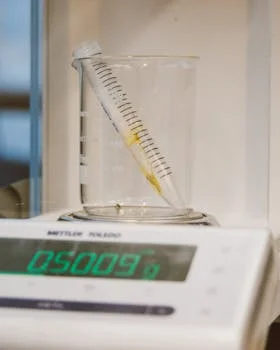
A 1 GW monocrystalline solar cell plant in Zhejiang, China, successfully implemented a solar-integrated ZLD system to treat 1,000 m³/day of wastewater with influent fluoride levels of 800 ppm and ammonia-nitrogen at 300 ppm. The facility chose a hybrid ZLD system for solar cell wastewater recycling that prioritized cryolite recovery to align with corporate sustainability targets. The system utilized a 1.5 MW on-site solar PV array to supply power to the high-pressure RO pumps and the automated chemical dosing units.
The results from the first 12 months of operation demonstrated exceptional effluent quality and resource efficiency. Fluoride levels in the treated effluent were consistently measured at <0.5 ppm, representing a 99.9% removal rate, while ammonia levels remained <3 ppm (99% removal). The plant achieved an 85% water recovery rate, allowing 850 m³/day of high-quality water to be reused in the production line, significantly reducing the facility's freshwater footprint. the 1.5 MW solar integration provided 30% of the wastewater plant's total energy needs, and the sale of recovered cryolite generated $80,000 in annual revenue.
Operational challenges during the first quarter included higher-than-anticipated membrane fouling due to fluctuations in influent silica. This was resolved by optimizing the precise chemical dosing for fluoride and ammonia removal, specifically increasing the antiscalant dosage by 1.5 ppm and adjusting the pH to 6.5. Additionally, the plant reduced lime consumption by 20% by substituting a portion of the reagent with magnesium hydroxide, which also resulted in a more manageable sludge volume for the cryolite recovery unit. This project serves as a definitive proof of concept for the economic and technical feasibility of solar-integrated ZLD in the PV sector.
Frequently Asked Questions
What are the discharge limits for fluoride and ammonia in PV wastewater?
In China, the GB 8978-1996 standard mandates fluoride <10 ppm and ammonia <15 ppm. In the EU, the Urban Waste Water Directive often requires fluoride <15 ppm and ammonia <10 ppm, though local regional standards may be stricter depending on the sensitivity of the receiving water body.
How much energy does a solar-integrated ZLD system consume?
The RO stage typically consumes 0.8–1.2 kWh/m³, while the UF stage requires 0.3–0.5 kWh/m³. When integrated with solar PV, 30–50% of this demand is typically offset, and in some high-irradiance regions, solar can cover up to 100% of the energy requirements for the wastewater facility.
What is the lifespan of RO membranes in PV wastewater treatment?
High-recovery RO membranes typically last 3–5 years. The lifespan is heavily dependent on the effectiveness of the SCE pretreatment and the accuracy of antiscalant dosing. Fouling symptoms include a 15% increase in pressure drop or a 10% reduction in permeate flow.
Can solar-integrated ZLD systems handle silica-rich wastewater?
Yes, but it requires specific pretreatment. Silica-rich wastewater is a known challenge in PV production. Management involves maintaining a pH of 6–7 and utilizing specialized silica-inhibiting antiscalants at dosing rates of 2–5 ppm to prevent irreversible membrane scaling.
What are the alternatives to lime for fluoride precipitation?
Magnesium hydroxide is a common alternative that produces lower sludge volumes and can offer 20% cost savings in sludge disposal. Sodium aluminate is another option that allows for faster reaction times, though it typically requires a higher CAPEX for the dosing equipment.
Related Equipment
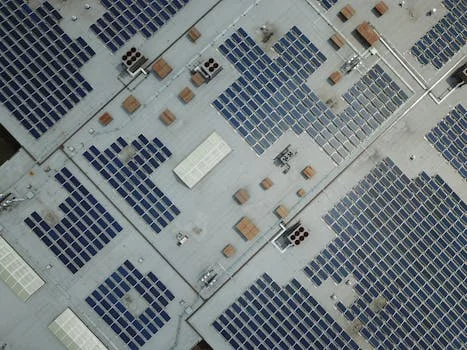
The following HydropureWater products are engineered for the wastewater challenges discussed above:
- MBR systems for ammonia-nitrogen removal in PV wastewater — view specifications, capacity range, and technical data
Need a customized solution? Request a free quote with your specific flow rate and pollutant parameters.