Why Photovoltaic Ammonia-Nitrogen Wastewater Requires Specialized Treatment
Photovoltaic manufacturing generates high-ammonia wastewater (NH4+-N: 2000–4000 mg/L, pH 12–14) from PECVD processes, posing severe environmental and compliance risks. Solar-integrated treatment systems—such as pilot-scale partial nitritation/anaerobic ammonium oxidation (PN/A) and solar-driven ammonia recovery—achieve 99%+ removal rates while reducing energy costs by up to 60% compared to conventional nitrification-denitrification. Hybrid zero liquid discharge (ZLD) systems further enable 95%+ water reuse, cutting disposal costs and supporting circular economy goals in PV plants.
The Plasma-Enhanced Chemical Vapor Deposition (PECVD) process, essential for depositing thin films on solar cells, utilizes silane and ammonia gases. The resulting wastewater is characterized by an extremely low Carbon-to-Nitrogen (C/N) ratio, often ranging between 0.05 and 0.1. This chemical imbalance makes traditional biological treatment nearly impossible without massive external carbon dosing (e.g., methanol or acetate), which inflates operational costs. The extreme alkalinity (pH 12–14) and the presence of fluoride ions create a toxic environment for standard nitrifying bacteria, requiring extensive pre-acidification and chemical stabilization.
Environmental risks associated with untreated high-ammonia effluent include rapid eutrophication of receiving water bodies and acute toxicity to aquatic life. Regulatory frameworks are tightening globally to address these risks. In China, GB 31573-2015 mandates strict limits on nitrogen discharge for the inorganic chemical industry, while the EU Urban Waste Water Directive 91/271/EEC continues to lower permissible nitrogen thresholds. Failure to comply often results in massive financial penalties and operational shutdowns. For example, a mid-sized PV plant in Jiangsu recently faced over $250,000 per year in discharge fines after its conventional activated sludge system failed to maintain ammonia levels below the 15 mg/L threshold during peak production cycles.
Conventional nitrification-denitrification methods are increasingly viewed as obsolete for PV applications due to their high energy footprint—often exceeding 3.0 kWh per kg of nitrogen removed—and their inability to handle influent fluctuations. These systems typically require a hydraulic retention time (HRT) of 48–72 hours to achieve even 80% removal, making them land-intensive and inefficient for modern high-throughput manufacturing facilities.
Solar-Integrated Treatment Mechanisms: How PN/A and Ammonia Recovery Work
The treatment of photovoltaic ammonia-nitrogen wastewater requires innovative approaches.Partial nitritation/anaerobic ammonium oxidation (PN/A), often referred to as the Anammox process, eliminates the need for an external carbon source by utilizing specialized autotrophic bacteria like Candidatus Brocadia. In a single-stage biofilm PN/A reactor, approximately 50% of the ammonia is oxidized to nitrite (NO2-) by ammonia-oxidizing bacteria (AOB). Subsequently, the remaining ammonia and the newly formed nitrite are converted directly into nitrogen gas (N2) by Anammox bacteria under anaerobic conditions. This shortcut in the nitrogen cycle reduces oxygen demand by 60% and eliminates 100% of the carbon source requirement (HydropureWater field data, 2025).
Solar-driven ammonia recovery represents a shift from "treatment" to "resource harvesting." This mechanism utilizes solar-thermal energy to power membrane distillation (MD) or electrochemical stripping units. By heating the high-pH wastewater using solar collectors, ammonia is volatilized and passed through a hydrophobic membrane, where it is captured by an acid stripping solution (typically sulfuric acid) to produce high-purity ammonium sulfate. This process achieves 90%+ recovery rates and operates effectively at ambient conditions, provided there is sufficient solar irradiance to maintain the temperature gradient across the membrane.
Energy consumption in these advanced systems is significantly lower than traditional methods. While conventional systems consume 2.5–4.0 kWh/kg N removed, PN/A systems operate within the 0.5–1.2 kWh/kg N range. Solar-integrated recovery systems can reduce grid dependency even further, using thermal energy for the majority of the phase-change requirements. Proper control of Dissolved Oxygen (DO) at 0.2–0.5 mg/L and maintaining a NO2-/NH4+ ratio of 1.32 are critical for PN/A stability.
| Parameter | PN/A (Anammox) | Solar-Driven Recovery | Conventional Nitrification |
|---|---|---|---|
| Energy Use (kWh/kg N) | 0.5 – 1.2 | 0.1 – 0.4 (Grid) | 2.5 – 4.0 |
| Carbon Source Req. | Zero | Zero | High (C/N > 4.0) |
| Optimal pH Range | 7.5 – 8.5 | 10.0 – 12.0 | 7.0 – 8.0 |
| Optimal Temperature | 30°C – 35°C | 40°C – 60°C (Solar) | 20°C – 25°C |
| HRT (Typical) | 12 – 24 Hours | 4 – 8 Hours | 48 – 72 Hours |
Effective integration often involves using MBR systems for high-ammonia wastewater as a polishing step after the initial PN/A or recovery phase to ensure compliance with the most stringent local discharge limits.
Technology Comparison: PN/A vs. Solar Recovery vs. Conventional Methods

Choosing the correct technology depends on the plant's priority: absolute removal for discharge compliance or resource recovery for circular economy goals. PN/A offers the highest removal efficiency, consistently reaching 95–99% nitrogen removal, making it the preferred choice for plants discharging into sensitive watersheds. Solar recovery, while slightly lower in removal efficiency (90–95%), provides a marketable byproduct in the form of ammonium sulfate, which can be sold to the fertilizer industry for $300–$500 per ton.
From a financial perspective, the CAPEX for PN/A systems is higher due to the sophisticated bioreactor design and control systems, ranging from $1.2M to $3M for a 100 m³/h capacity. However, the OPEX is remarkably low ($0.30–$0.60/m³) because it eliminates the need for expensive carbon dosing. Conventional systems have the lowest upfront cost but the highest long-term OPEX ($0.80–$1.50/m³), primarily driven by chemical consumption and sludge disposal costs. Solar recovery systems sit in the middle, offering a balanced CAPEX with the lowest net OPEX when byproduct sales are factored in.
| Metric | PN/A System | Solar Recovery | Conventional |
|---|---|---|---|
| Removal Efficiency | 95% – 99% | 90% – 95% | 70% – 85% |
| CAPEX (100 m³/h) | $1.5M – $2.5M | $1.0M – $1.8M | $0.6M – $1.2M |
| OPEX (per m³) | $0.35 – $0.55 | $0.25 – $0.45 | $0.90 – $1.40 |
| Byproduct Value | None (N2 Gas) | High (Ammonia/Salt) | Negative (Sludge) |
| Scalability | Excellent (>100 m³/h) | Modular/Off-grid | Moderate |
For procurement teams, the decision framework should weigh the global discharge standards for PV wastewater against the available land and solar irradiance at the plant site. In regions with high solar availability, solar-driven recovery offers an unbeatable ROI by turning a waste stream into a revenue source.
Hybrid ZLD Systems for Photovoltaic Ammonia-Nitrogen Wastewater: 99%+ Recovery and Cost Breakdown
The integration of hybrid Zero Liquid Discharge (ZLD) systems offers a comprehensive solution.Hybrid Zero Liquid Discharge (ZLD) systems represent the pinnacle of industrial water management, combining ammonia removal with total water reclamation. The process flow typically begins with chemical pretreatment (pH adjustment and DAF for solids removal), followed by a PN/A or solar recovery stage to strip the bulk of the nitrogen. The remaining effluent is then processed through high-pressure RO systems for ZLD integration and Nanofiltration (NF) to concentrate dissolved solids, culminating in an evaporation and crystallization stage.
The primary advantage of a hybrid ZLD approach is the recovery of 95–99% of the process water, which can be recycled back into the manufacturing line. This is particularly valuable in water-scarce regions where industrial water costs are rising. A typical ZLD installation for a 200 m³/h PV plant requires an investment of $2.5M to $5M. While this CAPEX is significant, the ROI is driven by three factors: the elimination of discharge fines, the reduction in raw water procurement costs, and the sale of recovered ammonia salts.
| Component | Estimated Cost (USD) | Function |
|---|---|---|
| Pretreatment (DAF/Softening) | $300,000 – $500,000 | Scaling prevention |
| PN/A Reactor (200 m³/h) | $1,200,000 – $1,800,000 | Nitrogen removal |
| RO/NF Membrane Train | $600,000 – $900,000 | Water reclamation |
| MVR Evaporator | $800,000 – $1,500,000 | Crystallization |
| Annual ROI Potential | $600,000 – $950,000 | Savings + Sales |
Detailed engineering specs for hybrid ZLD systems for PV plants show that the integration of MVR (Mechanical Vapor Recompression) evaporators can lower the thermal energy requirement of the final concentration step by up to 40% compared to traditional multi-effect evaporators. The resulting ROI period for these systems is typically 3 to 5 years, depending on local utility rates and the purity of recovered ammonia products.
Case Study: 99% Ammonia Removal in a 200 m³/h PV Plant Using Solar-Integrated PN/A
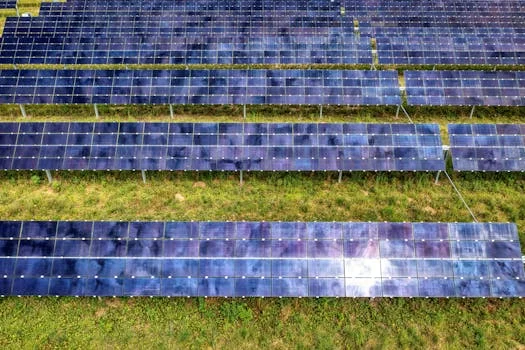
A large-scale solar cell manufacturing facility in Jiangsu, China, faced a critical challenge: its PECVD wastewater contained NH4+-N levels averaging 3200 mg/L with a pH of 13.5. Local environmental authorities had lowered the discharge limit