LED wastewater treatment using UV-C diodes is now specified for municipal and industrial disinfection trains, with CAPEX typically $120,000–$450,000 for 100–500 m³/h trains versus $80,000–$350,000 for low-pressure mercury UV. Reported energy OPEX for UV LED is $0.02–$0.05/m³ versus $0.04–$0.08/m³ for low-pressure UV, with reactor footprints often about 50% smaller on a per-100 m³/h basis. United Utilities’ Cumwhinton works in Northwest England installed the first municipal-scale UV LED system sized for a 28 megaliter-per-day (Ml/d) output using Typhon reactors. This guide covers process specs, cost trade-offs versus chlorine dioxide, selection rules, and procurement checks for engineers and buyers.
How LED Wastewater Treatment Works: Process and Dose Control
UV-C LEDs emit germicidal light, usually 255–280 nm, that forms pyrimidine dimers in microbial DNA or RNA and stops replication. Delivery needs about 25–65% UVT after solids control, turbidity below roughly 5 NTU, and TSS under 10 mg/L. Design dose tracks log-reduction target, flow, and online UVT; LED power is modulated to hold it.
UV LED disinfection relies on semiconductor photon emission rather than mercury vapor lamps. When UV-C photons enter a cell, they create dimers that block pathogen replication and infectivity. For wastewater duty, pre-treatment must protect that optical path. A typical train starts with screening, often a GX Series bar screen for UV LED pre-filtration. Clarification or dissolved air flotation then holds turbidity below 5 NTU and TSS under 10 mg/L before the reactor.
Earlier briefs often cited an “EPA 2024 UV Disinfection Guidance Manual” and a 30–120 mJ/cm² band for 3-log E. coli and coliform inactivation. The current US EPA Ultraviolet Disinfection Guidance Manual (EPA 815-R-06-007, November 2006) for LT2ESWTR instead lists required doses in Table 1.4 of 12 mJ/cm² for 3-log Cryptosporidium credit and 143 mJ/cm² for 3-log virus credit. Wastewater coliform targets still depend on local permits and collimated-beam validation, so engineers should size dose from site UVT and the regulated organism, not from a generic band alone. Instant on/off control extends diode life toward the common 50,000-hour rating and cuts idle energy use.
Mercury-free hardware also supports compliance paths discussed in UK wastewater treatment compliance requirements for UV LED systems. High iron or manganese still scales quartz sleeves, so specify automatic mechanical wiping and chemical CIP to hold design dose over the lifecycle.
UV LED vs Conventional UV vs Chlorine Dioxide: Cost and Performance
UV LED systems often show higher CAPEX than low-pressure UV. Lifecycle cost can still fall when energy, lamp disposal, and labor are counted over 10–15 years at 100–500 m³/h. Chemical safety and footprint rules push many plants away from chlorine dioxide bunkers even when ClO₂ CAPEX looks lower on paper.
The following table provides a direct comparison for a mid-scale treatment system with a capacity of 100–500 m³/h:
| Parameter | UV LED System | Low-Pressure (LP) UV | Chlorine Dioxide (ClO₂) |
|---|---|---|---|
| CAPEX (100-500 m³/h) | $120,000 – $450,000 | $80,000 – $350,000 | $50,000 – $200,000 |
| Energy OPEX (per m³) | $0.02 – $0.05 | $0.04 – $0.08 | Negligible (Pumping only) |
| Consumables/Chemicals | None | Mercury Lamp Replacement | $0.03 – $0.07 / m³ |
| Footprint (per 100 m³/h) | 0.5 – 1.2 m² | 1.0 – 2.5 m² | 2.0 – 4.0 m² (with tanks) |
| Maintenance Cycle | Annual Module Check | Quarterly Lamp Change | Daily Dosing Calibration |
| Byproduct Risk | Zero | Zero | High (Chlorates/Chlorites) |
Energy use drives most of the OPEX gap. Mercury lamps waste heat and non-germicidal infrared output, while UV-C LEDs convert more of the input into germicidal photons and need no ballast standby draw. At sites with swinging flow, intensity modulation supports a cost comparison for UV LED vs advanced oxidation (AOP) in high-COD wastewater that favors LED when the duty is disinfection only.
Chlorine dioxide OPEX is easy to understate. Precursor chemicals, storage bunkers, and residual quenching raise ownership cost even when equipment CAPEX is lower. Where a pipeline residual is still required, a Chlorine Dioxide Generator for hybrid disinfection can sit downstream of UV LED without rebuilding a full contact-tank train.
Real-World UV LED Projects: Specs and Measured Lessons
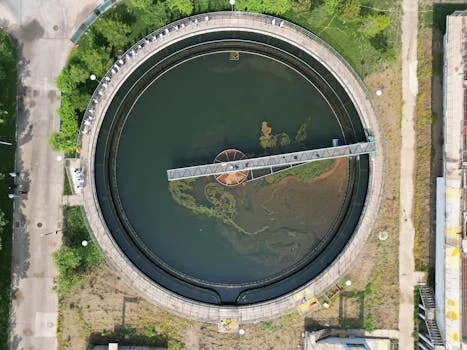
United Utilities’ Cumwhinton Water Treatment Works near Carlisle hosts the first municipal-scale UV LED installation. The works output is 28 Ml/d, with Typhon Treatment Systems reactors after rapid gravity filters. Earlier summaries framed the site as a wastewater plant. They also cited about 40% energy reduction with a 12-month OPEX payback. Project reporting confirms it is a drinking-water works. Each validated unit delivers 3-log Cryptosporidium inactivation at 6.0 Ml/d when UVT is 94.6% or higher. The case study cites potential savings of up to 90% energy and more than 50% whole-life cost versus traditional UV (Water Projects Online, 2020). Modular arrays allow dose trim at low flow, which is the main energy lever for both potable and wastewater duties.
In the industrial sector, a 2024 pilot at a semiconductor facility in Taiwan used UV LED in an AOP train on high-salinity water at about 5,000 mg/L TDS. Combined with hydrogen peroxide, the train reported 99.8% TOC removal. Solid-state diodes held up where fouling would shorten mercury-lamp sleeve life. Upstream oil and fine-solids removal used a DAF system for UV LED pre-treatment so emulsified oils would not absorb UV before the reactor.
A 2023 municipal retrofit in Germany replaced chlorine gas with a UV LED reactor near residences. The plant reported about 95% fewer disinfection byproducts and phased the changeover without long outages, supporting compliance with EU Urban Waste Water Directive 91/271/EEC without large contact tanks. Upstream solids control remained critical; plants often keep a GX Series bar screen for UV LED pre-filtration ahead of the reactor core.
Decentralized sites also trial solar-powered UV LED systems for off-grid wastewater treatment. LEDs can run on DC from photovoltaic arrays with less conversion loss than mercury ballasts, which suits remote industrial camps with weak grids.
When to Choose UV LED for Wastewater Treatment
Footprint limits, mercury restrictions, and high diurnal or batch flow swings decide when LED wastewater treatment beats mercury UV or chemical disinfection. UV LED reactors are typically about 50% smaller than low-pressure UV skids and about 70% smaller than chlorine contact tanks on an equivalent capacity basis, which matters in pipe galleries and tight mechanical rooms.
Ideal scenarios for UV LED:
- Mercury-free rules: Regions implementing Minamata Convention mercury controls where lamp disposal cost and risk keep rising.
- Variable flow: Batch industry or strong diurnal municipal curves where instant on/off and dimming cut wasted dose.
- Tight retrofits: Disinfection that must fit an existing gallery under about 1.5 m² per 100 m³/h.
- Remote O&M: Sites where quarterly mercury lamp changeouts are costly or slow to staff.
Scenarios to avoid or approach with caution:
- Very low CAPEX ceilings: High-flow trains under about $100,000 often still default to chemical dosing.
- High TSS (>50 mg/L): Without DAF or fine screening, shadowing will miss disinfection targets.
- Poor power quality: Many LED drivers need about 90–260 V with conditioning if the site has frequent sags.
If a 5 km or longer effluent pipeline needs a residual, keep UV LED for primary inactivation and add a Chlorine Dioxide Generator for hybrid disinfection as a secondary stage. For high-COD industrial streams, choose UV LED when the goal is pathogen log reduction only; choose LED-AOP when organic oxidation is also required.
How Do You Compare UV LED Equipment Suppliers?
UV LED supplier comparison should start with third-party dose validation, published diode lifetime at the design wavelength, and spare-module lead times, not unit price alone. Ask for collimated-beam curves at your UVT, RED bias documentation aligned with EPA UVDGM methods, and evidence that mechanical wiping plus CIP holds sleeve transmission over a full year. Score vendors on spectral match near 265 nm, driver ride-through during voltage dips, and whether modules swap without draining the whole channel. Reject bids that cannot show validated dose at your peak flow and lowest seasonal UVT.
What Upgrades Support Municipal Net-Zero Goals?
Municipal net-zero upgrade paths that favor UV LED include mercury-lamp retirement, dose modulation that cuts kWh/m³ at night minimum flows, and DC-coupled solar assist on remote or satellite plants. Boards comparing options should quantify avoided lamp hazardous-waste trips and the carbon of chemical precursors when ClO₂ or hypochlorite is the baseline. Compact reactors also free land that would otherwise go to contact tanks. For package plants serving small communities, an Underground Package Sewage Treatment Plant (WSZ Series) can host UV LED as the final disinfection stage without a new building footprint.
UV LED Equipment Selection Checklist for Procurement Teams

Procurement for UV LED should verify diode life, spectral power distribution, and third-party validation. Use protocols consistent with EPA Environmental Technology Verification practice and UVDGM methods. Market offerings change quickly, so look past the first quote to parts availability and service coverage.
Selection checklist:
- Validated dose at design flow and lowest expected UVT, with named challenge organism.
- Diode lifetime rating at the installed wavelength and drive current (often ~50,000 h).
- Automatic sleeve cleaning plus defined CIP chemistry and interval.
- Online UVT and intensity sensors tied to closed-loop power control.
- Driver voltage window and surge protection matched to site power quality.
- Modular hot-swap path and documented spare lead times under 90 days.
- Mercury-free materials declaration and end-of-life take-back terms.
Who this is for: plant engineers, EPC designers, and procurement managers sizing disinfection for municipal effluent or industrial wastewater with UVT above about 25% after solids removal. Who should look elsewhere: projects that must keep a long-pipe residual with no hybrid chemical stage, or high-TSS streams without budget for DAF or fine screening. Next step: send influent UVT, peak/average flow, and target log reduction for a reactor sizing pass before freezing CAPEX.
Frequently Asked Questions
How much does a UV LED wastewater system cost at 100–500 m³/h?
CAPEX for UV LED trains in the 100–500 m³/h band is typically $120,000–$450,000, versus $80,000–$350,000 for low-pressure mercury UV and $50,000–$200,000 for chlorine dioxide equipment. Energy OPEX is often $0.02–$0.05/m³ for LED versus $0.04–$0.08/m³ for low-pressure UV. Lifecycle ranking flips when lamp changes, hazardous disposal, and labor are included over 10–15 years.
What UV dose should engineers target for 3-log pathogen credit?
According to US EPA UVDGM Table 1.4 (EPA 815-R-06-007, November 2006), 3-log Cryptosporidium credit requires 12 mJ/cm² and 3-log virus credit requires 143 mJ/cm² under LT2ESWTR. Earlier secondary sources used a 30–120 mJ/cm² band for coliform-style targets. Wastewater permits vary, so confirm the regulated organism and validate at site UVT rather than copying a single number.
Is the UK 28 Ml/d UV LED project a wastewater plant?
No. Cumwhinton is a United Utilities drinking-water treatment works near Carlisle with a 28 Ml/d output, using Typhon UV LED reactors after rapid gravity filters. Units were validated for 3-log Cryptosporidium inactivation at 6.0 Ml/d when UVT is at least 94.6%. The same modular dose-control lessons apply when adapting UV LED to wastewater effluent polishing.
When is chlorine dioxide still better than UV LED?
Chlorine dioxide remains practical when CAPEX must stay near the $50,000–$200,000 equipment band and a lasting residual is mandatory in long pipelines. Chemical OPEX of about $0.03–$0.07/m³ plus storage and quenching must be booked honestly. Many plants pair UV LED primary kill with a small ClO₂ residual stage instead of choosing only one technology.
What pre-treatment does UV LED need before the reactor?
Keep turbidity below about 5 NTU and TSS under about 10 mg/L so photons are not shadowed; design UVT commonly sits between 25% and 65% depending on effluent quality. Screening plus clarification or DAF is the usual path. Without that protection, even a correctly sized LED reactor will miss log-reduction targets at peak solids load.