Why Photovoltaic Plants Need Specialized Arsenic Wastewater Treatment
Photovoltaic (PV) manufacturing processes, from silicon wafer etching to solar cell doping and module cleaning, frequently generate wastewater contaminated with arsenic.
Typical influent concentrations can range from 50–500 µg/L, significantly exceeding regulatory limits. The U.S. Environmental Protection Agency (EPA) established a maximum contaminant level (MCL) of 10 µg/L for arsenic in drinking water in 2001, a standard that increasingly influences industrial discharge permits. China's GB 31573-2015 standard mandates a maximum of 0.1 mg/L (100 µg/L) for arsenic in wastewater from photovoltaic manufacturing, while the EU's Industrial Emissions Directive (IED) also imposes stringent limits. Failure to comply can result in substantial financial penalties; for instance, a PV plant in Malaysia faced fines totaling $2.1 million due to arsenic discharge violations that far exceeded permissible levels. Conventional treatment methods, such as chemical precipitation, adsorption, or biological treatment, often prove inadequate for PV wastewater due to the complex matrix of co-contaminants like fluorine and ammonia, and the variable speciation of arsenic (As(III) vs. As(V)), which can hinder consistent removal efficiency and increase operational complexity and cost. The presence of fluoride, for example, can interfere with the coagulation process, while high ammonia levels can impact the effectiveness of certain biological treatment stages. Precise control of pH is critical, as arsenic solubility and speciation are highly pH-dependent, making robust and adaptable treatment systems indispensable for PV manufacturers aiming for sustainable operations and regulatory adherence. Efficient management of these challenges is paramount for maintaining operational continuity and environmental responsibility.
| Regulatory Standard | Arsenic Limit | Applicability |
|---|---|---|
| US EPA MCL | 10 µg/L | Drinking Water (influences industrial discharge) |
| China GB 31573-2015 | 0.1 mg/L (100 µg/L) | PV Manufacturing Wastewater Discharge |
| EU Industrial Emissions Directive (IED) | Varies by permit, generally stringent | Industrial Discharges in the EU |
Solar-Powered Electrocoagulation: Engineering Process & Arsenic Removal Efficiency
Solar-powered electrocoagulation (EC) offers a sustainable and effective solution for treating arsenic-contaminated PV wastewater by directly harnessing solar energy.
In this process, photovoltaic panels convert sunlight into direct current (DC), which powers an electrocoagulation reactor. Within the reactor, sacrificial electrodes (typically aluminum or iron) dissolve, releasing metal ions that coagulate with arsenic species. The direct DC current also promotes the generation of hydrogen gas, which can be safely recovered and utilized, potentially for other plant operations or as a clean fuel source. The process typically involves a tube-in-tube electrocoagulator, optimized for efficient mass transfer and electrode surface area. Key operational parameters include a current density of 5–20 A/m², a pH range of 6–8 maintained through automated dosing, and a hydraulic retention time of 30–60 minutes. Under these conditions, EC systems have demonstrated high arsenic removal efficiencies, achieving 92–99% for As(V) and 85–95% for As(III), according to 2024 EPA demonstration data. Beyond arsenic, these systems also effectively remove co-contaminants such as fluorine (over 90%), turbidity (over 95%), and other heavy metals like copper and lead, as shown in cited studies. The inherent advantage of EC is its ability to simultaneously coagulate and oxidize/reduce contaminants depending on electrode material and applied potential. While highly effective, challenges can include scaling for very high flow rates (>50 m³/h), potential electrode fouling over extended periods, and the need for robust hydrogen gas management systems to ensure safety and efficiency. For facilities requiring precise control over chemical addition, HydropureWater offers an automated pH adjustment and coagulant dosing for arsenic treatment, enhancing process stability and efficiency by precisely controlling the addition of neutralizing agents and supplemental coagulants when needed, ensuring optimal performance even with fluctuating influent characteristics.
| Parameter | Typical Range/Value | Arsenic Removal Efficiency (As(V)/As(III)) | Co-contaminant Removal |
|---|---|---|---|
| Power Source | Solar PV (DC) | 92–99% / 85–95% | Fluorine (>90%), Turbidity (>95%), Heavy Metals |
| Current Density | 5–20 A/m² | - | - |
| pH Range | 6–8 | - | - |
| Retention Time | 30–60 min | - | - |
| Electrode Material | Aluminum or Iron | - | - |
Building on the effectiveness of solar-powered electrocoagulation, integrating this technology with a hybrid Zero Liquid Discharge (ZLD) system can further enhance treatment outcomes.
Hybrid ZLD Systems for Photovoltaic Arsenic Wastewater: 99.9% Recovery Blueprint
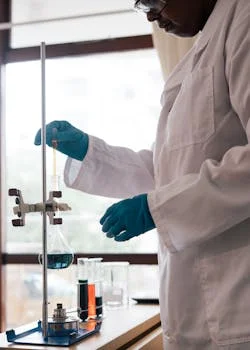
To achieve comprehensive regulatory compliance and maximize resource recovery, integrating solar-powered electrocoagulation with a hybrid Zero Liquid Discharge (ZLD) system is paramount for PV plants.
This integrated approach typically begins with electrocoagulation for arsenic removal, followed by sedimentation to separate precipitated solids. Subsequent stages include ultrafiltration (UF) and reverse osmosis (RO) to remove dissolved salts and further purify the water, ensuring high-quality recycled water. The final stage often involves an evaporator and crystallizer to recover the remaining water and concentrate any dissolved solids or residual contaminants into a solid matrix for safe disposal. HydropureWater’s 2024 PV plant case study demonstrated that this hybrid ZLD configuration can achieve over 99% water reuse and more than 95% reduction in arsenic sludge volume. The significant integration of solar PV power reduces the overall grid electricity consumption by 40–60% compared to conventional ZLD systems, leading to substantial operational cost savings. Dewatering of the arsenic-rich sludge is efficiently managed using a plate and frame filter press, achieving 30–40% dry solids content, a critical step for minimizing disposal volumes and costs. This comprehensive system ensures compliance with stringent standards such as China GB 31573-2015 and EPA arsenic limits, often with a 20% safety margin, providing an additional buffer against regulatory scrutiny. For efficient sludge management, the arsenic sludge dewatering to 40% dry solids is a key component, reducing hauling costs and landfill requirements. Advanced water purification for recycling is supported by systems like the 99%+ arsenic removal in ZLD systems, which are crucial for achieving the high purity levels required for reuse in sensitive PV manufacturing processes.
Solar vs. Conventional Arsenic Treatment: Cost, Efficiency & Scalability Comparison
Selecting the optimal arsenic treatment technology for photovoltaic manufacturing wastewater requires a thorough comparison of various methods.
Solar-powered electrocoagulation (EC) presents a compelling alternative to traditional chemical precipitation, adsorption, and biological treatment systems, particularly in terms of operational expenditure and environmental footprint. While initial capital expenditure (CAPEX) for solar EC systems can be higher, ranging from $1.2M to $3.5M for flow rates of 50–200 m³/h, their operational expenditure (OPEX) is typically 30% lower due to the elimination of chemical reagent costs, reduced energy consumption from solar integration, and less sludge generation. Solar EC systems often boast a 40% smaller footprint and the inherent advantage of on-site hydrogen production, which can offset energy costs or be utilized in other processes. Chemical precipitation, while having a lower CAPEX ($0.8M–$2.5M for similar flow rates) and better scalability for very large flows (>300 m³/h) or wastewater with very high arsenic concentrations (>1 mg/L), incurs higher OPEX due to continuous chemical consumption (e.g., coagulants, pH adjusters) and larger sludge volumes requiring disposal. Adsorption methods, such as activated alumina or ion exchange resins, are highly effective for polishing and achieving very low effluent concentrations, but can be costly for bulk removal of high arsenic loads, and require periodic media replacement. Biological treatment is generally not ideal for the complex and fluctuating nature of PV wastewater, especially concerning arsenic, due to potential toxicity to microorganisms and inconsistent removal rates. Therefore, solar EC is particularly well-suited for small-to-medium PV plants (10–200 m³/h) seeking sustainable compliance, reduced operating costs, and a lower environmental impact. For broader applications and further insights into compliance, readers can explore global arsenic discharge standards for PV plants, which provides context for the regulatory landscape and the need for advanced treatment solutions.
| Treatment Method | CAPEX (50-200 m³/h) | OPEX | Arsenic Removal Efficiency | Footprint | Scalability |
|---|---|---|---|---|---|
| Solar Electrocoagulation | $1.2M–$3.5M | Low (30% less than conventional) | High (90-99%) | Small (40% smaller) | Limited for >300 m³/h |
| Chemical Precipitation | $0.8M–$2.5M | Medium (chemical costs) | Medium-High (variable) | Medium | High (suitable for >300 m³/h) |
| Adsorption | $1.0M–$3.0M | Medium-High (media replacement) | Very High (polishing) | Small-Medium | Medium |
| Biological Treatment | $0.7M–$2.0M | Medium (energy, nutrients) | Low-Medium (variable) | Large | Medium |
2025 Cost Breakdown: CAPEX, OPEX & ROI for Photovoltaic Arsenic Treatment Systems
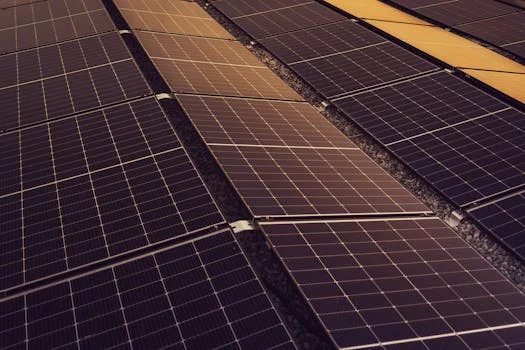
Procurement teams evaluating photovoltaic arsenic wastewater treatment solutions must consider a comprehensive cost breakdown.
For a typical solar-powered EC integrated with ZLD, the capital expenditure (CAPEX) can range from $1.4M to $4.2M, encompassing solar PV panels ($0.5M–$1.2M), the electrocoagulation reactor ($0.3M–$0.8M), ZLD integration components ($0.4M–$1.5M), and installation ($0.2M–$0.5M). These figures are indicative and can vary based on specific plant size, site conditions, and chosen equipment manufacturers. Operational expenditure (OPEX) is significantly reduced, typically comprising energy costs (around 20% of total OPEX, largely from solar), electrode replacement (15%), sludge disposal (10%), and maintenance (5%). The return on investment (ROI) for these systems is often realized within 3–7 years, driven by substantial savings from water reuse (estimated at $0.50–$2.00/m³, depending on local water costs) and the avoidance of significant environmental fines, which can range from $100K to $500K annually for non-compliance. A PV plant in Vietnam, for example, achieved a 35% reduction in arsenic treatment costs by implementing a solar-powered ZLD system, demonstrating the financial viability of such investments and highlighting the long-term economic benefits. For those seeking to optimize wastewater management and explore advanced ZLD strategies, a