Sludge dewatering equipment australia buyers shortlist in 2026 still centres on three mechanical options: screw presses, belt filter presses, and decanter centrifuges. Typical municipal cake dryness sits at 18–25% with screw presses and 20–30% with centrifuges, at energy uses of about 0.2–0.5 kWh/ton DS versus 2–5 kWh/ton DS. For plants treating 50–500 m³/day, screw presses usually deliver the lowest OPEX; belt presses suit fibrous industrial feeds up to about 12 m³/h. State biosolids rules in Victoria and New South Wales then decide whether the cake can go to land or must be landfilled.
Why Sludge Dewatering Equipment Australia Plants Upgrade First
Australian plants upgrade mechanical dewatering when tip fees and power dominate OPEX. Cake dryness and kWh/ton DS control haul volume and energy cost. Disposal costs cited for Australia are $80–$250/ton (2025), often 30–50% of OPEX on Australian Water Association benchmarks. Raising solids from about 2% to about 20% cuts hauled volume by roughly 90%.
Energy is the second cost lever. Centrifuges typically draw 2–5 kWh/ton DS; belt presses about 0.5–1.5 kWh/ton DS; modern screw presses about 0.2–0.5 kWh/ton DS. At a 2025 industrial tariff near $0.25/kWh, centrifuge energy alone can cost about $0.50–$1.25 per ton DS. A 100 m³/day Queensland municipal plant reported a 42% cut in annual sludge disposal cost after replacing an aging centrifuge with a screw press (Hydroflux Epco 2024 case study).
Reuse rules tighten the cake-dryness target. Victoria’s organic-waste-to-landfill direction and similar circular-economy policies push biosolids toward land application when treatment grades are met. Dewatering must therefore produce a stable cake that supports the pathogen and contaminant grades required for agricultural or industrial reuse, not only a lower haul mass.
How Sludge Dewatering Works: Mechanisms and Process Parameters
Mechanical dewatering moves sludge from a liquid state (2–5% solids) to a semi-solid cake (18–50% solids) by overcoming surface tension and capillary water held on particles. Gravity thickening cuts volume first, but it cannot reach the solids needed for economical transport or most land-application pathways. When industrial streams need extreme dryness, a Plate and Frame Filter Press for Sludge Dewatering is often specified to reach 35–50% cake solids under high filtration pressure.
Chemical conditioning sets mechanical performance. Polymer doses commonly fall between 0.5–2 kg/ton DS in light conditioning and 4–12 kg/ton DS on many municipal trains, with industrial feeds spanning about 2–20 kg/ton DS. An optimal mixing intensity (G-value) near 500–1000 s⁻¹ distributes polymer without shearing flocs. Many Australian plants use a PLC-controlled chemical dosing system for optimal polymer conditioning that trims dose against feed solids and flow.
Separation usually follows three stages: free-water drainage under gravity or low pressure; compression that expels interstitial water; and shear or friction that releases remaining moisture. Screw presses typically hold sludge 1–3 minutes; belt presses often need 5–10 minutes for the same solids load. Solids loading rate, polymer dose, cake dryness, and filtrate capture then decide whether return liquor overloads the headworks.
| Process Parameter | Typical Range (Municipal) | Typical Range (Industrial) | Impact on Performance |
|---|---|---|---|
| Solids Loading Rate (SLR) | 30–150 kg DS/m/h | 50–300 kg DS/m/h | Determines throughput capacity |
| Polymer Dosage | 4–12 kg/ton DS | 2–20 kg/ton DS | Directly affects filtrate clarity |
| Cake Dryness (%) | 18–25% | 25–50% | Determines disposal/reuse cost |
| Filtrate Capture Rate | >95% | >90% | Affects plant return liquor load |
What works best for digester sludge dewatering?
Anaerobic digester sludge usually dewaters best on a low-speed screw press or a well-tuned decanter when feed solids sit near 2–5% and polymer conditioning is stable. Digested biosolids form weaker flocs than primary sludge, so most plants we size run polymer toward the upper municipal band (often near 8–12 kg/ton DS) rather than the light end. Screw presses at 0.5–1.5 RPM tolerate feed swings common after digesters; centrifuges recover more dryness when the cake must hit 20–30% for hauling or composting.
Screw Press vs. Belt Press vs. Centrifuge: Performance Comparison for Australian Conditions
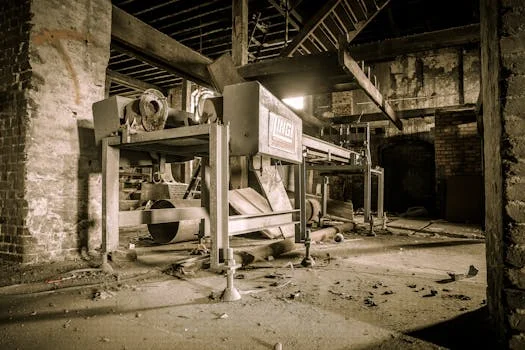
Technology choice follows sludge chemistry—coastal salinity, high FOG from food plants, or fibrous pulp—and site noise or footprint limits. Screw presses such as the HUBER Q-PRESS® suit many municipal STPs because 0.5–1.5 RPM operation cuts wear and keeps noise below about 60 dB while delivering 18–25% cake dryness across modest feed swings.
Decanter centrifuges remain the default for large trains or oily petrochemical sludge. Forces up to about 3,000 G can push biological cakes to 20–30% solids, but energy at 2–5 kWh/ton DS raises OPEX on smaller plants. Belt presses cost less to buy and handle fibrous, high-throughput industrial sludge well, yet they need more floor space, wash water, and operator time for belt tracking and cleaning.
| Metric | Screw Press | Belt Filter Press | Decanter Centrifuge |
|---|---|---|---|
| Cake Dryness | 18% – 25% | 15% – 22% | 20% – 30% |
| Energy Use (kWh/ton DS) | 0.2 – 0.5 | 0.5 – 1.5 | 2.0 – 5.0 |
| Wash Water Req. | Very Low | High | None/Low |
| Noise Level | <60 dB (Quiet) | 70–80 dB | >85 dB (Loud) |
| MTBF (Hours) | 500 – 1,000 | 200 – 400 | 400 – 800 |
How does a sludge decanter centrifuge improve biosludge dewatering?
A sludge decanter centrifuge improves biosludge dewatering by applying high G-force separation that raises cake dryness when screw or belt units stall below the haul or reuse target. On municipal biosludge, centrifuges commonly reach 20–30% solids versus about 18–25% on screw presses and 15–22% on belt presses under comparable conditioning. Capture stays high when bowl speed, differential, and polymer are tuned together; the trade-off is 2–5 kWh/ton DS and louder operation above 85 dB. For oily food or petrochemical biosludge, the three-phase cut of oil, water, and solids usually outperforms open belt machines.
Where landfill or compost gates need still higher solids, engineers compare centrifuge cakes with detailed specifications for plate and frame filter presses. Those presses apply the highest mechanical pressure on industrial sludge that must clear local acceptance limits.
Cost Breakdown: CAPEX, OPEX, and ROI for Australian Dewatering Trains
Total cost of ownership splits into CAPEX and recurring OPEX. In 2025, screw-press CAPEX typically ranged from $80,000 to $300,000 AUD for about 20–540 kg DS/hour, with 316 stainless preferred in high-salinity coastal plants over 304. Centrifuges often exceed $600,000 for large municipal units because of high-speed rotating assemblies. Belt presses usually sit between about $120,000 and $450,000 for mid-to-large frames.
OPEX is dominated by polymer, energy, and maintenance labour. Polymer alone can run $10,000–$80,000 per year on a mid-sized plant. Screw-press maintenance centres on wiper replacement at roughly $3,000–$7,000 per year; belt sets cost about $5,000–$15,000 each and drive higher annual maintenance ($8,000–$20,000). Centrifuge maintenance commonly lands near $10,000–$25,000 per year. Cross-checks against sludge dewatering equipment benchmarks in other markets help procurement spot inflated local quotes.
ROI compares disposal and energy savings with net capital. For a 200 m³/day municipal plant, screw-press payback is often cited near 2.5 years. Centrifuge payback is nearer 4.2 years when electricity demand drops by roughly 90% (Australian Water Association 2024 data referenced in prior plant studies). Procurement teams commonly use: ROI (years) = (Annual Savings – Annual OPEX) / (CAPEX – Resale Value).
| Cost Component (2025 AUD) | Screw Press (Small-Mid) | Belt Press (Mid-Large) | Centrifuge (Mid-Large) |
|---|---|---|---|
| CAPEX Range | $80k – $300k | $120k – $450k | $200k – $600k+ |
| Annual Energy Cost | $1,500 – $5,000 | $4,000 – $12,000 | $15,000 – $50,000 |
| Annual Maintenance | $3,000 – $7,000 | $8,000 – $20,000 | $10,000 – $25,000 |
| Estimated ROI | 2.0 – 3.0 Years | 3.5 – 5.0 Years | 4.0 – 6.0 Years |
Automation that cuts labour also matters in the Australian market; detailed specifications for plate and frame filter presses list features that reduce operator hours on high-pressure industrial trains.
Compliance and Environmental Considerations for Australian Plants
Biosolids reuse in Australia is state-based, so equipment selection must match the grade path the plant actually targets. Earlier guidance summaries often used a “Class A” label with E. coli below 1,000 MPN/g; EPA Victoria Publication 943 instead defines treatment grades T1–T3. According to EPA Victoria (Publication 943), T1 routine monitoring targets <100 E. coli MPN/g (dw), while T2 allows <1,000 E. coli MPN/g (dw). One prescribed T1 long-term storage path requires digested sludge dewatered to >10% w/w solids and stored for more than three years.
According to NSW EPA, land application follows the Environmental Guidelines: Use and Disposal of Biosolids Products, with Unrestricted Use and Restricted Use classifications supported by the Biosolids Order and Biosolids Exemption. The Protection of the Environment Operations framework then pre-classifies compliant biosolids for disposal when beneficial use is not available. Cake dryness alone does not create a grade, but dryness above about 20% usually supports downstream drying, composting, or storage steps that hit pathogen and vector-attraction controls.
Odour control shapes machine layout near residential boundaries. Screw presses and centrifuges are enclosed, which simplifies compliance with ambient air expectations under the National Environment Protection (Ambient Air Quality) Measure. Belt presses often need hoods and scrubbers for H2S. A Melbourne WWTP reported an 85% drop in odor-boundary complaints after moving to an enclosed screw press while meeting its biosolids reuse path (Hydroflux Epco 2023). Low-energy screw trains also align more easily with Climate Active-style carbon accounting than high-speed centrifuges.
How do you dewater industrial lagoon sludge?
Industrial lagoon sludge is usually dredged or pumped, screened, polymer-conditioned, then dewatered on a belt press, centrifuge, or plate-and-frame press sized to peak solids, not average depth. Lagoon solids often carry grit, FOG, and aged anaerobic material, so pilots at 50–100 kg DS/hour for 1–2 weeks are the safest way to lock polymer dose and cake dryness before CAPEX. Fibrous lagoon sludge above about 10 m³/h often favours a belt press; oily lagoon sludge favours a decanter; when landfill gates demand 35–50% solids, high-pressure filtration is the practical path.
Step-by-Step Decision Framework: Selecting the Right Equipment
Selecting dewatering technology needs sludge data, site limits, and a clear reuse or disposal grade—not a brochure comparison alone. Work the steps below before freezing CAPEX.
- Step 1: Characterize sludge: Use APHA Standard Methods for total solids (%), volatile solids, and organic/inorganic ratio. Fibrous sludge favours belt presses; oily sludge usually needs centrifuges.
- Step 2: Define capacity: Calculate peak and average solids loading (kg DS/hour). Size for the 1-in-10-year peak without bypassing wet sludge.
- Step 3: Assess site constraints: Measure footprint and headroom. Screw presses are compact for building retrofits.
- Step 4: Evaluate compliance: Set the Victorian T-grade or NSW use class target. If high-grade reuse is required, confirm the train can hold about 20–25% cake dryness for downstream treatment.
- Step 5: Compare technologies: Shortlist two options from the performance and cost tables. For industrial high-solids duties, keep plate-and-frame filtration on the shortlist.
- Step 6: Request detailed quotes: Specify 316 stainless where salinity is high, PLC dosing integration, and at least a 3-year warranty.
- Step 7: Pilot test: Run a 1–2 week mobile trial at about 50–100 kg DS/hour to prove polymer use and cake dryness before full-scale spend.
Decision logic: If sludge is fibrous and throughput exceeds about 10 m³/h, a belt press is often cheapest to own. If municipal energy and noise dominate, choose a screw press. If the feed is oily or absolute dryness in a small footprint matters most, specify a decanter centrifuge.
Who This Is For / Next Step
Municipal STP engineers, industrial EHS managers, and EPC teams use this framework to compare screw, belt, and centrifuge trains for Australian compliance paths. Look elsewhere if you only need gravity thickening, or if duty is locked to thermal drying alone. When feed solids, peak kg DS/hour, and the target biosolids grade are known, request a quote so CAPEX and polymer OPEX are modelled on your sludge.
Frequently Asked Questions
What cake dryness do Australian municipal plants typically reach?
Most Australian municipal plants reach 18–25% cake dryness on screw presses and 20–30% on centrifuges under normal polymer conditioning. Those ranges support economical transport and many land-application pathways when pathogen treatment is completed downstream. Belt presses more often land near 15–22% on the same biosolids. Exact dryness still depends on volatile solids, polymer dose, and whether the feed is primary, secondary, or digested sludge.
How much does a screw press cost in Australia?
In 2025, screw presses typically cost $80,000–$300,000 AUD for about 20–540 kg DS/hour capacity. Price moves with stainless grade (304 versus 316), enclosure options, and automation for unmanned shifts. Annual energy is often only $1,500–$5,000, which is why payback is commonly cited near 2.0–3.0 years when disposal savings are counted. Always confirm duty with a pilot before freezing the purchase order.
What maintenance does a belt press need?
Belt presses need weekly tracking checks and regular high-pressure cleaning of rollers and belts. Belts commonly last about 2,000–3,000 operating hours and cost $5,000–$15,000 per set, depending on width and cloth. Annual maintenance budgets of $8,000–$20,000 are typical for mid-to-large machines. Plants without dedicated operators usually see more downtime than enclosed screw or centrifuge trains.
Which centrifuge is best for municipal sludge dewatering?
A decanter centrifuge sized to peak kg DS/hour with stable polymer control is the usual municipal choice when cake must reach about 20–30% solids. Bowl and differential speed must match digested versus undigested feed; oily trade waste may need a three-phase configuration. Expect 2–5 kWh/ton DS and noise above 85 dB, so energy and acoustic enclosures should sit in the CAPEX sheet. Pilot the unit on your digester sludge before comparing vendors on nameplate G-force alone.
What biosolids compliance standards apply in Australia?
Standards are state-based rather than a single national Class A rule. EPA Victoria Publication 943 uses treatment grades T1–T3, with T1 routine E. coli at <100 MPN/g (dw) and T2 at <1,000 MPN/g (dw). NSW EPA applies the Biosolids Guidelines plus the Biosolids Order and Exemption for Unrestricted or Restricted Use. Dewatering must produce a cake dry enough for the chosen stabilisation or storage path that proves those grades.