Chemical Foundations: What Makes Cl₂ and ClO₂ Different?
Chlorine (Cl₂) and chlorine dioxide (ClO₂) possess fundamentally different molecular structures that dictate their reactivity and disinfection mechanisms. Chlorine hydrolyzes upon contact with water to form hypochlorous acid (HOCl), the primary disinfecting agent. This reaction creates a pH-dependent equilibrium; HOCl dominates at lower pH levels (below 7.5), but its efficacy diminishes as pH rises and the less-active hypochlorite ion (OCl⁻) becomes prevalent. In contrast, chlorine dioxide remains a stable, dissolved gas in aqueous solution. It does not hydrolyze, allowing it to maintain consistent oxidative power across a broad pH spectrum from 5 to 10. Critically, ClO₂ acts as a selective oxidant, directly targeting and disrupting specific microbial cellular components like amino acids and RNA. This targeted action allows it to achieve disinfection without chlorinating organic matter, which is the primary pathway for the formation of regulated disinfection byproducts (DBPs) associated with chlorine use. For instance, ClO₂'s single-electron transfer mechanism is highly effective at breaking peptide bonds and denaturing proteins, a key difference from chlorine's broader, less-specific halogenation approach.
Disinfection Performance: Efficacy Against Pathogens and Organics
Chlorine dioxide delivers superior microbial kill rates under typical industrial wastewater conditions. At a concentration of 1.5 ppm with a 30-minute contact time, ClO₂ achieves a >99.9% reduction of key pathogens like E. coli and Legionella, outperforming chlorine at an equivalent dose. This high efficacy extends to hard-to-kill, biofilm-forming bacteria and resistant cysts like Cryptosporidium, against which chlorine is often ineffective due to its inability to penetrate protective extracellular polymeric substances (EPS). Beyond pathogen control, ClO₂ effectively oxidizes problematic reduced compounds common in industrial effluent. It eliminates phenols, sulfides, and dissolved iron/manganese without creating chlorinated offshoots like chlorophenols—a common source of medicinal tastes and odors in water treated with chlorine. Practical tests in meat processing plants, for example, have shown ClO₂ doses of just 1.2 ppm can achieve a 4-log reduction of Listeria on contact surfaces, a feat difficult to accomplish with chlorine without incurring high corrosion rates or DBP formation.
Byproduct Formation: THMs, HAAs, and Regulatory Risk
The propensity for byproduct formation is the most significant differentiator for compliance officers. Chlorine reacts with natural organic matter (NOM) to form trihalomethanes (THMs) and haloacetic acids (HAAs), both classified as carcinogens and strictly regulated under the EPA and EU Drinking Water Directive 98/83/EC. Managing these byproducts often requires costly additional treatment steps. Chlorine dioxide, by its selective oxidation mechanism, produces negligible amounts of THMs and HAAs. Its primary inorganic byproduct is chlorite (ClO₂⁻), which is more easily managed and often remains within discharge limits without post-treatment. For industries like pharmaceuticals and food processing operating under strict adsorbable organic halogens (AOX) limits, ClO₂ use can reduce AOX formation by up to 80% compared to chlorine, substantially lowering long-term regulatory and environmental liability. A study of a German chemical plant's effluent showed a switch to ClO₂ reduced AOX levels from 500 µg/L to below 100 µg/L, bringing them into compliance with local regulations and avoiding significant potential fines.
Operational Parameters: pH, Temperature, and Dosing Requirements
Industrial wastewater streams are rarely stable, making a disinfectant’s operational flexibility critical. Chlorine efficacy is highly sensitive to pH, dropping sharply above pH 7.5 and often necessitating the capital and operational expense of precise pH control systems. Chlorine dioxide remains effective across the pH 5–10 range, making it ideal for highly variable or alkaline industrial effluents without any process adjustment. For instance, in textile manufacturing where effluent pH can frequently exceed 9.0, ClO₂ maintains consistent disinfection while chlorine would require large amounts of acid for pH correction. ClO₂ is approximately ten times more soluble in water than chlorine, enabling more stable and consistent dosing, even in cold water. This high solubility translates to lower dosage requirements; a typical ClO₂ dose for secondary effluent is 0.5–2.0 ppm, whereas chlorine often requires 2–5 ppm to achieve an equivalent log reduction, a fact that can be leveraged by an integrated PLC-controlled chemical dosing system.
| Parameter | Chlorine (Cl₂) | Chlorine Dioxide (ClO₂) |
|---|---|---|
| Optimal pH Range | 6.0 - 7.5 | 5.0 - 10.0 |
| Solubility in Water (g/L at 20°C) | ~7.3 | >70 |
| Typical Dose for Secondary Effluent (ppm) | 2.0 - 5.0 | 0.5 - 2.0 |
| Temperature Sensitivity | High (efficacy decreases) | Low (maintains efficacy) |
Head-to-Head Comparison: Cl₂ vs ClO₂ Across Key Metrics
This direct comparison provides a scannable reference for engineers evaluating the core technical and economic parameters of each disinfectant. It's crucial to consider not just the raw chemical cost, but the total cost of ownership, which includes dosing equipment, pH control, and compliance management.
| Parameter | Chlorine (Cl₂) | Chlorine Dioxide (ClO₂) | Winner | Notes |
|---|---|---|---|---|
| Solubility in Water | Low (~7.3 g/L) | High (>70 g/L) | ClO₂ | Enables stable dosing and storage |
| Effective pH Range | 6.0 - 7.5 | 5.0 - 10.0 | ClO₂ | Ideal for variable industrial effluent |
| Contact Time for 99.9% Kill | >30 min (pH dependent) | <30 min | ClO₂ | Faster action at lower doses |
| Typical Dose (ppm) | 2 - 5 | 0.5 - 2 | ClO₂极> | Lower chemical consumption |
| DBP Formation | High (THMs, HAAs) | <极>Negligible (primarily chlorite)ClO₂ | Reduces regulatory compliance risk | |
| Corrosivity | High | Moderate to Low | ClO₂ | Less corrosive to equipment |
| Safety Handling | Hazardous (gas, hypochlorite) | Safer (on-site generation) | ClO₂ | Eliminates transport/storage of hazardous chemicals |
| OPEX per 1,000 m³ | $0.50 - $0.90 | $1.20 - $1.80 | Cl₂ | Higher chemical cost offset by lower dose and reduced compliance costs |
When to Choose Chlorine Dioxide: Industry-Specific Applications
The optimal disinfectant choice is often dictated by industry-specific wastewater characteristics and compliance mandates. In food & beverage processing, ClO₂ is preferred for its ability to eliminate biofilms in processing lines and rinse water without forming chlorophenols or other compounds that can alter product taste or aroma. For the pharmaceutical industry, meeting stringent effluent limits for AOX is paramount; ClO₂ produces up to 80% less AOX than chlorine, making it the standard for high-purity wastewater applications. Hospitals and healthcare facilities benefit from ClO₂'s proven efficacy against antibiotic-resistant bacteria and its integration into advanced treatment systems like the compact treatment system for medical wastewater, which is designed to meet 2025 compliance standards. Finally, in cooling tower applications, ClO₂ provides superior control of Legionella and biofilm without the increased corrosion potential typically associated with high chlorine doses. It is also extensively used in the pulp and paper industry for bleaching, where its selective oxidation prevents the degradation of cellulose fibers that can occur with chlorine.
On-Site Generation: Cost, Safety, and Reliability
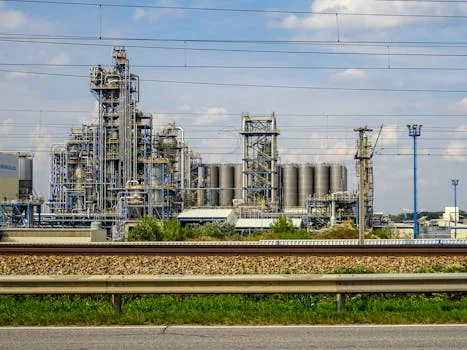
The operational model for chlorine dioxide—specifically on-site generation—fundamentally alters its total cost of ownership and risk profile. Generating ClO₂ on-demand from sodium chlorite and an acid activator eliminates the need to transport and store large quantities of hazardous chlorine gas or unstable hypochlorite solutions, significantly enhancing plant safety. Systems like the ClO₂ Generator, available in capacities from 50 g/h to 20,000 g/h, are designed for reliability and compliance with EPA and WHO standards. While the raw chemical cost per kilogram of ClO₂ generated (~$1.20–$1.80) is higher than that of chlorine (~$0.50–$0.90), this is frequently offset by its lower dosage requirements, reduced need for pH adjustment, and the avoidance of potential fines and treatment costs associated with DBP non-compliance. A total cost analysis often reveals that for facilities with variable pH or high organic load, ClO₂ can be more economical over a 5-year period despite its higher unit cost.
Frequently Asked Questions
Is chlorine dioxide better than chlorine?
For most industrial wastewater applications, yes. Chlorine dioxide offers superior disinfection across a wider pH range, produces significantly fewer harmful byproducts, and provides better control of biofilms and resistant pathogens. It is particularly advantageous in applications with high organic load or variable pH.
Is chlorine dioxide the same as free chlorine?
No. Free chlorine refers to the combined concentration of hypochlorous acid (HOCl) and hypochlorite ion (OCl⁻) resulting from chlorine hydrolysis. Chlorine dioxide (ClO₂) is a distinct molecular compound with a different oxidation mechanism and is separately listed by the EPA as a primary disinfectant.
Can I switch from chlorine to chlorine dioxide?
Yes. Retrofitting an existing system is often straightforward, typically involving the installation of an on-site generation system and potentially a new chemical dosing system. Many infrastructure elements, like contact tanks, can be reused. A site-specific engineering assessment is recommended to determine the exact scope.
Does chlorine dioxide leave a residual?
Yes. Chlorine dioxide provides a stable, measurable residual that is effective for maintaining disinfection throughout a distribution system, unlike ozone which dissipates quickly. This residual is also a useful tool for process control and monitoring.
What industries use chlorine dioxide most?
Its primary industrial applications are in food and beverage processing, pharmaceutical manufacturing, hospital wastewater treatment, pulp and paper bleaching, and municipal drinking water disinfection. It is also gaining traction in oil and gas for water treatment and biofouling control.
Further Reading
Explore these in-depth articles on related wastewater treatment topics for a more comprehensive understanding of system design and operation: