Why GaN Wastewater Reclaim is Critical for Semiconductor Fabs
Untreated GaN wastewater typically exceeds EPA indirect discharge limits of 500 mg/L TDS, leading to surcharges and disposal fees that range from $3 to $12 per cubic meter depending on regional infrastructure and local utility constraints. As the semiconductor industry shifts toward Gallium Nitride (GaN) for high-frequency and power applications, the resulting wastewater streams present a unique challenge: they contain 50–500 mg/L of gallium and 1,000–10,000 mg/L of Total Dissolved Solids (TDS). These concentrations are too high for standard municipal treatment and too valuable to be discarded as hazardous waste. According to 2024 fab data, gallium disposal in sludge can cost between $500 and $2,000 per ton in landfill fees, creating a double financial burden of high disposal costs and lost raw material value.
The economic incentive for reclamation has reached a tipping point in 2025. With gallium market prices fluctuating between $300 and $600 per kilogram, recovery becomes financially viable for any facility producing more than 10 cubic meters of GaN wastewater per day. Beyond the direct market value of the metal, the scarcity of gallium and the geopolitical sensitivity of its supply chain make on-site recovery a strategic necessity for supply chain resilience. Fabs that implement closed-loop systems mitigate the risk of supply disruptions while simultaneously addressing ESG (Environmental, Social, and Governance) mandates that require significant reductions in freshwater intake.
Consider a real-world scenario: A mid-sized fab producing 100 m³/day of GaN wastewater. Without a reclaim system, this facility spends approximately $1.2 million annually on wastewater disposal and sludge management. By implementing a hybrid Zero Liquid Discharge (ZLD) system, the same facility can recover $150,000 to $300,000 per year in high-purity gallium while reducing its water procurement costs by 70%. This transformation shifts wastewater management from a pure cost center to a resource recovery operation that supports both the bottom line and regulatory standing. meeting the stringent China GB 31573-2015 discharge standard—which limits gallium to 0.5 mg/L—is virtually impossible without the advanced separation stages found in hybrid ZLD systems.
Hybrid ZLD System Design for GaN Wastewater: Step-by-Step Process
A hybrid ZLD architecture for GaN wastewater utilizes a sequential train of chemical precipitation, dissolved air flotation, ultrafiltration, and reverse osmosis to isolate gallium before final brine concentration and crystallization. This engineering approach ensures that each component operates at peak efficiency, preventing the fouling of sensitive membranes by high metal loads or colloidal silica common in semiconductor effluents. The process begins with Step 1: Chemical Precipitation. By adjusting the influent pH to a range of 9.0 to 11.0 using lime (Ca(OH)₂) or sodium hydroxide (NaOH), 95% or more of the dissolved gallium is converted into Ga(OH)₃ precipitates. Dosing ratios must be precisely controlled based on real-time sensor data to account for fluctuations in influent metal concentration.
Following precipitation, Step 2 involves Dissolved Air Flotation (DAF). This stage is critical for removing the bulk of the Total Suspended Solids (TSS). Utilizing DAF systems for GaN wastewater pretreatment, engineers can achieve 90–98% TSS removal efficiency even at influent levels of 50–100 mg/L. The micro-bubbles produced in the DAF unit attach to the gallium-rich flocs, lifting them to the surface for mechanical skimming into a sludge thickening tank. Step 3: Ultrafiltration (UF) follows as a polishing step, using 0.03 μm pore size membranes to reject 99% of particles greater than 0.1 μm, protecting the downstream RO membranes from colloidal matter and residual precipitates.
The core of the water recovery occurs in Step 4: Reverse Osmosis (RO). Using high-recovery RO systems for GaN wastewater TDS reduction, the system achieves 95–98% TDS rejection. At this stage, 75–85% of the water is reclaimed for reuse in non-critical fab processes, such as cooling towers or scrubber make-up. Finally, Step 5: Evaporative Crystallization treats the RO brine. This thermal process concentrates the remaining salts and gallium, achieving a 99.9% gallium purity and an overall system water recovery rate of 99.8%. The final output is high-purity distilled water and a solid or concentrated liquid gallium product ready for refining or sale.
| Process Stage | Primary Equipment | Target Contaminant | Typical Efficiency |
|---|---|---|---|
| Pre-Treatment | Reaction Tank / Dosing Pump | Dissolved Gallium, pH adjustment | 95% Ga Precipitation |
| Primary Clarification | DAF | Ga(OH)₃ Flocs, TSS | 90-98% TSS Removal |
| Fine Filtration | UF Membrane Skids | Colloids, Residual Solids | 99% Particle Rejection |
| Desalination | Multi-Stage RO | TDS, Fluoride, Ions | 95-98% TDS Rejection |
| Concentration | MVR / Crystallizer | Brine, Final Gallium Recovery | 99.9% Ga Purity |
GaN Wastewater Treatment Parameters: Influent vs. Effluent Specs
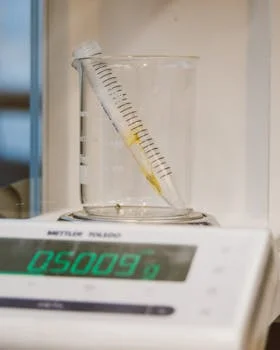
Effective design of GaN water reclaim systems requires addressing influent gallium concentrations that are 100 to 1,000 times higher than permissible discharge levels set by international standards. Engineers must account for the specific chemical behavior of gallium, which is amphoteric and requires precise pH control to remain in a solid state during filtration. According to HydropureWater field data (2025), failure to maintain the pH window between 9.0 and 11.0 results in the re-solubilization of gallium, which then bypasses DAF and UF stages, leading to rapid scaling of RO membranes.
The following table outlines the design parameters for a standard hybrid ZLD system tailored for semiconductor GaN streams. These targets ensure compliance with EPA 40 CFR Part 469 and the more stringent China GB 31573-2015 standards, which are often the benchmark for global fab construction. Note that TDS removal is not just a regulatory requirement but a functional one for water reuse; reclaimed water with TDS <500 mg/L significantly reduces the load on the fab's primary Ultrapure Water (UPW) system if used as influent.
| Parameter | Influent Range | Effluent Target (Reclaim) | Removal Efficiency | Primary Method |
|---|---|---|---|---|
| Gallium (mg/L) | 50 – 500 | < 0.5 | 99.9% | Precipitation + Crystallization |
| TDS (mg/L) | 1,000 – 10,000 | < 500 | 95% – 99% | Reverse Osmosis + MVR |
| TSS (mg/L) | 100 – 300 | < 1.0 | 99.5% | DAF + Ultrafiltration |
| Fluoride (mg/L) | 100 – 500 | < 10 (or <4 for direct) | 98% | Calcium Precipitation |
| COD (mg/L) | 200 – 800 | < 50 | 90% | Oxidation / MBR systems |
| pH | 2.0 – 4.0 | 6.5 – 8.5 | N/A | Automated Acid/Base Dosing |
In addition to these inorganic parameters, GaN wastewater often contains organic residues from photoresist stripping and cleaning processes. If COD levels exceed 500 mg/L, engineers should integrate biological pretreatment. Utilizing MBR systems for biological pretreatment of organic-laden GaN wastewater prevents biofouling of the RO membranes, which is the leading cause of unplanned downtime in semiconductor ZLD systems. This hybrid approach—combining biological, chemical, and membrane processes—is the only way to ensure 2025-era compliance across all global jurisdictions.
Hybrid ZLD vs. Conventional Treatment: Cost and Performance Comparison
While the initial CAPEX for a hybrid ZLD system is 3 to 4 times higher than conventional chemical precipitation, the reduction in liquid waste disposal costs typically offsets this investment within 36 to 60 months. Procurement managers evaluating these systems must look beyond the sticker price to the Total Cost of Ownership (TCO). Conventional treatment—usually consisting of simple pH neutralization and metals precipitation followed by discharge to a municipal sewer—leaves the fab vulnerable to rising utility surcharges and tightening environmental regulations. In contrast, a hybrid ZLD system provides a fixed-cost solution for wastewater management that is largely independent of municipal rate hikes.
The following comparison uses data from a 100 m³/h system (2,400 m³/day capacity). This scale is typical for large-scale power semiconductor fabs. The "Conventional" model assumes the fab pays for industrial water discharge and hazardous sludge landfilling, while the "Hybrid ZLD" model accounts for the energy costs of evaporation but offsets them with reclaimed water and gallium sales.
| Metric | Conventional Treatment | Hybrid ZLD System |
|---|---|---|
| CAPEX (100 m³/h) | $1.5M – $2.0M | $5.0M – $7.5M |
| OPEX (per m³ treated) | $0.40 – $0.60 | $1.20 – $1.80 |
| Disposal Costs (per m³) | $3.00 – $12.00 | $0.00 (Zero Liquid Discharge) |
| Water Recovery Rate | 0% | 99.8% |
| Gallium Recovery Rate | 0% (Lost in Sludge) | 99.9% |
| ROI Period | N/A (Cost Center) | 3.5 – 5.0 Years |
To calculate the ROI for a specific project, procurement teams can use the formula: ROI = CAPEX / (Annual Disposal Savings + Annual Reclaimed Water Value + Annual Gallium Revenue - Annual OPEX). For a facility producing 50 kg of gallium per day, the revenue from metal recovery alone can exceed $5 million annually at 2025 market prices, drastically accelerating the payback period. the detailed cost breakdown for GaN wastewater ZLD systems shows that energy-efficient MVR (Mechanical Vapor Recompression) evaporators can reduce the ZLD OPEX by up to 40% compared to older thermal technologies, making the financial case even stronger.
Compliance Blueprint: Meeting EPA and China GB Standards for GaN Wastewater
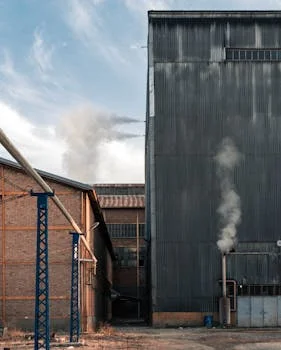
Compliance with EPA 40 CFR Part 469 requires semiconductor fabs to manage Total Toxic Organics (TTO) and pH, yet local municipalities increasingly impose stringent TDS and gallium limits to protect wastewater treatment plant (WWTP) infrastructure. In regions like the United States, gallium is not yet a federally regulated categorical pollutant, but indirect discharge permits often include "interference" clauses that allow municipalities to fine fabs if gallium concentrations disrupt sludge digestion processes at the city level. In contrast, China’s GB 31573-2015 is explicit, setting a gallium limit of 0.5 mg/L for any facility discharging into public water bodies.
To ensure a fab remains compliant through 2030, managers should adopt a "compliance by design" approach. This involves four key pillars:
- Redundant Separation: Using both DAF and UF ensures that even if one stage underperforms, the gallium-rich solids do not reach the discharge point or the RO membranes.
- Continuous Monitoring: Real-time TDS and pH sensors must be linked to an automated diversion valve. If effluent exceeds 500 mg/L TDS (EPA) or 1,000 mg/L (China), the water is automatically sent back to the equalization tank.
- Zero Liquid Discharge (ZLD) as a Safe Harbor: By eliminating the discharge stream entirely, ZLD systems bypass the need for many NPDES (National Pollutant Discharge Elimination System) permits, simplifying the regulatory landscape for fab expansion.
- BAT Implementation: The EU Industrial Emissions Directive (2010/75/EU) requires the use of Best Available Techniques (BAT). In 2025, BAT for semiconductor fabs includes closed-loop water reuse wherever technically feasible.
For more information on navigating these requirements, refer to the global discharge standards for GaN wastewater guide. Implementing a hybrid ZLD system not only meets current laws but future-proofs the facility against the "forever chemical" and heavy metal regulations currently being drafted in the EU and North America. This proactive stance is highly regarded by ESG investors and local community stakeholders, providing a "social license to operate" in water-stressed regions.
Frequently Asked Questions
Q: What is the typical gallium concentration in GaN wastewater?A: Based on 2024-2025 industry benchmarks, gallium concentrations range from 50 to 500 mg/L. The specific concentration depends on the fab’s etching chemistry and the efficiency of the cleaning processes used during wafer fabrication.
Q: Can hybrid ZLD systems handle fluoride in GaN wastewater?A: Yes. Fluoride, often present at 100–500 mg/L, is removed via calcium precipitation (forming CaF₂) during the chemical pretreatment step. This typically achieves an effluent concentration of <10 mg/L, which is then further reduced by the RO stage to meet the EPA direct discharge limit of 4 mg/L.
Q: What is the CAPEX for a 50 m³/h hybrid ZLD system?A: For a 50 m³/h system in 2025, CAPEX typically ranges from $2.5M to $4.0M. This includes chemical dosing skids, DAF units, UF/RO membrane racks, and the MVR crystallizer unit.
Q: How much gallium can be recovered from 100 m³/day of GaN wastewater?A: At an average concentration of 250 mg/L, a 100 m³/day stream yields approximately 25 kg of gallium per day. At 99.9% purity, this represents a market value of $7,500 to $15,000 per day, depending on 2025 market spot prices.
Q: Are there any subsidies for GaN wastewater treatment in China?A: Yes. Under China’s "Water Pollution Prevention and Control Action Plan," semiconductor fabs implementing ZLD systems may qualify for tax incentives and green manufacturing grants that cover up to 30% of the initial CAPEX. Similar incentives are emerging in the US under the CHIPS Act for sustainable infrastructure.
Further Reading
Explore these in-depth articles on related wastewater treatment topics: